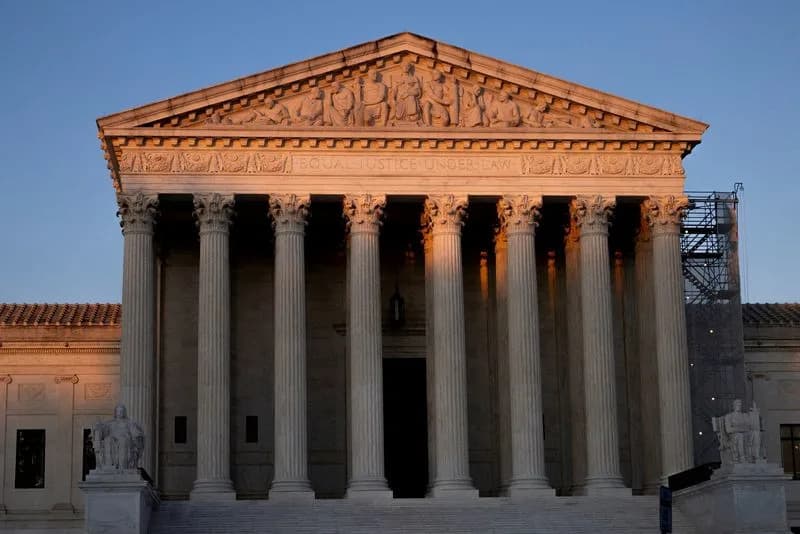
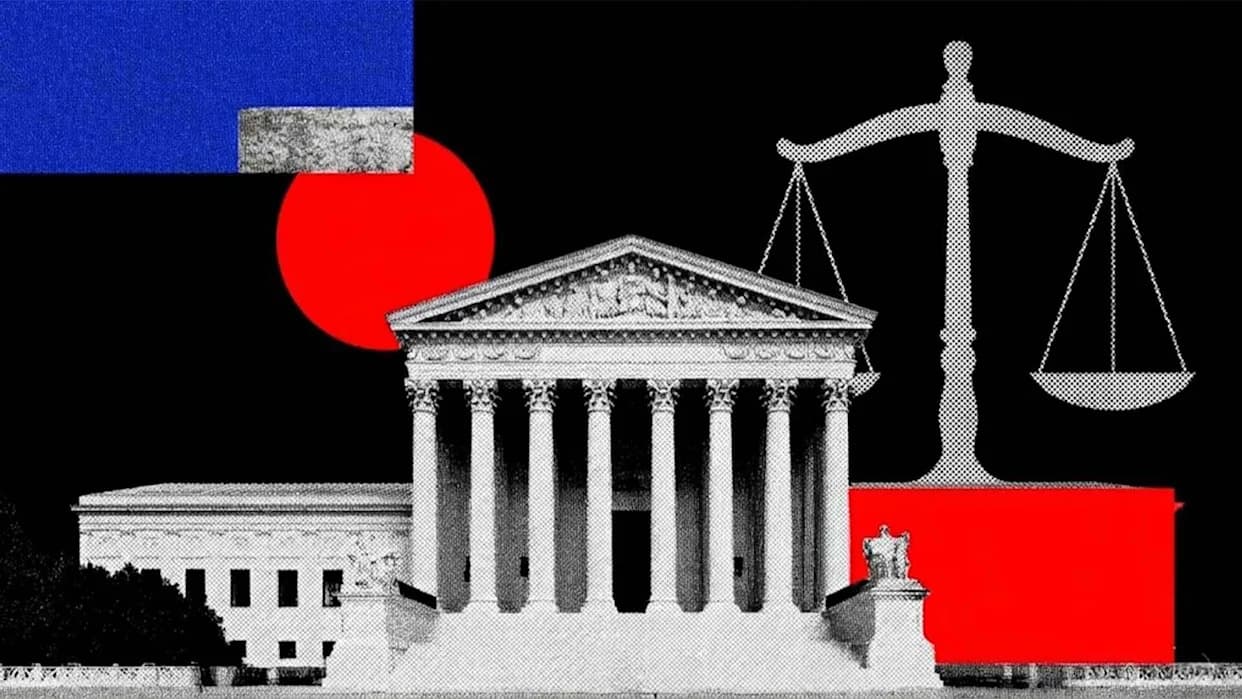
Trump v. Slaughter presents a pivotal clash over presidential removal power and the future of independent agencies. The case tests the unitary executive theory and arrives amid a Court that has also developed a robust major questions doctrine and recognized broad presidential immunities. Together, these developments threaten to weaken Congress’s authority over the executive branch and increase judicial oversight of major policy choices.
Supreme Court Poised to Reinforce Presidential Control and Narrow Congress’s Role in Trump v. Slaughter

The Supreme Court’s argument in Trump v. Slaughter (argued Dec. 8) looks likely to deliver a major shift in the balance of power among the three branches of the federal government. At issue is whether the president may remove a member of the Federal Trade Commission who is protected by a statutory “for cause” removal standard — and the decision could cement a broader legal agenda that strengthens presidential authority while constraining Congress and expanding judicial review over executive actions.
What the case is about
Trump v. Slaughter concerns Rebecca Slaughter, one of five commissioners on the Federal Trade Commission (FTC). Federal law permits removal of FTC commissioners only for “inefficiency, neglect of duty, or malfeasance in office.” The president does not claim Slaughter engaged in any of those offenses; his stated reason is that her views do not align with his administration’s priorities. The question is whether Congress may continue to insulate such officials from at‑will removal by the president.
Legal theories at play
Two interlocking doctrines dominate the dispute:
- The unitary executive theory — a view, advanced in contemporary conservative legal thought, that Article II vests all executive power exclusively in the president and therefore the president must have broad authority to control and remove executive officers.
- The major questions doctrine — a judicial principle requiring that Congress clearly authorize agencies to decide issues of vast economic or political significance; the doctrine has been used to limit agency actions even when a statute appears to grant authority.
Both doctrines are being developed by the Court’s conservative majority and, taken together, they can substantially reduce Congress’s practical ability to structure and constrain executive agencies.
Precedent and history
The Court’s 1935 decision in Humphrey’s Executor v. United States long has been understood to permit Congress to create independent agencies with members removable only for cause. Slaughter’s lawyers also point to early examples of multi‑member commissions — including a 1790 commission proposed by Alexander Hamilton that included high officials not directly removable by the president — as historical evidence that independent bodies are not novel.
Opponents, leaning on earlier dissents such as Justice Antonin Scalia’s Morrison v. Olson (1988) dissent, argue that the vesting clause of Article II implies broad executive control. Proponents of the unitary executive view now find strong support among the Court’s conservative majority, which has signaled sympathy for expanding presidential removal power.
Why this matters
If the Court rules that the president may remove FTC commissioners at will, the practical effect would extend beyond one agency. Many federal agencies — including regulatory and technocratic bodies — rely on statutory protections to insulate decisionmakers from short‑term political pressure. A decision eroding those protections would enable greater White House control over regulatory policy and reduce institutional independence designed to promote expertise, continuity, and insulation from partisan swings.
Relatedly, the Court’s recent recognition of broad presidential immunity in a separate 2024 opinion has raised stakes in criminal‑law contexts by suggesting limits on prosecuting certain official acts by a president. Combined with an expanded unitary executive doctrine, that immunity framework could make it harder for Congress to hold presidents accountable through criminal statutes or statutory design of the executive branch.
The major questions doctrine and judicial veto
The major questions doctrine has been invoked to invalidate agency action on the ground that Congress must clearly authorize choices of vast importance. Critics argue the doctrine is inconsistently applied and sometimes substitutes judicial judgment for legislative delegation. Historically, Congress has often granted broad delegations to the executive (for example, actions taken by the first Congress concerning territorial governance and patents), so the doctrine’s recent aggressive use marks a shift toward giving the judiciary greater power to police the scope of executive action.
What to expect
Observers expect the conservative majority to rule for the president in Slaughter, given prior temporary rulings and the alignment of legal theories in recent opinions. If so, the decision will likely be another significant step in a broader Court project that reallocates authority away from Congress and toward the presidency and the judiciary. That reallocation would have long‑term consequences for regulatory independence, accountability, and the relative power of elected branches.
Bottom line
The Court is reshaping separation‑of‑powers doctrine using doctrines that rest on contested readings of constitutional text and historical practice. Whether one welcomes or fears these changes, their practical effect will be to shrink Congress’s institutional control over the executive branch and to empower both the president and the judiciary in new ways.
Help us improve.