
The Supreme Court issued an unsigned emergency order blocking the Trump administration from federalizing National Guard troops in Chicago, concluding the government had not shown legal authority to do so. The justices suggested "regular forces" likely means the standing U.S. military, not federal civilian agents like ICE. Justice Brett Kavanaugh concurred with the outcome but cautioned the ruling could limit presidential options in unforeseen crises. Justices Alito, Thomas and Gorsuch dissented, arguing presidential authority to protect federal officers could justify the action.
Supreme Court Blocks Trump From Federalizing Chicago National Guard; Kavanaugh Concurs But Warns Of Limits

Andrew Harnik / Getty Images
The Supreme Court issued an unsigned emergency order blocking the Trump administration's attempt to federalize National Guard troops in Chicago, finding the government had not shown adequate legal authority to convert the troops to federal status.
What The Court Said
In the brief order, the Court said the administration failed at this preliminary stage to identify a source of authority that would permit the military to execute the laws in Illinois. The justices noted federal law allows the president to federalize the National Guard when "regular forces" are insufficient, but they said it is "likely" that the term refers to the standing U.S. military rather than federal civilian agents such as those in ICE.
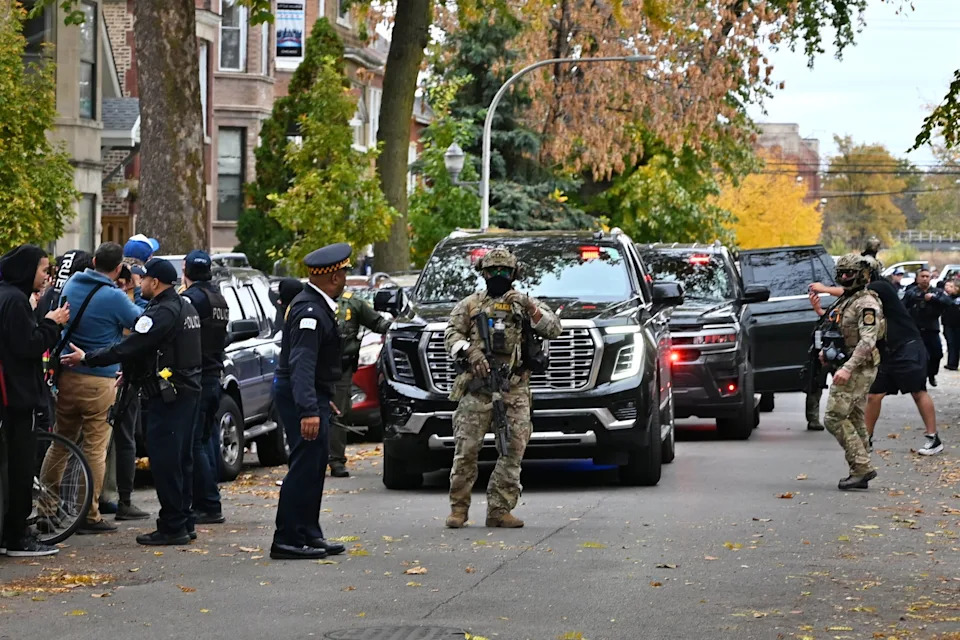
ICE agents conduct operations in Chicago’s Little Village neighborhood last month. The Supreme Court has blocked President Trump from federalizing National Guard troops to support them. / Anadolu / Anadolu via Getty Images
“At this preliminary stage, the government has failed to identify a source of authority that would allow the military to execute the laws in Illinois,” the Court wrote.
Kavanaugh's Concurrence
Justice Brett Kavanaugh joined the Court's judgment but filed a concurrence explaining he would resolve the case on narrower grounds. He wrote that it does not appear the President made the statutorily required determination that he is unable, with the U.S. military as distinct from federal civilian law enforcement officers, to ensure execution of federal law in Illinois.
Kavanaugh warned the Court's legal interpretation could have significant implications in unforeseen crises, offering a hypothetical in which local security is rapidly overwhelmed and troops cannot mobilize in time. In such circumstances, he cautioned, the ruling might limit presidential options.
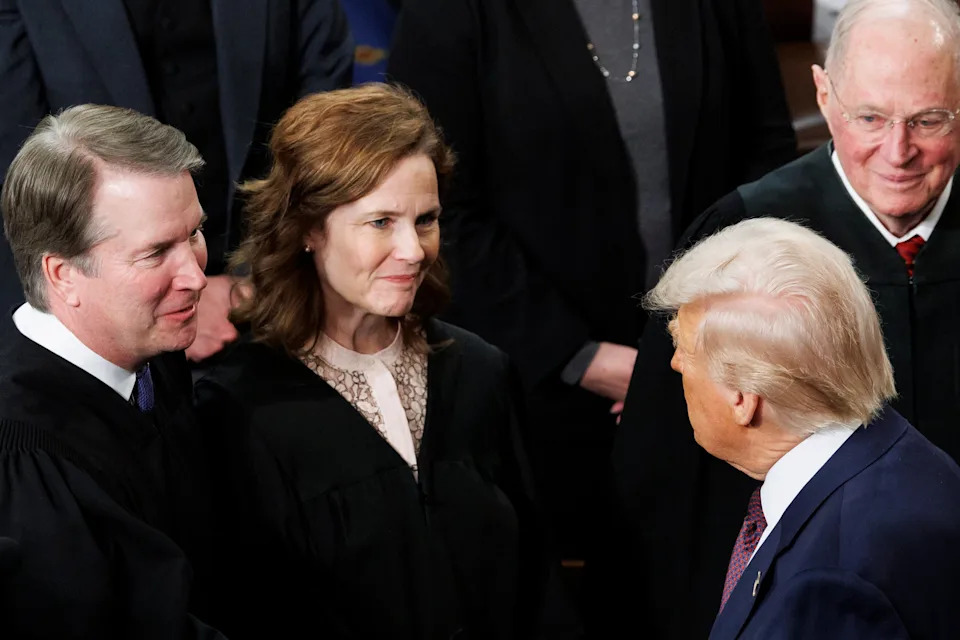
Kavanaugh ultimately agreed with the court’s determination, but said he would have done so on narrower grounds. / The Washington Post / The Washington Post via Getty Im
Dissent
Justices Samuel Alito, Clarence Thomas and Neil Gorsuch dissented. In his dissent, Justice Alito argued the Court failed to explain why the President's inherent constitutional authority to protect federal officers and property would not justify using National Guard members for that purpose. Alito said the majority offered no basis for rejecting the President's determination that civilian law enforcement resources were insufficient to enforce federal immigration laws.
White House Response
White House spokesperson Abigail Jackson said the ruling does not alter the administration's immigration agenda. She said the President remains committed to enforcing immigration laws and protecting federal personnel and property, and that the Administration will continue its efforts to safeguard the public.
Why It Matters
The decision clarifies limits on when the federal government can federalize state National Guard units, highlighting a legal distinction between the standing military and federal civilian law enforcement. It also sets up potential future litigation over the scope of presidential authority in emergencies where federal agents and local resources may be deemed insufficient.


