The Supreme Court’s current term is tackling a wide range of high-stakes cases—from presidential authority and tariffs to voting rights, gun policy, transgender participation in sports, campaign finance and major copyright liability. Several rulings that could alter administrative power and civil-rights protections are expected by the end of June. Key argument dates fall in January and March.
Supreme Court Term: Key High-Stakes Cases to Watch Through June
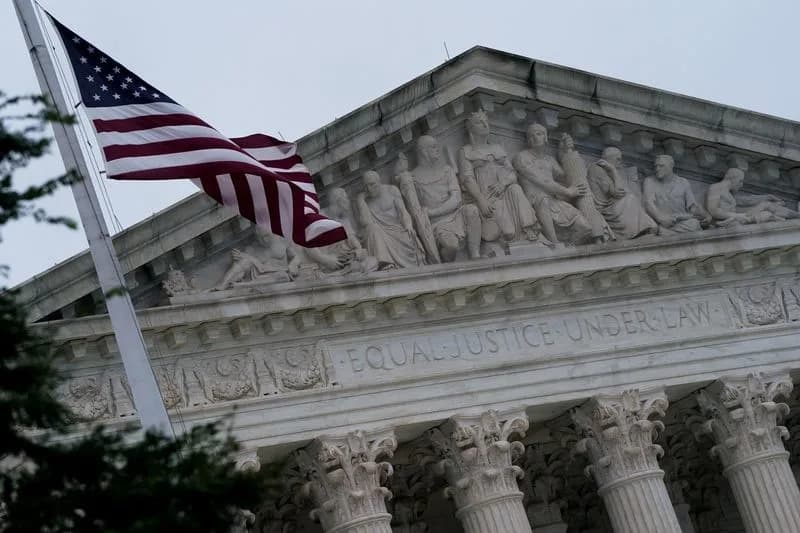
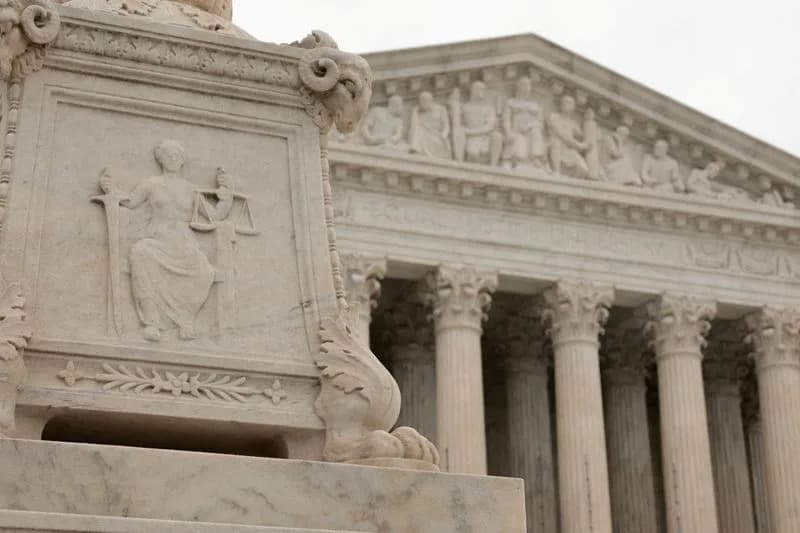
The U.S. Supreme Court building is seen in the rain in Washington, U.S., October 2, 2022. REUTERS/Elizabeth Frantz
The U.S. Supreme Court’s current term, which began in October and runs through the end of June, is hearing a broad slate of consequential cases that could reshape administrative power, voting and civil-rights protections, campaign finance rules, gun policy, religious-liberty claims, and more. Several major decisions are expected by the end of June, and argument dates are concentrated in January and March.
Trump Tariffs
On Nov. 5, justices pressed whether former President Donald Trump lawfully relied on the International Emergency Economic Powers Act (1977) to impose broad tariffs. Both conservative and liberal justices questioned whether invoking that statute usurped Congress’s power, while some conservative members emphasized traditional presidential authority in foreign affairs. Lower courts held that the administration overreached; businesses and a coalition of 12 states challenged the tariffs. A decision is expected by the end of June.
Birthright Citizenship
The court agreed to review a directive that would limit birthright citizenship by instructing federal agencies not to recognize as citizens children born in the United States when neither parent is a U.S. citizen or lawful permanent resident. A lower court blocked the order, finding it inconsistent with the 14th Amendment and federal law in a class-action suit brought by parents and children. No argument date has been set.
Louisiana Electoral Districts
During Oct. 15 arguments, several conservative justices signaled openness to narrowing Section 2 of the Voting Rights Act—which prohibits voting maps that dilute minority voting strength even absent proof of intentional discrimination. A lower court found Louisiana’s current six-district U.S. House map (now with two Black-majority districts, up from one) raised equal-protection concerns. A ruling is expected by the end of June.
Attempt To Remove Fed Official
On Jan. 21 the court will hear arguments over a presidential effort to remove Federal Reserve Governor Lisa Cook. The dispute turns on the Federal Reserve Act’s provision that governors be removable only "for cause," although the statute does not define that term or set formal removal procedures. The case raises questions about the independence of the central bank and executive removal powers.
Federal Trade Commission Firing
On Dec. 8 the justices heard the Justice Department’s appeal challenging a lower court ruling that a presidential removal of an FTC member exceeded executive authority. Conservative justices appeared sympathetic to arguments that statutory tenure protections for independent-agency officials unduly constrain the president. The court allowed the removal to stand while the case proceeds. A decision is expected by the end of June.
LGBT “Conversion Therapy”
On Oct. 7 justices considered a free-speech challenge to Colorado’s ban on licensed therapists providing so-called "conversion therapy" to minors. A Christian counselor argued the law violates the First Amendment; the state contends it regulates professional conduct to protect minors from unsafe and discredited practices. A lower court upheld the ban. A ruling is expected by the end of June.
Transgender Sports Participation
On Jan. 13 the court will hear appeals from Idaho and West Virginia seeking to enforce state laws that bar transgender girls from participating on female public-school sports teams. Lower courts sided with transgender students who sued, finding the laws likely discriminate on the basis of sex and transgender status in violation of the 14th Amendment and Title IX.
Hawaii Gun Law
On Jan. 20 the justices will review a Hawaii statute that restricts carrying handguns on private property open to the public unless the property owner gives consent. Three Hawaii residents with concealed-carry permits and a gun-rights group challenged the law after a lower court found it likely complies with the Second Amendment.
Drug Users and Firearms
On March 2 the court will consider the Justice Department’s appeal defending a federal prohibition on firearm possession by users of illegal drugs, a provision that originates in the Gun Control Act of 1968. A lower court found much of the restriction inconsistent with the Second Amendment; the case involves a dual U.S.-Pakistani national in Texas and implicates broader questions about the scope of gun rights.
Campaign Finance
On Dec. 9 the court heard a Republican-led challenge to federal limits on coordinated spending by political parties with candidates—one dispute involves JD Vance. Some conservative justices seemed open to striking down limits as inconsistent with the First Amendment, while the court’s liberal justices appeared inclined to preserve them. A ruling is expected by the end of June.
Mail-In Ballots
The court will consider Mississippi’s defense of a law that permits certain mail-in ballots to be counted if postmarked by Election Day and received up to five business days later. A lower court found the statute unlawful; no argument date has been set.
U.S. Asylum Processing (Metering)
The court agreed to review a challenge to the government practice known as "metering," under which immigration officials limited asylum processing at ports of entry on the U.S.-Mexico border. A lower court concluded the policy violated federal law. The policy has been rescinded by the Biden administration, though the issue remains legally and politically significant. No argument date has been set.
Crisis Pregnancy Centers
On Dec. 2 justices considered whether a New Jersey attorney general’s subpoena seeking information about donors and medical partners of faith-based crisis pregnancy centers violated constitutional protections. A majority of justices appeared inclined to allow a federal lawsuit by the centers to proceed. A decision is expected by the end of June.
Rastafarian Inmate
On Nov. 10 the court heard an appeal from Damon Landor, a Louisiana inmate who says guards forcibly shaved his hair in violation of his Rastafarian religious practice. The case raises whether the applicable statute allows inmates to sue individual officials for monetary damages. Conservative justices appeared inclined to reject his claim; a ruling is expected by the end of June.
Death Row Inmate
On Dec. 10 the justices heard Alabama’s appeal seeking to proceed with the execution of Joseph Clifton Smith, convicted of a 1997 murder. A lower court ruled Smith intellectually disabled—based on IQ testing and expert testimony—and therefore ineligible for execution under a 2002 Supreme Court precedent. The high court’s decision is expected by the end of June.
Cox Copyright Dispute
On Dec. 1 the court considered Cox Communications’ effort to avoid liability in a major music-piracy suit brought by record labels including Sony, Warner and Universal. A lower court ordered a retrial to determine damages, which could reach up to $1.5 billion. Justices were skeptical that mere awareness of user piracy would shield the company from liability. A ruling is expected by the end of June.
Reporting: John Kruzel, Andrew Chung, Blake Brittain, Jan Wolfe and Nate Raymond. Editing: Will Dunham.
Help us improve.