The author argues that U.S. presidents have long exercised broad unilateral authority in military, trade, and immigration policy, citing examples from Truman through Obama. He contends that powers once accepted as routine were suddenly recast as illegitimate when used by President Trump, reflecting a partisan double standard rather than changes in law. The piece warns that permitting executive authority to depend on elite approval rather than statutes or the Constitution will erode democratic institutions.
Selective Enforcement: How A Double Standard On Presidential Power Threatens The Republic
For more than two centuries, U.S. presidents from both parties have exercised broad executive discretion across military, trade, and immigration policy. The Constitution vests the president with authority as commander-in-chief, and successive administrations have repeatedly relied on that role to take military action without formal declarations of war.
Historical Practice Across War, Trade, and Immigration
Military: President Harry Truman dispatched U.S. forces to Korea in 1950 without a congressional declaration, creating what scholars call the "Korean precedent" for unilateral presidential military action. President Bill Clinton similarly launched operations in Kosovo in 1999 without explicit congressional authorization, and President Barack Obama ordered military intervention in Libya in 2011 under the War Powers framework rather than via a formal declaration.
Trade: Although the Constitution assigns tariff power to Congress (Article I, Section 8), Congress delegated substantial tariff authority to the executive branch in statutes passed in the 1960s and 1970s. Those delegations enabled President Ronald Reagan to raise tariffs on Japanese electronics in the 1980s, President George W. Bush to impose steel tariffs in 2002, and President Barack Obama to enact tire tariffs on China in 2009.
Immigration: The Immigration and Nationality Act grants presidents broad discretion over deportation priorities, parole authority, and entry restrictions. President Barack Obama created the Deferred Action for Childhood Arrivals (DACA) program in 2012 without new legislation from Congress. President Jimmy Carter suspended entry by Iranian nationals during the 1979 hostage crisis, and President Bill Clinton used parole and deferred enforced departure for various populations during the 1990s. Each action sparked debate but was widely treated as within the presidency's discretionary authority under existing law.
Where The Double Standard Appears
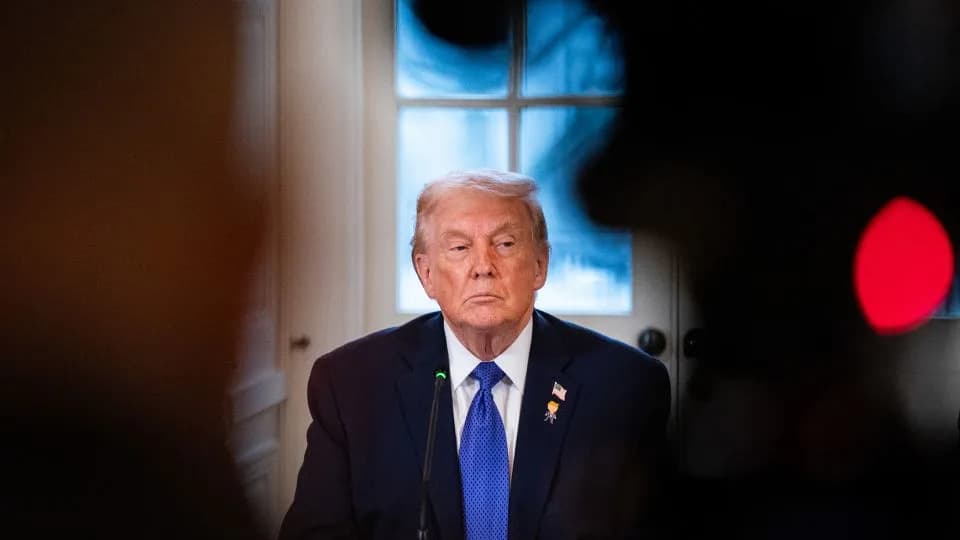
These long-standing practices did not become unlawful by statute, constitutional amendment, or Supreme Court reversal. Rather, debates over presidential power shifted in tone and intensity depending on who occupied the White House. The moment President Donald Trump assumed office, some executive actions that had been tolerated for decades under previous administrations were suddenly labeled legally suspect, illegitimate, or historically unprecedented.
Whether one supports or opposes a particular president, the pattern is notable: powers exercised by leaders from Truman through Obama were reinterpreted when used by a president outside the political establishment's favor. That selective scrutiny suggests a politicization of enforcement and interpretation, rather than a consistent application of statutory or constitutional limits.
Why This Matters
In a constitutional republic, the proper check on presidential authority is lawmaking by Congress or amendment of the Constitution, not selective enforcement by administrative bodies, partisan actors, or unelected gatekeepers. If executive authority becomes contingent on elite approval rather than on statutory text or constitutional doctrine, the role of the presidency risks being narrowed by precedent and practice rather than clarified by democratic institutions.
The choice facing Americans is clear: preserve the presidency as a constitutional office with defined powers, or allow it to become a permission slip administered by unelected actors — a change that would weaken democratic accountability.
Author: Erick Chomskis is a civilian employee of the War Department. His views do not necessarily reflect those of any government department or agency.
Copyright 2025 Nexstar Media, Inc. All rights reserved. This material may not be published, broadcast, rewritten, or redistributed. For the latest news, weather, sports, and streaming video, head to The Hill.
Help us improve.