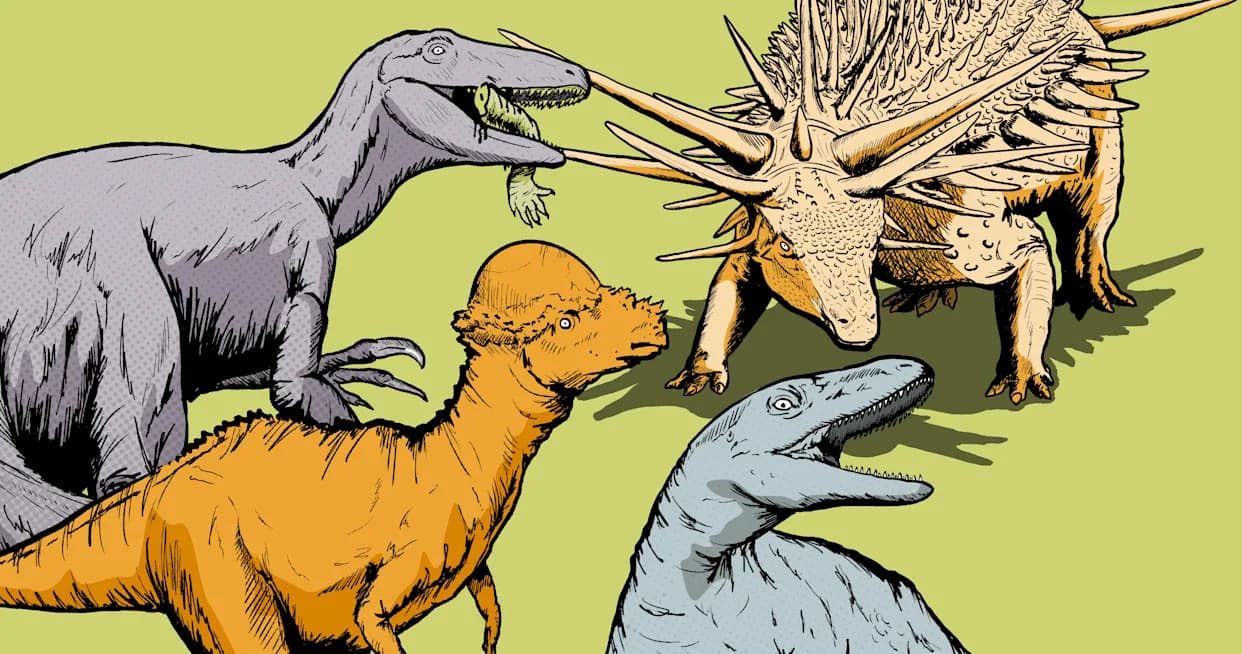
Modern science keeps uncovering prehistoric finds that reshape our picture of the past. Recent discoveries—from a paddle-tailed Spinosaurus and a nearly human-sized penguin to permafrost-preserved puppies, ancient embryos and new human lineages—reveal surprising diversity and unexpected evolutionary links. Together, they enrich our understanding of life’s history and highlight how much remains to be discovered.
15 Remarkable Prehistoric Discoveries Unearthed in Modern Times

The familiar image of a paleontologist brushing away soil to reveal ancient bones suggests prehistoric finds belong to the distant past. In reality, the 21st century continues to deliver discoveries that rewrite chapters of Earth's history. From frozen mammals to paddle-shaped dinosaur tails and exquisitely preserved embryos, these finds deepen our understanding of evolution, ecology and behavior.
Below are 15 of the most striking modern prehistoric discoveries that have captivated scientists and the public alike. Each entry highlights why the find matters and what it reveals about life long ago.
Elasmotherium — the “Siberian Unicorn”
This massive, rhinoceros-like mammal, known for its single large horn, persisted across Eurasia until roughly 39,000 years ago. Fossil evidence confirming its horn and surprisingly recent survival has prompted revisions to timelines of late Pleistocene megafauna.
2011 Nodosaur "Dinosaur Mummy" (Canada)
Unearthed with fossilized skin and armor plates intact, this exceptionally preserved nodosaur provides direct evidence of scales, body armor and stomach contents, offering an unusually detailed picture of its biology and appearance.
"Hell Ant" in Amber (2017)
A 99-million-year-old ant trapped in amber exhibits scythe-like mandibles and a peculiar head orientation, suggesting a predatory strategy unlike that of modern ants and revealing a previously unknown branch of ant evolution.
Giant Penguin Fossils (New Zealand, 2018)
Fossils of a penguin almost as tall as a human, dated to about 55–60 million years ago, show that early penguins included very large, diverse forms and prompt questions about how climate and ecology shaped their evolution.
"Wonderchicken" — Early Ancestor of Modern Chickens (66.7 million years)
Dated to 66.7 million years ago, this fossil links modern fowl to their dinosaur ancestors and fills an important gap in the early evolution of birds after the end-Cretaceous extinction.
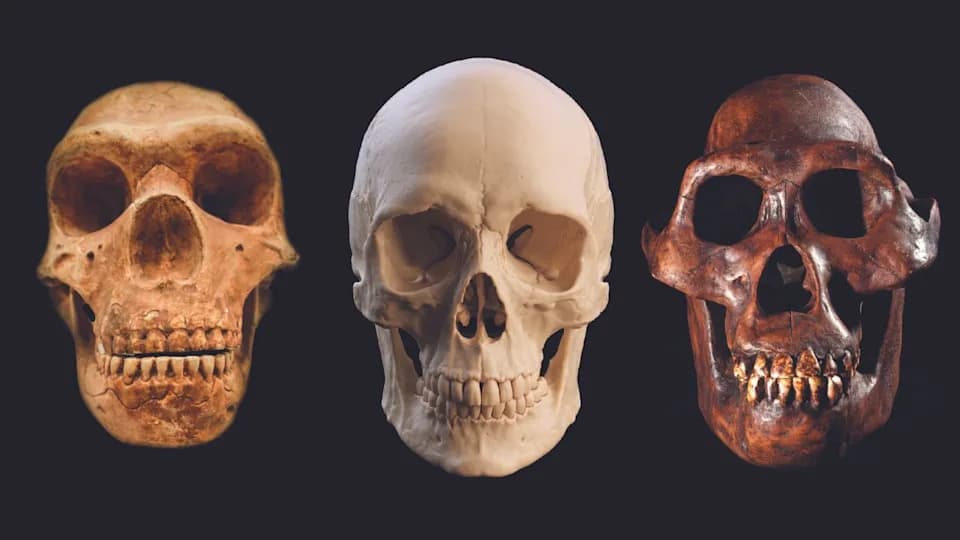
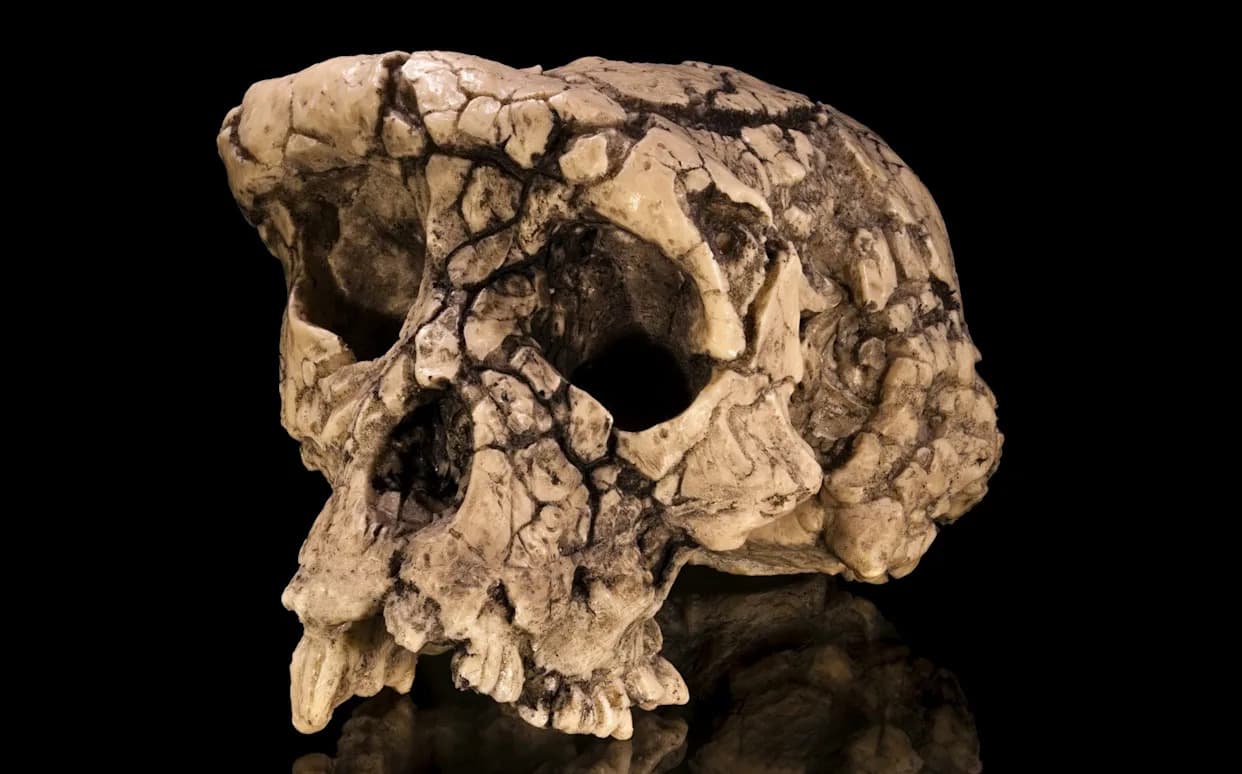
"Dragon Man" Skull (China; skull ~146,000 years old)
A nearly complete skull discovered in 1933 but recently re-evaluated may represent a previously unrecognized human lineage. Its morphology has triggered debate about hominin diversity and migration in Pleistocene Asia.
"Baby Yingliang" Dinosaur Embryo (China, found 2021)
This exquisitely preserved embryo is curled with its head tucked under its body—remarkably similar to modern bird embryos—strengthening evidence for developmental links between certain theropod dinosaurs and birds.
Spinosaurus Tail (Morocco, 2020)
The discovery of a paddle-shaped tail supports the view that Spinosaurus was well adapted for an aquatic or semi-aquatic lifestyle, changing long-held ideas about the behavior and ecology of this large predator.
The Tully Monster (reclassification)
After decades of uncertainty, new analyses suggest the enigmatic Tully Monster belongs among primitive vertebrates, possibly related to lampreys, helping place this bizarre fossil within the tree of life.
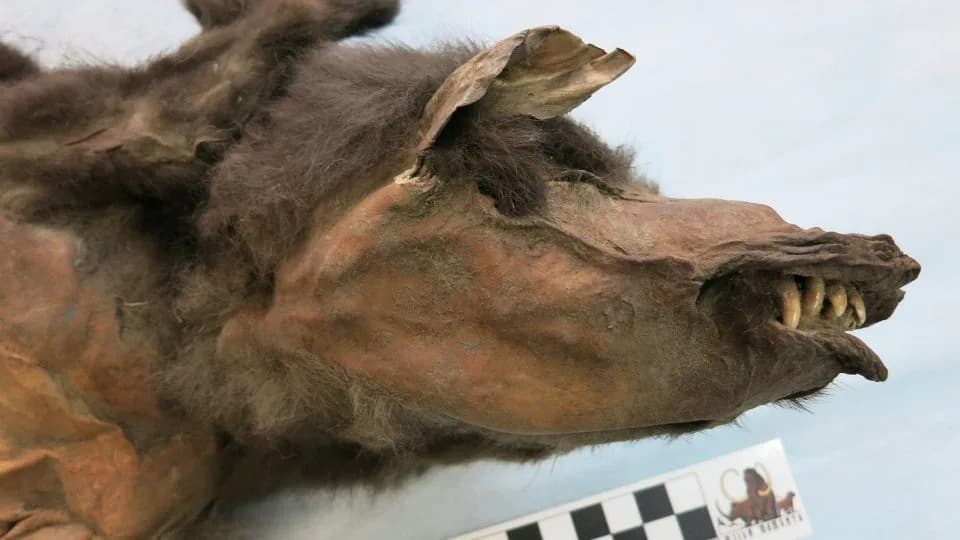
18,000-year-old Puppy (Siberia, 2018)
A permafrost-preserved puppy discovered in 2018 provides DNA evidence of a lineage distinct from modern wolves and dogs. It offers rare insights into early canid diversity and the complex timeline of dog domestication.
Giant Sloth Coprolites (Southwestern United States)
Fossilized dung (coprolites) from giant sloths preserves pollen, plant fragments and insect remains, revealing diet, seasonality and ecological interactions that bones alone cannot provide.
"Jurassic Pompeii" Fossil Beds (China; ~160 million years ago)
A volcanic event preserved a Middle Jurassic ecosystem—plants, insects and even a pterosaur embryo—offering a snapshot of biodiversity and ecological relationships frozen at the moment of catastrophe.
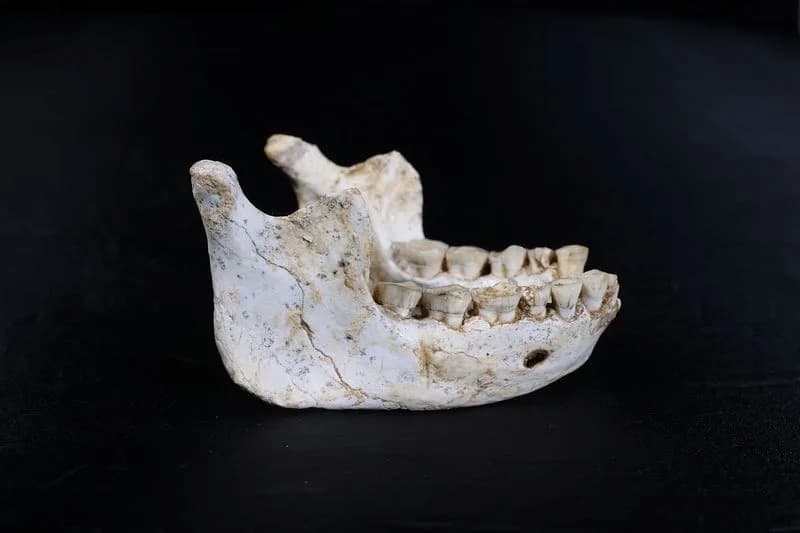
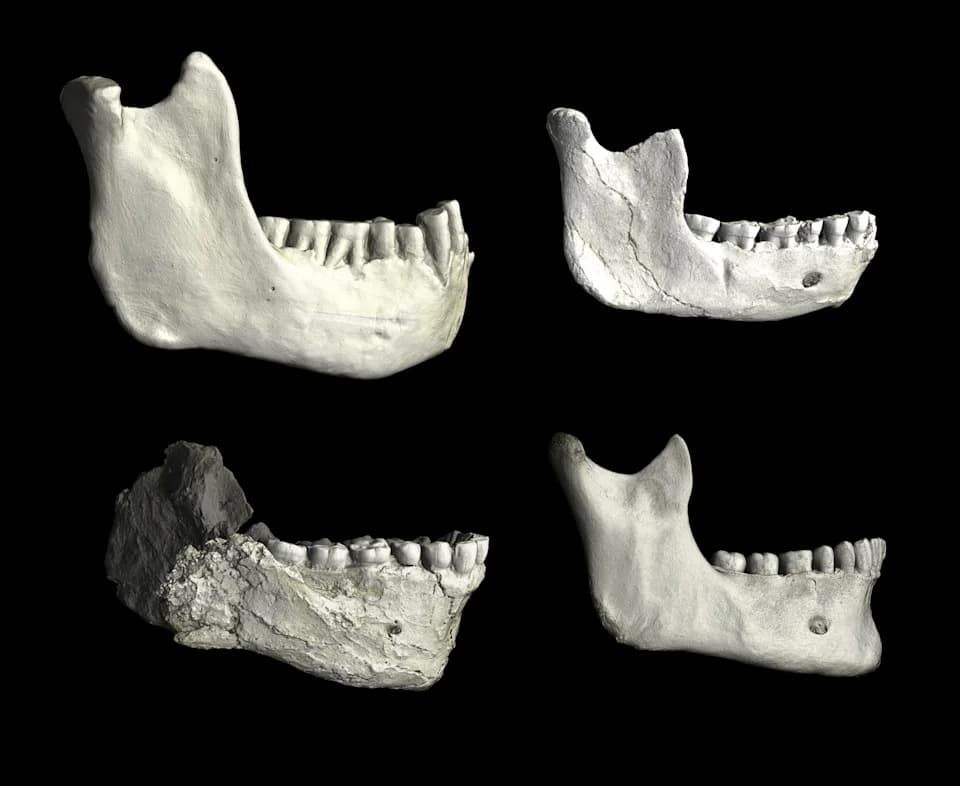
Homo floresiensis — the "Hobbit" (Flores, discovered 2003)
This small-bodied hominin lived on the Indonesian island of Flores until as recently as ~50,000 years ago. Its unusual anatomy and late survival raise important questions about insular evolution and hominin diversity.
Peregocetus pacificus — the "Walking Whale" (Peru, 2011)
A 42.6-million-year-old whale fossil with limbs adapted for both walking and swimming documents a key stage in the transition from land-dwelling mammals to fully aquatic cetaceans.
Denisovans (Siberian cave, 2008)
A fragmentary finger bone recovered in 2008 yielded DNA that identified the Denisovans, a previously unknown human group that interbred with Neanderthals and modern humans, reshaping our view of ancient human population dynamics.
Each of these discoveries adds depth to the fossil record and reminds us that new finds can overturn assumptions, reveal unexpected adaptations and illuminate evolutionary pathways. As technology and fieldwork advance, more surprising chapters of Earth's deep history are sure to emerge.
Help us improve.