During parking-lot improvements on Sept. 16, workers exposed dinosaur-bearing sandstone near the Quarry Exhibit Hall at Dinosaur National Monument, triggering the first excavation at the site in over 100 years. Paleontologists removed about 3,000 pounds of fossils and matrix between mid-September and mid-October; the material is being cleaned and analyzed in Vernal, Utah. The bones likely belong to a large, long-necked dinosaur, probably a Diplodocus, and come from a bonebed that had not been excavated since 1924. The project resumed and was completed after the scientific work concluded.
Parking Lot Work Uncovers Dinosaur Bones — First Excavation at Monument in Over 100 Years
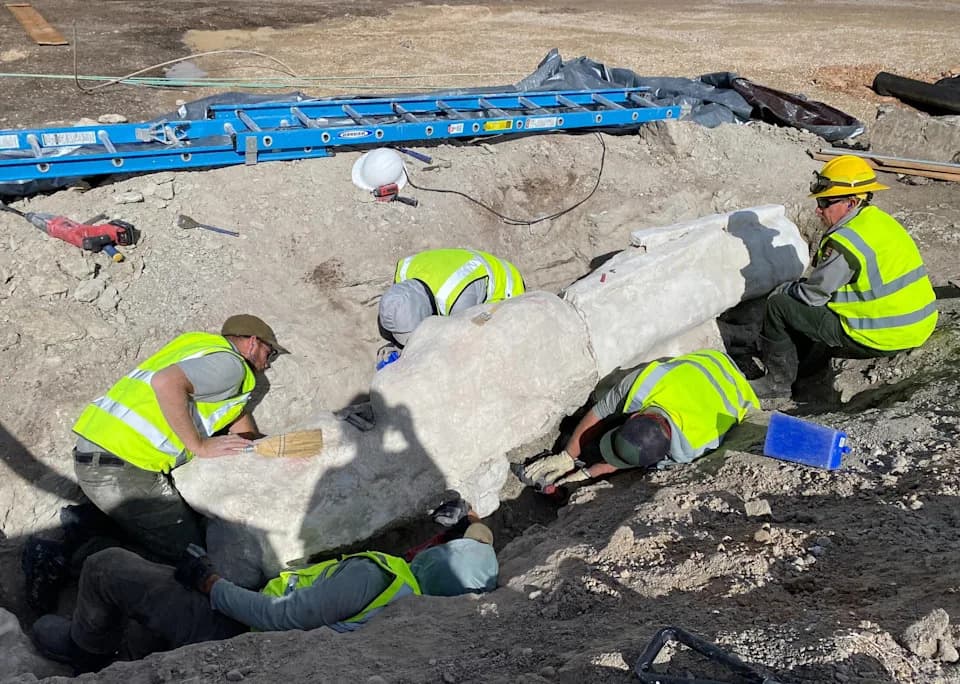
Workers are excavating dinosaur fossils and rocks at the Dinosaur National Monument in September and October 2025. / Credit: National Park Service(National Park Service)
Construction crews removing asphalt on Sept. 16 uncovered a section of dinosaur-bearing sandstone near the Quarry Exhibit Hall on the Utah side of Dinosaur National Monument, prompting the first excavation at the site in more than a century, officials said.
Discovery and Response
The National Park Service (NPS) immediately halted the parking-lot improvement project so paleontologists could evaluate and recover the specimens. Dinosaur National Monument sits on the Colorado–Utah border, roughly 300 miles west of Denver.
What Was Found
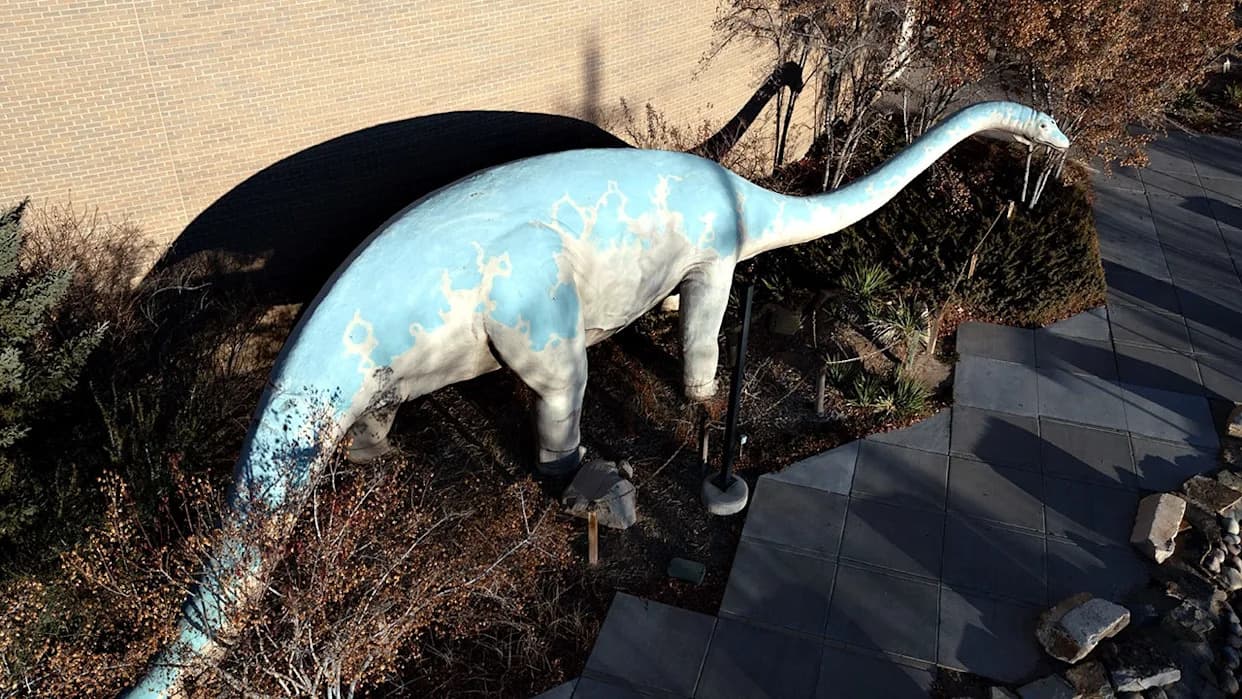
In a statement, the NPS said the bones appear to belong to a large, long-necked dinosaur, most likely a Diplodocus — a species commonly found in this particular bonebed. Between mid-September and mid-October, crews removed roughly 3,000 pounds of fossils and surrounding rock.
Scientific Work Underway
The recovered material is being cleaned and studied at the Utah Field House of Natural History State Park Museum in Vernal, Utah. The NPS noted that this bonebed had not been excavated since the original digs ended in 1924. Once paleontologists completed their work, the parking lot and road improvements resumed and the construction project was finished.
"The fossils belong to a large, long-necked dinosaur, most like Diplodocus, which is common in this bonebed," the NPS said in a statement.
Context and Related Finds
Last October, researchers reported evidence suggesting dinosaur populations were still thriving in North America just before the asteroid impact 66 million years ago. Separately, in January 2025 a nearly 70-million-year-old dinosaur fossil was discovered during a parking lot project at the Denver Museum of Nature & Science — the oldest dinosaur fossil found within Denver city limits. James Hagadorn, the museum’s Curator of Geology, called that specimen a "rare window into the ecosystem" that existed immediately before the mass extinction.
Why This Matters
Accidental exposures like this one can yield important scientific material from long-untouched bonebeds, helping paleontologists refine knowledge of species distribution, paleoecology, and the timing of events leading up to the end-Cretaceous extinction.
Help us improve.