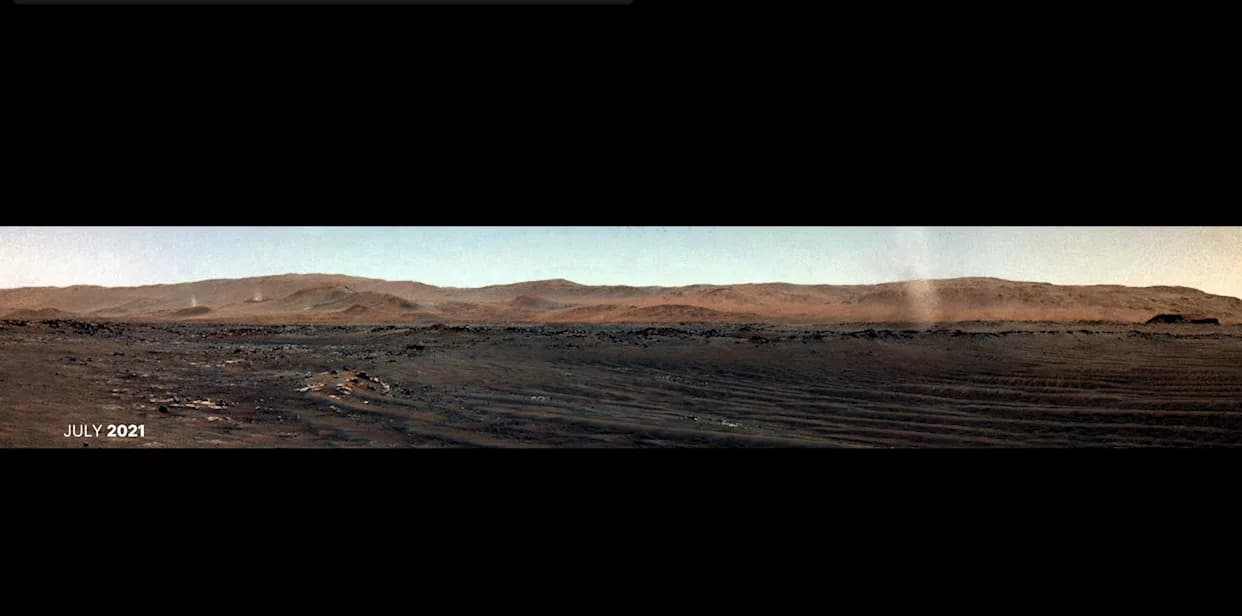
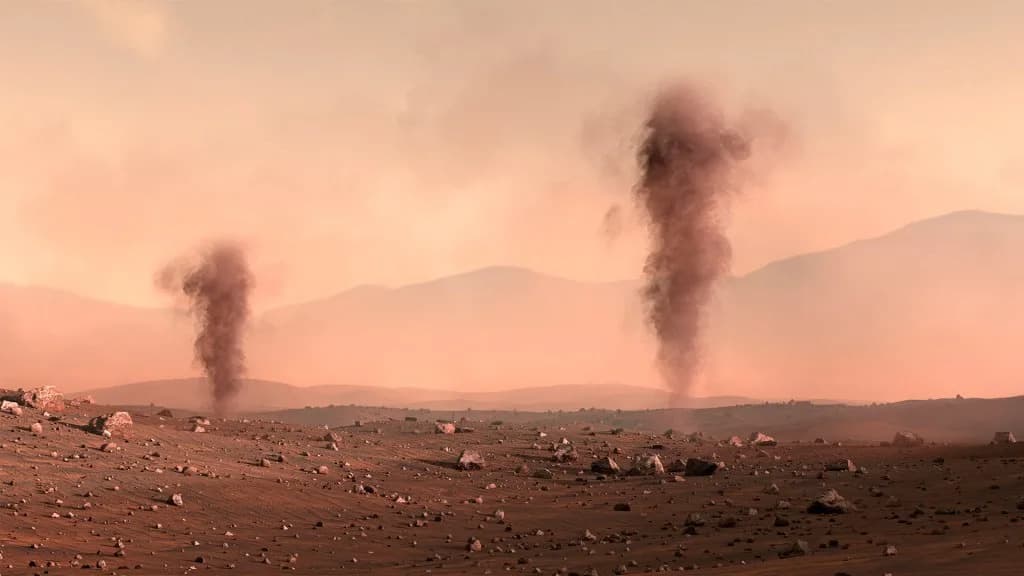
Perseverance’s mast-mounted microphone recorded 55 brief electrical discharges — described as “mini lightning” — over two Martian years, mainly during dust storms and dust devils. The tiny sparks, often occurring within about 6 feet (2 meters) of the rover, lasted seconds in dust devils and up to 30 minutes during storms. Researchers say the findings open new avenues for studying Martian chemistry and environmental hazards, though independent confirmation with dedicated instruments is still needed.
Perseverance Records 55 Instances of Tiny Lightning on Mars — ‘Mini’ Sparks Detected During Dust Storms

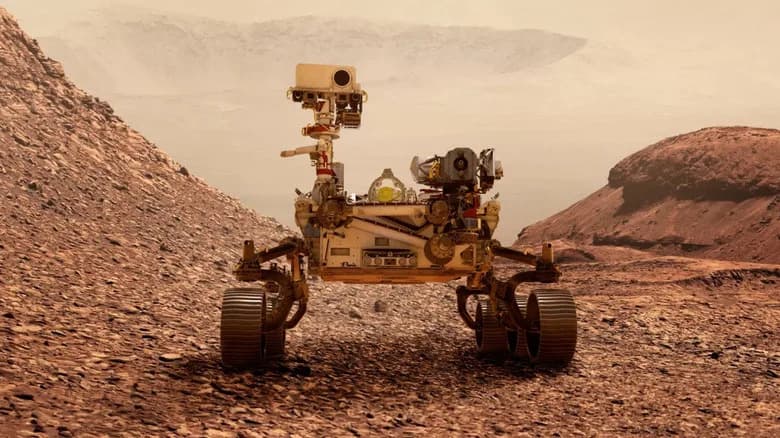
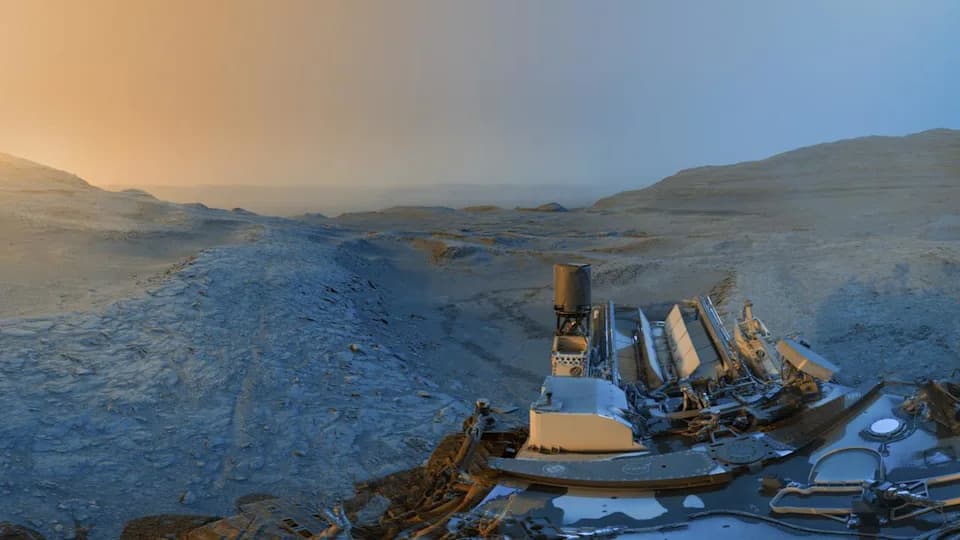
Scientists report that NASA’s Perseverance rover recorded crackling sounds interpreted as electrical discharges — what researchers are calling “mini lightning” — on Mars. The noises were captured by a microphone mounted on the rover’s mast while it monitored swirling winds and dust.
A French-led team documented 55 separate events over two Martian years, with nearly all detections occurring on the windiest sols (Martian days) and concentrated during dust storms and dust devils. The electrical arcs were extremely small — only a few inches (centimeters) across — and were recorded within roughly 6 feet (2 meters) of the mast-mounted microphone that also carries cameras and lasers used to study Martian rocks.
The tiny sparks, similar to static discharges on Earth, are audible against the background of gusting wind and dust particles striking the microphone. Researchers analyzed about 28 hours of Perseverance audio and identified episodes using both acoustic signatures and electric signals. Discharges associated with fast-moving dust devils lasted only a few seconds, while those tied to larger dust storms could persist for as long as 30 minutes.
“It opens a completely new field of investigation for Mars science,” said Baptiste Chide of the Institute for Research in Astrophysics and Planetology in Toulouse, the study’s lead author, noting the potential chemical effects that electrical discharges could produce.
“It really is a chance discovery to hear something else going on nearby, and everything points to this being Martian lightning,” wrote Daniel Mitchard of Cardiff University, who was not involved in the study. He cautioned, however, that the evidence rests on a single instrument originally intended to record rover laser zaps rather than visual lightning, and that the discharges were heard rather than seen.
Mars’ thin, carbon dioxide–rich atmosphere absorbs much of the sound energy, making many of the zaps faint or barely perceptible. The frequent contact and friction among grains of dust and sand on Mars also make electrostatic discharging and small sparks more likely than on Earth.
While lightning has been confirmed on Jupiter and Saturn, direct evidence on Mars has been elusive for decades. The newly reported detections are persuasive but not yet definitive; independent verification with purpose-built instruments would strengthen the case. Researchers note that the small, static-like discharges are unlikely to produce the kind of bolt that would endanger an astronaut planting a flag, but they could pose a hazard to sensitive electronics and instruments.
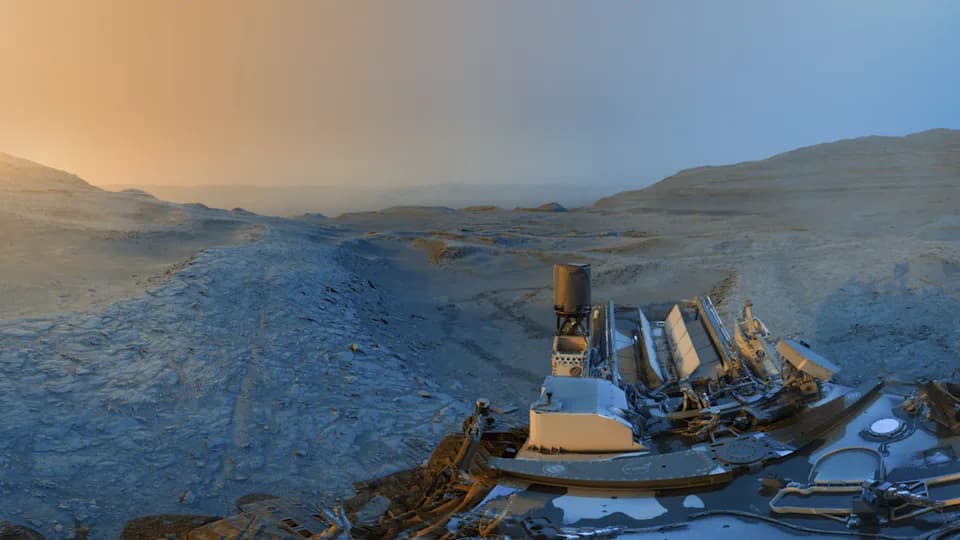
These audio recordings join other Martian sounds captured by Perseverance, including wheel motions and the sounds previously made by the Ingenuity helicopter. Perseverance has been exploring a dry river delta since 2021, collecting rock cores that may hold clues to ancient microscopic life. Plans to return those samples to Earth are currently on hold while mission planners evaluate cost-effective approaches.
Sources: Research led by Baptiste Chide; commentary by Daniel Mitchard; results discussed in an accompanying Nature article.
Help us improve.