NASA data published in Nature show that Perseverance's SuperCam microphone recorded crackling sounds from a passing dust devil that researchers interpret as electric discharges caused by triboelectric charging. Mars' thin atmosphere lowers the charge needed for sparks, making such discharges more likely than on Earth. These events could alter methane chemistry and present hazards to electronics, while highlighting the scientific value of simple instruments like microphones.
Perseverance Hears Sparks: Electric Discharges Recorded in Martian Dust Devils
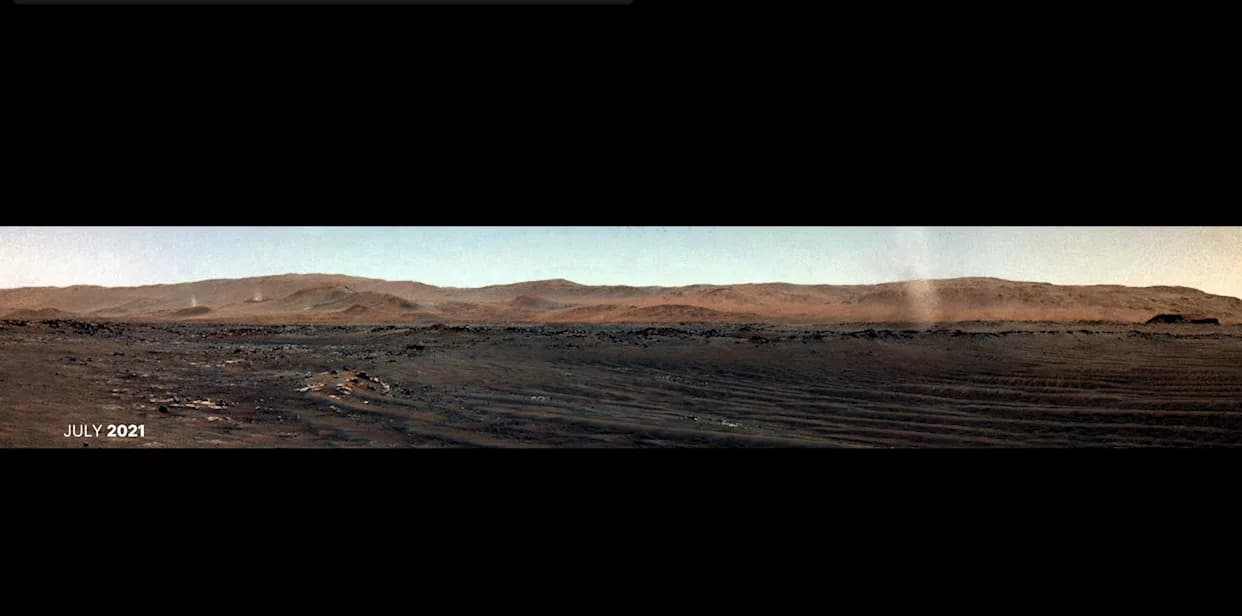
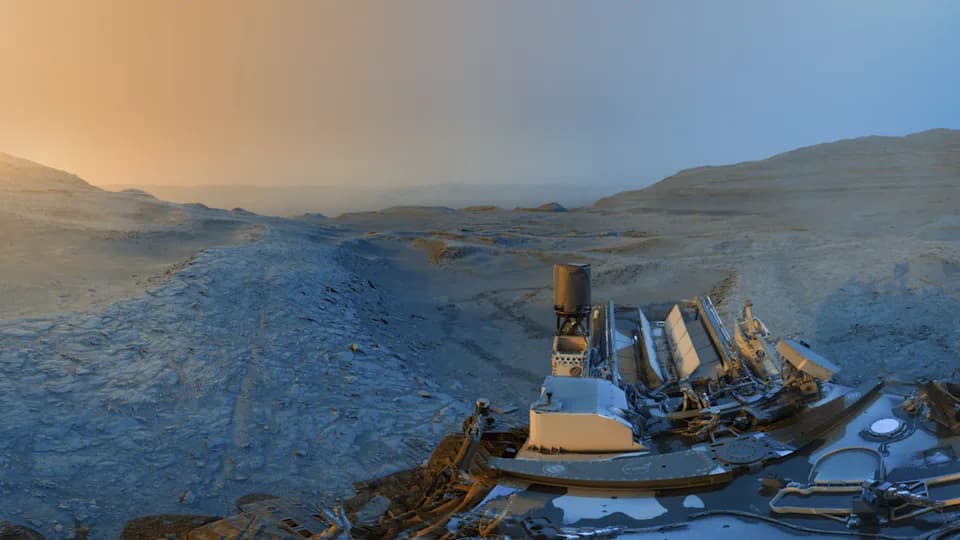
Electrical discharges turn out to be quite common inside Martian dust devils. (Credit: NASA/JPL)
A new paper published in Nature reports that NASA's Perseverance rover recorded audible signatures consistent with electric discharges inside Martian dust devils. The sounds were captured by the microphone on the rover's SuperCam instrument and analyzed by the mission team, revealing crackling consistent with small sparks generated by charged dust particles.
What the Rover Heard
The most notable audio clip was made as a dust devil swept past Perseverance, producing distinct crackling on the audio track. After detailed analysis, researchers concluded those crackles are consistent with electric discharges produced by triboelectric charging—the same basic process that creates static electricity when materials rub together.
How It Works
The triboelectric effect occurs when particles exchange charge through friction. On Earth, a thicker atmosphere makes near-surface electrical discharges comparatively rare because a larger amount of charge is needed to bridge air and form a spark. On Mars, however, the atmosphere is thinner (less than 1% of Earth's surface density), so the amount of charge required to produce a discharge is much lower. As Perseverance team member Baptiste Chide explains, "The thin atmosphere makes the phenomenon far more likely, because the amount of charge required to generate sparks is much lower than in Earth's near-surface atmosphere."
Why It Matters
These discharges have several important implications. Electrically driven chemistry could help explain unexpectedly low methane measurements on Mars if sparks break down methane molecules. At the same time, repeated electrical activity poses a potential risk to sensitive electronics, sensors, and future surface infrastructure. The finding underscores that even relatively simple instruments—such as an audio recorder—can reveal surprising and mission-critical science on other planets.
Context
Perseverance carried only the third human-made microphone sent to another world. Earlier attempts on the Mars Polar Lander (1998) and Phoenix lander (2007) failed to capture usable audio. Perseverance's successful audio recordings therefore mark a milestone in planetary exploration and enabled this unexpected discovery.
Takeaway: Sound recordings from Mars are not just curiosities—they can provide direct evidence of physical and chemical processes that affect both science and engineering on future missions.
Help us improve.