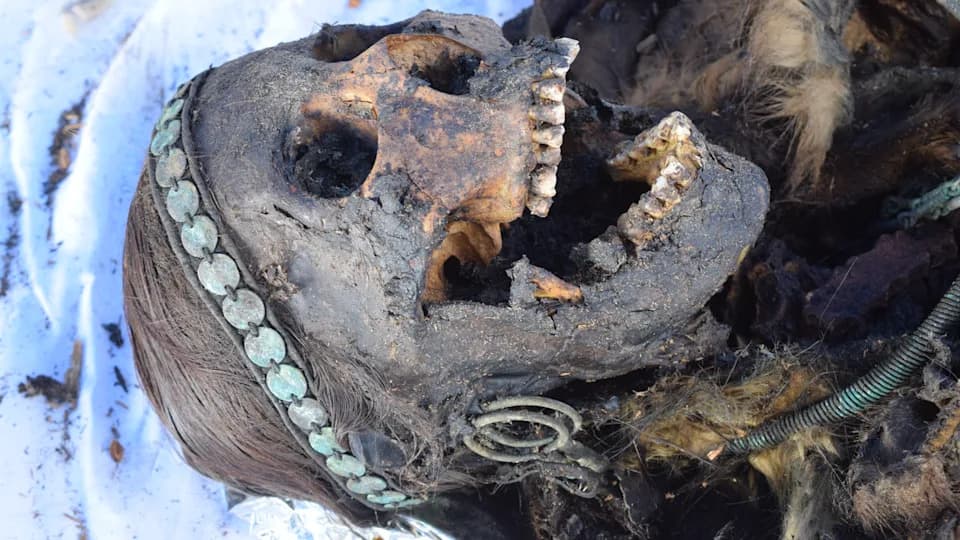
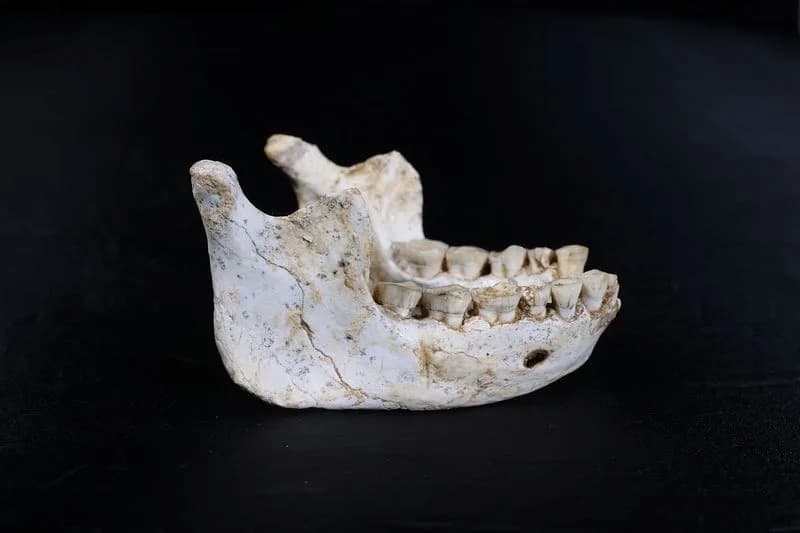
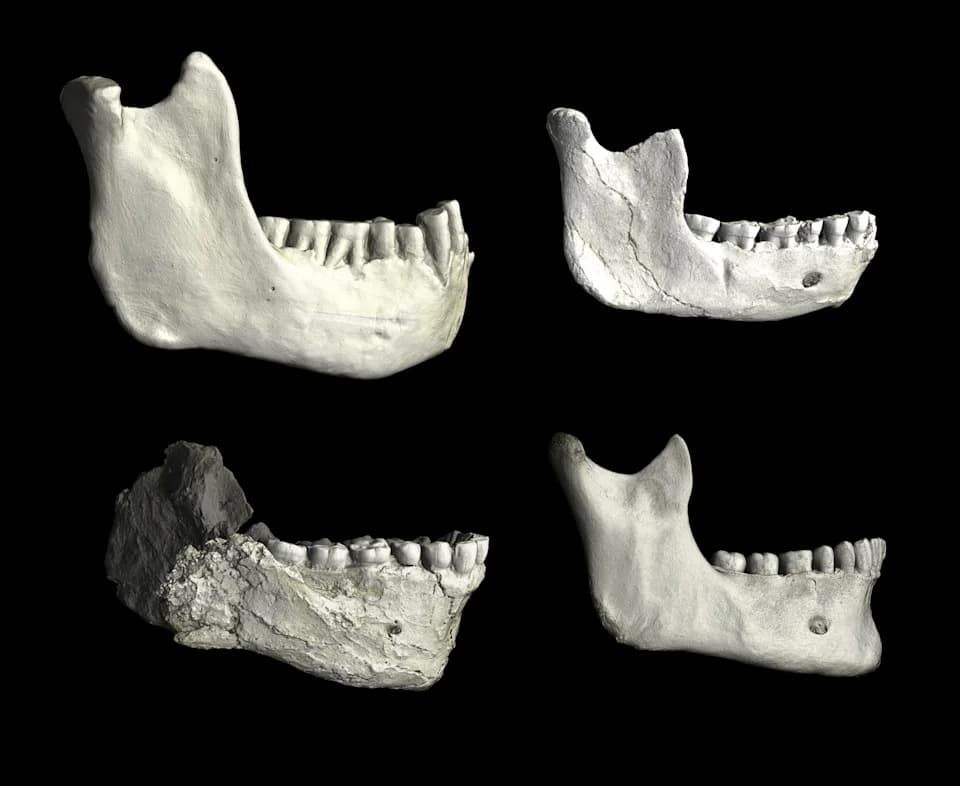
A Harvard-led team analyzed genome-wide data from 238 ancient individuals across the central Southern Cone and discovered a previously unknown human lineage that persisted for at least 8,000 years in what is now Argentina. The dataset increases regional ancient-DNA coverage more than tenfold and was evaluated alongside records spanning roughly 12,000 years. The earliest member of the lineage dates to about 8,500 years ago, and between ~4,600 and 150 years before present most sampled people trace primary ancestry to this group. Despite coexisting with other genetic groups, the data show little long-term mixing, revealing prolonged biological continuity amid cultural and linguistic diversity.
Genetic 'Ghost' in Argentina: A Lost Human Lineage Persisted for 8,000 Years

Scientists have identified DNA evidence of a previously unknown human lineage that remained genetically distinct in the central Southern Cone of South America—especially in present-day Argentina—for at least 8,000 years.
A team led by Harvard human evolutionary biologist Javier Maravall López analyzed genome-wide data from 238 ancient individuals spanning roughly 10 millennia. These new samples increase the available ancient-DNA record for the region by more than tenfold and were compared with existing ancient genomes from across the Americas to place them in a broader continental context.
Key findings
The researchers report a previously undocumented lineage whose earliest identified individual dates to about 8,500 years ago. Between roughly 4,600 and 150 years before present, most sampled individuals in the dataset derive primarily from this lineage, indicating it became the dominant ancestry component in the central Southern Cone during that interval.
During the Middle Holocene these central-Argentinian people coexisted alongside two other genetically distinct groups, but the genomic evidence shows surprisingly little long-term inter-regional mixing. A roughly 10,000-year-old genome from the Pampas indicates that populations in that area were already diverging genetically from neighboring groups elsewhere in South America.
"We found this new lineage, a group we didn't know about before, that has persisted as the main ancestry component for at least the last 8,000 years up to the present day," says Javier Maravall López.
Harvard geneticist David Reich, senior author on the study, notes that the expanded sample size will enable refined demographic reconstructions—maps of population size change and migration—similar to those available for Europe. Such reconstructions can transform our understanding of prehistoric lifeways by revealing demographic patterns that were previously invisible.
The team was struck by the contrast between deep biological continuity and rich cultural and linguistic diversity in the region. "People with the same ancestry, in an archipelago-like fashion, were developing distinctive cultures and languages while being biologically isolated," Maravall López says.
The study was published in the journal Nature. The authors expect that further analysis of this enlarged ancient-DNA dataset will yield additional insights into population relationships, migration, and social dynamics in prehistoric Argentina.
Help us improve.