
2025 brought major advances in Denisovan research. Mitochondrial DNA recovered from dental calculus and protein fragments from the Harbin "Dragon Man" skull link the specimen to Denisovans, making it the first broadly corroborated Denisovan cranium. A second high-coverage Denisovan genome from a 200,000-year-old Denisova Cave molar reveals Neanderthal admixture and ancestry from an unknown "super archaic" lineage. These findings clarify Denisovan biology and suggest more fossil and genomic breakthroughs may arrive in 2026.
How 2025 Began to Unravel the Denisovan Mystery: 'Dragon Man' and New Genomes Rewrite the Story

Genetic information from the "Dragon Man" skull has linked the fossil, found in China, to the Denisovans. - Hebei GEO University
New molecular and fossil evidence in 2025 brought a long-standing mystery of human evolution into much sharper focus: who were the Denisovans, and what did they look like? Fifteen years after a tiny finger bone first revealed this enigmatic population, researchers have linked a nearly complete skull from China to Denisovan ancestry and recovered another high-quality Denisovan genome — findings that reshape how scientists interpret archaic human diversity across Asia.
From a Finger Bone to a Face
The Denisovans were first identified in 2010 from DNA extracted from a 60,000-year-old finger bone found in Denisova Cave, Siberia. That genetic fingerprint showed an archaic human group that interbred with Homo sapiens and left traces in millions of people today, especially in Asia. Until 2025, however, no well-preserved skull had been confidently tied to them.

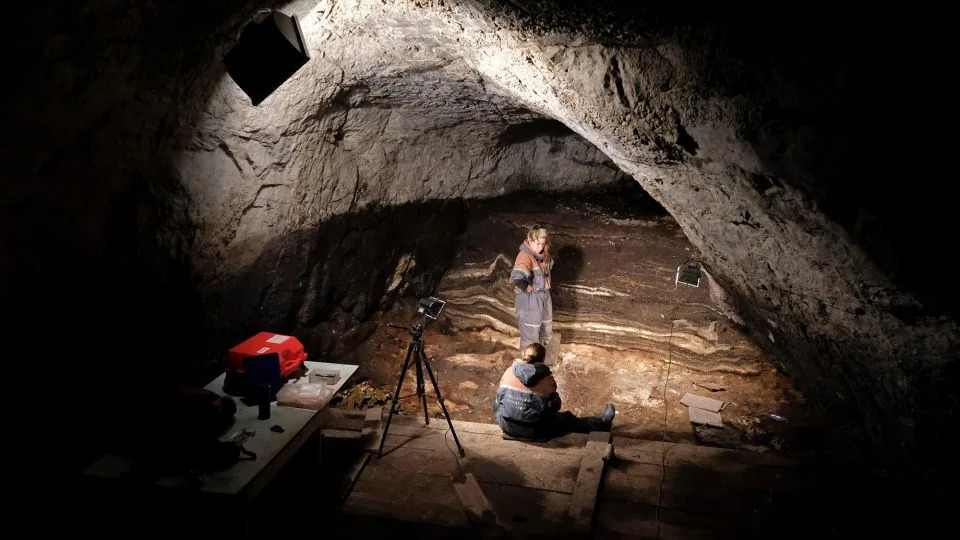
The view from Denisova Cave in the Altai Mountains of southern Siberia. - Zoonar GmbH/Alamy Stock Photo
Dragon Man: Harbin Cranium Linked to Denisovans
The Harbin skull, publicly revealed in 2018 and nicknamed "Dragon Man," was proposed as a new species, Homo longi, because of its distinctive large and robust features. The specimen, dated to roughly 146,000 years ago, resurfaced as a crucial test case: could a complete cranium be linked molecularly to Denisovans?
In June, a team led by geneticist Qiaomei Fu reported mitochondrial DNA recovered from dental calculus (hardened plaque) on the Harbin specimen and protein fragments from the petrous portion of the cranium. The mitochondrial sequences point toward Denisovan maternal ancestry, while the protein data support a Denisovan affinity for the skull. Together, these molecular lines make a compelling case that the Harbin specimen is the first broadly corroborated Denisovan cranium.
DNA extracted from a pinkie finger bone unearthed in the cave revealed the first known Denisovan. - Eddie Gerald/Alamy Stock Photo
"These molecular findings clear up some of the mystery around this population," Fu told reporters when the work was published, noting the result represents a major advance after 15 years of searching.
What the Skull Suggests About Denisovan Appearance
Paleoartists and anatomists say the Harbin skull likely reflects a face with strong brow ridges, large teeth and a lower forehead than modern humans. John Gurche, who reconstructed the face for National Geographic, emphasized that bone reveals soft-tissue relationships (brow, cheek breadth, tooth size) but cannot determine details like lips, ears or hair with certainty.
New High-Coverage Denisovan Genome From Denisova Cave
Complementing the Harbin results, researchers also reported a second high-coverage Denisovan genome, recovered from a 200,000-year-old molar excavated at Denisova Cave in 2020. This genome — the second of its quality from Denisovan material — reveals a complex ancestry: Neanderthal admixture plus contribution from an unidentified "super archaic" lineage for which no matching ancient DNA currently exists.
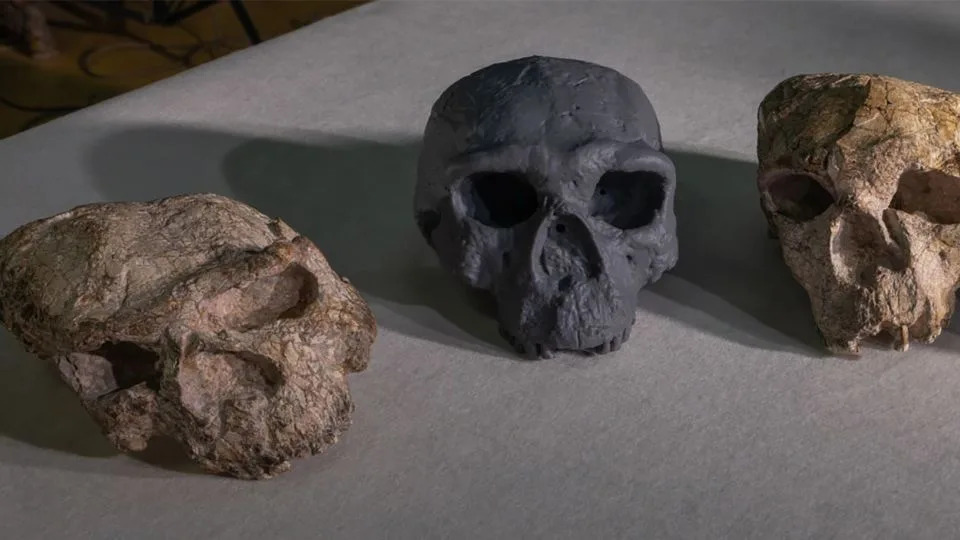
With molecular evidence now linking the Dragon Man skull to the Denisovans, it's easier for paleoanthropologists to identify other potential Denisovan remains, including these skulls unearthed in China. - Guanghui Zhao
That "ghost lineage" signal suggests Denisovans carried genetic input from older, divergent hominins (candidates include Homo erectus, Homo floresiensis, or unknown groups), highlighting how much remains to be discovered about hominin diversity in Pleistocene Asia.
Broader Context and Cautious Notes
Other fossil work is also stirring debate. A digital reconstruction of a crushed skull from Yunxian (Hubei province) suggests a lineage that may predate Dragon Man by hundreds of thousands of years; a comparative cranial analysis incorporating that reconstruction has led some researchers to propose pushing back the emergence dates for Homo sapiens and Homo neanderthalensis by roughly 400,000 years. Some experts urge caution: additional descriptions and peer-reviewed analyses of the Yunxian material are needed before timelines are revised definitively.
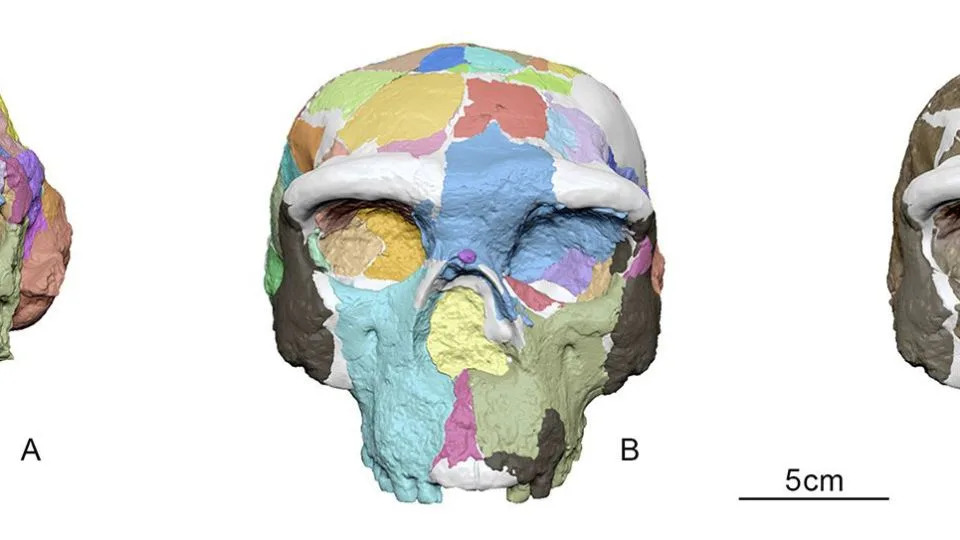
Scientists used digital techniques to reconstruct a squashed skull. - Jiannan Bai/Xijun Ni
Experts expect that linking intact skulls to Denisovan molecular signatures will make it easier to identify other Denisovan remains across Asia and that further fossils and genomes could appear in 2026 and beyond. These discoveries not only clarify Denisovan anatomy and geographic range but also illuminate how interbreeding among ancient human groups shaped modern human diversity.
What’s Next
Key open questions include the full geographic range of Denisovans, the identity of the "super archaic" contributors to their genomes, and how Denisovan biology influenced modern human traits. Ongoing excavations and new molecular techniques — including DNA from dental calculus and proteomics from dense bone — mean the next few years may produce more decisive evidence.


