The Beachy Head Woman, a Roman-era skeleton rediscovered in 2012, has been reexamined using improved ancient DNA techniques. NHM researchers find her genome most closely matches rural Roman-period Britons and modern Britons, with no evidence of recent African ancestry. Genetic markers suggest probable blue eyes, light hair, and an intermediate skin tone. The study cautions against inferring race from skull features and highlights the value—and limits—of genetic data.
Ancient DNA Rewrites Identity of the 'Beachy Head Woman' — Not Britain’s 'First Black Briton'

Ancient DNA Reveals Surprising Truth of Beachy Head Woman's Identity
A new ancient DNA study overturns earlier suggestions about the identity of the so-called "Beachy Head Woman." Researchers at the Natural History Museum (NHM) in London report that higher-quality genetic data link this Roman-era individual to local populations in Britain, rather than to recent African ancestry or the eastern Mediterranean as earlier low-coverage tests suggested.
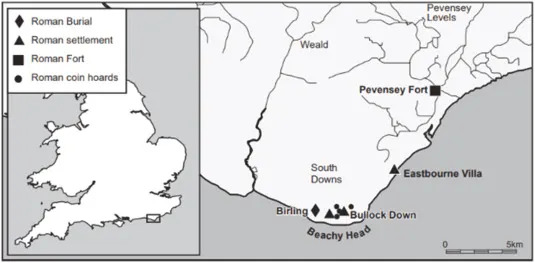
Location of Beachy Head and notable Roman sites surrounding the area. (Map produced by Sarah Lambert-Gates)
Background
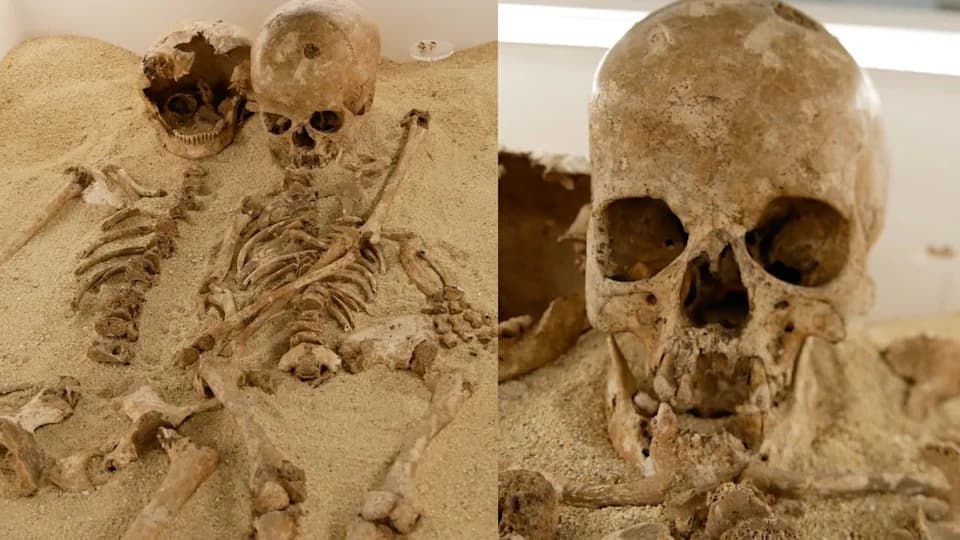
The skeleton, nicknamed the Beachy Head Woman after a box label that surfaced in 2012 reading "Beachy Head (1959)," was originally recovered from southeast England in the mid-20th century. Radiocarbon dating places her death between 129 and 311 cal CE, during Roman rule in Britain. Because of certain skull features, some researchers and media outlets previously speculated she might represent the "first black Briton" or have origins outside Britain.
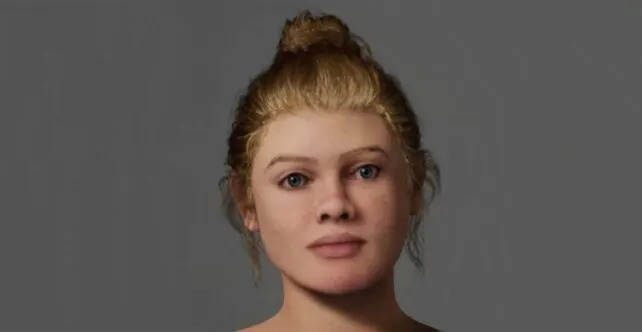
This digital image was generated from a 3D scan of Beachy Head Woman's skull. (Face Lab/Liverpool John Moores University)
What the New DNA Shows
Using improved ancient DNA recovery and recently published reference genomes, the NHM-led team obtained higher-quality genetic data from the skeleton. Their analysis finds the woman's ancestry closely matches individuals from rural Britain during the Roman period and modern Britons. The genome shows no signs of recent African ancestry.

Subscribe to ScienceAlert's free fact-checked newsletter
"By using state-of-the-art DNA techniques and newly published genomes, we were able to determine the ancestry of the Beachy Head Woman with much greater precision than before," says William Marsh, an archaeogeneticist at the Natural History Museum.
Genetic markers from the study indicate she most likely had blue eyes, light-colored hair, and a skin tone described as between pale and dark. These predictions are probabilistic and reflect common variants associated with appearance, not a photographic reconstruction.
Broader Significance
The case has sparked wider debate about how scientists and the public infer race and identity from skeletal remains. The research team emphasizes that relying solely on skull morphology to assign race or ethnicity can reinforce "outdated notions of the biological reality of race" and ignores the continuous and complex nature of human variation.
"The case of the Beachy Head Woman illustrates how erroneous assumptions based on appearance alone can be, and why genetics is a much richer and more reliable source of inquiry," the authors write. NHM anthropologist Selina Brace adds: "Our scientific knowledge and understanding is constantly evolving, and as scientists, it's our job to keep pushing for answers."
The full study is published in the Journal of Archaeological Science. While ancient DNA provides stronger evidence of ancestry than skull morphology alone, the authors note that genetic inference has limits and should be integrated with archaeological and historical context.
Help us improve.