The analysis of 122 naturally mummified Yakut individuals (14th–19th centuries) finds genetic continuity dating to the 12th–13th centuries and little evidence of large‑scale Russian admixture after 1632. Dental plaque analyses show a surprisingly stable oral microbiome across the conquest period. One late 18th‑century female shaman, UsSergue1, was buried with traditional regalia and had parents who were second‑degree relatives, a notable instance of high inbreeding. Exceptional preservation enabled close comparisons of biological and cultural data.
DNA Study Finds Long-Term Yakut Genetic Continuity — 18th‑Century Female Shaman Had Closely Related Parents
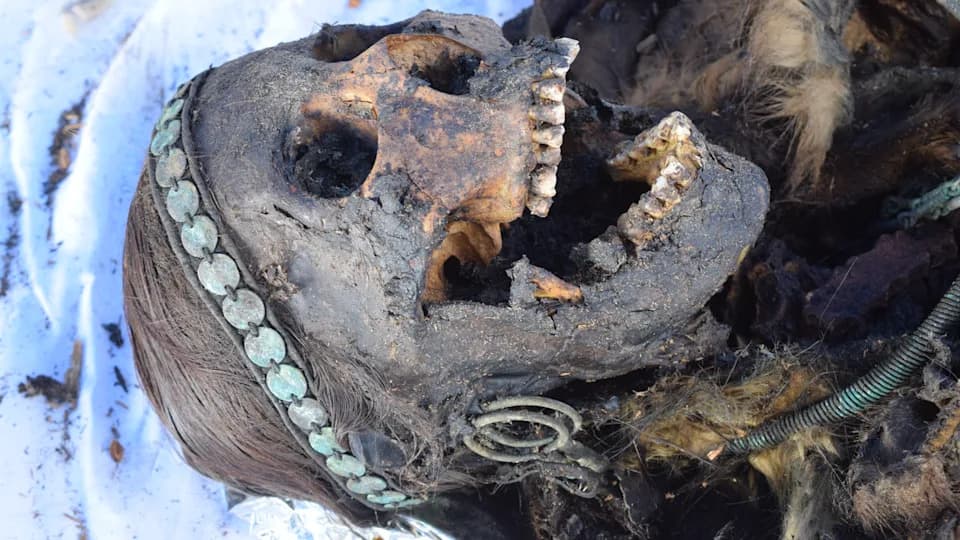
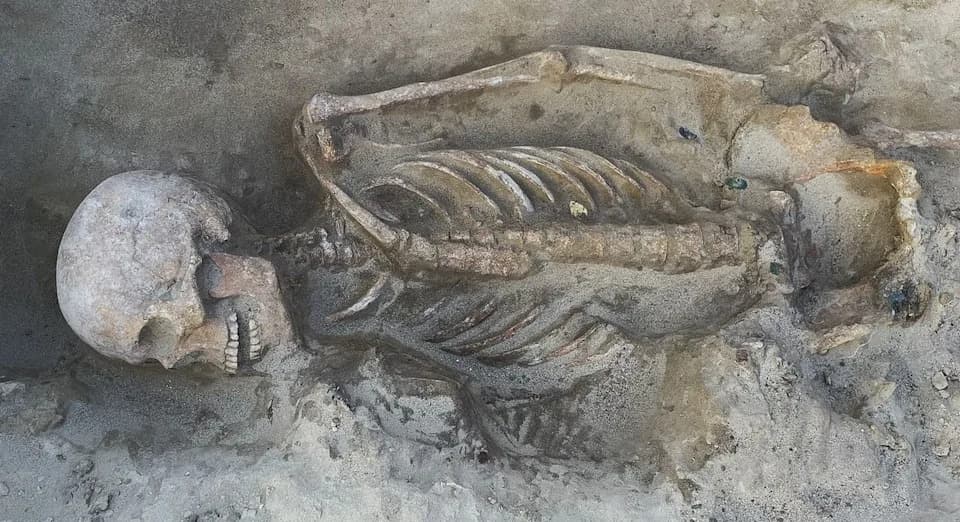
The mummified remains of UsSergue1, an 18th-century female shaman discovered in Yakutia. | Credit: © Patrice Gérard-CNRS
Archaeogenetic analysis of more than 100 naturally preserved Yakut burials from northeastern Siberia reveals striking continuity in ancestry, a stable oral microbiome across centuries, and evidence that traditional shamanic practices persisted well into the late 18th century. One notable individual, a female shaman labeled UsSergue1, was buried with rich ritual goods and was found to have parents who were second-degree relatives.
images of artifacts preserved in permafrost
Study and Methods
Over nearly 16 years of excavation, researchers recovered 122 individuals from four regions across Yakutia (the Sakha Republic), with burials dated between the 14th and 19th centuries. The team combined ancient DNA sequencing, dental plaque (oral microbiome) analysis, and careful archaeological context to test whether Russia's conquest of Siberia — begun in the 17th century — produced major demographic replacement, admixture, or cultural disruption among the Yakuts.
images of artifacts preserved in permafrost
Key Findings
The genetic data place the origins of modern Yakut ancestry around the 12th to 13th centuries, corroborating Yakut oral histories. Contrary to patterns commonly seen in colonial encounters, the researchers found little evidence of large-scale population decline or extensive genetic mixing with Russians after the conquest that began in 1632. The authors suggest that extreme climate and logistical difficulties limited large-scale settlement and demographic replacement.
images of artifacts preserved in permafrost
Analysis of dental plaque sampled from the mummified remains showed that the oral microbiome remained remarkably stable across the centuries covered by the study. Despite the introduction of new foods and substances (for example, barley, rye and tobacco) during the colonial period, the preserved microbial communities showed limited detectable change.

images of artifacts preserved in permafrost
UsSergue1: An 18th‑Century Female Shaman
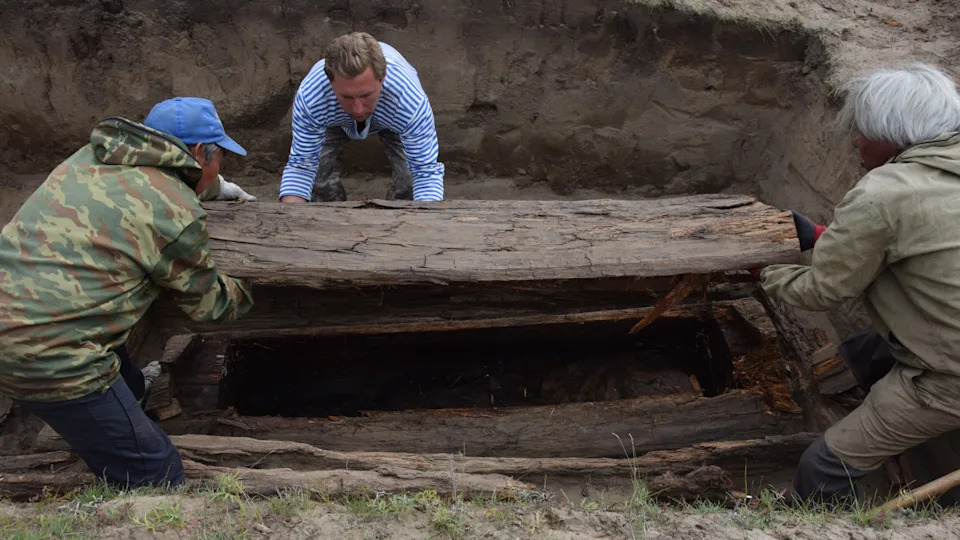
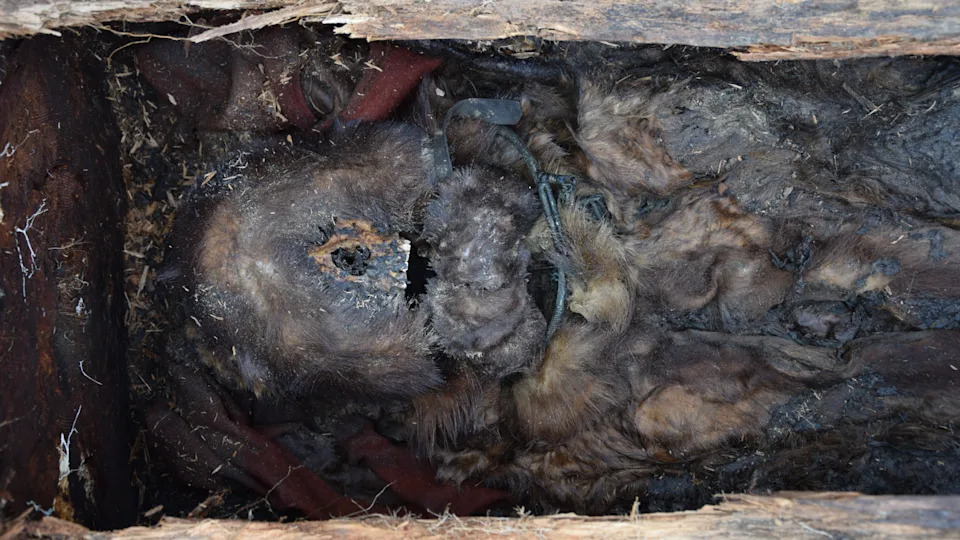
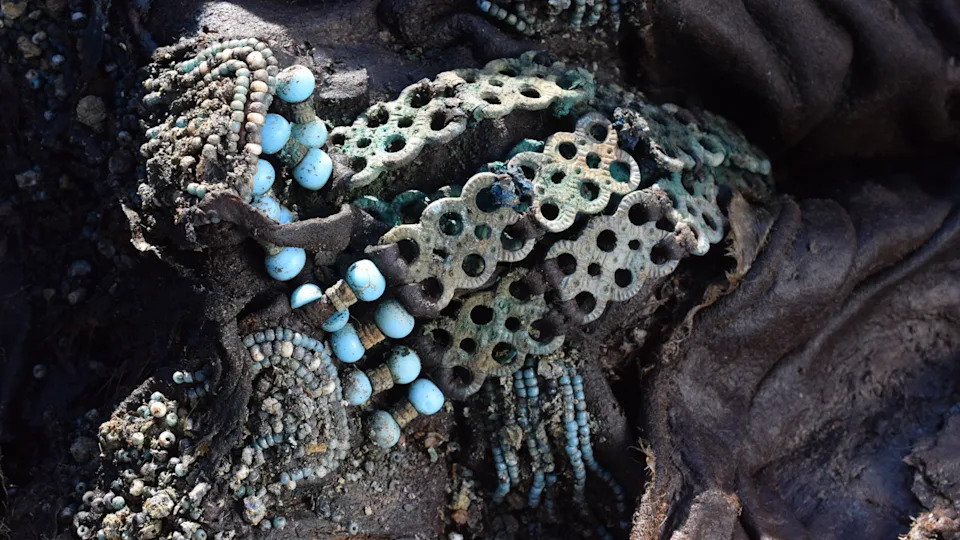
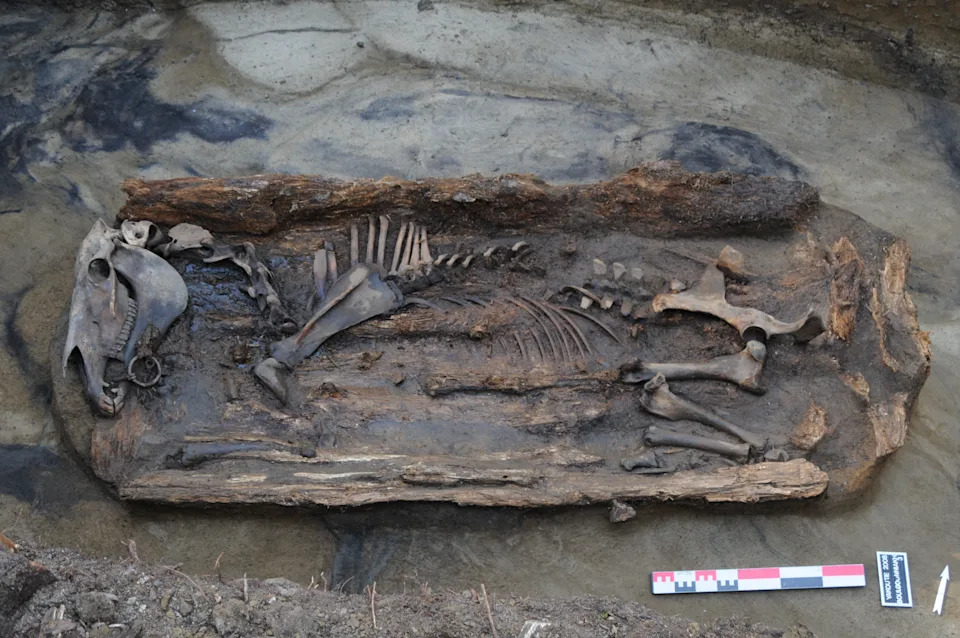
One standout burial, designated UsSergue1, dates to the late 18th century and represents a woman in her 30s interred in a tree‑trunk coffin. She was wrapped in multiple layers of clothing, including a red woolen dress fashioned from imported blankets, a traditional Yakut ushanka hat, and leather thigh‑high leg warmers. Excavators also recovered shamanic accoutrements such as a so‑called bride's belt, beaded accessories and associated horse remains — one horse bearing decorative motifs matching the woman’s clothing — reinforcing an interpretation of ritual or clan‑linked burial practice.

images of artifacts preserved in permafrost
Genetic kinship analysis indicates that UsSergue1's parents were second‑degree relatives, which could correspond to half‑siblings, an uncle/niece or aunt/nephew pairing, or a grandparent and grandchild. The authors emphasize they cannot resolve the exact relationship or whether such a union was socially exceptional. While multiple related individuals were buried near one another across the cemeteries, UsSergue1 was the most highly inbred individual identified and was associated with an influential clan and late shamanic practices.
images of artifacts preserved in permafrost
Significance and Open Questions
Yakutia’s cold environment produced exceptional preservation, allowing rare integration of biological, cultural and microbiological data. As Éric Crubézy (CNRS) noted, the bodies were so intact that autopsies were possible and clothing and jewelry survived in detail. Together the genetic, archaeological and paleomicrobiological evidence paints a picture of substantial continuity in Yakut ancestry and many cultural traditions despite political and religious pressures during and after Russian expansion.
At the same time, questions remain about social norms, clan structure and the meaning of close‑kin unions in historic Yakut society. The authors call for additional research combining genetics, funerary context and ethnography to better understand how family networks and spiritual roles intersected.
Publication: The study was published in Nature on Jan. 7 and reports new archaeogenetic and paleomicrobiological evidence from Yakutia spanning the 14th–19th centuries.
Help us improve.