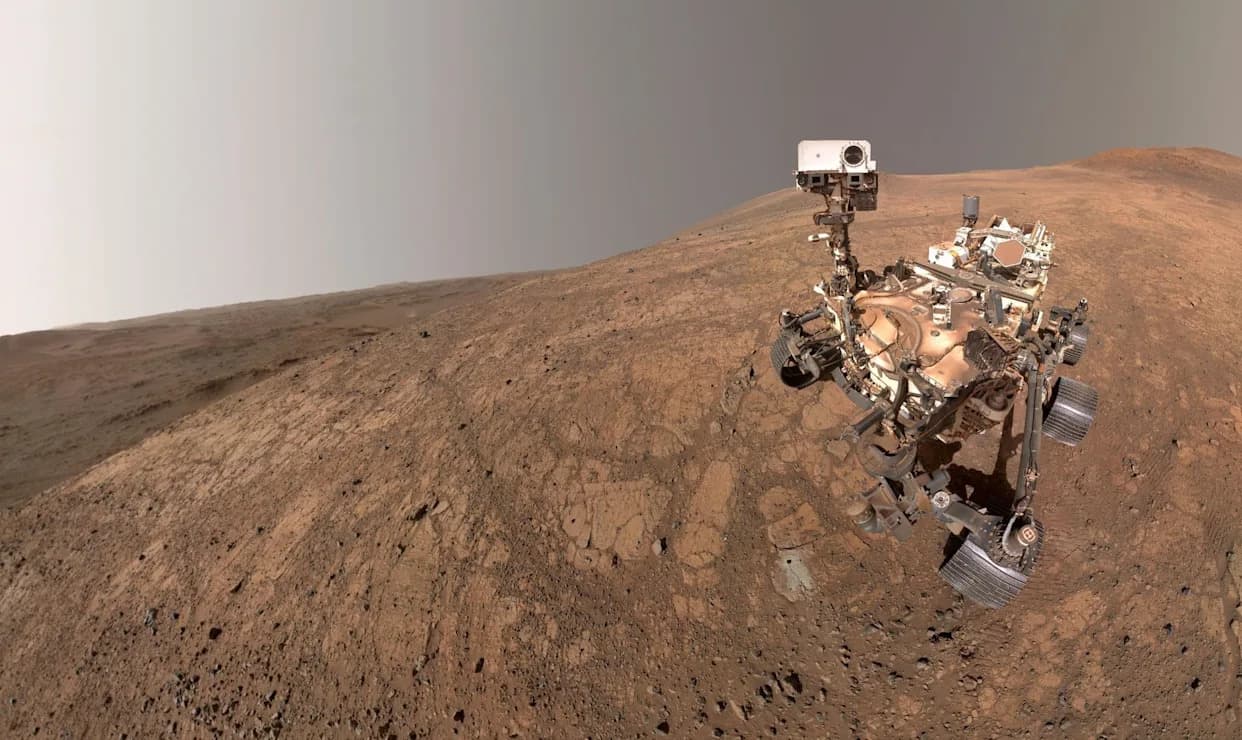
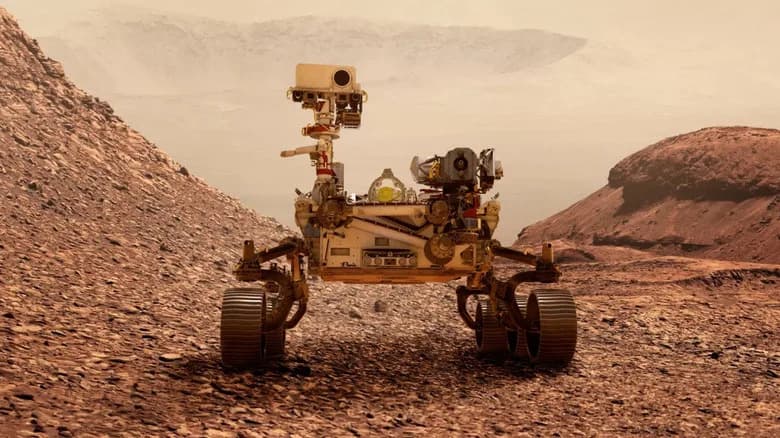
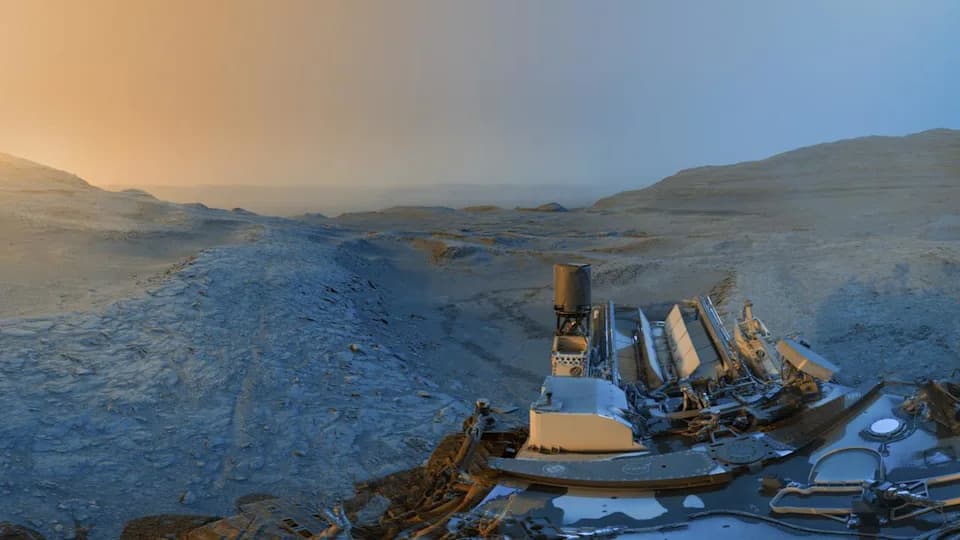
Perseverance discovered a metal-rich boulder named Phippsaksla in Jezero Crater on Sept. 19 (Sol 1,629). Analyses reveal elevated iron and nickel, indicating the rock is likely an iron‑nickel meteorite that landed on Mars long ago. The public announcement was delayed by a U.S. government shutdown and was released on Nov. 13. This find adds to prior meteorite detections by Mars rovers and helps scientists compare in-situ and Earth‑recovered Martian samples.
Perseverance Finds Metal‑Rich Boulder on Mars — Likely an Iron‑Nickel Meteorite

NASA's Perseverance rover has identified a distinctive, metal-rich boulder in Jezero Crater that appears compositionally different from nearby Martian rocks and is most likely an iron‑nickel meteorite.
Discovery in Vernodden
On Sept. 19 (Sol 1,629), while exploring an area nicknamed "Vernodden," Perseverance came across a lumpy, high-standing boulder about 31 inches (80 cm) across. The team has given the object the name Phippsaksla because its sculpted profile contrasts sharply with the low-lying, fragmented stones around it.
Composition and likely origin
Mission analyses show elevated concentrations of iron and nickel — an elemental signature that is uncommon in typical Martian bedrock but characteristic of iron‑nickel meteorites. That composition, together with the rock's uncommon appearance, supports the conclusion that Phippsaksla originated elsewhere in the solar system and later landed on Mars. Scientists estimate it may have been on the Red Planet for millions or even billions of years.
"This rock was identified as a target of interest based on its sculpted, high-standing appearance that differed from that of the low-lying, flat and fragmented surrounding rocks," said Candice Bedford, a geochemist and mineralogist in Purdue University's planetary science program.
Context within Mars exploration
Other rovers on Mars — Spirit, Opportunity and Curiosity — have also reported iron‑nickel meteorites during their missions; Curiosity remains active today. Given Jezero's geology and age, researchers were somewhat surprised Perseverance had not yet encountered similar meteorites until the discovery of Phippsaksla.
Announcement and mission continuity
The team identified the likely meteorite about two months before making the finding public. The formal internal statement was prepared on Oct. 1 but its release was delayed by a recent U.S. government shutdown; NASA issued the public announcement on Nov. 13 after operations resumed. Throughout the shutdown, Perseverance and other mission-critical systems remained operational.
Why this matters
While iron‑nickel meteorites are relatively uncommon on Mars, Earth has received many rocks ejected from Mars by ancient impacts. Martian meteorites recovered on Earth provide valuable, directly accessible samples that complement in-situ studies conducted by Perseverance. A 2024 study estimated that roughly 200 Martian meteorites recovered on Earth likely originated from only five impact craters, and high-profile meteorite finds continue to attract both scientific and public interest.
Help us improve.