Researchers used a nondestructive neutron-based CT method to map water inside the Martian meteorite NWA 7034 ("Black Beauty"). The 320 g rock contains roughly 0.6% water by mass, mainly trapped in hydrogen-rich iron oxyhydroxide clasts. Dated to at least 4.44 billion years and likely linked to the Karratha crater, Black Beauty offers direct clues to Mars’ wet early history and remains a vital sample while Mars sample-return plans are uncertain.
New Neutron Scans Reveal 'Black Beauty' Meteorite Holds Ancient Water — About 0.6% By Mass
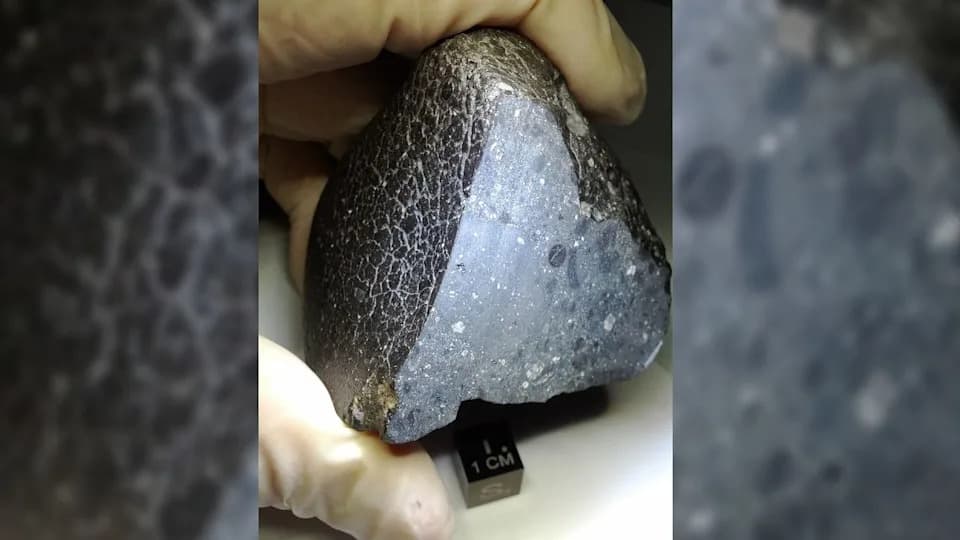
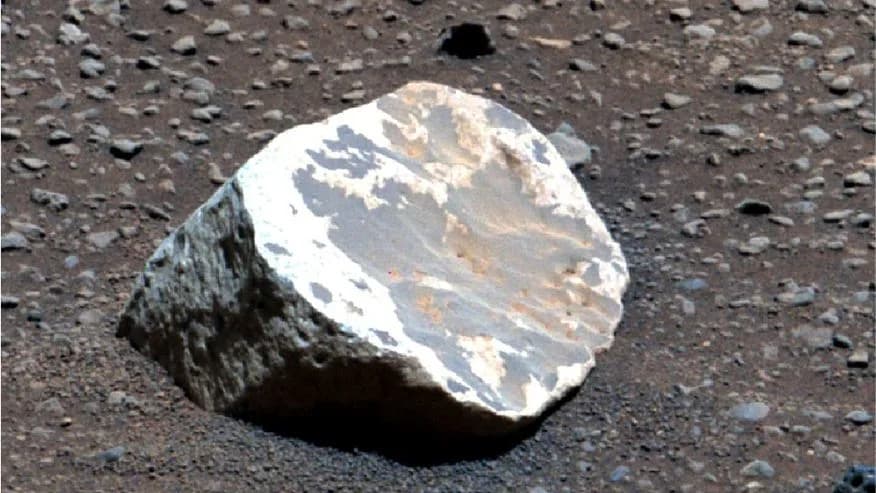
NWA 7034, a.k.a. "Black Beauty," is a roughly 11-ounce (320 grams) and exceptionally dark meteorite that originated on Mars. | Credit: NASA
A new nondestructive neutron-scanning study has mapped microscopic pockets of ancient water inside NWA 7034 — the famed Martian meteorite nicknamed "Black Beauty." The work gives researchers a clearer picture of where Martian water was stored early in the planet's history and preserves the rock for further study without chipping away precious samples.
What Was Studied
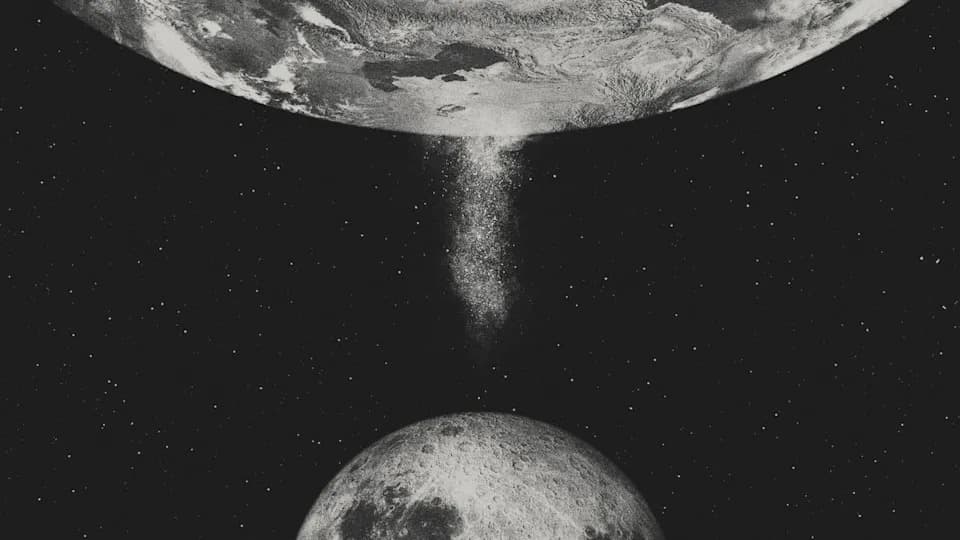
Black Beauty is a roughly 320-gram (11-ounce) fragment of Martian crust discovered in Morocco in 2011. Radiometric dating places its age at at least 4.44 billion years, making it the oldest known Martian meteorite. Researchers link the specimen to the ~6-mile (10 km) Karratha crater near Mars’ equator; impact ejecta from that event likely launched the rock into space an estimated 5–10 million years ago.
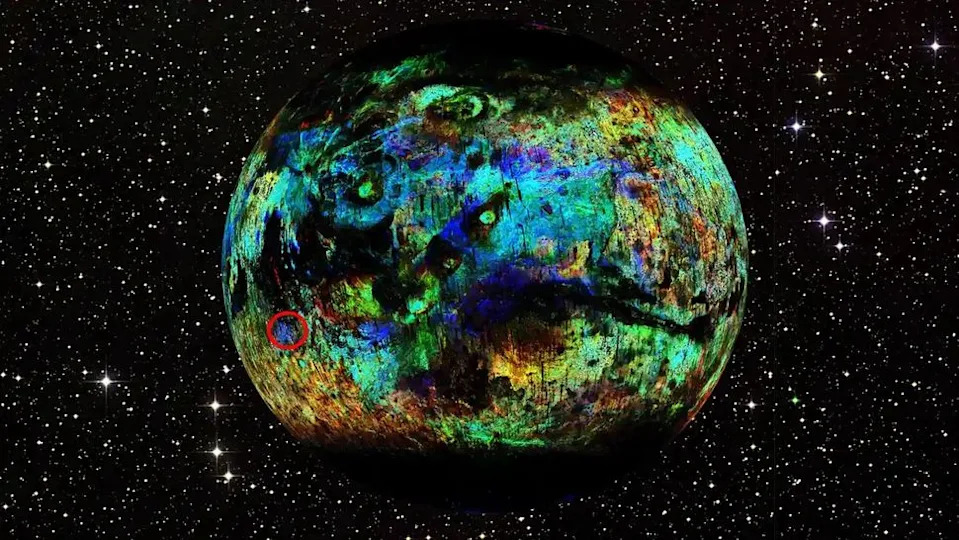
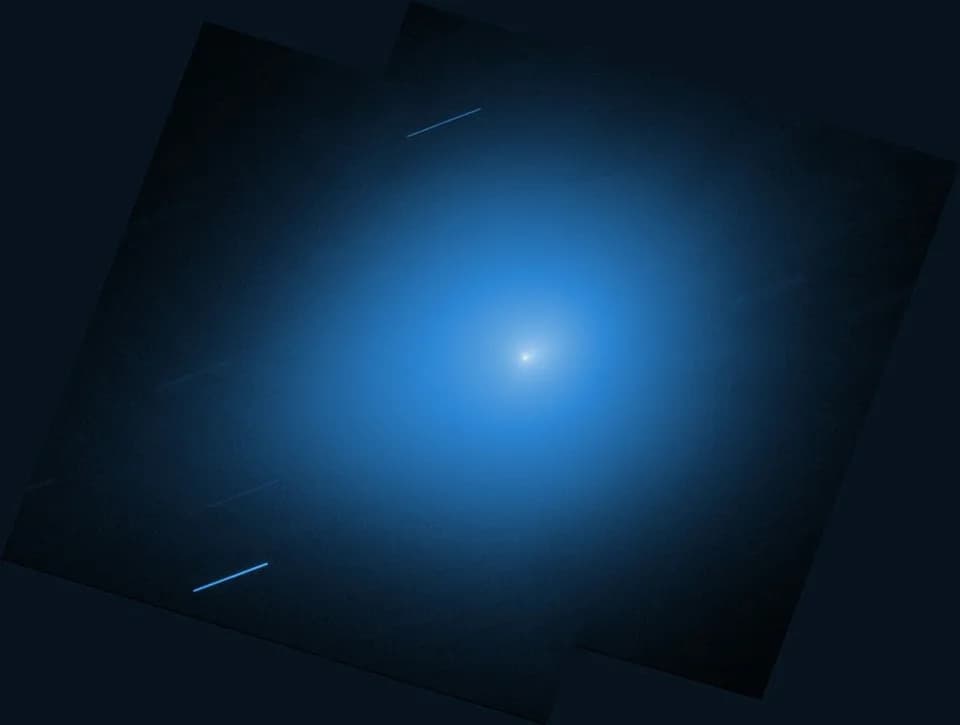
Researchers previously traced Black Beauty to the Karratha crater in Mars' southern hemisphere. | Credit: Curtin University
New Method — Neutron CT-Style Scanning
Instead of traditional X-ray CT, the research team used neutron-based tomography to probe the meteorite. Neutrons interact strongly with hydrogen atoms, so this technique is especially sensitive to water or hydrogen-bearing minerals even inside very dense samples. Crucially, the method is nondestructive, allowing a full internal map of water distribution without removing or destroying fragments.
Key Findings
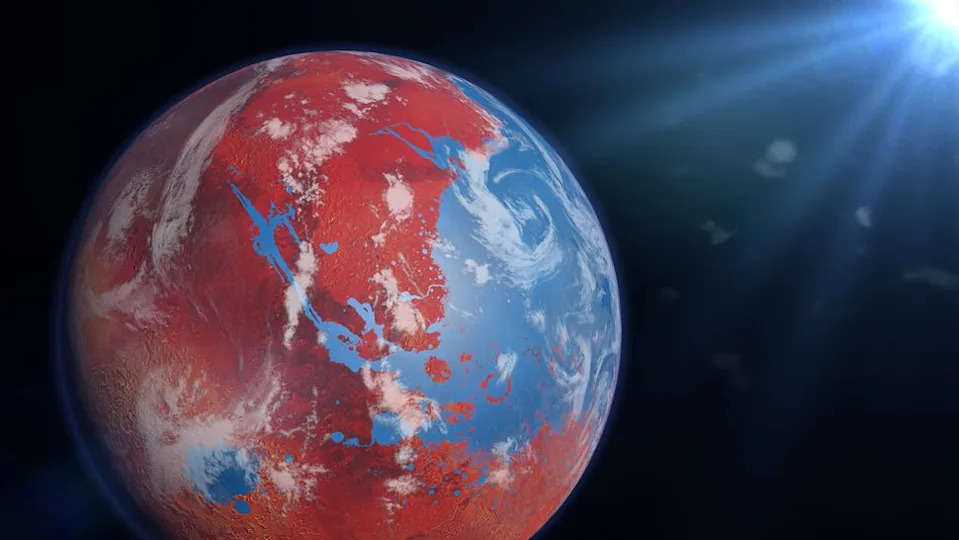
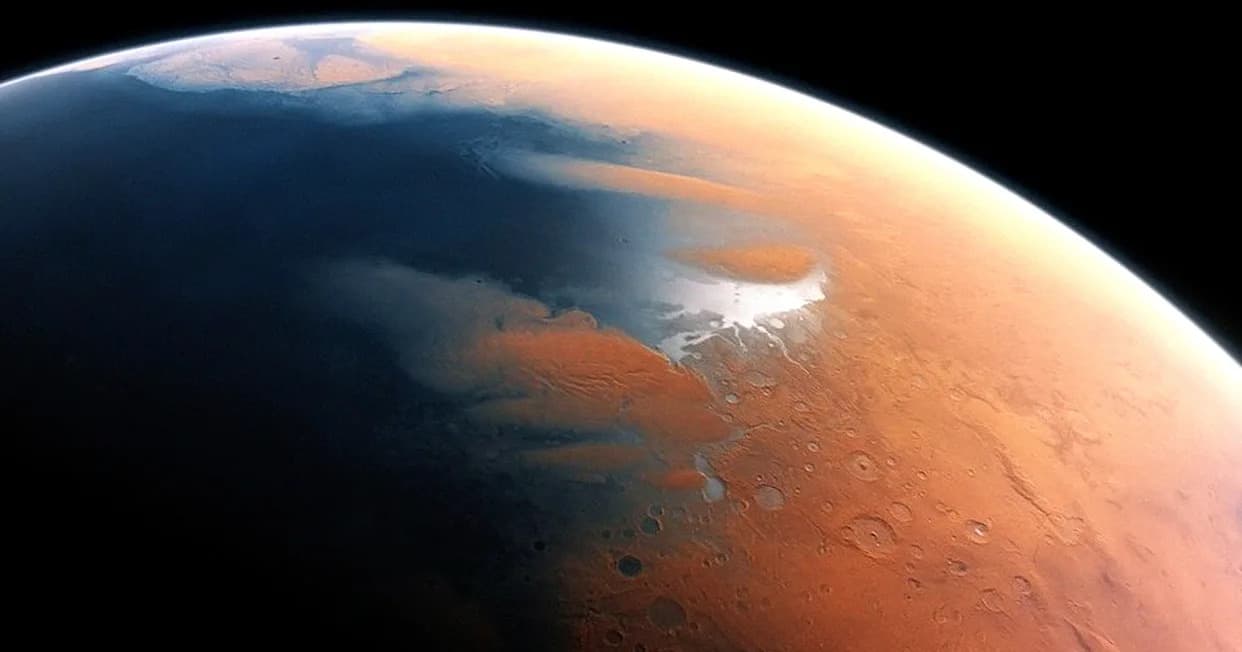
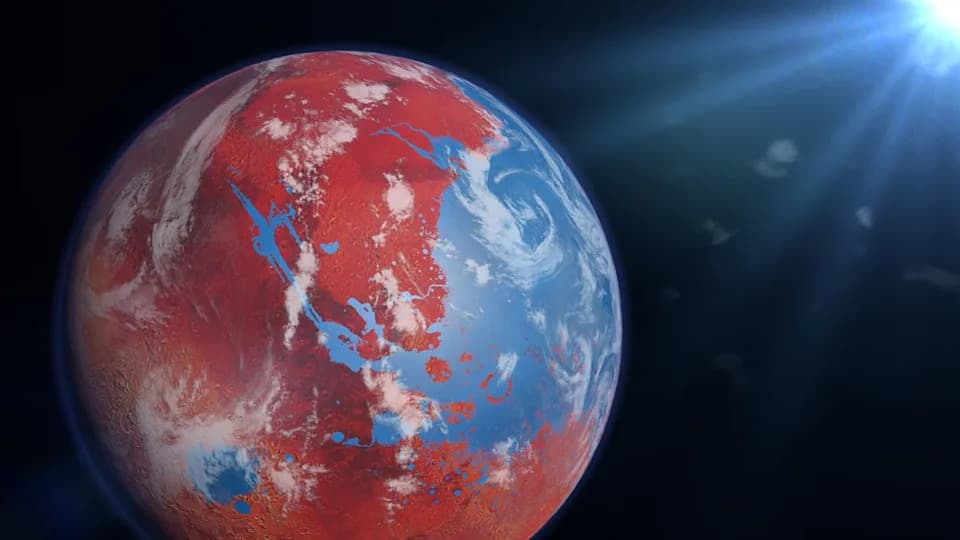
Research suggests that Mars was once home to large Earth-like oceans, raising hopes it once supported extraterrestrial life. | Credit: Getty Images
The scans indicate that water makes up roughly 0.6% of Black Beauty's mass — roughly the volume of a human fingernail in the 320 g rock — a substantially higher concentration than earlier estimates. Most of that water is locked within tiny clasts of a hydrogen-rich iron oxyhydroxide (FeHO2), a mineral related to rust that forms when iron and water react under high pressure (for example, during impact events).
Why This Matters
Black Beauty’s exceptional age and its preserved water signatures offer direct evidence about Mars’ early hydrology. The presence of hydrogen-rich minerals that may have been heated suggests the meteorite sampled environments where warm water existed — conditions potentially hospitable to microbial life in Mars’ distant past. The findings also add to a growing body of evidence that Mars was substantially wetter billions of years ago, with much of that water later lost to space or sequestered as ice and subsurface reservoirs.
Context and Next Steps
The new study was posted to the preprint server arXiv and has been discussed in outlets such as Universe Today and Space.com. A demonstration video of the neutron scanning process is available from the research team. With the future of large-scale Mars sample-return planning under debate, meteorites like Black Beauty remain uniquely valuable for laboratory analysis. Researchers say further nondestructive studies and targeted destructive analyses of select small fragments will help clarify the rock’s full history and the role of water on early Mars.
Bottom line: Nondestructive neutron tomography reveals that Black Beauty contains more ancient water than previously estimated — concentrated in hydrogen-rich iron oxyhydroxide clasts — strengthening evidence that early Mars hosted warm, water-rich environments.
Help us improve.