Perseverance has found thousands of bleached, kaolinite-rich rocks across Jezero Crater, strengthening evidence that ancient Mars experienced prolonged liquid water and possibly sustained rainfall. Chemical comparisons with Earth deposits in Southern California and South Africa support a rainfall-driven weathering origin rather than volcanic or hydrothermal formation. The main open question is the rocks' source—nearest candidate deposits lie about 1.2 miles (2 km) away, and the fragments may have been transported by rivers or impacts.
Bleached Martian Rocks Containing Kaolinite Strengthen Case for a Warmer, Rainier Ancient Mars
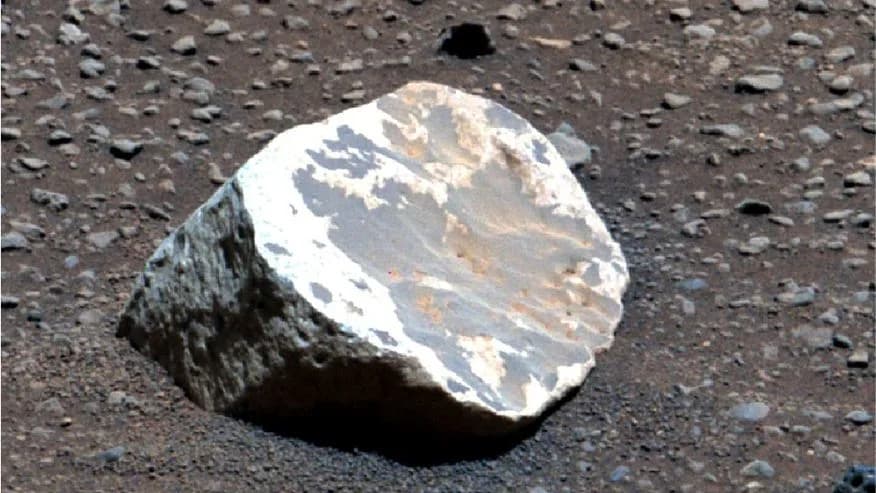
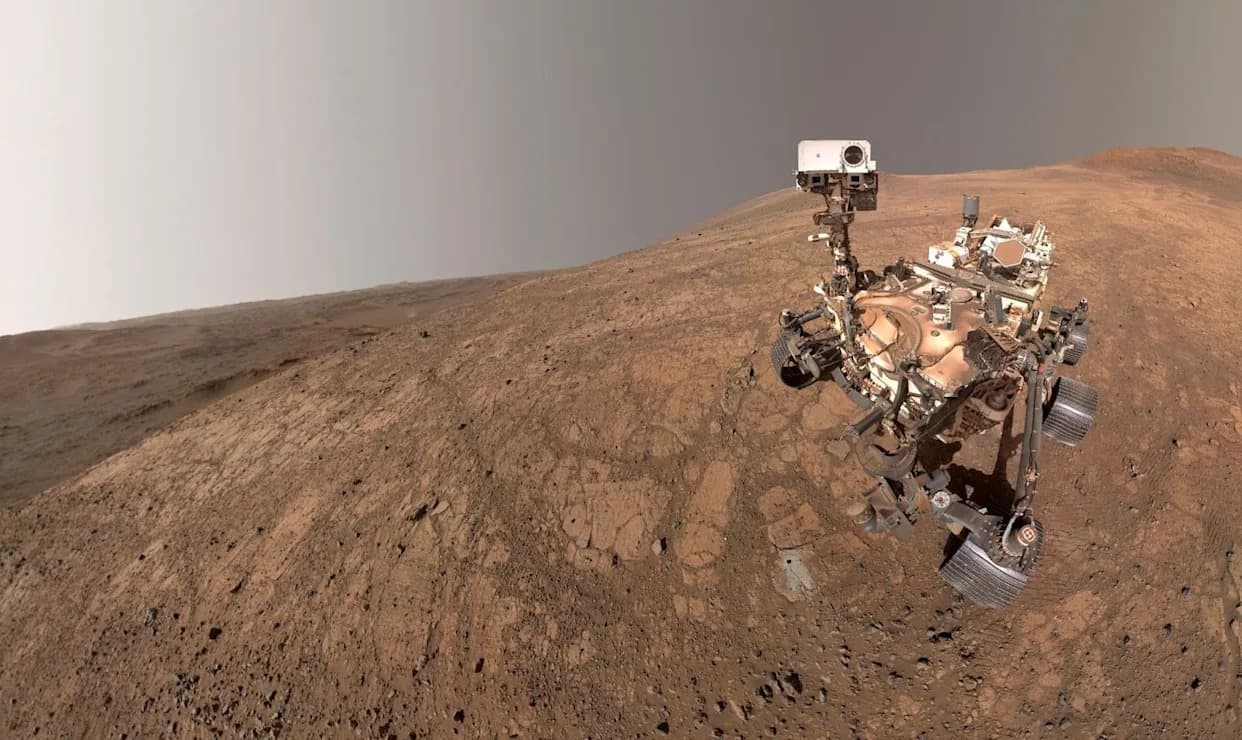
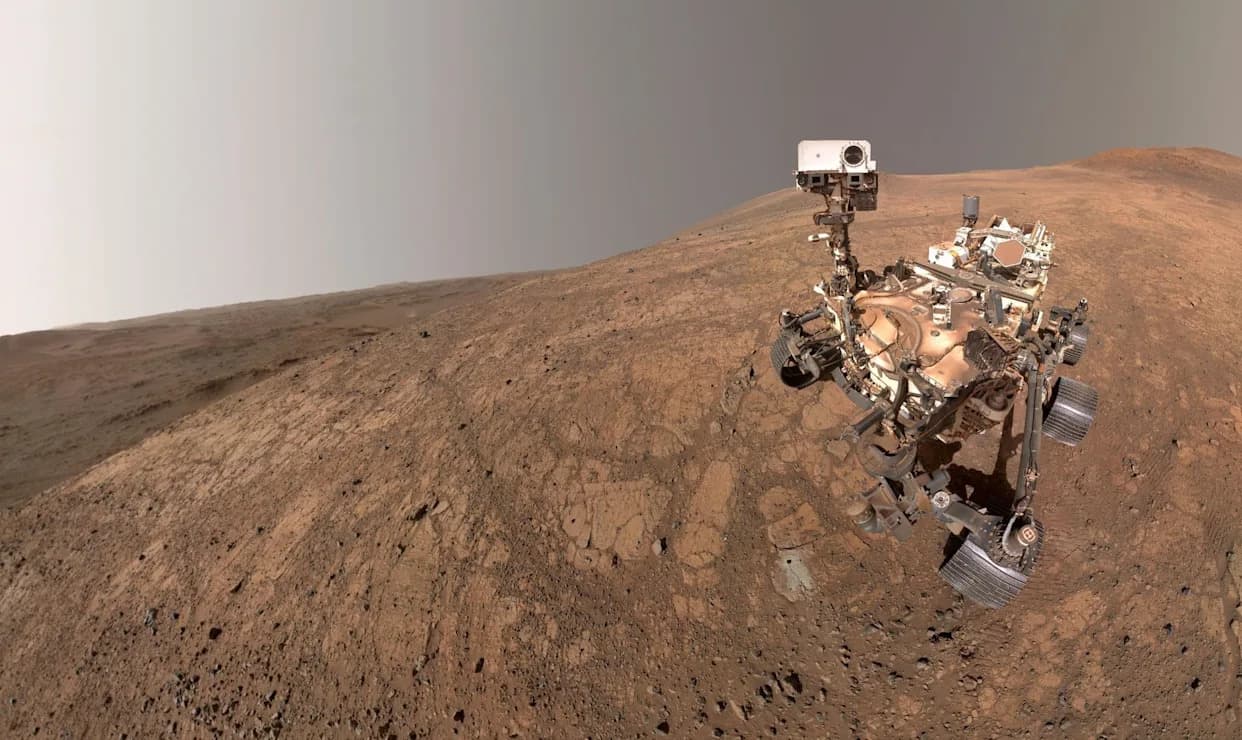
Bleached, clay-rich rocks spotted by NASA's Perseverance rover offer fresh evidence that Mars may have had rain and a warmer, wetter climate billions of years ago. | Credit: NASA
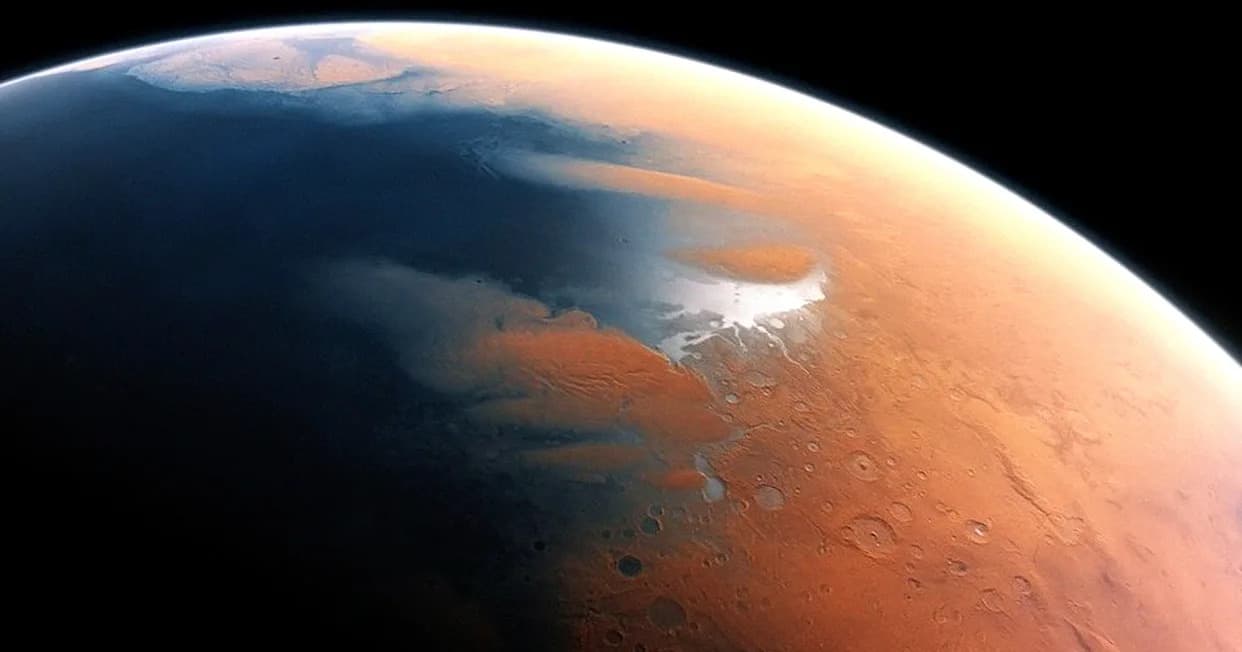
NASA's Perseverance rover has identified thousands of unusually bleached rocks in Jezero Crater that are rich in the clay mineral kaolinite, offering new evidence that Mars was once warmer, wetter and potentially subject to rainfall for long periods.
Kaolinite is a soft, white clay that on Earth typically forms when water slowly leaches elements from bedrock over thousands to millions of years. It is most commonly associated with warm, humid environments—such as tropical and subtropical settings—where frequent precipitation drives intense chemical weathering.
"All life uses water," said Adrian Broz, a postdoctoral researcher at Purdue University and lead author of the study. "So when we think about the possibility of these rocks on Mars representing a rainfall-driven environment, that is a really incredible, habitable place where life could have thrived if it were ever on Mars."
"You need so much water that we think these could be evidence of an ancient warmer and wetter climate where there was rain falling for millions of years," added Briony Horgan, professor of planetary science at Purdue University and a long-term planner for the Perseverance mission.
Perseverance recorded several thousand kaolinite-bearing fragments—ranging from small pebbles to large boulders—scattered across the floor of Jezero Crater, the dry, bowl-shaped depression near Mars' equator that likely hosted a lake billions of years ago. Since its 2021 landing, the rover has mapped and sampled the crater floor and in late 2024 climbed the inner wall to investigate rim terrains.
How the Team Reached Its Conclusion
To test possible formation scenarios, Broz and colleagues compared Perseverance's in situ observations with known kaolinite deposits on Earth, using published datasets from Southern California and South Africa. The chemical fingerprints and mineralogical signatures matched closely, supporting the interpretation that the Martian kaolinite formed through prolonged, rainfall-driven chemical weathering rather than from volcanic or hydrothermal activity.
An Unresolved Mystery: Where Did the Rocks Come From?
Despite the clear weathering signal, the study reports no obvious nearby bedrock source within the immediate crater floor. The nearest plausible origin appears to be about 1.2 miles (2 kilometers) away, where orbital data indicate large fractured blocks with kaolinite signatures—likely exposed by ancient impacts. Researchers also point to segments of Neretva Vallis, a now-dry channel that once fed into Jezero Crater, as a potential transport route.
"They're clearly recording an incredible water event, but where did they come from?" Horgan said. The team suggests the fragments may have been transported into the crater by ancient river flow or deposited by impact-related processes, but the exact provenance remains uncertain.
The findings are detailed in a paper published in December 2025 in the journal Nature Communications Earth & Environment. Continued rover mapping, sample analysis, and comparison with orbital data will help clarify the rocks' origins and refine our understanding of Mars' ancient climate.
Help us improve.