Archaeologists report mammoth-ivory and stone tools from a 14,000-year-old layer at the Holzman site in Alaska's middle Tanana Valley. The finds include an almost intact female mammoth tusk and, in a 13,700-year layer, a quartz-rich workshop with the earliest-known ivory rod tools in the Americas. The artifacts resemble Clovis-era technology and may link eastern Beringian hunters to later North American populations, though ancient DNA and paleoclimate evidence are still needed to confirm migration routes.
Alaska Mammoth-Ivory Workshop Dated to 14,000 Years Rewrites Early North American Timeline

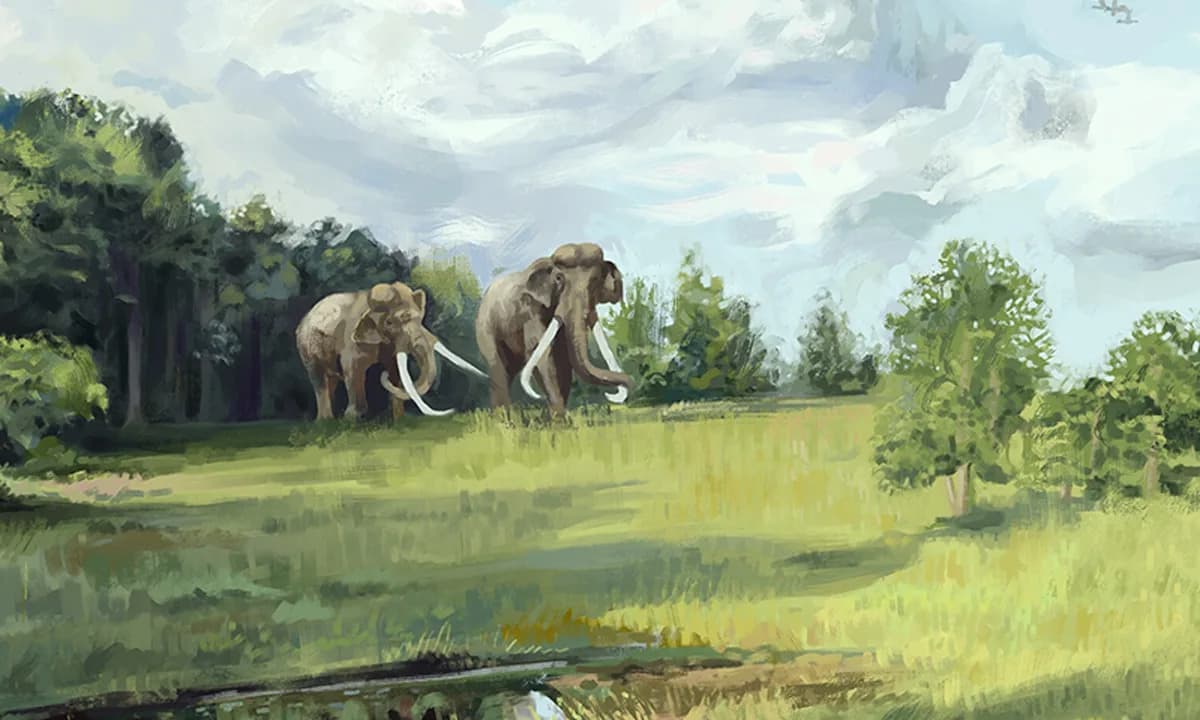
mammoths walking at night
Archaeologists have uncovered human-made mammoth-ivory and stone tools in a 14,000-year-old layer at the Holzman site in Alaska's middle Tanana Valley, providing fresh evidence about some of the earliest people in North America.
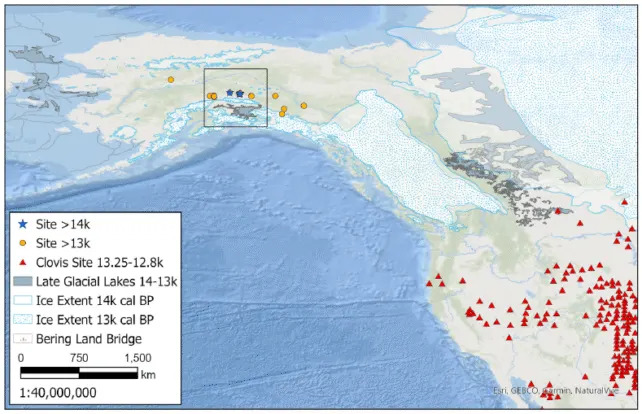
Late Pleistocene extent of glaciation at 14 and 13 thousand years ago (ka) with the Beringia landmass, and ancient archaeological sites. (Wygal et al.,Quant. Int., 2026)
What the Excavations Revealed
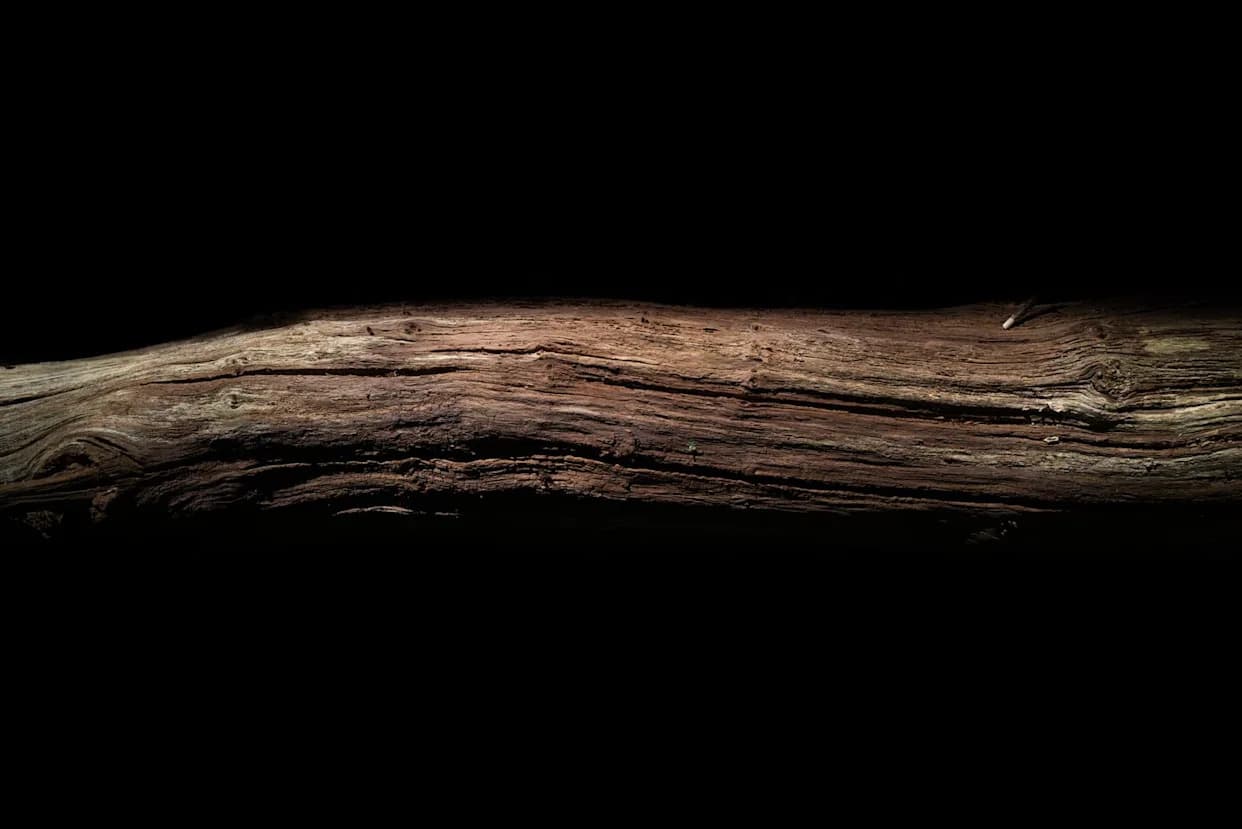
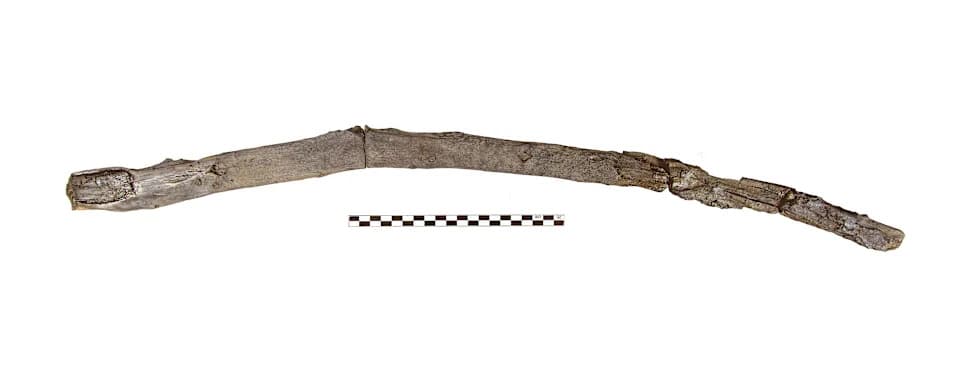
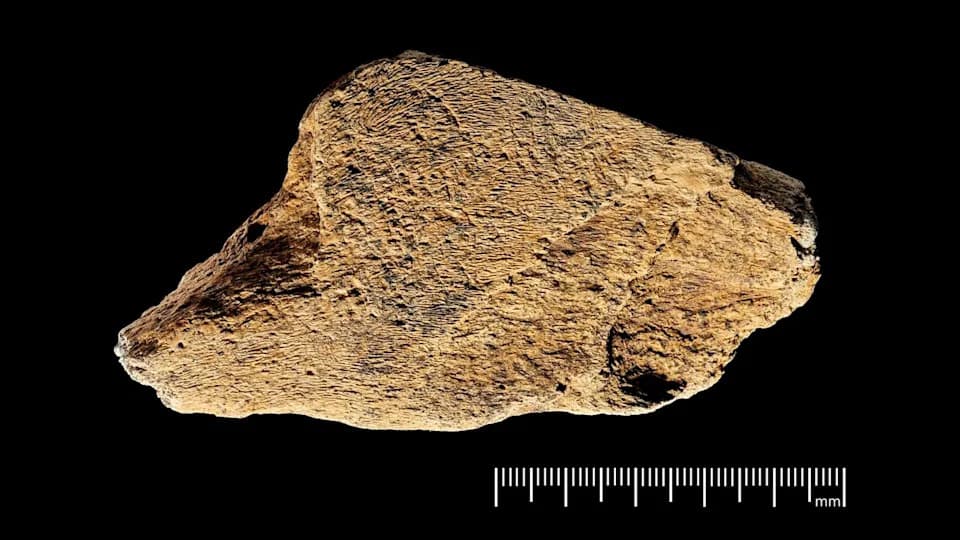
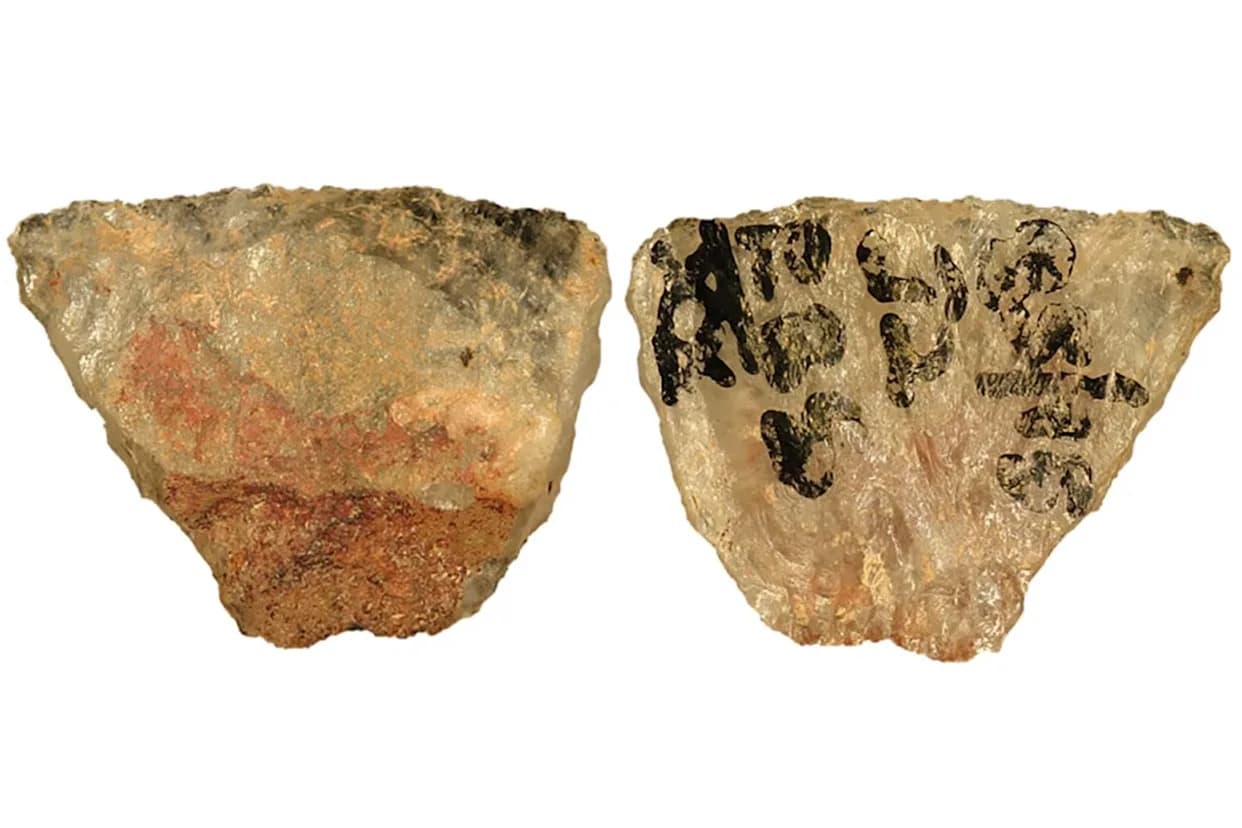
The oldest excavated layer contained an almost intact female mammoth tusk alongside flake tools, a hammer stone, animal bones, red ocher, and clear traces of burning and knapping. In a slightly younger, well-dated layer (about 13,700 years ago), researchers found a large workshop area with abundant quartz, waste from ivory-tool production, and the earliest-known ivory rod tools identified in the Americas.

Subscribe to ScienceAlert's free fact-checked newsletter
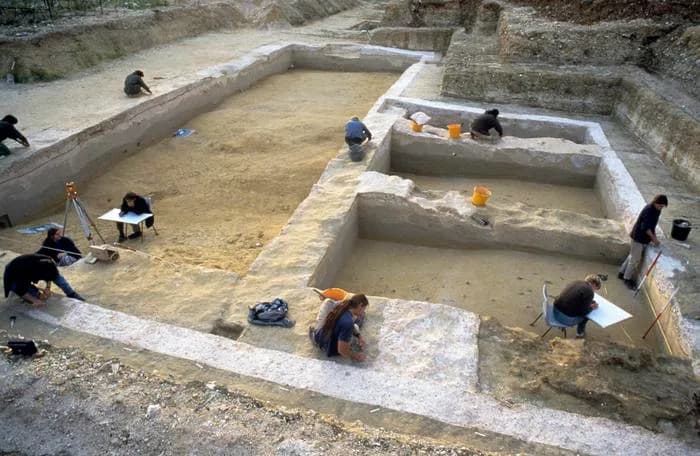
The Holzman site reveals evidence of stone and mammoth ivory tool production, food preparation, and human dispersals dating back to 14,000 years.
Why This Matters
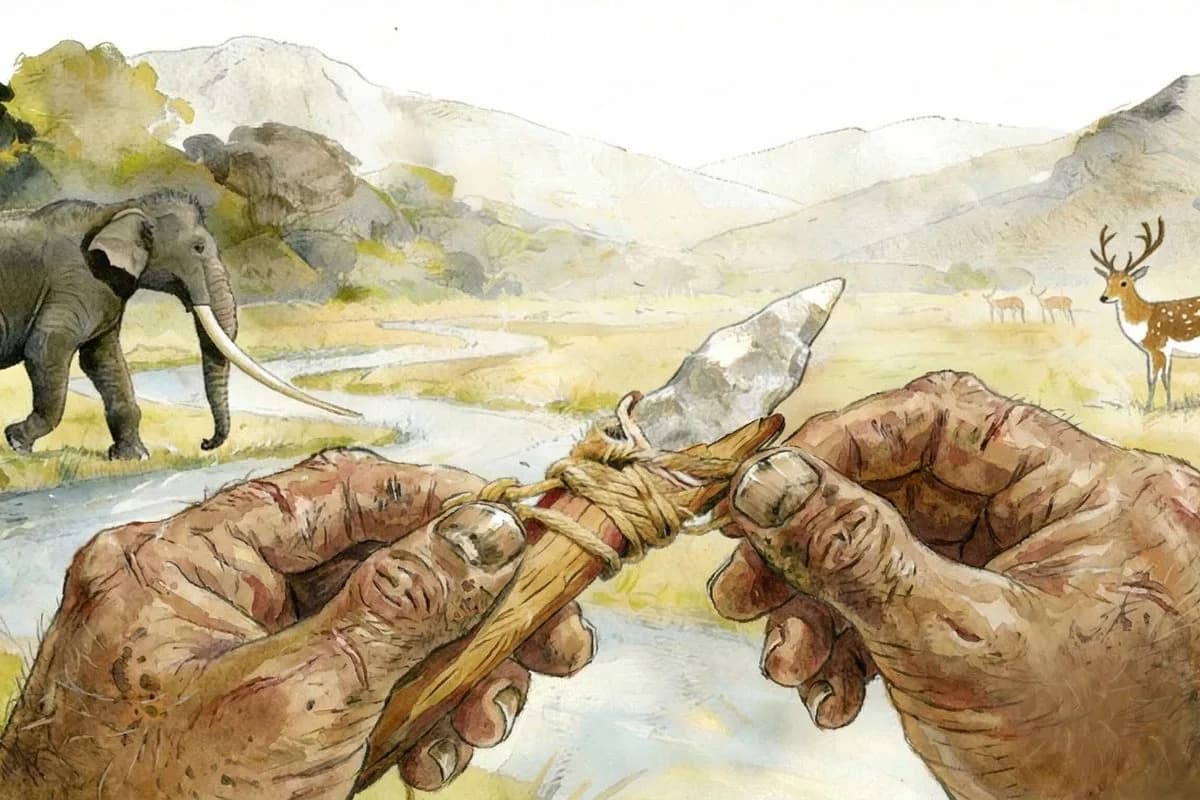
Many of the ivory and lithic techniques observed at the site resemble technology long associated with the Clovis cultural tradition, which is typically dated to roughly 13,000 years ago. These new Alaskan finds therefore offer a possible technological and geographic link between eastern Beringian hunters and later Clovis groups on the North American continent.
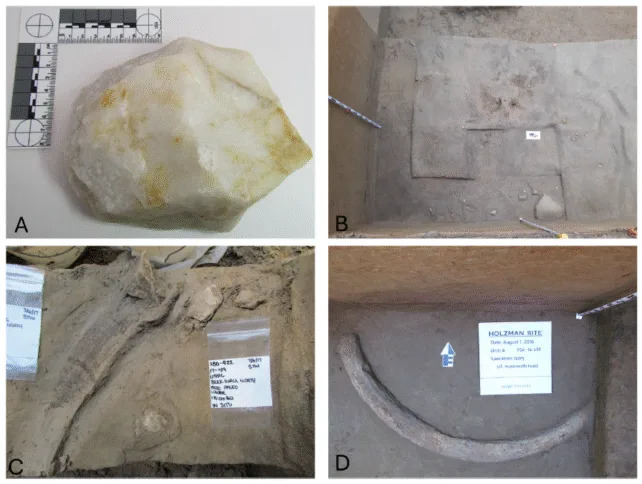
(A) A large quartz bifacial chopper or cleaver; (B) Heavy flat anvil stone manuport among a large ivory workstation including small hearth and abundant ivory fragments; (C) Large ivory blank with quartz scraper and flake tools lying in situ; (D) A female woolly mammoth tusk cached near a smallhearth and activity area. (Wygal et al.,Quant. Int., 2026)
The discovery supports a model in which early people occupied milder refuges such as the Tanana Valley during the last glacial period and later dispersed south as ice sheets retreated. It also reinforces the idea that mammoth ivory and high-quality lithic raw materials circulated across eastern Beringia and into the interior of the continent.
Context and Caveats
The research team, from Adelphi University and the University of Alaska Fairbanks, published their results in Quaternary International. The authors note that while the tools are strong evidence for a technological lineage that may link Alaskan groups with later Clovis populations, they do not rule out even earlier, pre-Clovis occupations elsewhere in the Americas.
Other evidence—such as the contested White Sands footprints (dated by some studies to >20,000 years) and coastal migration hypotheses like the kelp-highway theory—shows the peopling of the Americas was likely complex. The authors call for additional lines of evidence, particularly ancient DNA and refined paleoclimate data, to clarify timings and migration routes.
Publication: Quaternary International. Institutions: Adelphi University and University of Alaska Fairbanks.
Help us improve.