Thailand’s Feb. 8 election will be a test of whether voters prefer conservative stability under Anutin Charnvirakul’s Bhumjaithai or a democratic turn led by the People’s Party, successor to Move Forward. Article 112 (lèse‑majesté) — punishable by up to 15 years per charge — has been widely used since the 2020 protests to silence critics; TLHR recorded 284 Article 112 charges from Nov. 19, 2020 to Sept. 1, 2025 (including 20 minors). The People’s Party has removed lèse‑majesté reform from its platform and is focusing on judicial and economic reform while facing uphill legal and institutional obstacles.
Article 112 and Thailand’s Election: Will Lèse‑Majesté Remain Untouchable?

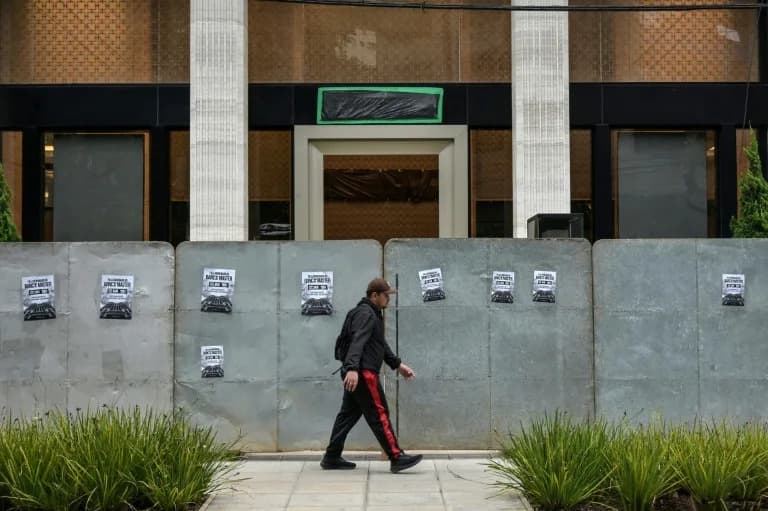
A military vehicle rolled past a national flag near the Cambodian border on Dec. 30, 2025 — a stark image that frames the fraught political terrain ahead of Thailand’s Feb. 8 general election.
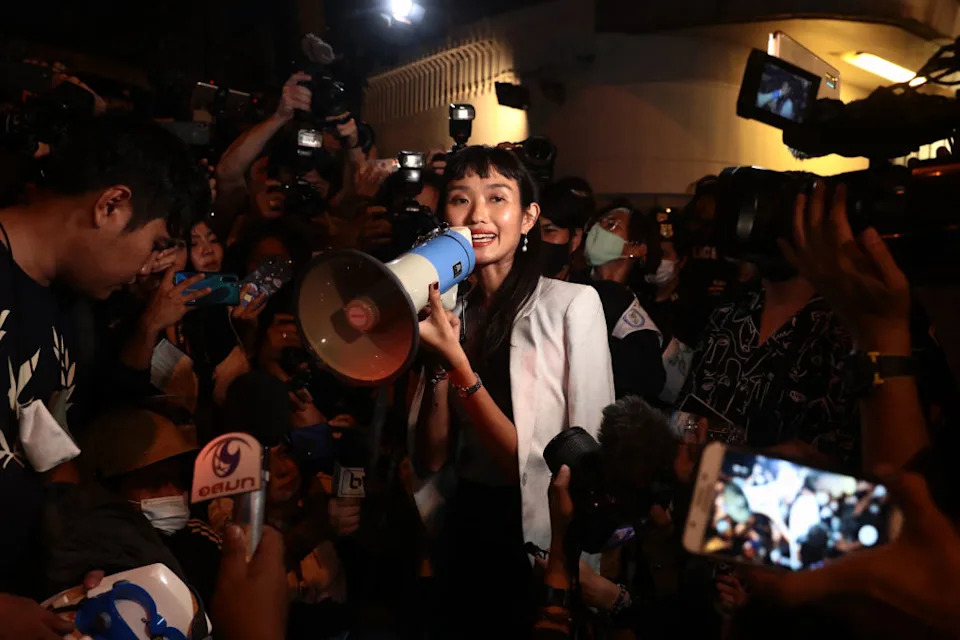
Chonthicha ‘Lookate’ Jangrew addresses the crowd during a rally in Bangkok on Oct. 26, 2020.Jack Taylor—AFP/Getty Images
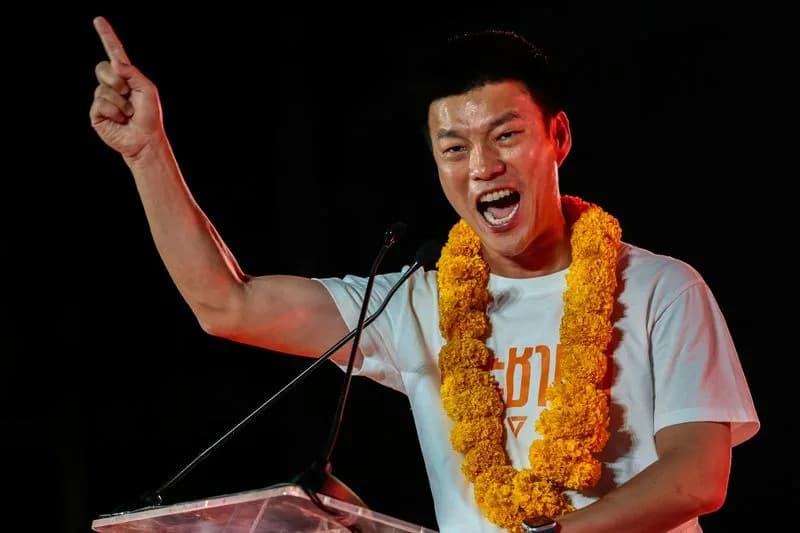
Chonthicha “Lookkate” Jangrew moved through a market in Chunphon, a conservative, royalist province in southern Thailand, in January as she campaigned for the progressive People’s Party. A prominent pro‑democracy activist and a member of parliament named one of TIME’s Next Generation Leaders in 2024, Lookkate is accustomed to taking high personal and legal risks. Before entering parliament after the 2023 elections, she faced roughly 30 criminal cases that human‑rights groups describe as politically motivated. Convicted under Thailand’s lèse‑majesté statute (Article 112) in 2024, she is appealing and remains free on bail for now — but a prison term would strip her of her seat and her freedom.
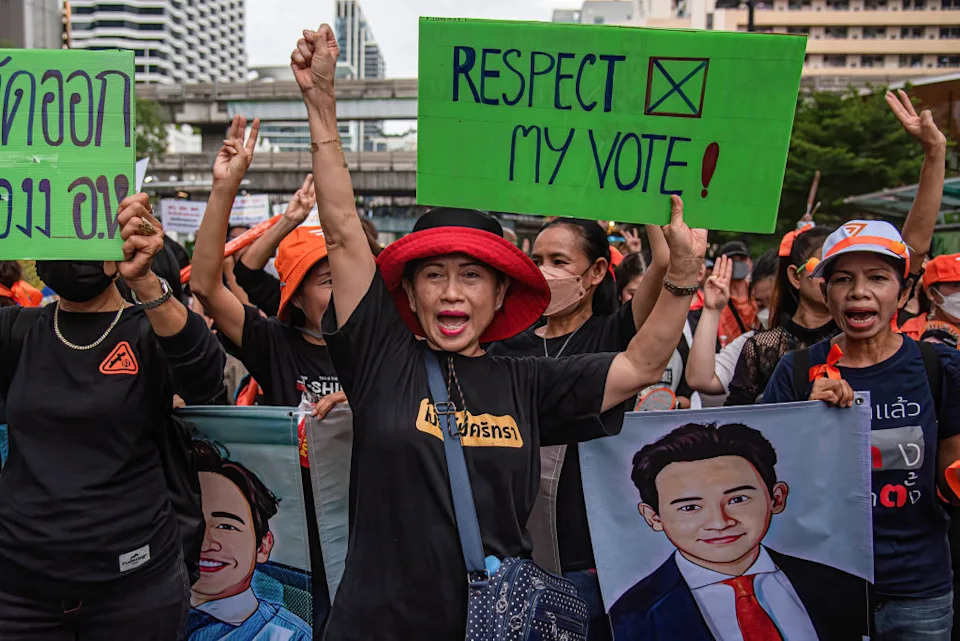
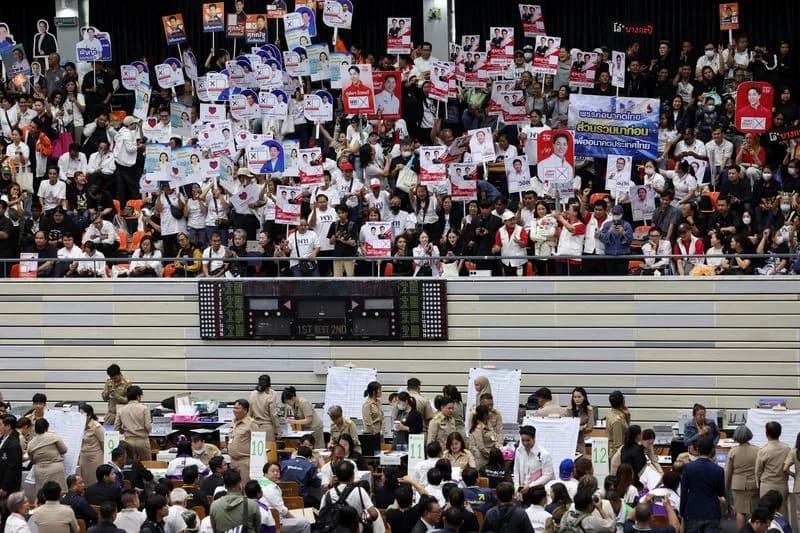
Protesters hold signs saying ‘Respect my vote!’ and posters of Move Forward Prime Minister candidate Pita Limjaroenrat during a pro-democracy march calling for senators to respect the result of the 2023 general election, in Bangkok on July 29, 2023.Peerapon Boonyakiat—SOPA Images/LightRocket/Getty Images
What Is at Stake
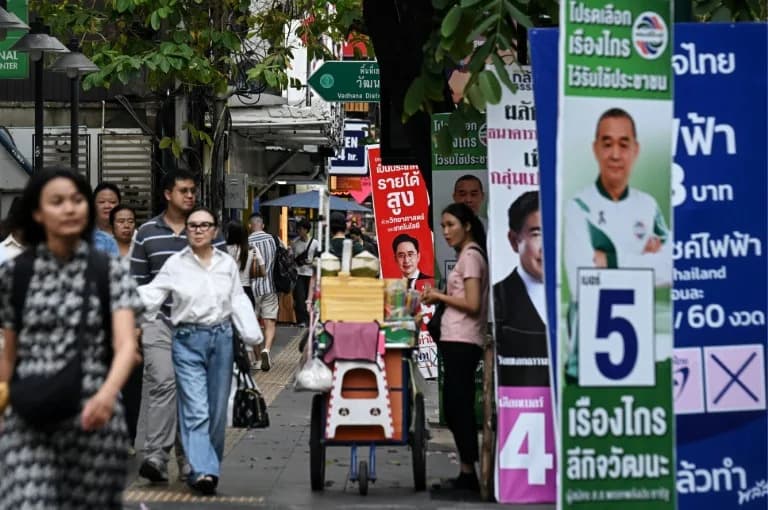
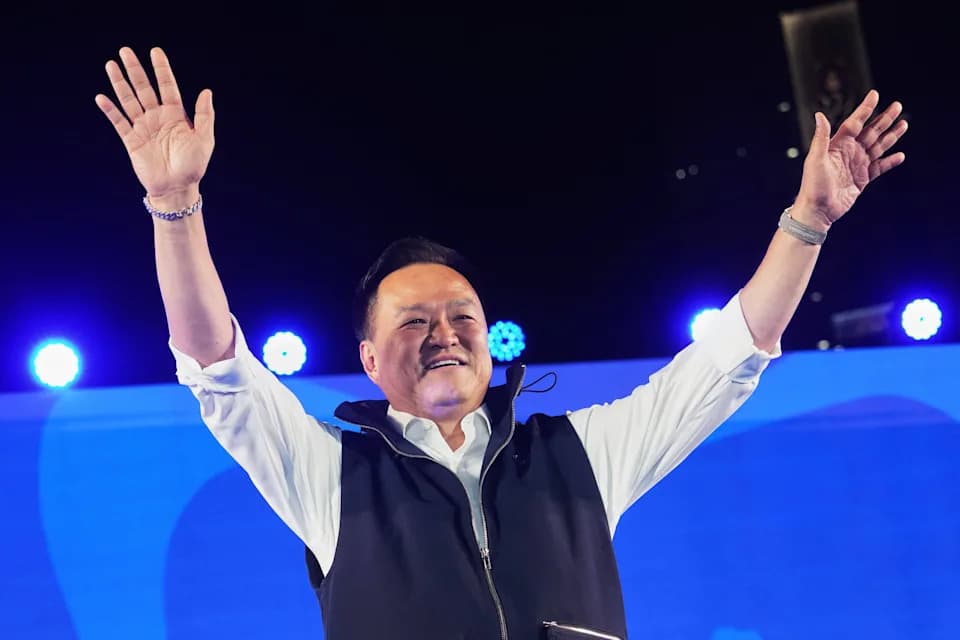
The Feb. 8 vote will determine whether Thailand continues under a conservative, royalist coalition led by Prime Minister Anutin Charnvirakul’s Bhumjaithai Party, or whether voters will reward the People’s Party (the successor to the dissolved Move Forward Party) with a stronger mandate for reform. Beyond immediate economic challenges — an earthquake, widespread floods, deadly construction accidents, and stalled growth — the election is increasingly framed as a referendum on political space: whether dissenting voices can survive in public life.

Paul Chambers after being fingerprinted and detained by police in Phitsanulok, Thailand, on April 8, 2025.Courtesy of Dr. Napisa Waitoolkiat, wife of Chambers, and Thai Lawyers for Human Rights
Article 112: Shield or Sword?
Article 112, the lèse‑majesté law, carries penalties of up to 15 years in prison per charge and is formally meant to protect the royal family from insults, defamation and threats. Rights organizations argue that since the youth‑led protests of 2020–21 the law has been used systematically to silence critics and to target political opponents. Between Nov. 19, 2020 and Sept. 1, 2025, Thai Lawyers for Human Rights (TLHR) recorded 284 Article 112 charges — including 20 minors; by the end of September 2025, 12 people were serving sentences and 18 remained detained pending trial or appeal.
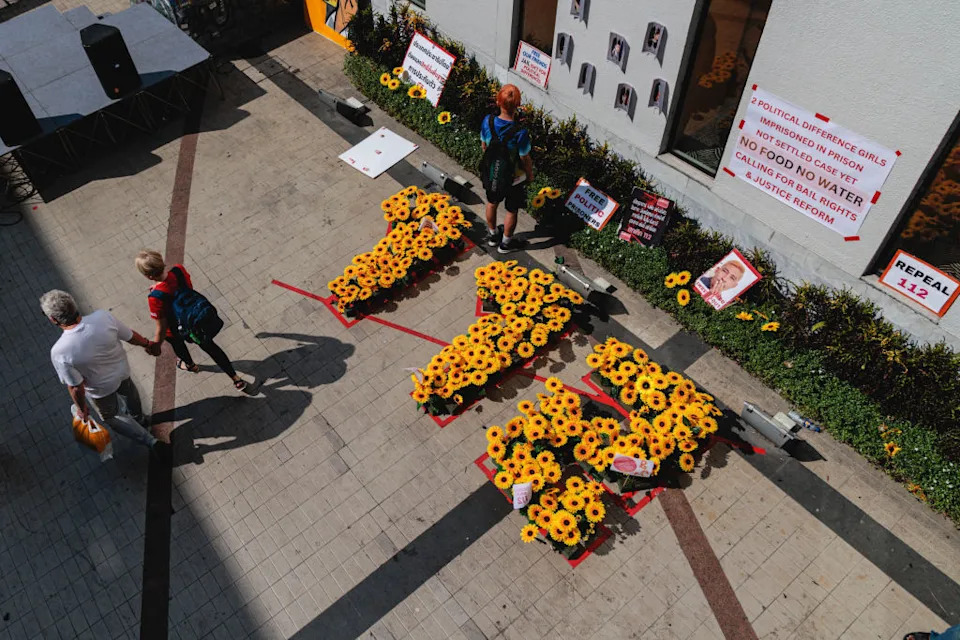
Sunflowers are arranged to portray the number 112, representing Article 112, during a pro-democracy demonstration in Bangkok on Jan. 26, 2023.Varuth Pongsapipatt—SOPA Images/LightRocket/Getty Images
Observers say the law functions less as a narrowly applied protection and more as a political instrument: it allows conservative elements in parliament, the judiciary and the military to neutralize reformist politicians by escalating reform debates into existential threats to the monarchy.

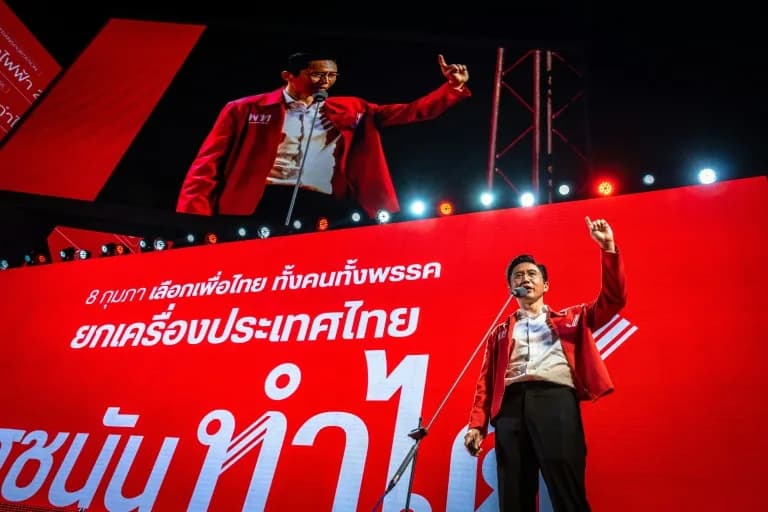
People's Party leader Natthaphong Ruengpanyawut speaks during a rally in Bangkok on Jan. 25, 2026.Varuth Pongsapipatt—SOPA Images/LightRocket/Getty Images
Political Repercussions
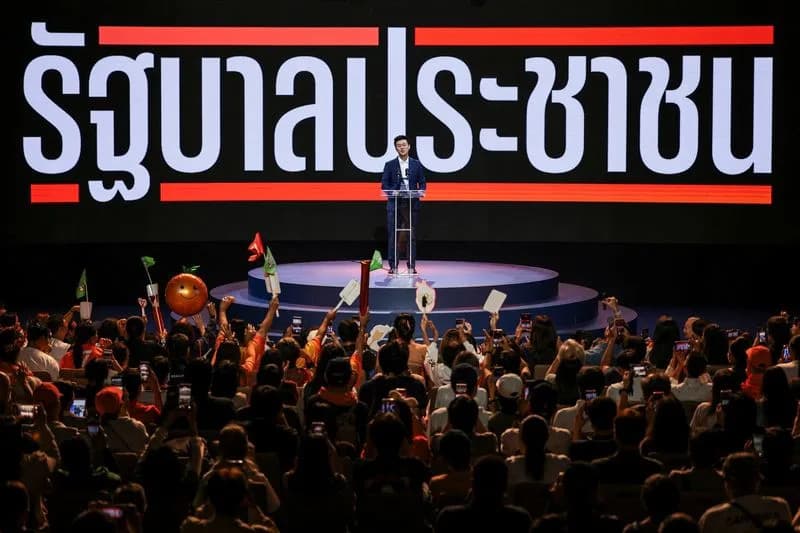
The Move Forward Party won the most votes in 2023 but was blocked from office by establishment forces and the Senate. In August 2024 the Constitutional Court dissolved Move Forward and barred its leaders from politics for 10 years, citing its campaign to amend Article 112 as an effort to overthrow the monarchy. The movement reconstituted as the People’s Party, which has largely removed lèse‑majesté reform from its 2026 platform amid legal constraints and political pressure, focusing instead on judicial reform, anti‑corruption measures and economic policies.

Lookkate takes a selfie with supporters on her arrival at the Thanyaburi Provincial Court in Pathum Thani province on May 27, 2024.Sakchai Lalit—AP
Polls place the People’s Party near 30%, a strong showing but likely short of an outright majority in Thailand’s fractured multiparty system. That raises the familiar problem: even plurality success may not translate into governing power if establishment and conservative parties form a coalition against them.
Examples And Human Cost
High‑profile cases illustrate the law’s reach. American academic Paul Chambers was detained under Article 112 in 2025 over an unpublished webinar blurb; he was released on bail and had charges dropped on May 1, 2025, but the episode cost him his job and visa. Youth activist Netiporn “Bung” Sanesangkhom died in custody on May 14, 2024 after a prolonged hunger strike during pretrial detention on lèse‑majesté charges. Advocates say the law’s application has broadened to include criticism of the institution of monarchy, historical scrutiny, satire and calls for reform.
Article 112 cases sit alongside other legal tools used against dissent: between July 2020 and Oct. 2025 nearly 1,500 people faced charges under an emergency decree; 599 were charged with illegal assembly; 156 with sedition; more than 200 under the Computer Crimes Act; and 45 with contempt of court. TLHR also recorded at least 286 children charged or prosecuted for political participation during that period.
What To Watch
- Whether the People’s Party can increase its seat total substantially beyond the 151 seats won in 2023 — a decisive victory could limit establishment manoeuvring.
- How the Constitutional Court, the Election Commission and other institutions respond to post‑election disputes or legal actions tied to Article 112.
- Whether public concern over economic stability and border security will outweigh appetite for structural reforms among urban youth and reformist voters.
For politicians like Lookkate, the election is a possible turning point — but institutional gatekeepers and the courts will remain central to any long‑term change. For now, she spends her remaining free months raising rights issues in parliament, meeting constituents and visiting family, determined to do as much as she can before her legal fate is decided.
Contact: letters@time.com
Help us improve.