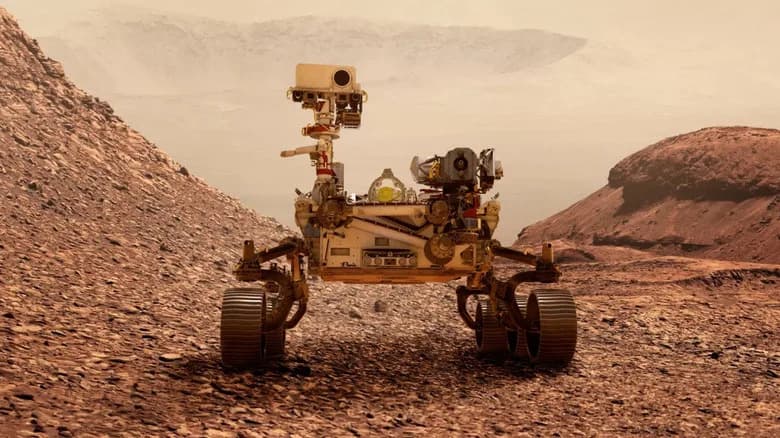
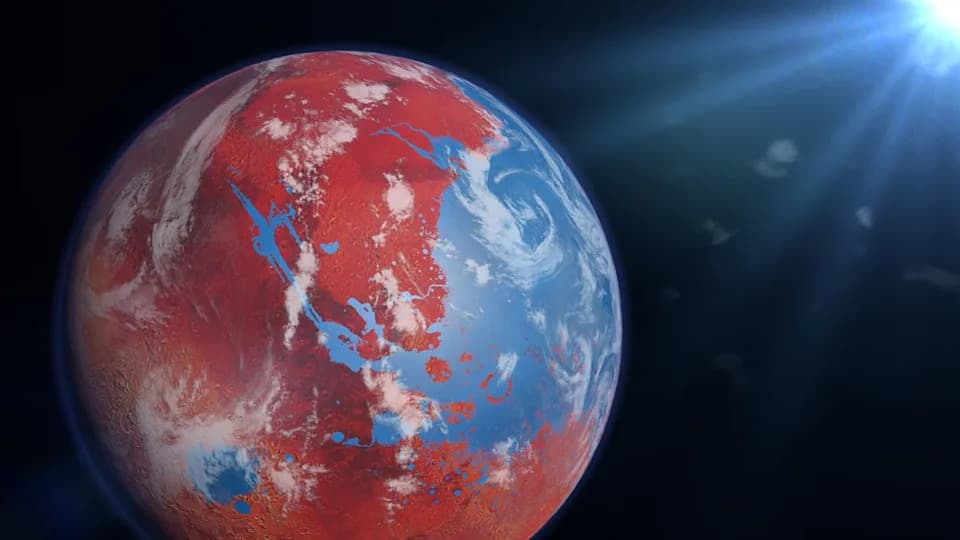
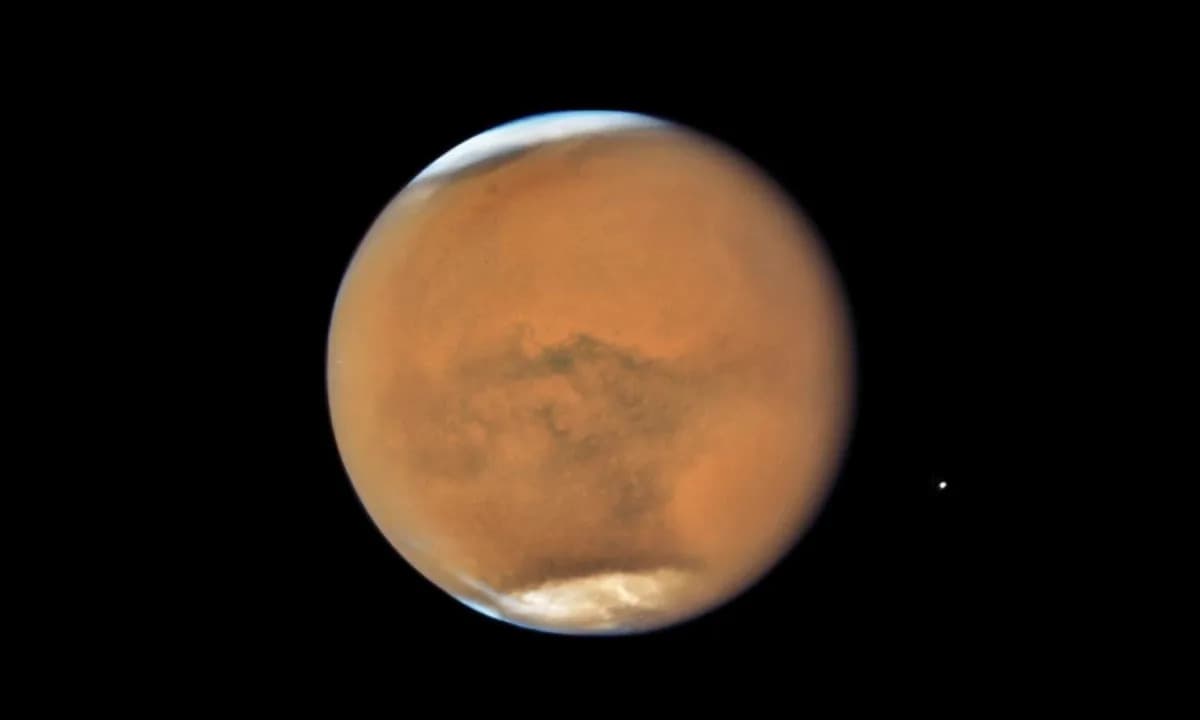
NASA’s Perseverance rover found bleached, clay-rich kaolinite fragments on Mars that researchers say likely formed under long-term rainfall and humidity. Published in Communications Earth & Environment, the study reports fragments ranging from pebbles to boulders that closely match kaolinite on Earth. The pieces may have been washed into Jezero Crater or scattered by impacts, and they act as a time capsule preserving evidence of a warmer, wetter ancient Mars that could have supported habitable conditions.
Bleached Kaolinite Rocks on Mars Suggest Long-Term Rain and a Potentially Habitable Past
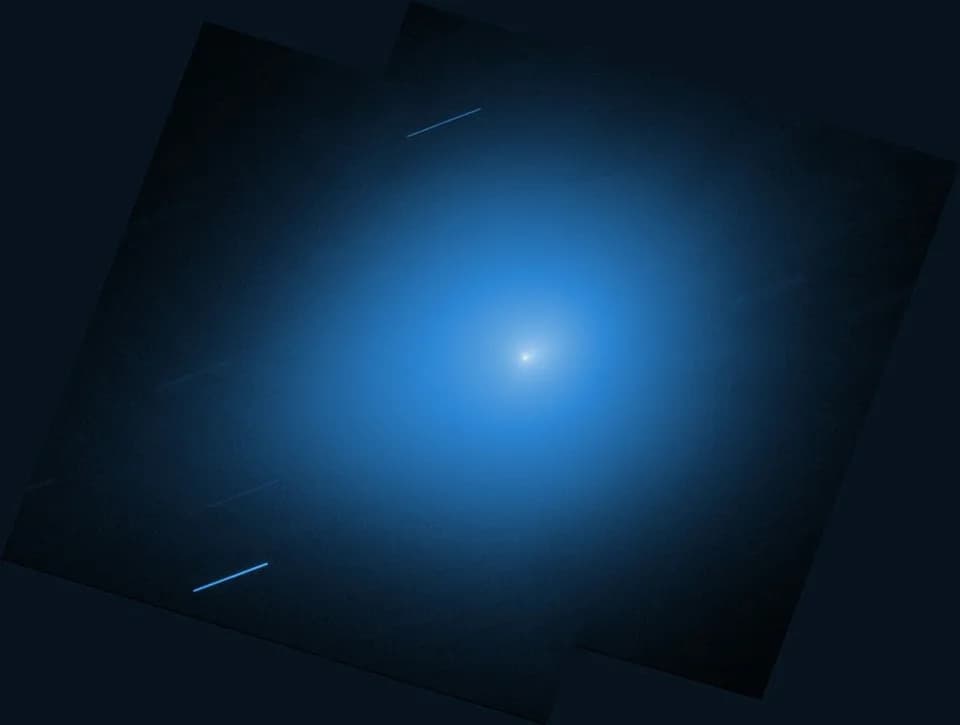
NASA’s Hubble Space Telescope last observed come 3I/ATLAS on Nov. 30, about four months after Hubble's first look at the interstellar comet. 3I/ATLAS became one of the biggest cosmic stories of the year when astronomers deemed it to be the third-ever discovered interstellar object in our solar system originating from an entirely different part of the galaxy.
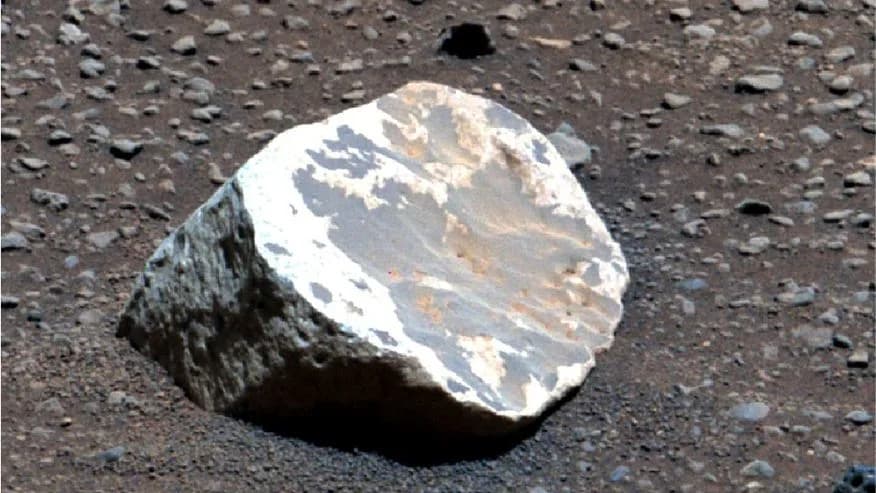
NASA’s Perseverance rover has discovered bleached, white rock fragments on Mars that researchers interpret as kaolinite — a clay mineral typically formed by prolonged rainfall and sustained humidity on Earth. The finding adds to growing evidence that parts of ancient Mars experienced warm, wet conditions capable of altering rocks the way tropical weathering does on our planet.
A team that analyzed thousands of fragments published their results in Communications Earth & Environment in December. The researchers say the fragments range from pebble-sized pieces to boulders and closely match kaolinite-bearing rocks found near San Diego and in regions of South Africa.
What the Rocks Reveal
Kaolinite is an aluminum-rich clay that forms when other minerals are leached away by long-term exposure to water and humidity — processes that on Earth occur over millions of years in tropical, rainy climates. Finding this mineral on Mars suggests that some locations underwent sustained alteration by liquid water, not just brief wet events.
“It tells us that there was once a lot more water than there is today,” said Adrian Broz, lead author of the study and a planetary scientist at Purdue University.
Rowan Horgan, a long-term planner on the Perseverance mission, noted from orbital observations that rocks like these are hard to form and require extensive water: “You need so much water that we think these could be evidence of an ancient warmer and wetter climate where there was rain falling for millions of years.”
Where the Fragments Came From
The fragments were found in and around Jezero Crater, a basin long interpreted as the site of an ancient lake. Because no major kaolinite outcrop lies immediately adjacent to the find sites, the team suggests two plausible transport mechanisms: the pieces were either washed into the crater by ancient rivers and runoff, or they were excavated and scattered across the landscape by an impact event. Orbital spectral data also reveal other kaolinite-rich outcrops elsewhere on Mars, supporting a broader distribution of this alteration product.
Why This Matters
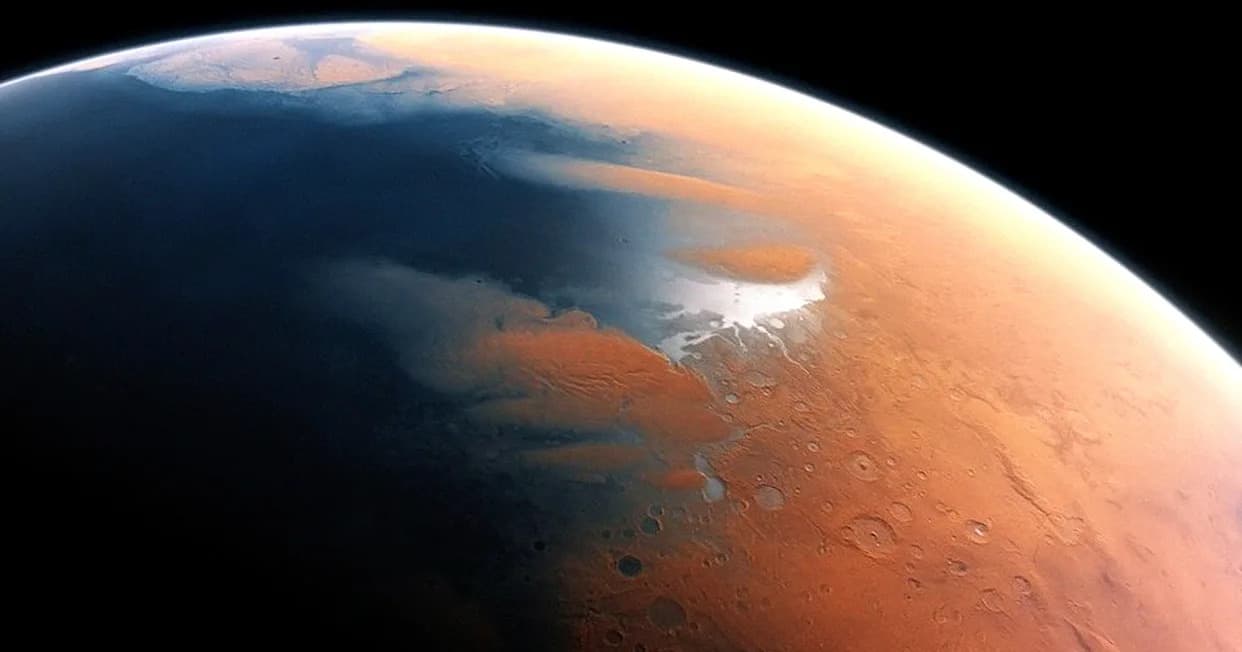
The bleached rocks act like a time capsule, preserving clues about environmental conditions billions of years ago and helping scientists reconstruct how Mars transitioned from a wetter world to the cold, dry planet we see today. Because liquid water is a fundamental requirement for life as we know it, evidence for long-lived, rainfall-driven environments increases the possibility that ancient Mars could once have supported habitable environments.
Perseverance — launched in 2020 and arriving at Jezero Crater in February 2021 after a roughly 200-day, 300-million-mile journey — has spent years collecting geological context and samples. By late 2024 the rover began exploring the crater rim, continuing its search for rocks that might preserve biosignatures or other traces of past habitability.
What Comes Next: Researchers will continue to map kaolinite occurrences from orbit, study returned samples (when available), and compare Martian fragments with terrestrial analogs to better constrain the timing and duration of the wet conditions that produced them.
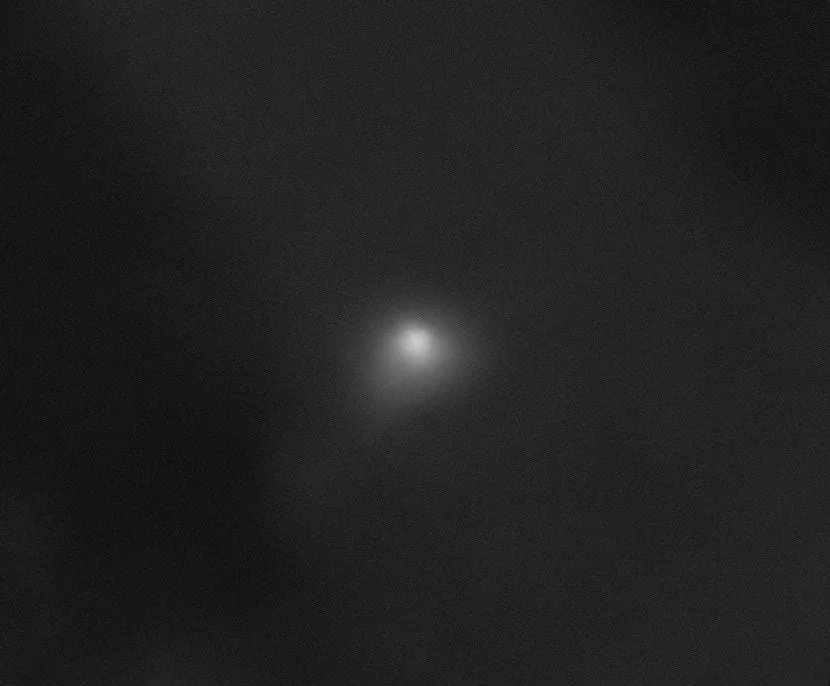
The High Resolution Imaging Science Experiment (HiRISE) camera aboard NASA’s Mars Reconnaissance Orbiter captured this image of interstellar comet 3I/ATLAS on Oct. 2, 2025. At the time it was imaged, the comet was about 19 million miles from the spacecraft. The comet didn't come nearly as close to Earth, when it reached a distance of 170 million miles from our planet on Dec. 19.
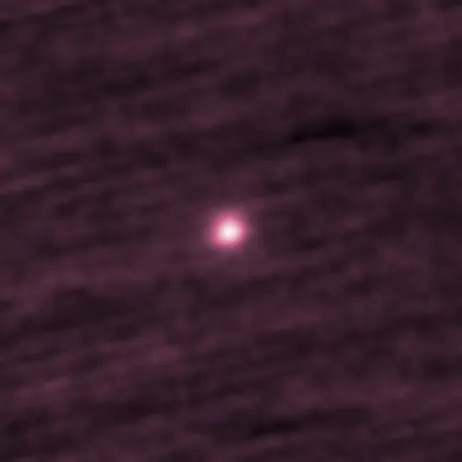
This image shows the 3I/ATLAS interstellar comet as a bright, fuzzy orb in the center. Traveling through our solar system at 130,000 miles per hour, 3I/ATLAS was made visible by using a series of colorized stacked images from Sept. 11-25, using the Heliocentric Imager-1 (H1) instrument, a visible-light imager on the STEREO-A (Solar Terrestrial Relations Observatory) spacecraft. The colorization was applied to differentiate the image from other observing spacecraft images.

Because it's big enough to be deemed a "city killer," asteroid 2024 YR4 became a source of alarm due to the uncommonly high risk it had of colliding with Earth on Dec. 22, 2032. For a time, it was the only object among more than 37,000 known large space rocks with any chance of hitting Earth anytime soon – with its probability of impact even rising to a record level of 3.1%.That began to change in late February as more precise observations allowed scientists to effectively winnow down the asteroid's odds of impact to a number so low, it might as well be zero.
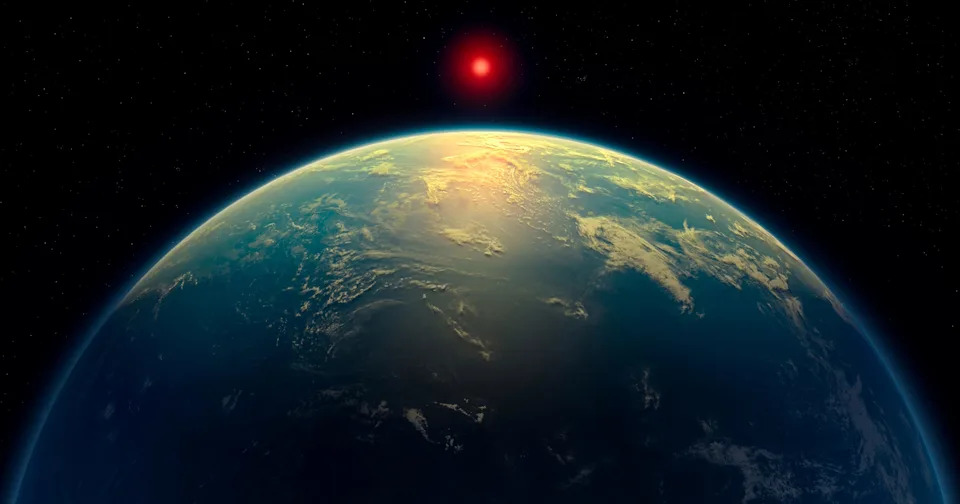
An exoplanet known as K2-18b achieved a degree of fame in April when a team of astronomers claimed to have found in its atmosphere "the strongest evidence yet" that life exists anywhere else besides Earth. Other scientists have since cast doubt on the findings – putting a damper on the notion that humanity finally had proof that we aren't alone in the cosmos.
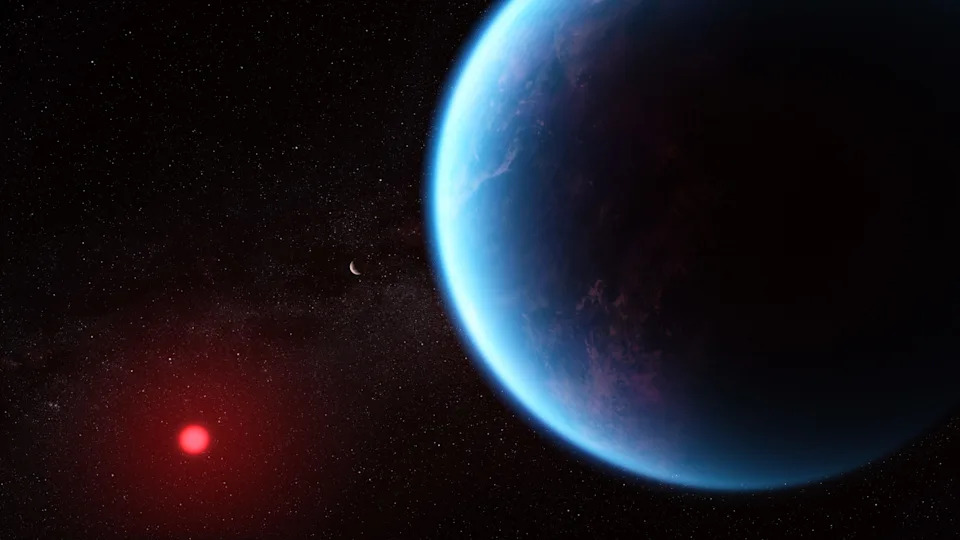
This artist's concept shows what exoplanet K2-18b could look like based on scientific data. NASA's James Webb Space Telescope has observed K2-18b, an exoplanet 8.6 times as massive as Earth, revealing conditions that could support life on the exoplanet.
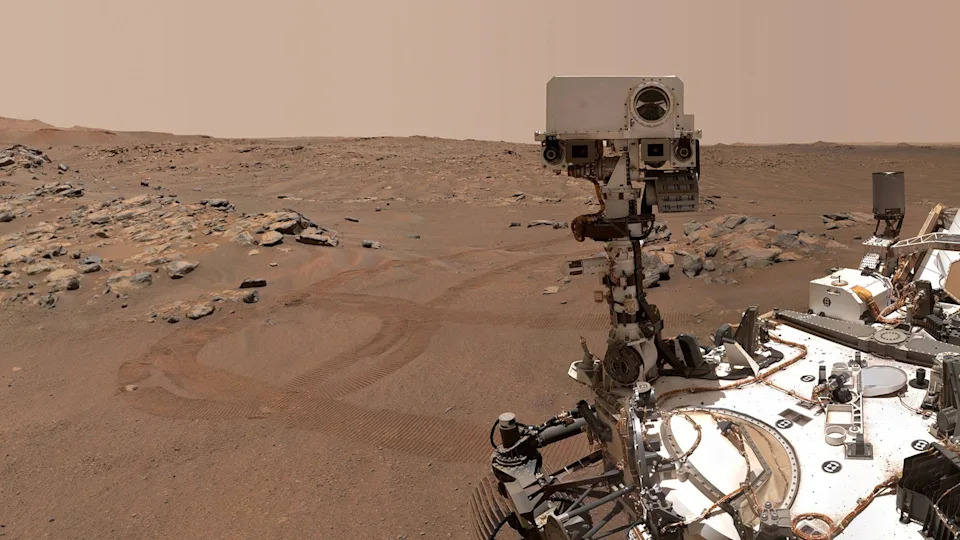
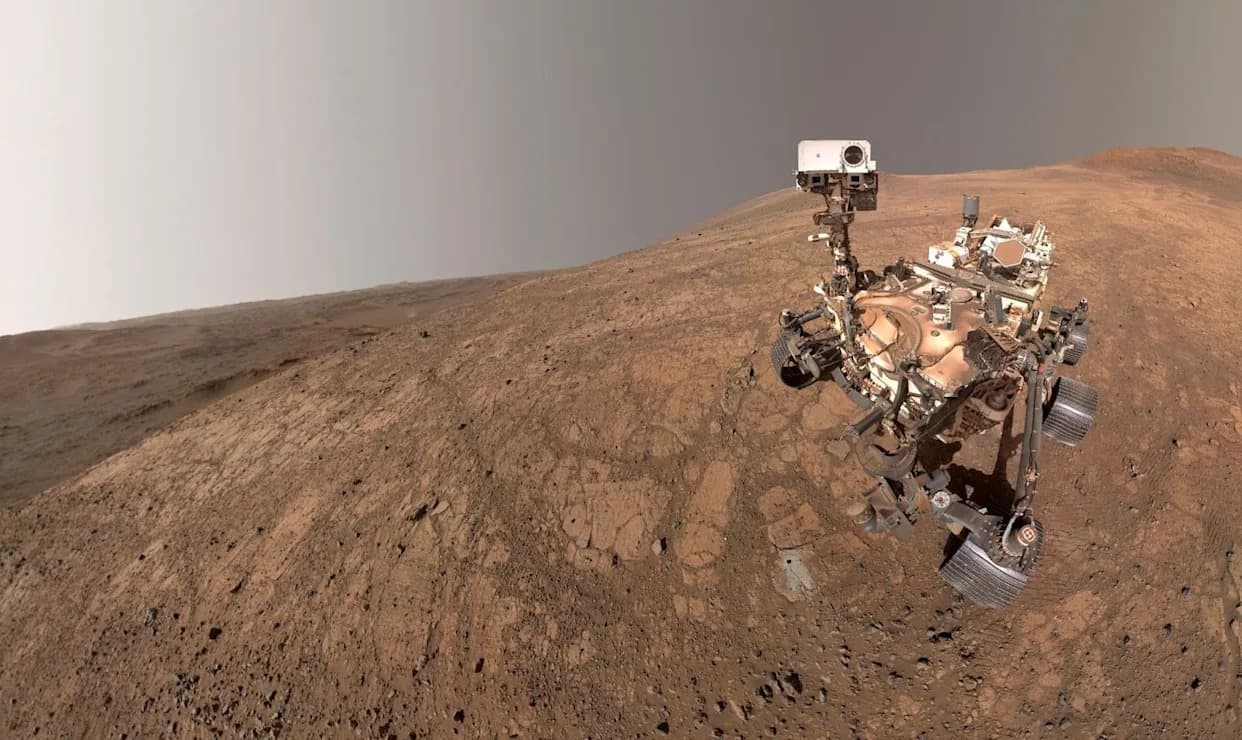
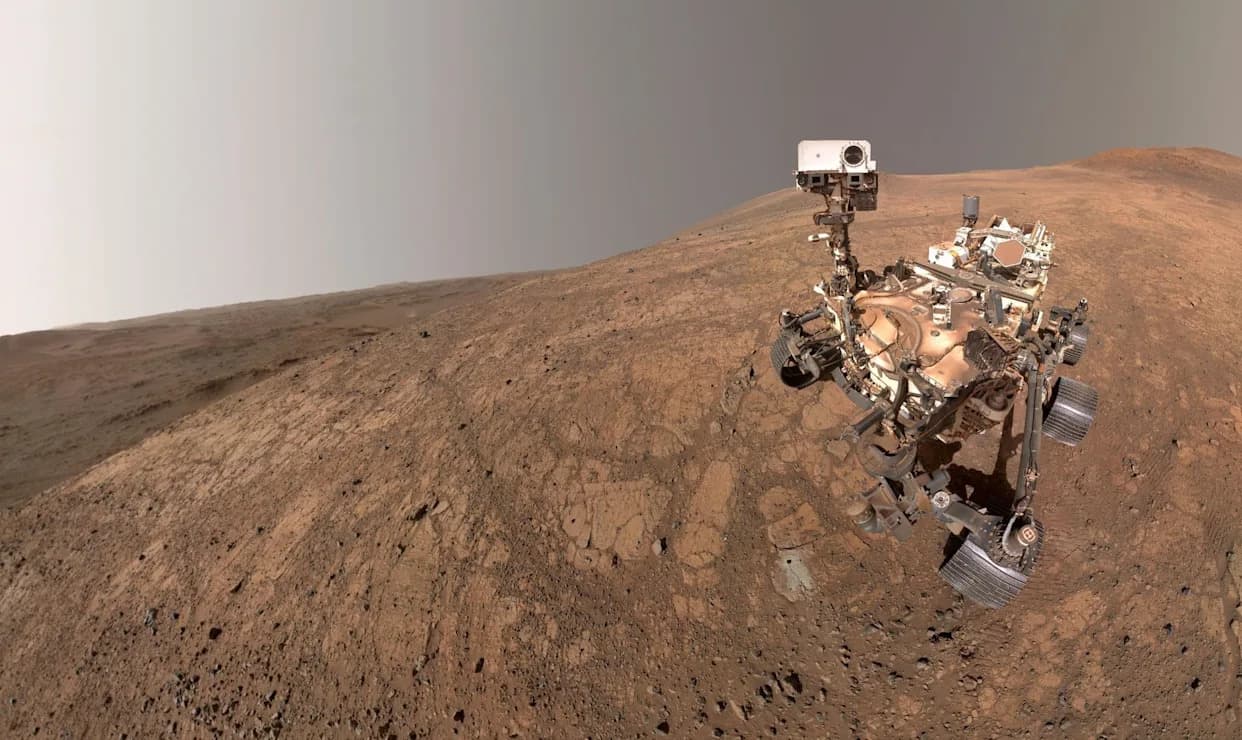
NASA’s Perseverance Mars rover is seen in a "selfie" that it took over on Sept. 10, 2021. Perseverance rover, along with Curiosity, is one of the agency's two car-sized robots exploring the Martian surface for signs that the planet was once habitable. And in September, NASA officials confirmed that one of the rovers’ finds contained a potential biosignature.
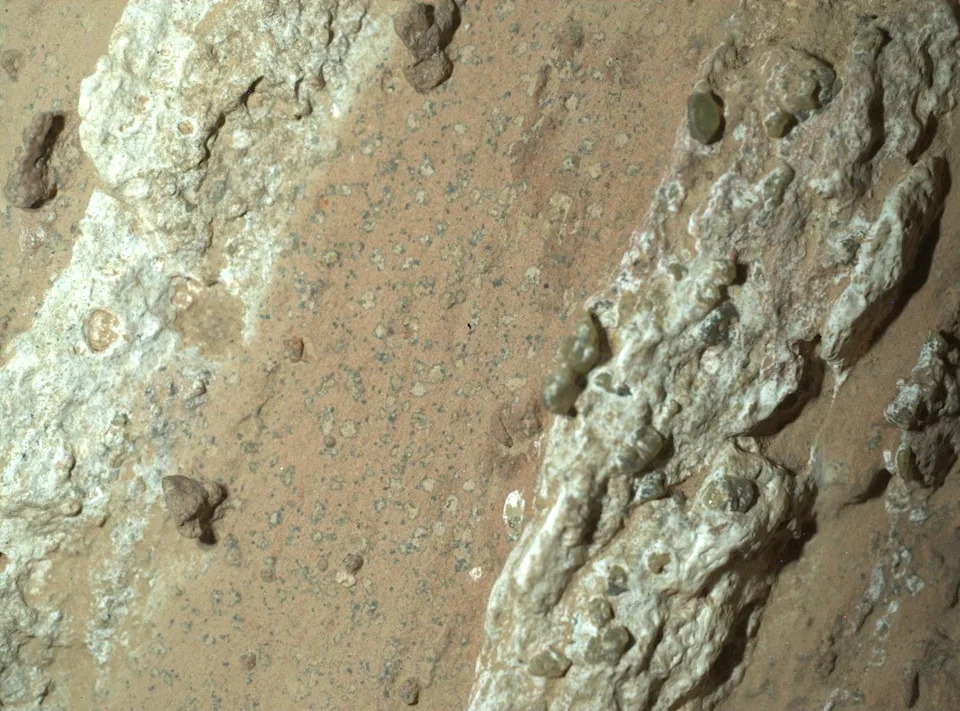
A reddish rock nicknamed "Cheyava Falls", with features resembling leopard spots was discovered by NASA's Perseverance rover in Mars’ Jezero Crater in July 2024, in this handout photograph released on September 10, 2025.
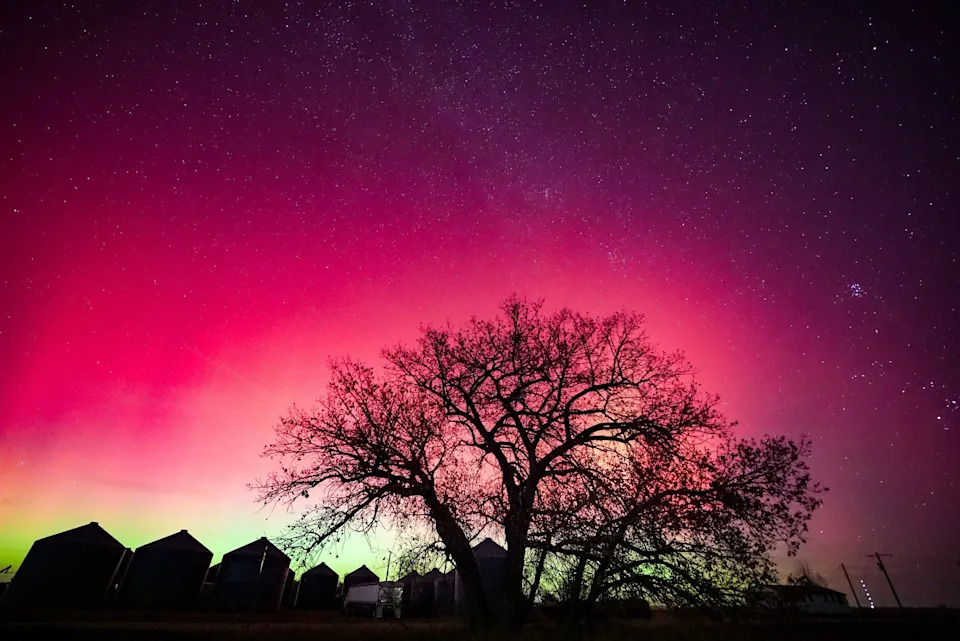
The northern lights, also known as the aurora borealis, light up the night sky Nov. 11 east of Denver, Colorado. A powerful geomagnetic solar storm in November blasted Earth and created the conditions necessary to reveal the auroras much further south in the United States than is typical.
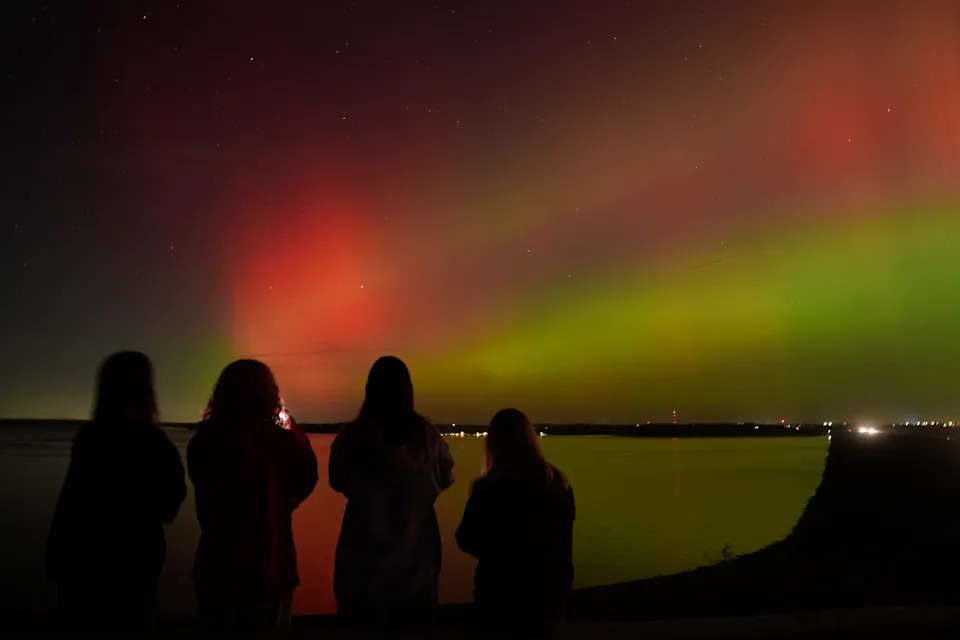
A group of friends take photos of the northern lights Nov. 11 as they appear over Clinton Lake in Lawrence, Kansas. After NOAA's Space Weather Prediction Center issued a "severe" geomagnetic storm watch in November, many people in the Northern Hemisphere, which includes the U.S., had an extraordinary opportunity to gaze upon some breathtaking red and green auroras in their own backyard.
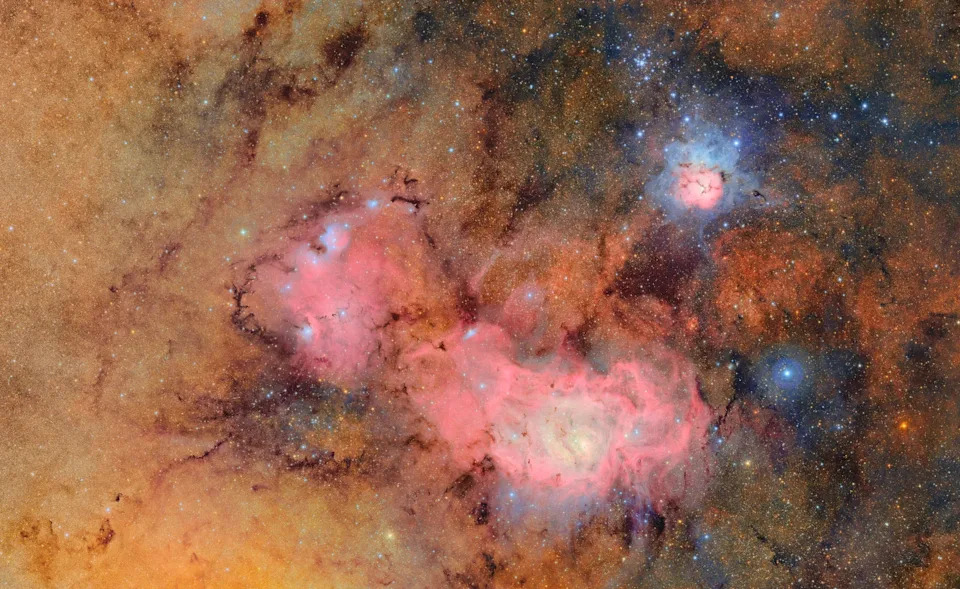
In June, the state-of-the-art Vera C. Rubin ground telescope in Chile unveiled its first stunning images of the cosmos. This particular image combines 678 separate images taken by the observatory in just over seven hours of observing time. Combining many images in this way clearly reveals otherwise faint or invisible details, such as the clouds of gas and dust that comprise the Trifid nebula (top) and the Lagoon nebula, which are several thousand light-years away from Earth.
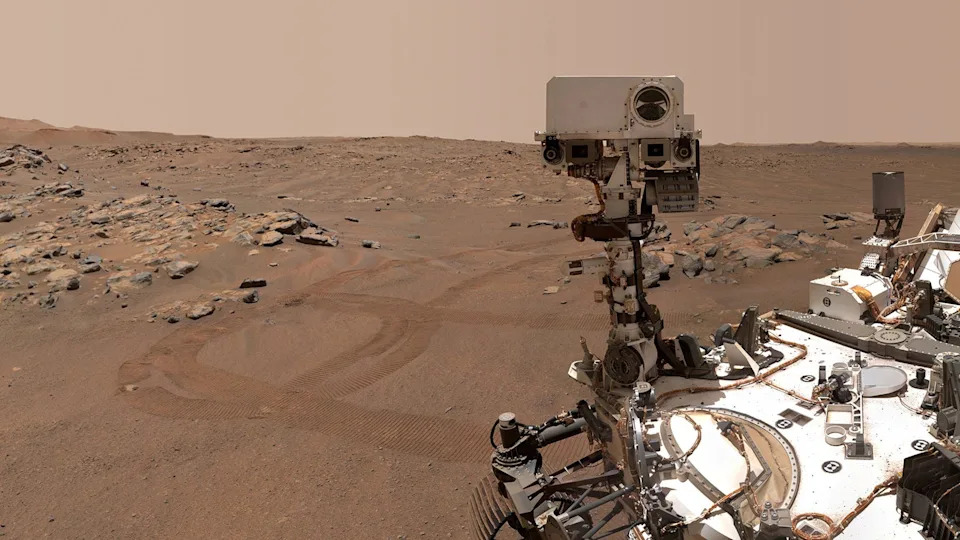
NASA’s Perseverance Mars rover is seen in a "selfie" that it took over on Sept. 10, 2021. Perseverance rover, along with Curiosity, is one of the agency's two car-sized robots exploring the Martian surface for signs that the planet was once habitable. And in September, NASA officials confirmed that one of the rovers’ finds contained a potential biosignature.
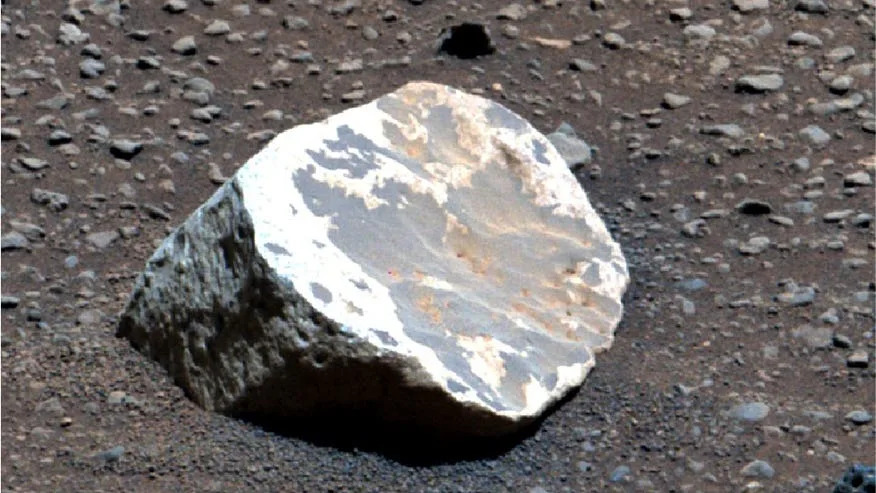
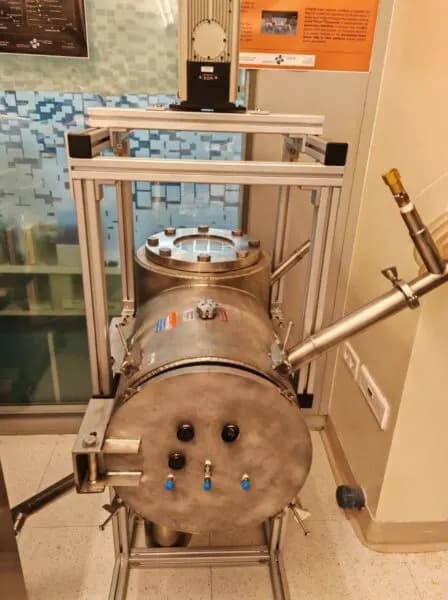
Purdue University research into scattered kaolinite rocks on Mars’ surface shows the dry, dusty planet could have featured a rain-heavy climate billions of years ago.
Help us improve.