The University of Bern-led team used high-resolution images from ExoMars, Mars Express and NASA's MRO to map delta-like landforms near Valles Marineris that resemble river mouths entering standing water. These fan-delta deposits cluster at a consistent elevation (11,975–12,300 ft / 3,650–3,750 m) and date to ~3.37 billion years ago, which the researchers interpret as evidence of an ancient shoreline. The reconstruction suggests a northern-hemisphere ocean at least as large as the modern Arctic Ocean, though further data and in-situ studies are needed to confirm the interpretation.
Orbital Images Suggest an Ancient Arctic-Sized Ocean Once Covered Mars' Northern Hemisphere

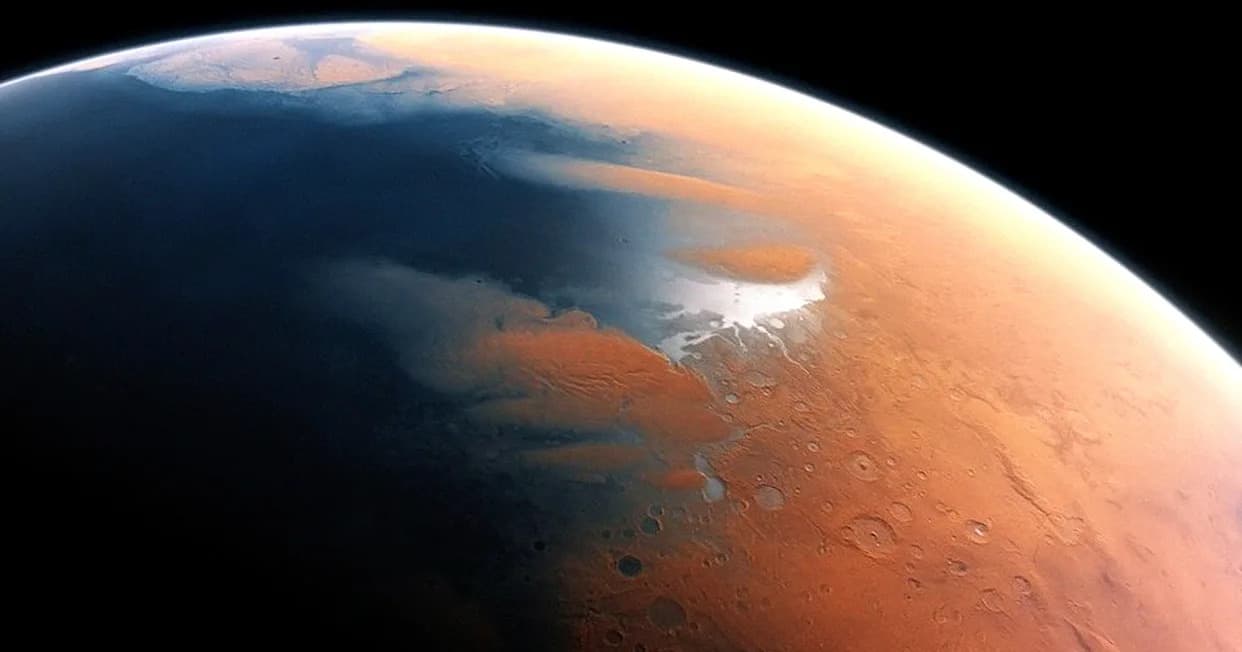
An illustration of Mars as it may have appeared billions of years ago, with a liquid water ocean spanning its northern hemisphere. | Credit: Getty Images
New high-resolution imagery from multiple Mars orbiters offers fresh evidence that an extensive ocean once covered much of Mars' northern hemisphere. Researchers led by the University of Bern report delta-shaped sedimentary deposits and a consistent shoreline elevation around the Valles Marineris region, which they interpret as the mouths of rivers that emptied into a vast, long-lived sea.
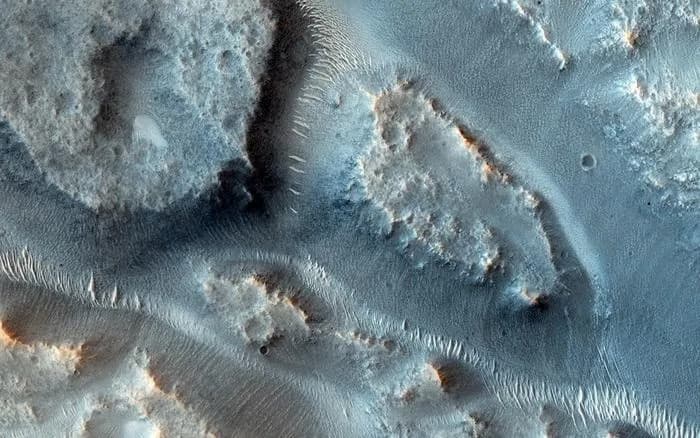
What the team examined: The study — published Jan. 7 in NPJ Space Exploration — combined detailed geomorphological mapping from the ExoMars Trace Gas Orbiter, ESA's Mars Express and NASA's Mars Reconnaissance Orbiter. Investigators focused on landforms adjacent to Valles Marineris, the planet's largest canyon system, which stretches roughly five times the length of Earth's Grand Canyon.
Key findings: The authors identified wedge-shaped "fan deltas" and layered deposits that closely resemble deltas formed where rivers enter calm standing water on Earth. These deposits cluster at a consistent elevation between 11,975 and 12,300 feet (3,650 to 3,750 meters) and were dated to about 3.37 billion years ago. Because the features occur at the same elevation across a broad region of the northern lowlands, the team interprets them as remnants of a former shoreline — evidence for a coherent sea that may have spanned the entire northern hemisphere.
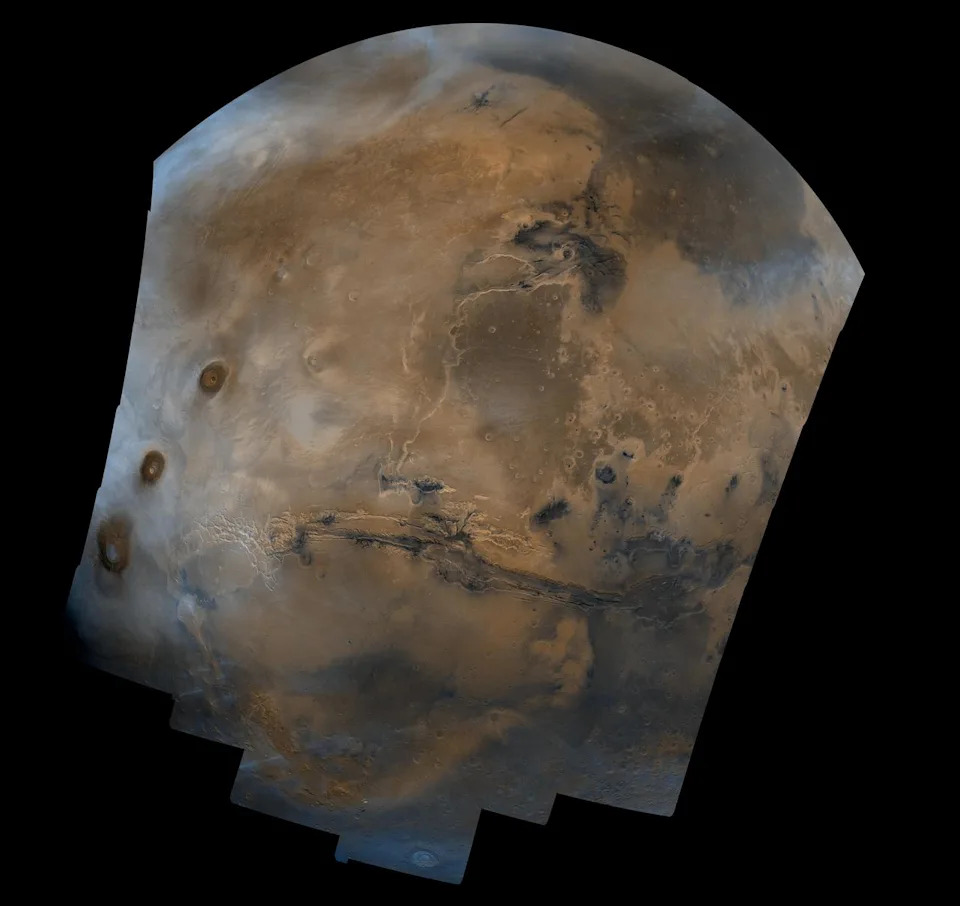
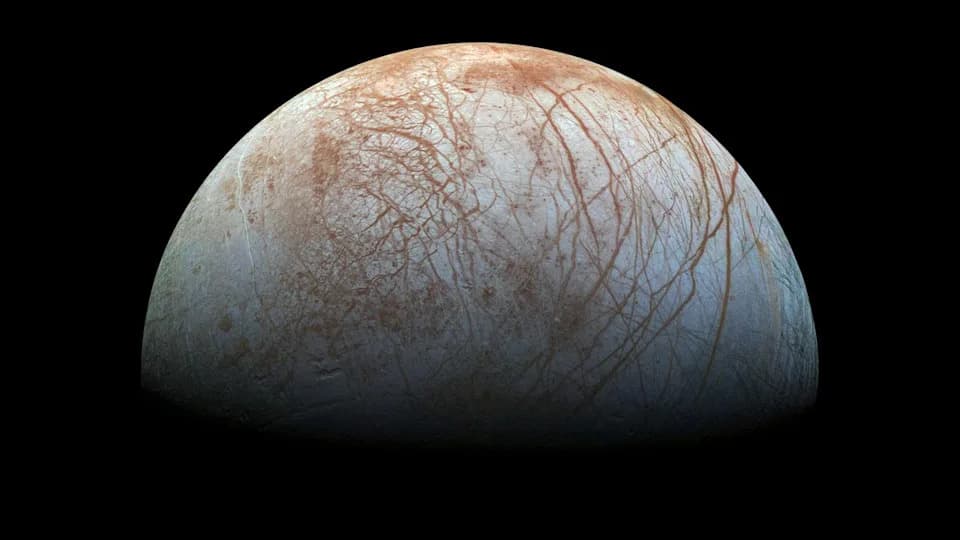
Valles Marineris (center) is the longest canyon in the solar system, and holds many signs of ancient water. Part of the canyon may have been the shoreline where a massive ocean and rivers met. | Credit: NASA/JPL/USGS
Author perspectives and context: Ignatius Argadestya, the study's lead author and a doctoral student at the University of Bern, said the high-resolution images enabled precise mapping of mountains, valleys, and delta-like shapes resembling terrestrial analogs. Co-author Fritz Schlunegger, a geology professor at the University of Bern, noted that while the idea of a northern ocean on ancient Mars is not new, this reconstruction relies on higher-resolution, direct geomorphic evidence for a coastline and a controlled sea level.
"These structures represent the mouth of a river into an ocean," representatives of the University of Bern stated, emphasizing that the new imagery gives clearer, more direct support for a past shoreline than earlier, lower-resolution studies.
Why this matters: If confirmed, a stable northern ocean at least as large as Earth's modern Arctic Ocean would bolster the view that early Mars had abundant surface water and active hydrological cycles. The finding complements rover and orbital discoveries of iron-rich spherules, possible ancient river ripples, and other signs of past water.
Caveats and next steps: Geological interpretation of ancient landforms on Mars remains challenging. While the delta shapes and uniform elevations are compelling, alternative explanations and additional corroborating data (for example, subsurface composition, sediment stratigraphy, or in-situ sampling) would strengthen the case. Future orbital studies and, ultimately, targeted lander or sample-return missions could test this shoreline hypothesis more directly.
Bottom line: Detailed orbital mapping has revealed delta-like deposits and a consistent elevation band around Valles Marineris consistent with an ancient coastline that may mark an Arctic-sized ocean covering much of Mars' northern hemisphere about 3.37 billion years ago.
Help us improve.