Researchers used high-resolution images from ESA and NASA orbiters to identify delta-like fan deposits in Coprates Chasma (Valles Marineris) that closely match river mouths on Earth. By mapping these features and reconstructing sea level, the team infers a northern-hemisphere ocean at least the size of the Arctic Ocean existed on Mars around three billion years ago. The study, published in NPJ Space Exploration, strengthens evidence that early Mars was water-rich, though implications for ancient life remain uncertain.
New Study Finds Delta-Like Formations Pointing to a Vast Ancient Ocean on Mars
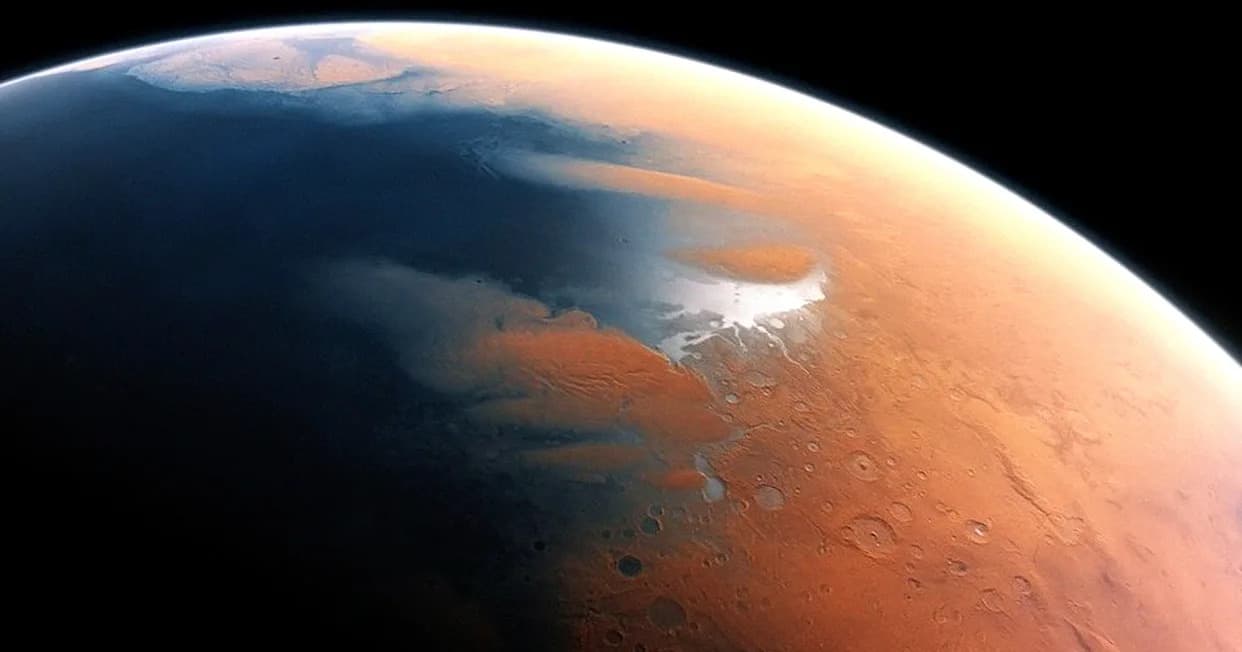
Researchers used satellite data to calculate and simulate the sea level in a canyon, getting a glimpse of a huge ocean.
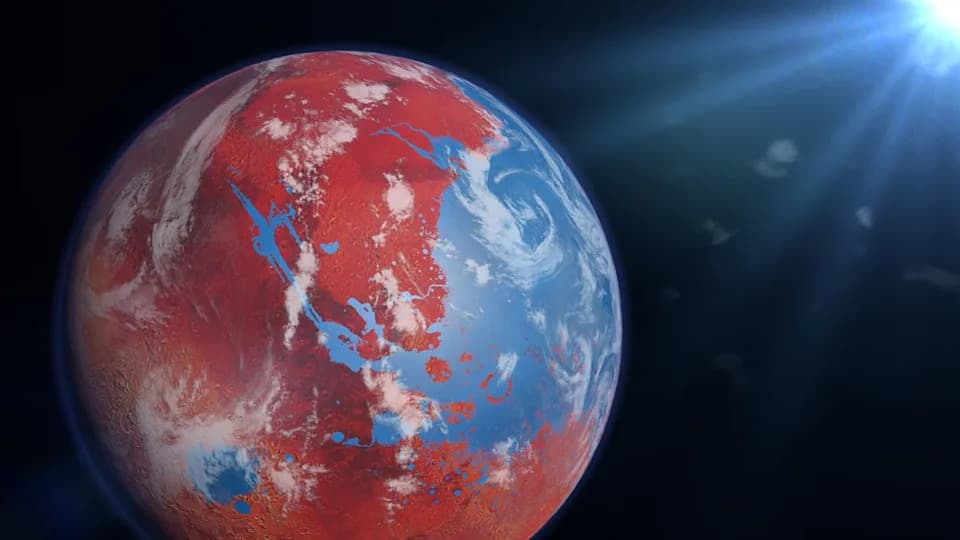
Scientists have long suspected that Mars once hosted abundant surface water. A new international study strengthens that view by identifying delta-like landforms in Coprates Chasma, part of the immense Valles Marineris canyon system, and using them to reconstruct an ancient sea level that would have filled much of Mars' northern hemisphere.
Delta Evidence From High-Resolution Orbital Data
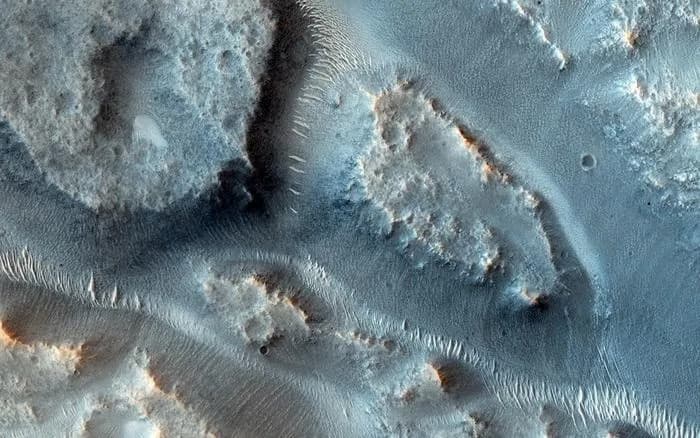
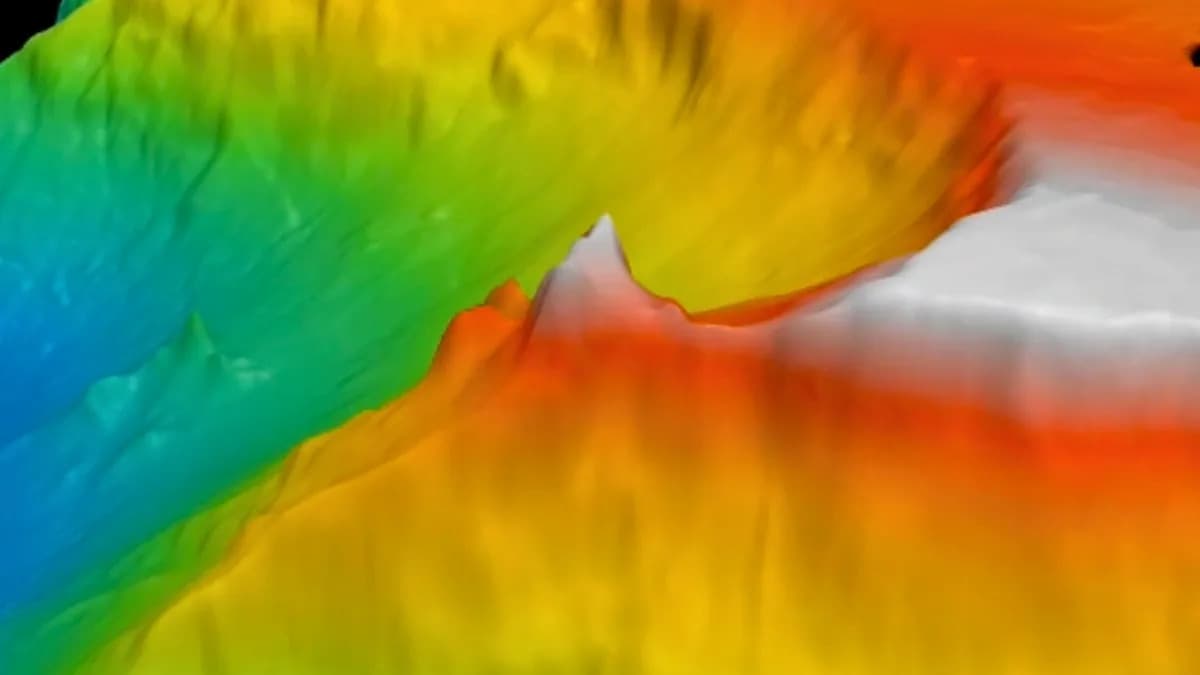
The team analyzed high-resolution imagery and topographic data from the European Space Agency’s ExoMars Trace Gas Orbiter and Mars Express, together with NASA’s Mars Reconnaissance Orbiter. The researchers report geomorphological features around Valles Marineris that closely resemble fan-shaped "deltas" found where rivers meet standing bodies of water on Earth.
"The unique high-resolution satellite images of Mars have enabled us to study the Martian landscape in great detail by surveying and mapping," said coauthor Ignatius Argadestya, a PhD student at the University of Bern.
Argadestya and colleagues mapped these fan deltas and compared their shapes and elevations with terrestrial analogs. From the distribution and elevations of the deltas, they inferred a past sea level during a period when surface water on Mars was most extensive—roughly three billion years ago.
"The structures that we were able to identify in the images are clearly the mouth of a river into an ocean," said coauthor Fritz Schlunegger, professor of geology at the University of Bern.
What the Reconstruction Suggests
Using the delta geometries as constraints, the study estimates that the ocean into which these deltas emptied would have been at least the size of Earth’s Arctic Ocean and may have covered large parts of Mars' northern hemisphere. The authors describe this as evidence for one of the deepest and largest former oceans proposed for Mars to date.
The work is published in NPJ Space Exploration and builds on previous hypotheses of ancient Martian oceans by providing a sea-level reconstruction tied to identifiable coastal and deltaic features seen in high-resolution imagery.
Implications and Caveats
While the findings strengthen the case that early Mars was a water-rich, potentially habitable world, the authors caution that the implications for ancient life remain uncertain. Additional data and modeling are needed to refine the timing, extent, and persistence of the inferred ocean and to evaluate whether conditions could have supported biology.
Overall, the study offers a compelling new window into Mars' watery past and demonstrates how modern orbital datasets can be used to reconstruct ancient environments on other planets.
Help us improve.