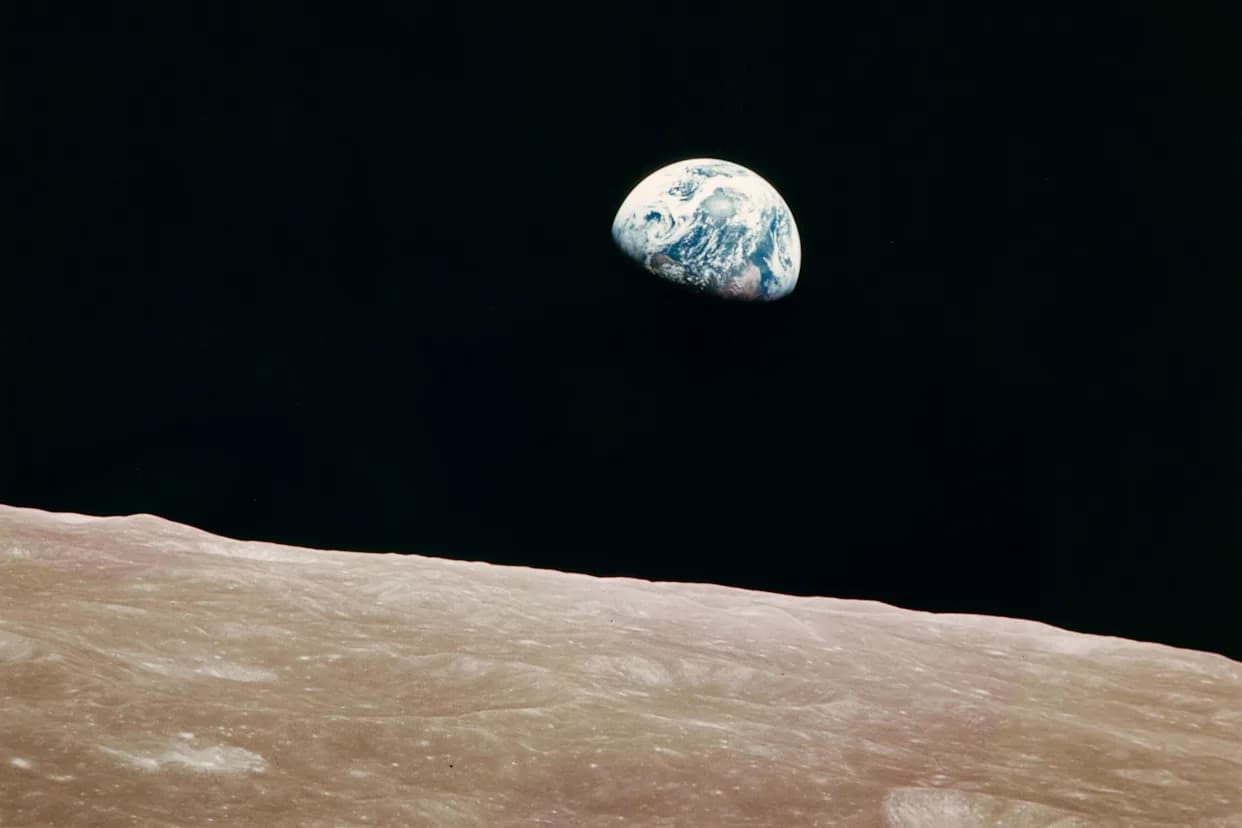
The James Webb Space Telescope has produced a new, high‑resolution dark matter map — described by researchers as twice as sharp as previous maps — revealing filaments that link galaxy clusters from roughly 10 billion years ago. Using gravitational lensing, the map shows how dark matter acted as a gravitational scaffold that gathered ordinary matter into the first large structures. Teams are now working to build a three‑dimensional version of the map to probe dark matter’s properties more directly.
Webb’s Sharpest Dark Matter Map Reveals 10‑Billion‑Year‑Old Cosmic Web
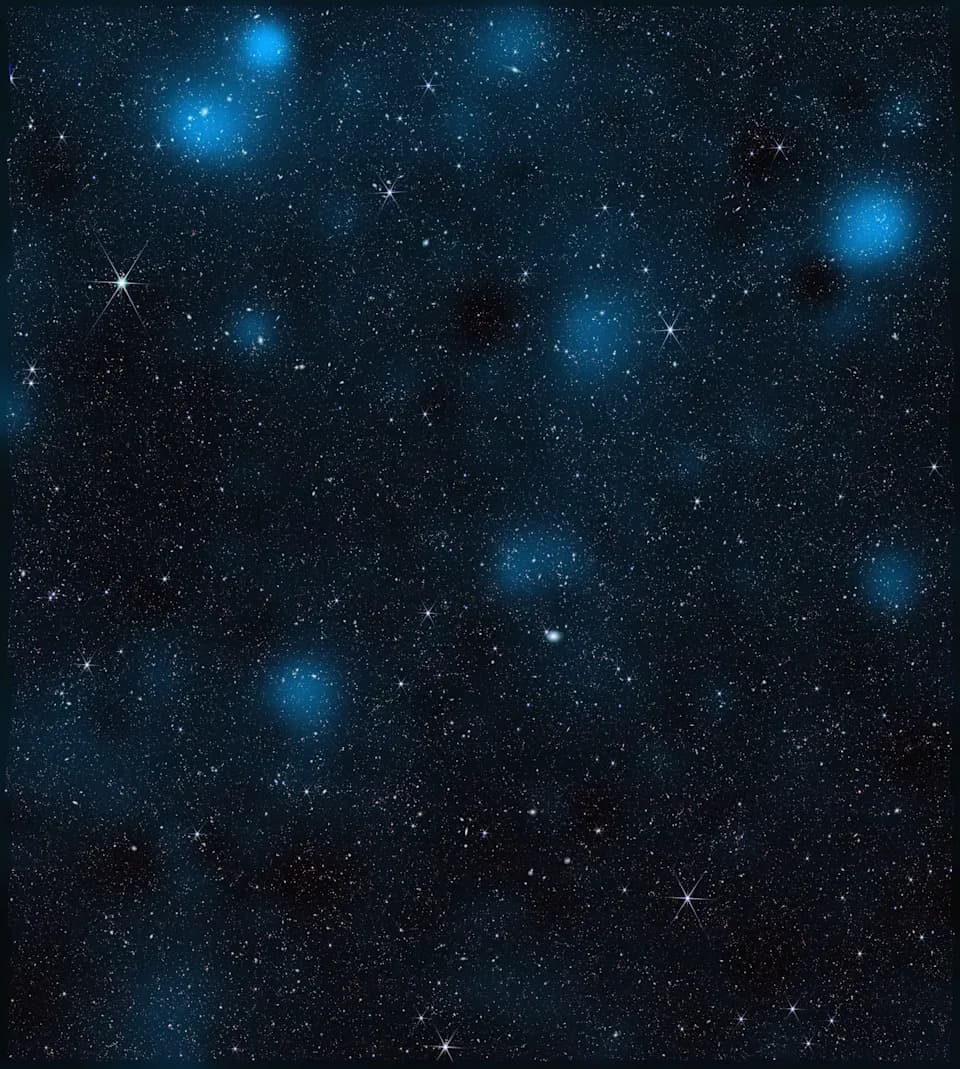
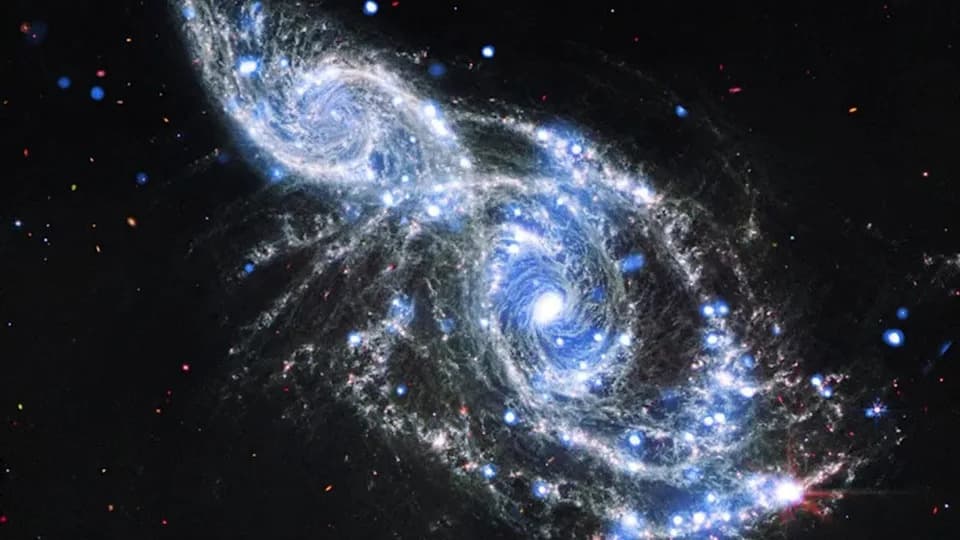
Only by studying these distortions across large swathes of the universe, can scientists get closer to unmasking dark matter and its various hiding places. | Credit: Marian Femenias-Moratinos / Getty Images
A new, high‑resolution map produced using NASA’s James Webb Space Telescope offers one of the clearest looks yet at the invisible structure that shapes the universe: dark matter. Published in Nature Astronomy, the images trace galaxy clusters as far back as about 10 billion years and reveal the filamentary threads of dark matter that connect them.
What the Webb Images Show
The Webb observations use gravitational lensing — the way massive objects bend and distort light from background galaxies — to infer where dark matter lies. According to study lead author Diana Scognamiglio of NASA’s Jet Propulsion Laboratory, this dark matter map is "twice as sharp as any dark matter map made by other observatories." Building on Hubble data, the map highlights dark matter's imprint on large cosmic structures, including galaxy clusters that span millions of light‑years.
Why This Matters
Dark matter does not emit or absorb light, so scientists cannot see it directly. Instead they measure its gravitational effects on visible matter and light. The new Webb map strengthens the prevailing picture that dark matter acts as a gravitational scaffolding, drawing ordinary matter into clumps that grew into galaxies and clusters over cosmic time. As Durham University physicist Richard Massey puts it, this scaffolding is where "everything else falls and is built into galaxies."
“Dark matter is one of the most persistent and important puzzles in all of physics,” noted Elizabeth Landau in National Geographic.
Next Steps
Researchers are now working to convert these two‑dimensional maps into three‑dimensional reconstructions, which could offer new constraints on dark matter’s distribution and properties. The improved resolution from Webb opens the door to more precise studies of how dark matter and ordinary matter interacted across the history of the universe.
Credits: Study published in Nature Astronomy; reporting by National Geographic, The Associated Press and BBC Sky at Night; lead author Diana Scognamiglio (JPL); co‑author Richard Massey (Durham University).
Help us improve.