The James Webb Space Telescope used its aperture masking interferometer (AMI) to capture the sharpest image yet of the supermassive black hole environment in the Circinus galaxy, 13 million light-years away. The team found that roughly 87% of the infrared excess originates from the dusty accretion disk feeding the black hole, while under 1% comes from outflows. This finding reshapes how astronomers interpret obscured galactic cores and highlights AMI’s power for future studies.
James Webb’s Sharpest View Around a Black Hole Reveals Dusty Disk, Solving a Galactic Puzzle
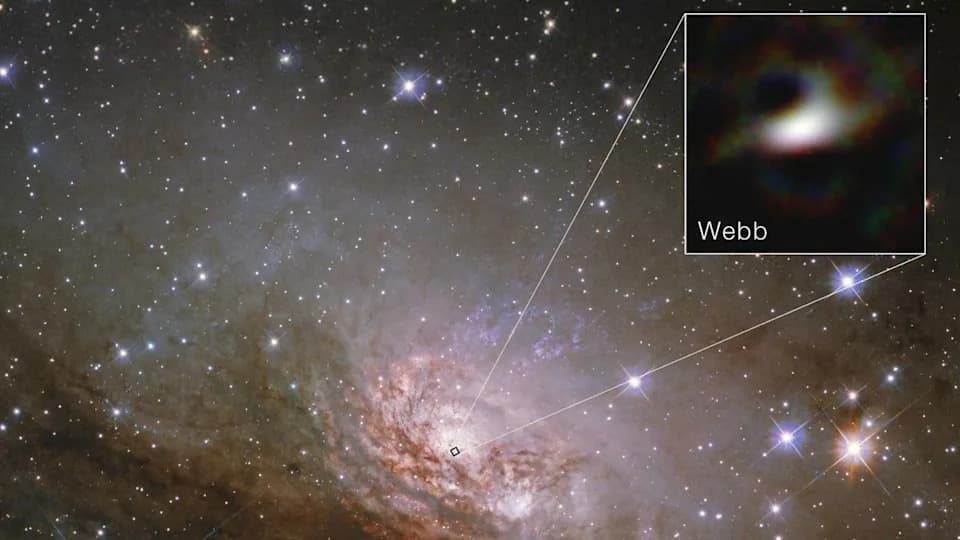
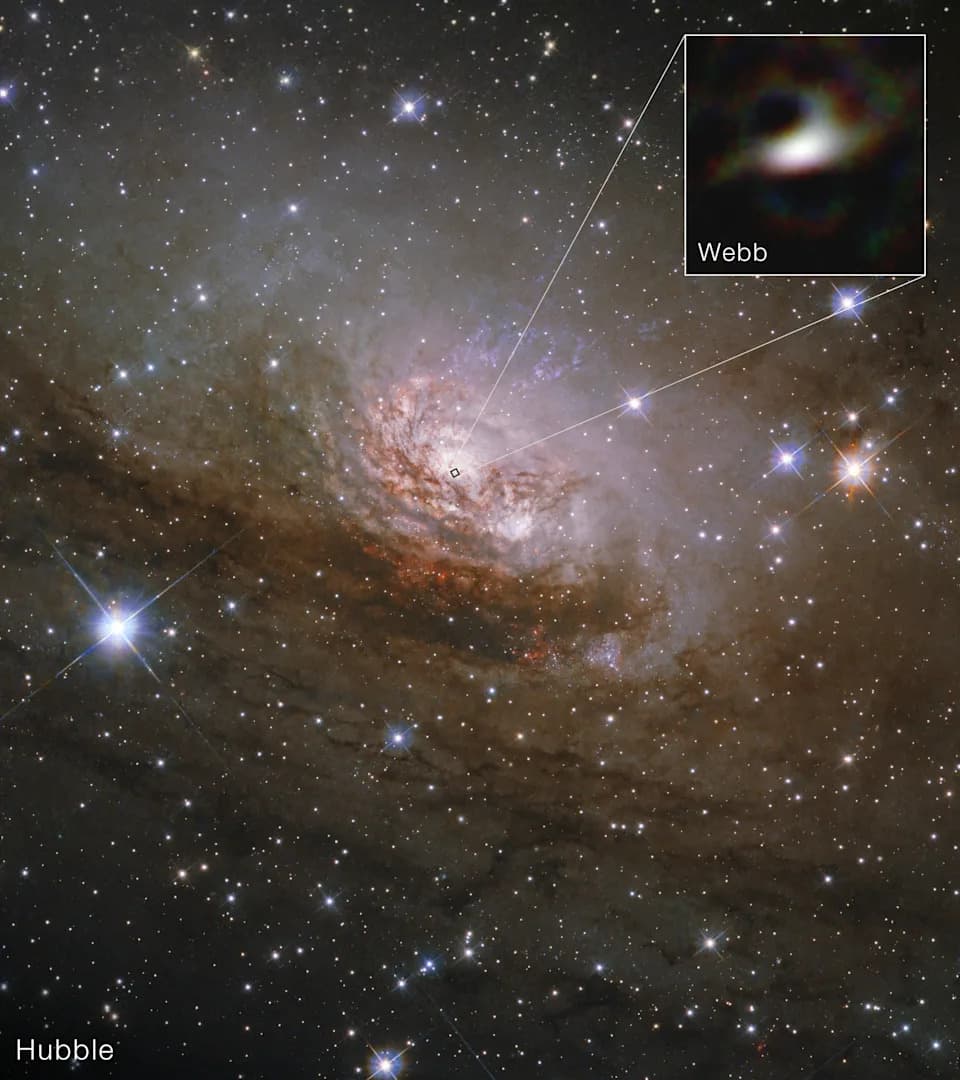
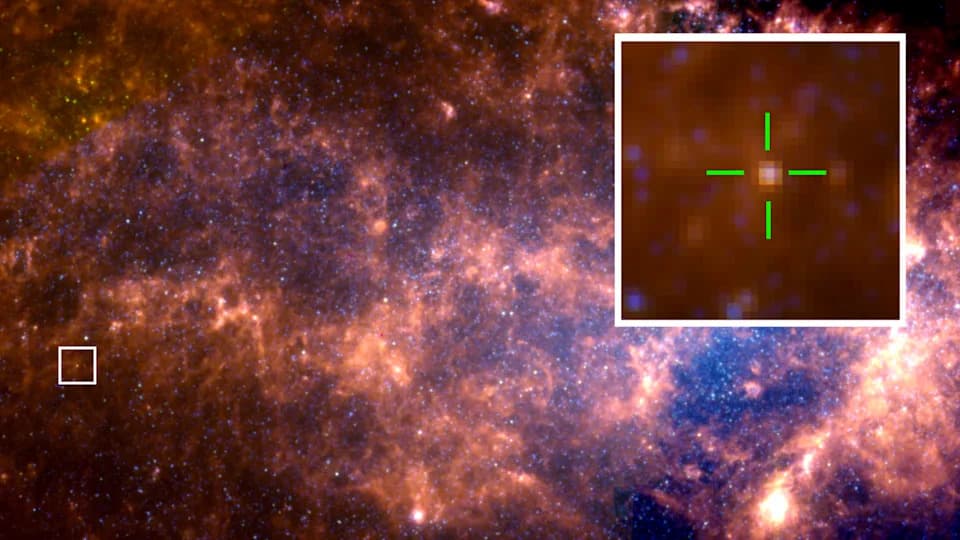
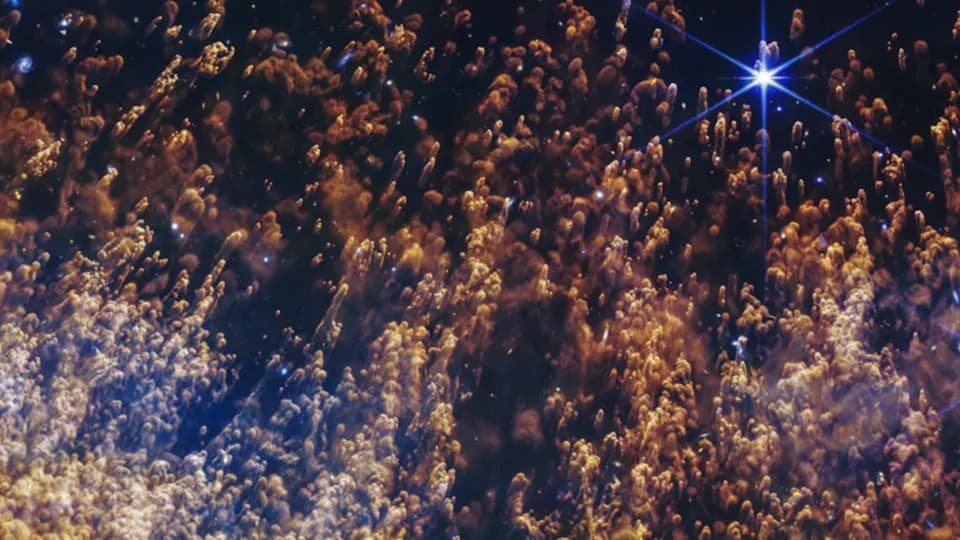
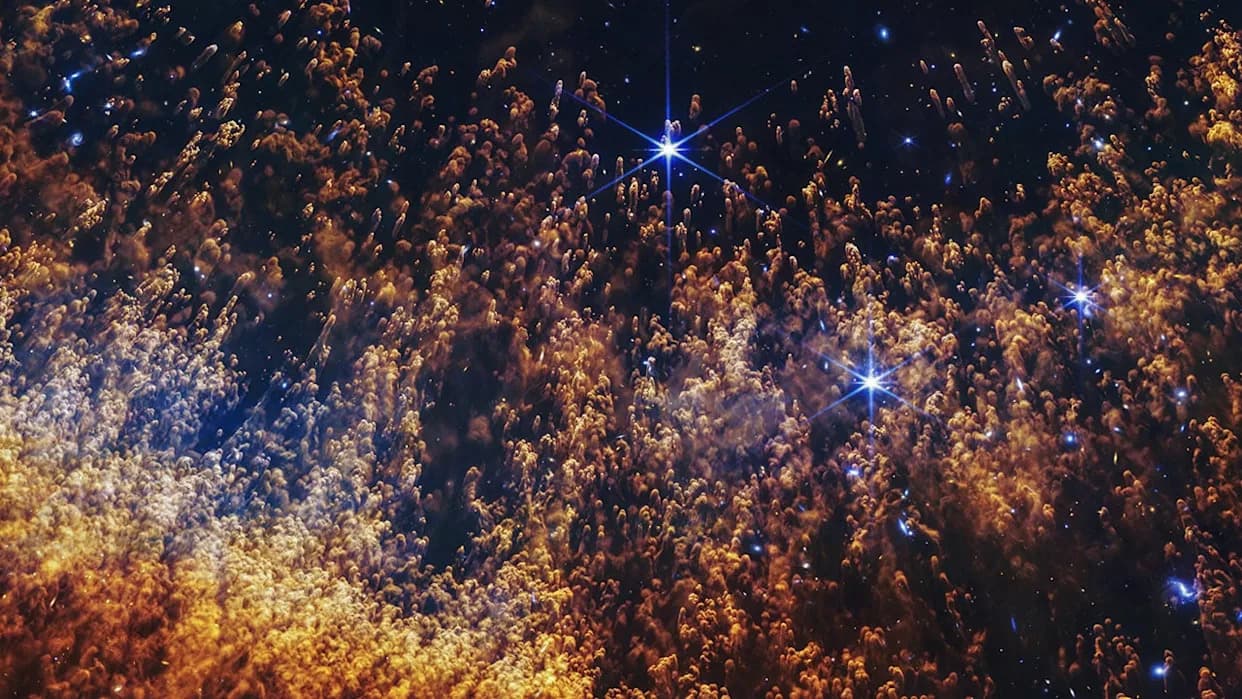
The James Webb telescope has zoomed in on the structures surrounding a supermassive black hole (inset) in unprecedented detail. A Hubble telesscope image (background) shows the cosmic context. | Credit: NASA, ESA, CSA, Enrique Lopez-Rodriguez (University of South Carolina), Deepashri Thatte (STScI); Image Processing: Alyssa Pagan (STScI); Acknowledgment: NSF's NOIRLab, CTIO
The James Webb Space Telescope (JWST) has produced its sharpest image yet of the region surrounding a supermassive black hole, offering a solution to a decades-old question about the source of excess infrared light seen near some active galactic nuclei.
Clearer View of Circinus’ Central Engine
An international team used JWST’s aperture masking interferometer (AMI), part of the NIRISS instrument, to probe the center of the nearby Circinus galaxy — about 13 million light-years from Earth. By effectively doubling Webb’s resolving power (to an equivalent aperture of roughly 13 meters), AMI allowed researchers to resolve a 33-light-year-wide area around the galaxy’s central supermassive black hole (SMBH).
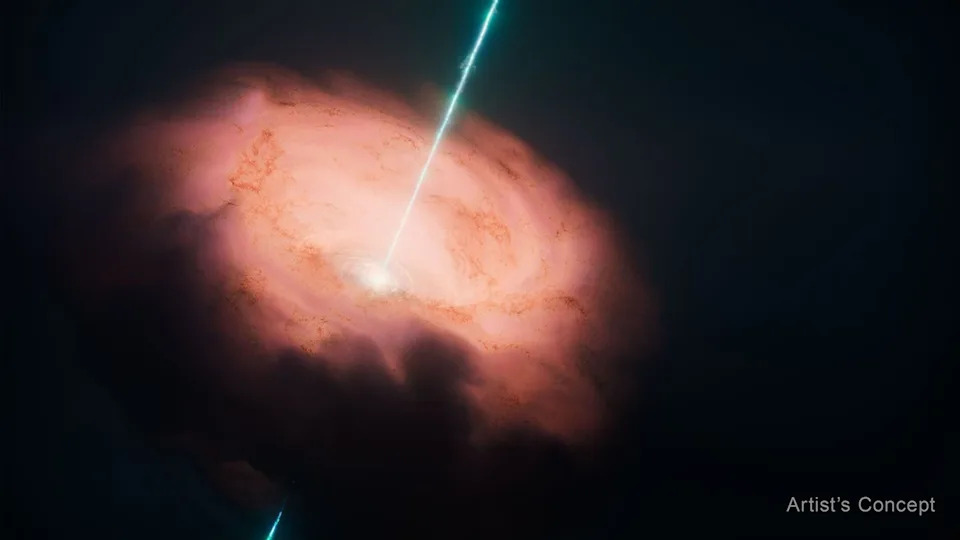
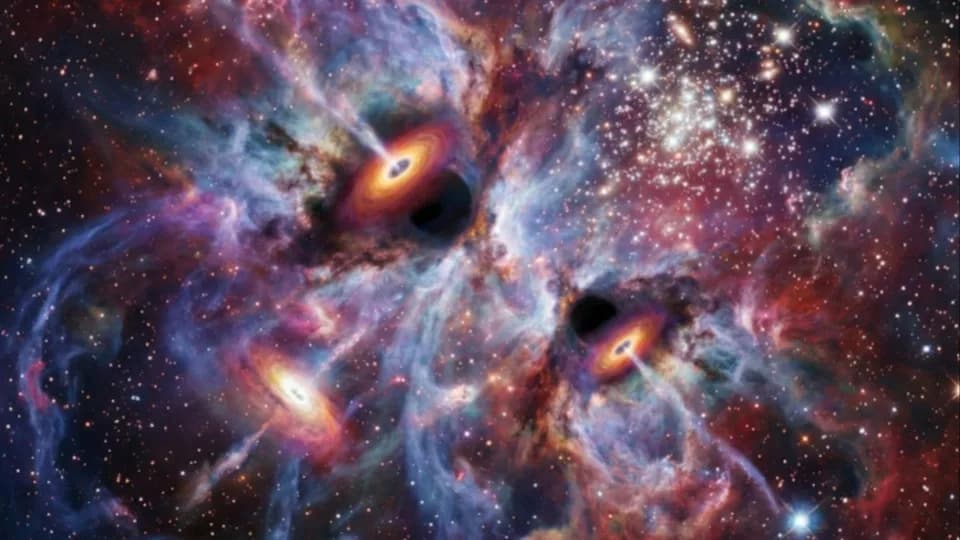
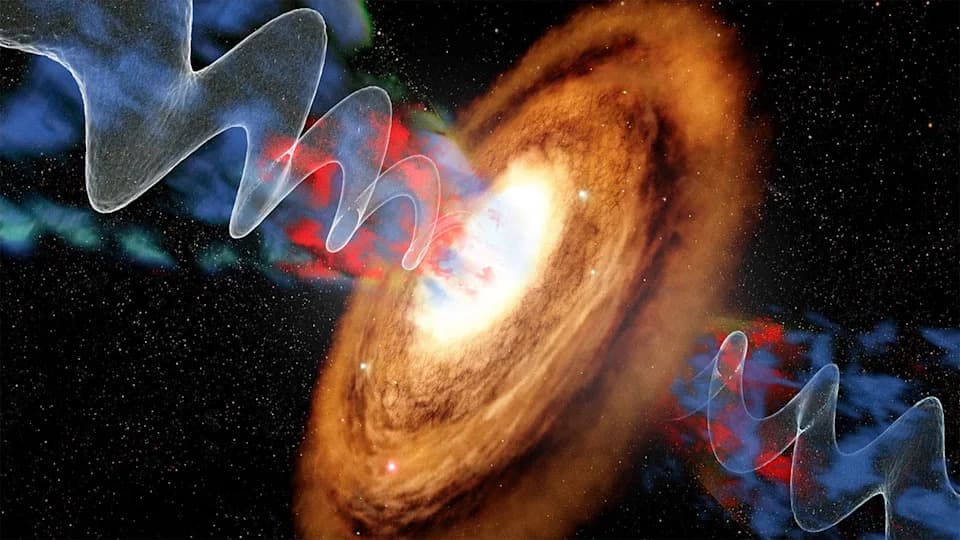
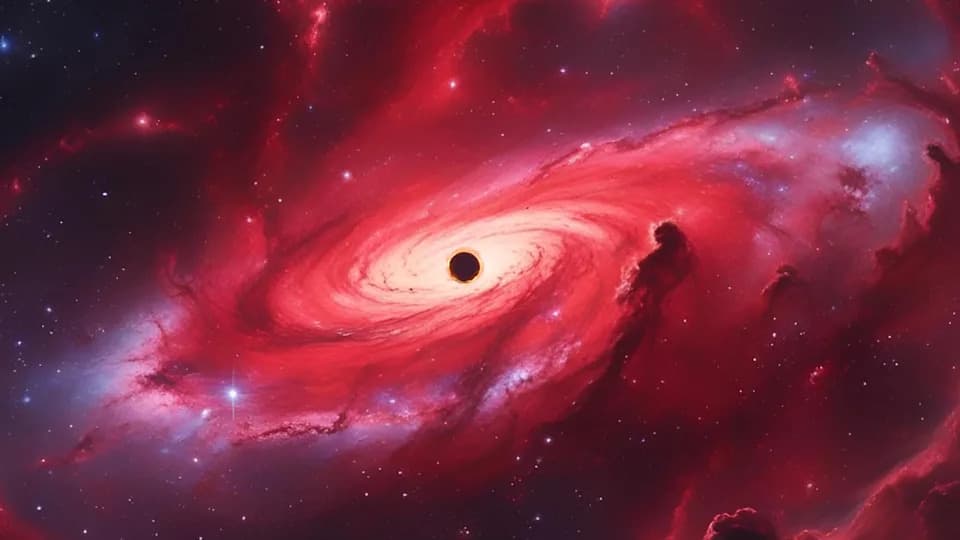
An illustration of a supermassive black hole spewing an energetic outburst into space | Credit: NASA, ESA, CSA, Ralf Crawford (STScI)
Dusty Accretion Disk, Not Hot Winds
Combining JWST data with extensive ground-based observations and modeling, the team found that roughly 87% of the previously unexplained infrared excess originates on the inner surface of the dusty disk feeding the black hole — the inner wall of the torus and the accretion flow — while less than 1% comes from energetic outflows or winds. This overturns the common interpretation that hot, dusty winds were the dominant source of the infrared excess in similar active galactic nuclei.
"The infrared excess is coming from the dusty disk that's falling into the SMBH, rather than from material flowing away from it," said lead author Enrique Lopez-Rodriguez.
Why This Matters
Understanding whether excess infrared emission is produced by inflowing dust (the accretion disk/torus) or by outflowing winds affects how astronomers model black hole growth and feedback. If accretion dominates the observed infrared emission, it changes estimates of how SMBHs feed and how they influence star formation and the evolution of their host galaxies. The team suggests the observed accretion activity in Circinus could be suppressing central star formation, though targeted JWST observations of star-formation tracers are required to confirm that effect.
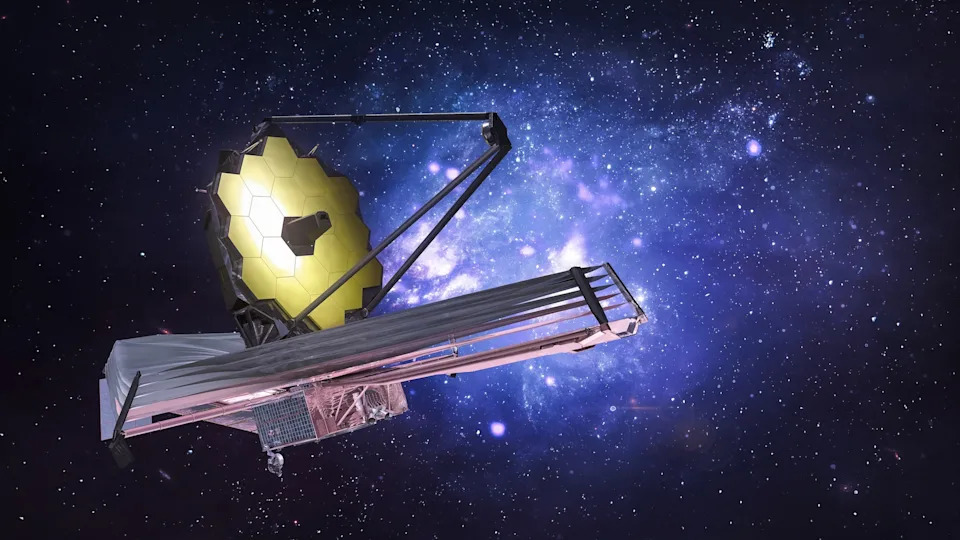
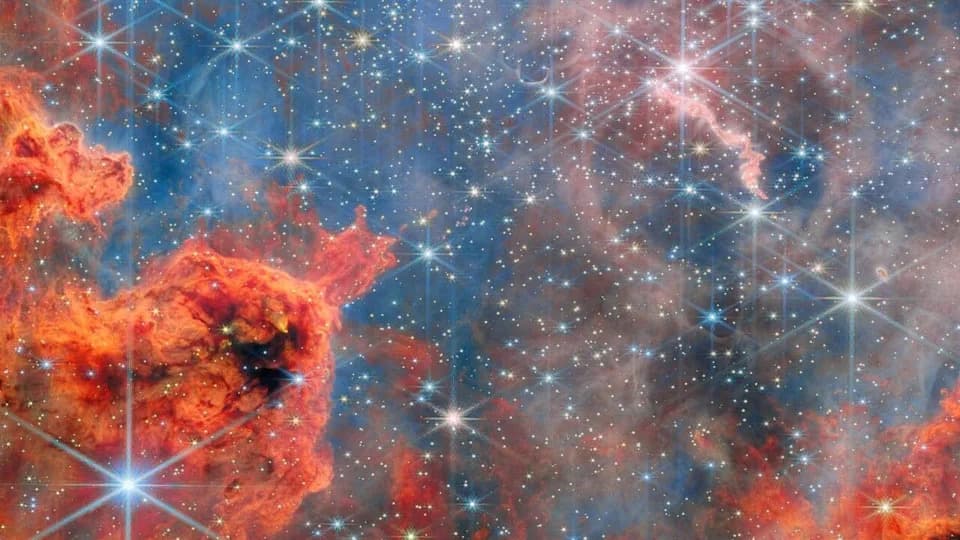
An illustration of the James Webb Space Telescope in orbit | Credit: Getty Images
Interferometry from Space: AMI’s Wide Reach
Ground-based interferometry combines light from multiple telescopes to achieve high resolution, but JWST’s AMI replicates this technique in space using a mask with seven hexagonal apertures. The approach not only enabled this breakthrough in Circinus, it has already provided detailed views of other targets — for example, volcanic activity on Io — and promises applications across solar system and stellar studies, such as detecting moons around asteroids or measuring orbits in multiple-star systems.
The study was published Jan. 13 in Nature Communications and involved co-authors including Joel Sanchez-Bermudez and Julien Girard. By expanding AMI observations to more active SMBHs, astronomers aim to determine whether Circinus is typical or exceptional in having its infrared excess dominated by a dusty accretion disk.
Key facts: JWST AMI resolved a 33-light-year region, traced ~87% of the infrared excess to the dusty accretion disk, found <1% contribution from outflows, and demonstrated AMI’s value for diverse astronomical targets.
Help us improve.