A genetic analysis of remains from Romito Cave in southern Italy shows a teenage girl who lived about 12,000 years ago had acromesomelic dysplasia, Maroteaux type (AMDM), caused by mutations in the NPR2 gene. Romito 2 was about 3 ft 7 in (110 cm) tall and carried two abnormal NPR2 copies; an adult buried with her, Romito 1, was a first-degree relative with one abnormal copy and measured about 4 ft 9 in (145 cm). Published Jan. 28 in The New England Journal of Medicine, the study represents the earliest DNA-confirmed genetic diagnosis in an anatomically modern human and suggests her community provided care despite her mobility limits.
12,000-Year-Old Teen From Italy Had Rare Dwarfism, Ancient DNA Reveals
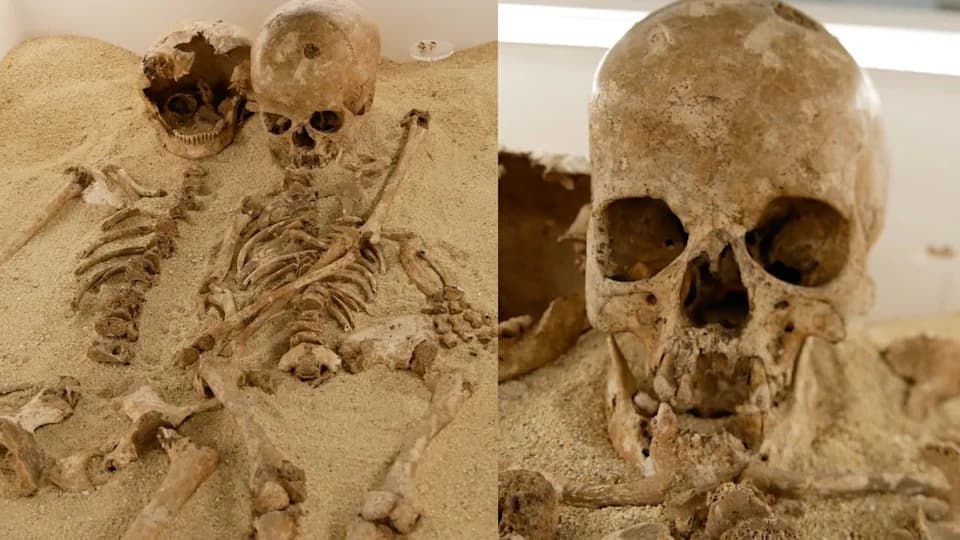
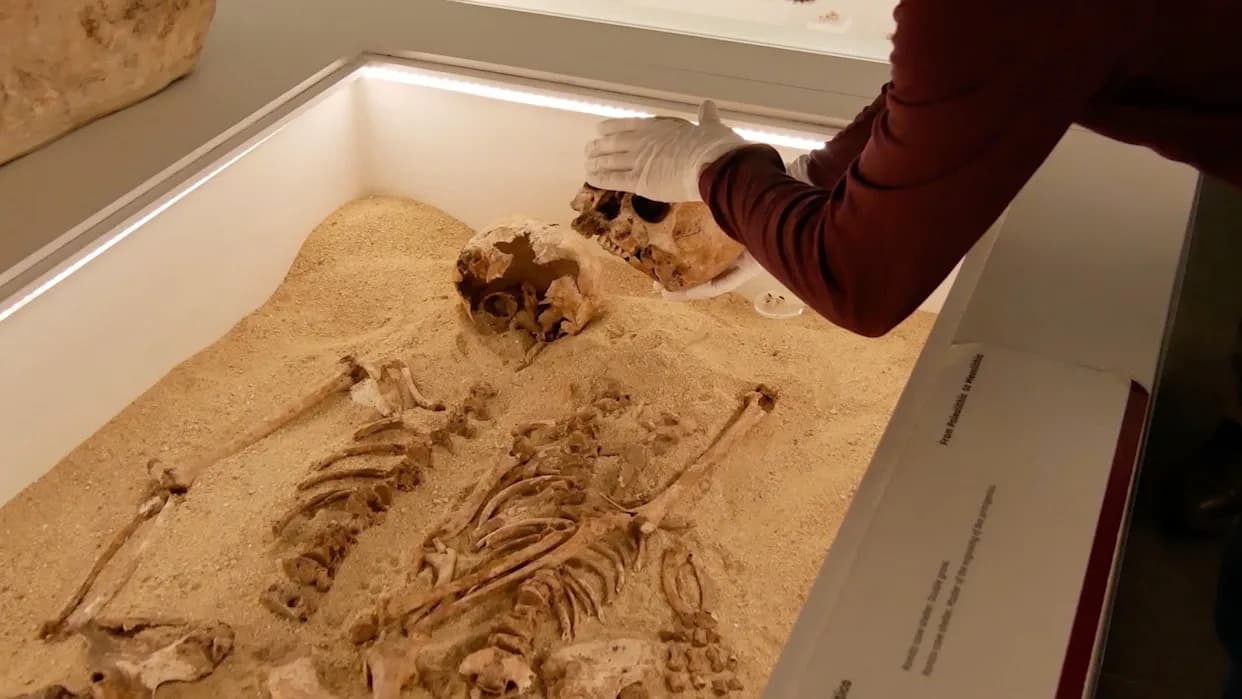
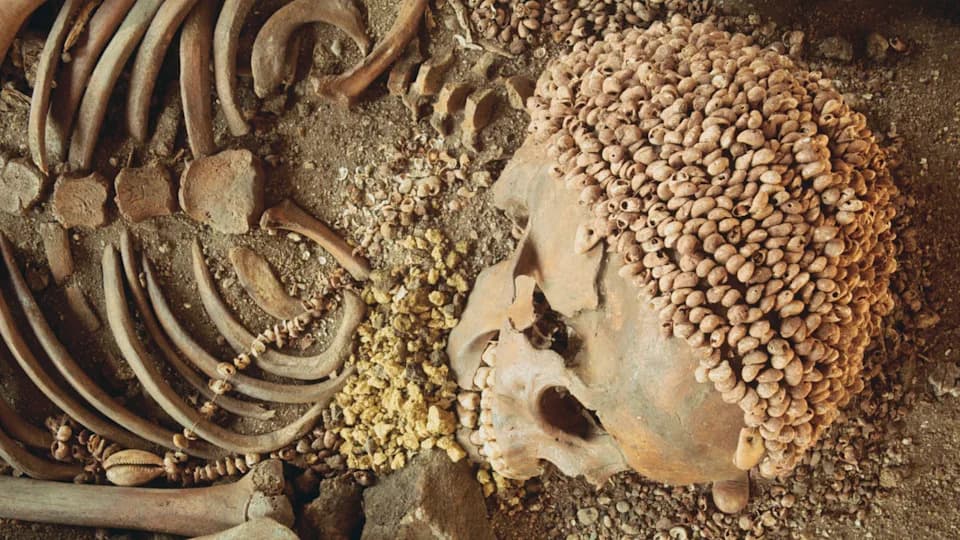
Researchers have identified a rare form of dwarfism in a Stone Age skeleton. | Credit: Adrian Daly
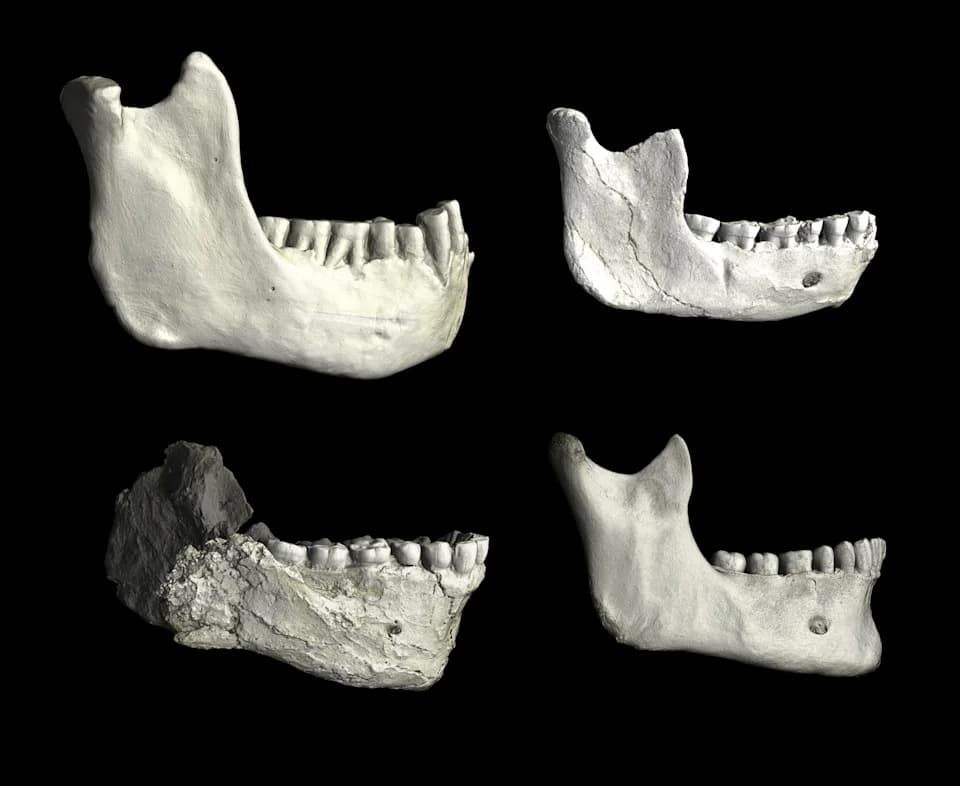
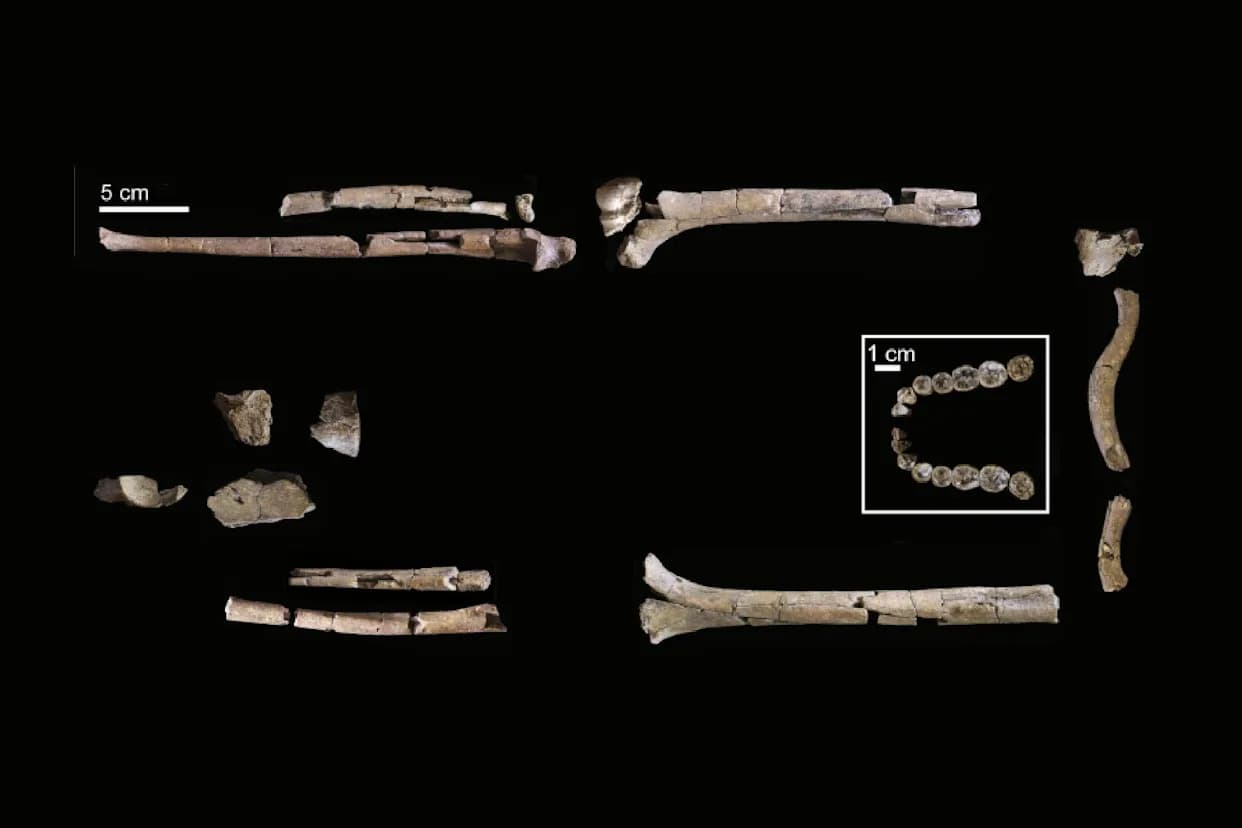
A DNA study of human remains from Romito Cave in southern Italy has identified a rare genetic form of dwarfism in a teenager who lived about 12,000 years ago. The analysis indicates the individual — nicknamed Romito 2 — had acromesomelic dysplasia, Maroteaux type (AMDM), a disorder that severely shortens the forearms, lower legs, hands and feet.
Genetic Findings and Significance
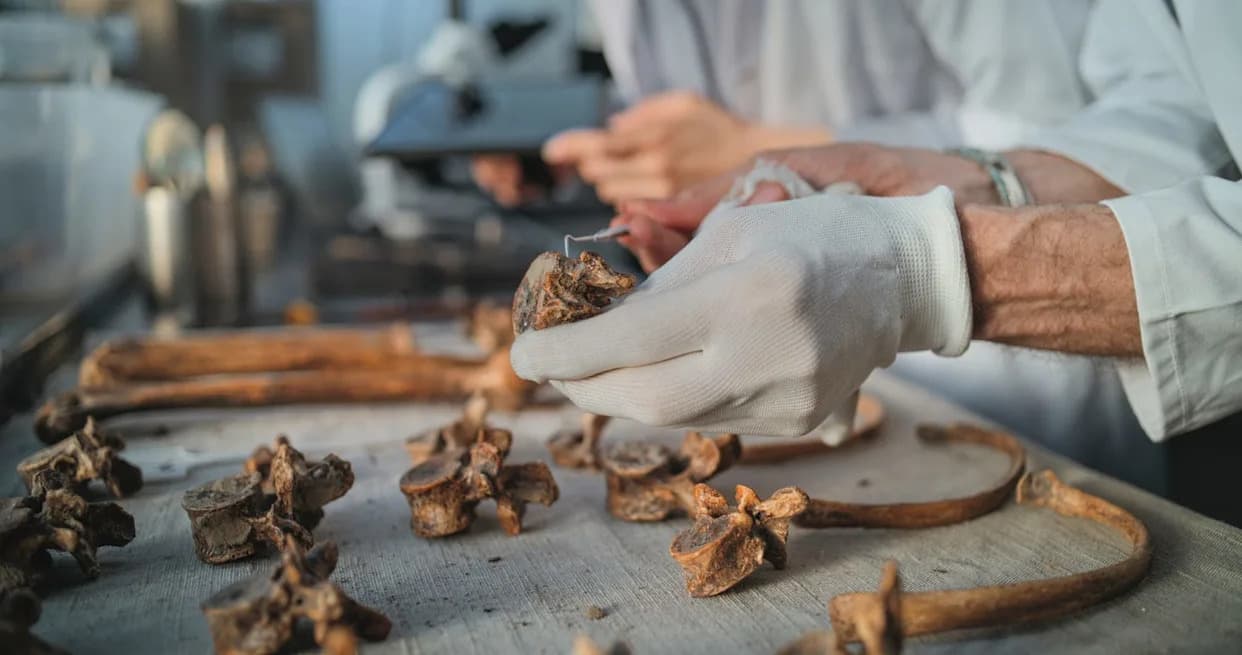
Researchers sequenced ancient DNA recovered from skeletal material, including tissue from the left inner ear, and identified mutations in the NPR2 gene. Romito 2 carried two abnormal copies of NPR2, which explains the pronounced limb shortening observed in her skeleton. Study co-author Adrian Daly, an endocrinology researcher at the University Hospital of Liège, described this as the earliest DNA-confirmed genetic diagnosis in an anatomically modern human, dating to roughly 12,000–13,000 years ago.
Who Were Romito 2 And Romito 1?
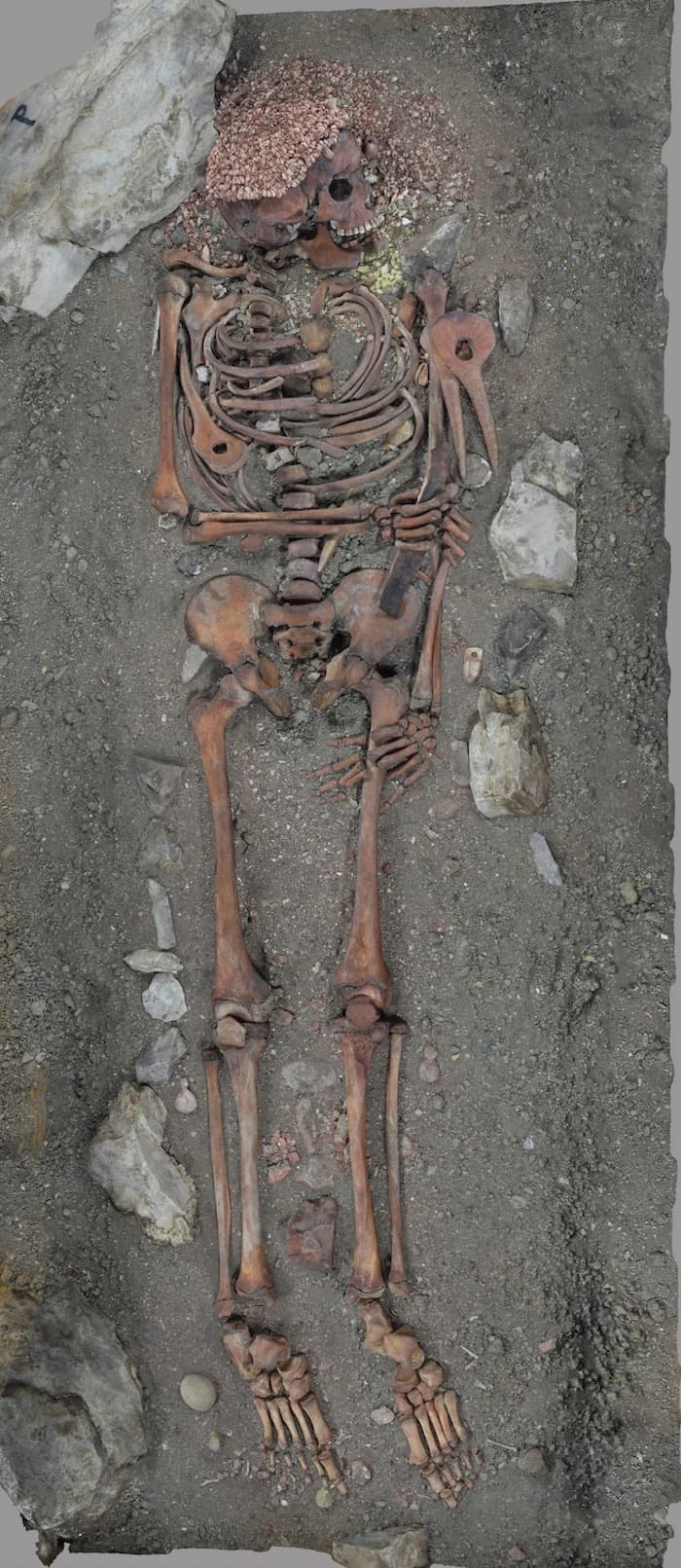
Romito 2 stood about 3 feet 7 inches (110 cm) tall. Earlier assessments had misidentified the skeleton as male, but DNA from the inner ear confirmed the individual was female. She was buried in an embraced position with an adult labeled Romito 1. DNA testing showed Romito 1 was also female and a first-degree relative — likely her mother or an exact sister — and measured about 4 feet 9 inches (145 cm).
Romito 1 carried a single abnormal copy of NPR2, which likely reduced her stature modestly but did not produce the severe dwarfism seen in Romito 2, who had two abnormal copies.
Context And Community Care
Both individuals belong to the Villabruna genetic cluster, a hunter-gatherer population that spread from southern into central and western Europe after the last Ice Age. The researchers found no evidence of close inbreeding in these individuals, though the local population around Romito Cave was probably small.
There are no clear signs of trauma on either skeleton, and chemical and dietary indicators show Romito 2's nutrition matched that of other people buried at the site. The authors emphasize this suggests she received care from her family group despite mobility limitations.
"Identifying with near certainty a single base change in a gene in a person that died between 12,000 and 13,000 years ago is the earliest such diagnosis by about 10 millennia," the team notes.
Publication And Methods
The study was published on Jan. 28 in The New England Journal of Medicine. The diagnosis builds on archaeological context (the Romito Cave burials, first found in 1963) and state-of-the-art ancient DNA sequencing techniques that allow researchers to detect single-base changes in ancient genomes.
What This Means
Beyond adding a striking individual story to the archaeological record, the study demonstrates that high-resolution genetic diagnosis of single-gene disorders is possible even in very ancient human remains. It also provides rare evidence of familial transmission of a genetic disease and of social care in a Stone Age community.
Help us improve.