The richly furnished burial of a 15-year-old found at Arene Candide Cave shows skeletal injuries consistent with a bear mauling roughly 27,000 years ago. Researchers using optical magnification identified bite and claw marks — including a dislodged mandible, a groove on the skull, and a fractured clavicle with no healing — suggesting the youth lived several days after the attack. The elaborate grave goods, including a handwoven shell cap, underline ritual behaviors of Ice Age communities. The study appears in the Journal of Anthropological Sciences (Vol. 103, 2025).
15-Year-Old 'Il Principe' Likely Mauled by Bear 27,000 Years Ago, Reanalysis Shows
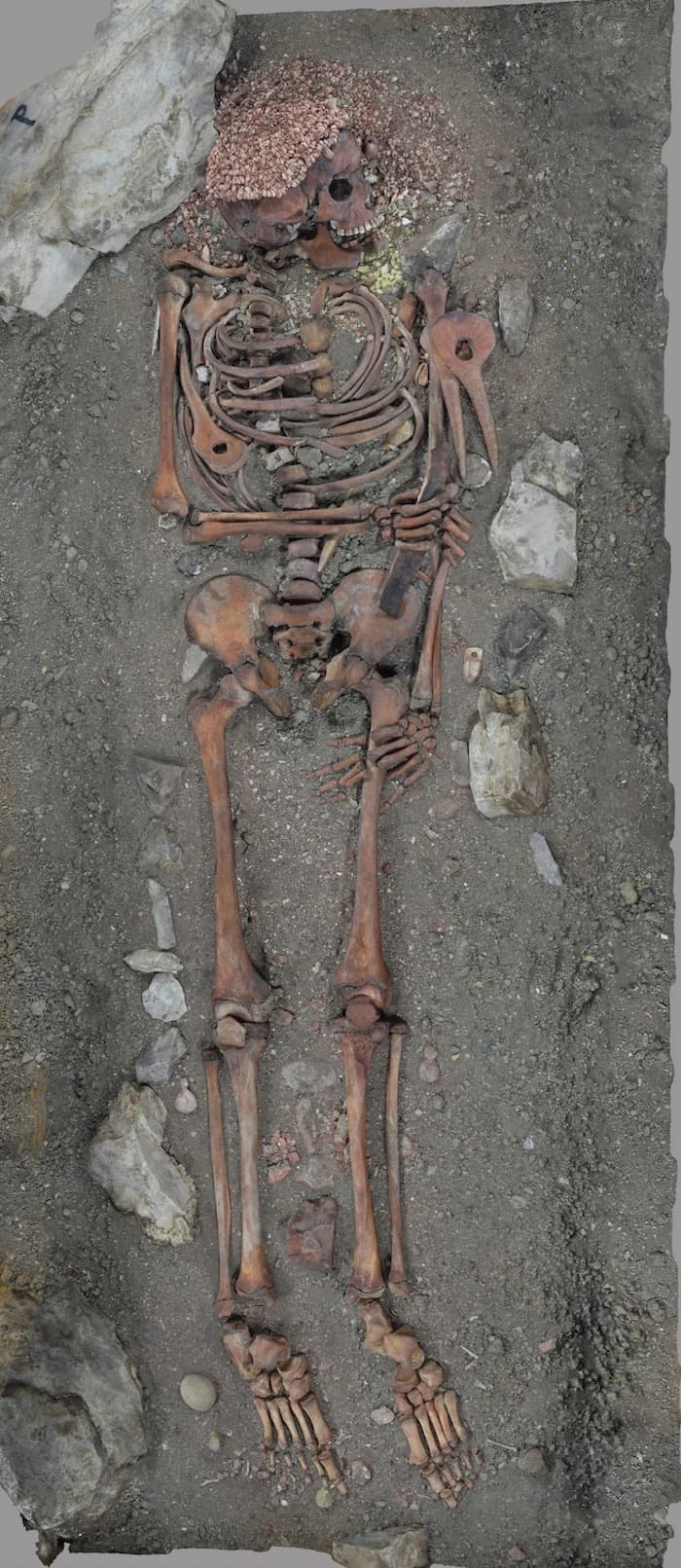
The “Il Principe” burial, as displayed at the Museo di Archeologia Ligure in the Pegli neighborhood of Genoa in Italy.From “New Signs of Skeletal Trauma in the Upper Paleolithic Principe from Arene Candide Cave (Liguria, Italy) Bear Novel Insights into the Circumstances of His Death,” by Stefano Sparacello et al., inJournal of Anthropological Sciences, Vol. 103; 2025
Researchers reexamining the richly furnished grave of a 15-year-old discovered at Arene Candide Cave (Liguria, Italy) report skeletal injuries consistent with a bear mauling about 27,000 years ago. The adolescent, nicknamed "Il Principe" ("The Prince") because of the grave goods buried with him, was first excavated in 1942 and has been the subject of renewed study using optical magnification techniques.
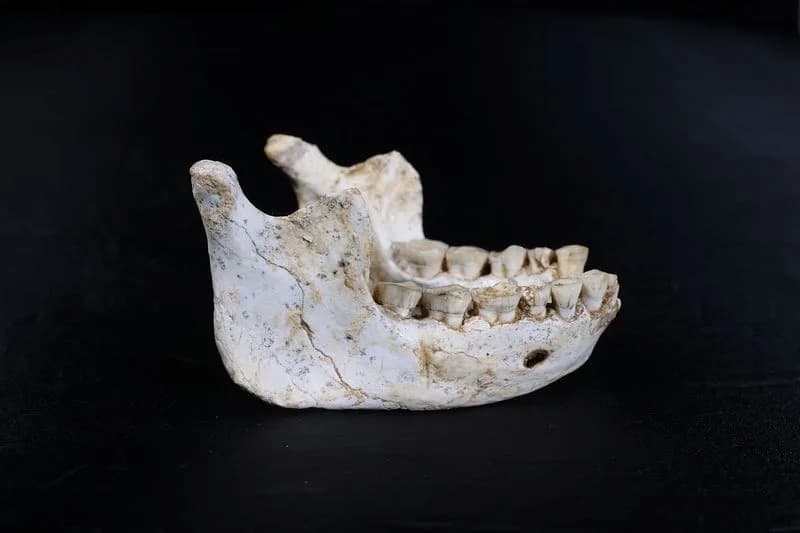
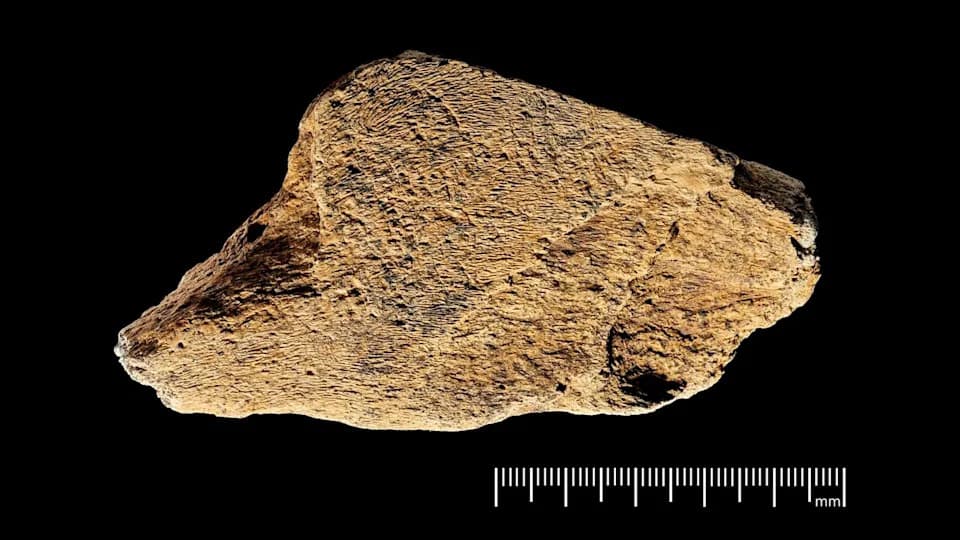
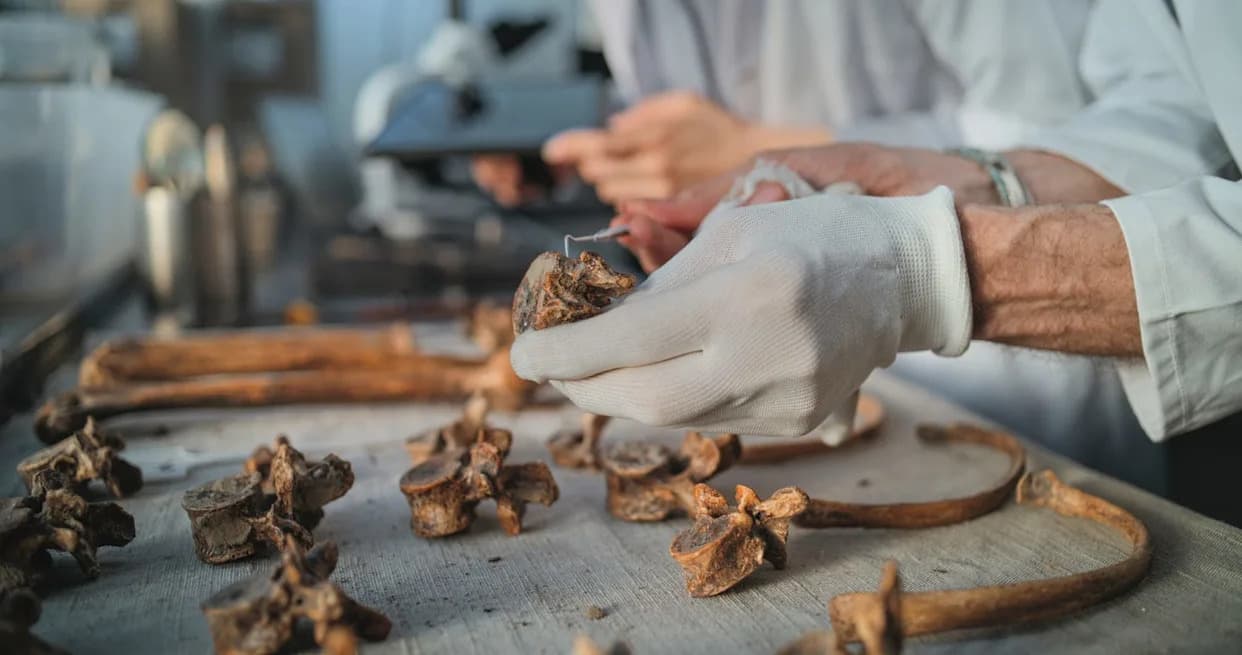
Analysts led by Vitale Stefano Sparacello, a biological anthropologist at the University of Cagliari, identified a pattern of lesions and traumatic marks that match bite and claw trauma most consistent with a cave or brown bear. The team describes several severe injuries: a displaced mandible, a distinct groove on the skull, a fractured clavicle with no signs of healing, a bite impression on the right ankle, and a fractured left pinky toe.
What the injuries suggest: The absence of healing at the clavicle fracture indicates the boy likely survived for several days after sustaining the wound before dying, rather than being killed instantly. Based on the distribution and morphology of the wounds and the presumed mostly plant-based diet of these bears, Sparacello and colleagues argue the animal may have treated the youth as a threat to be neutralized rather than as prey.
Context and burial: The burial is unusually elaborate for the Upper Paleolithic: the youth was interred wearing a handwoven shell cap and was accompanied by shells, blades and other ritual objects. The remains are exhibited at the Museo di Archeologia Ligure in Pegli, Genoa. Such grave goods may reflect ritual responses intended to protect the living or the dead, or to guard against further misfortune.
"He was probably a budding hunter still learning his skills when this happened," said lead author Vitale Stefano Sparacello. "These burials are as much about the living as they are about the dead," added Christopher J. Knüsel, a biological anthropologist at the University of Bordeaux, who was not involved in the study.
The new analysis, published in the Journal of Anthropological Sciences (Vol. 103, 2025), offers a rare, close look at the final, painful days of a young individual from the last Ice Age and contributes direct physical evidence of violent interactions between humans and Pleistocene megafauna.
Citation: Sparacello, V. S., et al. "New Signs of Skeletal Trauma in the Upper Paleolithic Principe from Arene Candide Cave (Liguria, Italy): Bear Novel Insights into the Circumstances of His Death." Journal of Anthropological Sciences, Vol. 103 (2025).
Help us improve.