The Geneva Academy's War Watch warns that international humanitarian law is under extreme strain after analyzing 23 conflicts from July 2024 through December 2025. The report documents alleged genocide in Gaza, mass killings in Sudan, rising civilian deaths in Ukraine, widespread sexual violence, and routine drone strikes on noncombatants. It warns that weakening enforcement and shifting geopolitics risk normalising atrocities, while urging stronger support for courts like the ICC and ICJ to restore accountability.
Report: Global Conflicts Push International Humanitarian Law To A Critical Breaking Point
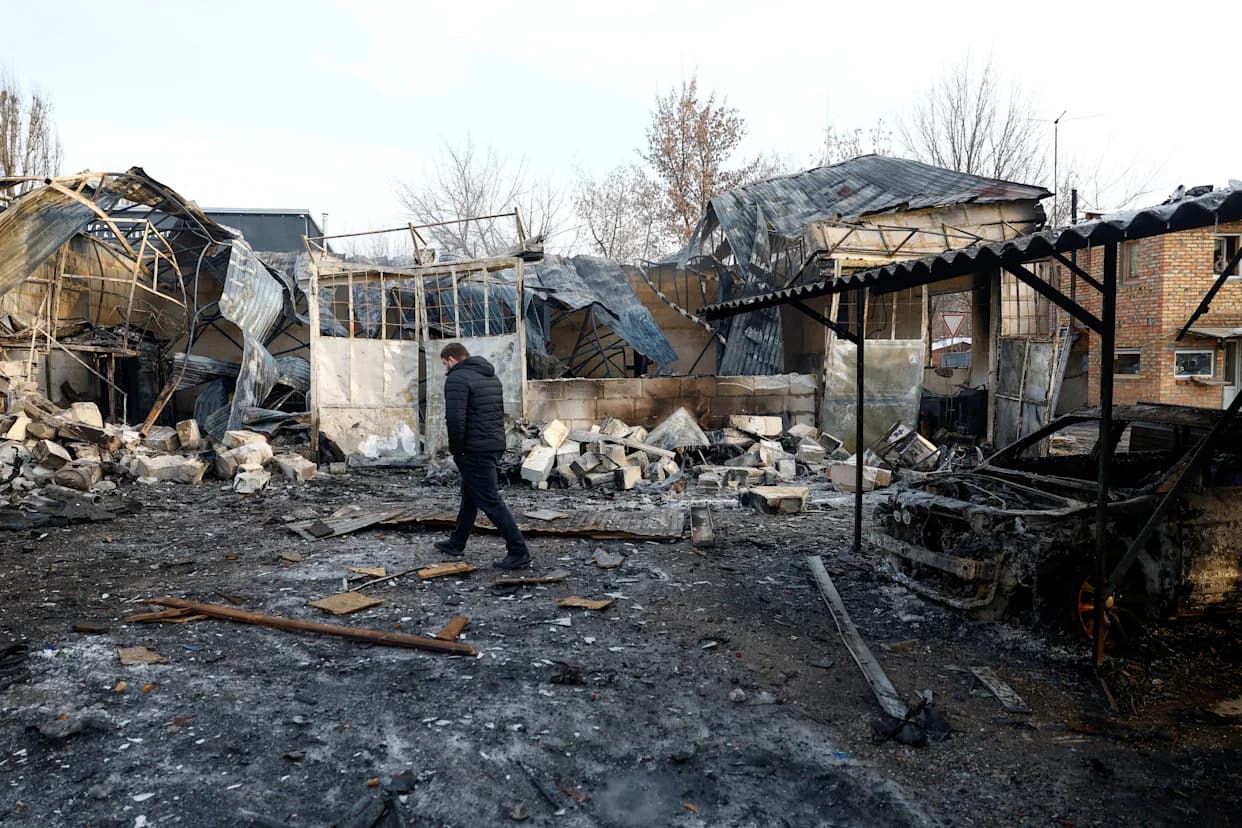
A resident inspects a compound of a car workshop and garage hit during Russian drone and missile strikes in Kyiv, Ukraine, on January 24, 2026 [Valentyn Ogirenko/Reuters]
The Geneva Academy's War Watch report warns that international humanitarian law (IHL), framed after World War II to protect civilians in war, is facing unprecedented strain. A study of 23 conflicts from July 2024 through December 2025 documents repeated mass atrocities, rising civilian death tolls and growing impunity across multiple theatres of violence.
Key Findings
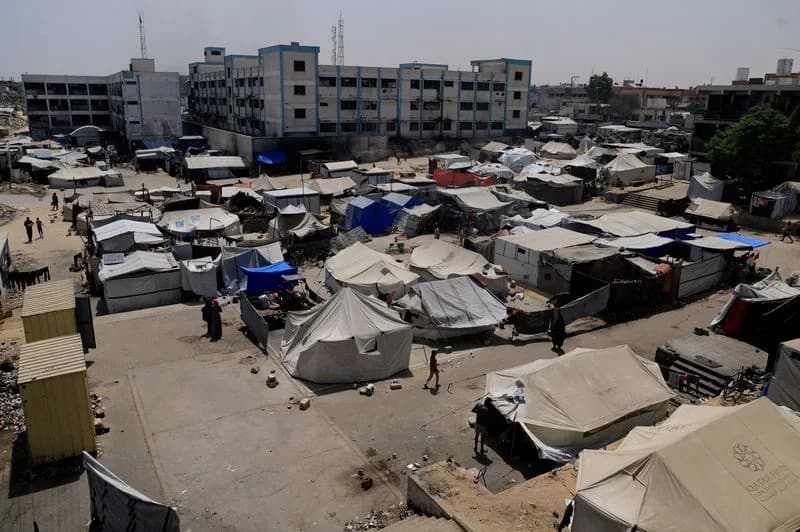
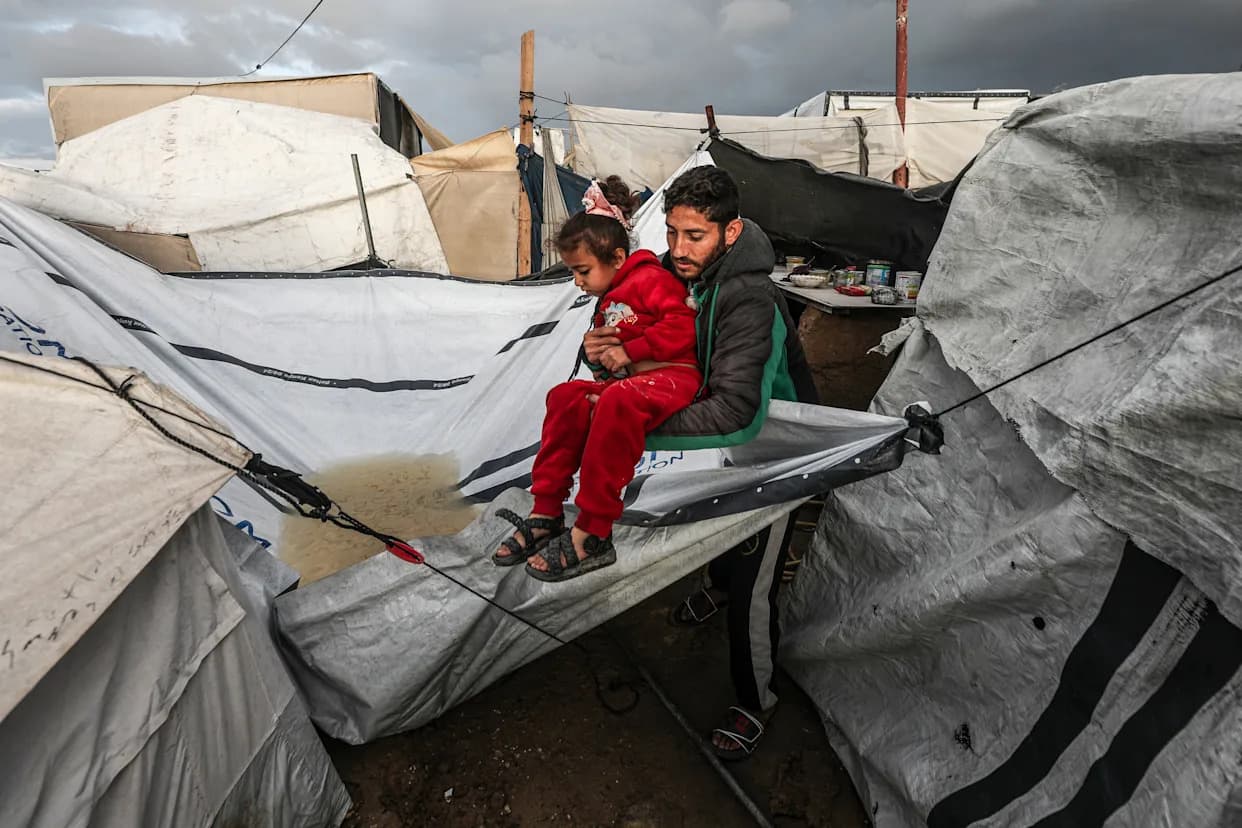
Genocide and Mass Killings. The report cites a United Nations Commission of Inquiry finding that acts amounting to genocide were perpetrated against Palestinians in Gaza and documents continuing mass killings in Sudan since the 2023 outbreak of war. The report attributes more than 71,000 Palestinian deaths in Gaza to the period covered.
Escalating Civilian Harm. Civilian deaths have risen in many conflicts, including Russia's war in Ukraine where civilian casualties increased as the war dragged on. Widespread bombing of homes, schools and hospitals was repeatedly recorded.
Sexual Violence and Brutality. The report documents widespread murder, torture, gang rape and gender-based violence across conflicts — including an "epidemic" of rape in the Democratic Republic of the Congo and mass sexual violence allegedly carried out by paramilitary forces in parts of Sudan.
New and Persistent Tactics. Drone strikes against noncombatants are now a defining feature in several conflicts. In Myanmar, the report records brutal attacks on returned villagers, including dismemberment and public desecration of bodies.
Responsibility And Impunity
The report warns that many violations are occurring with few consequences for perpetrators. Lead author Stuart Casey-Maslen told Al Jazeera that without credible sanctions or pressure, illegal acts are likely to continue. He urged sustained international attention and action, including pressure on states alleged to be supplying arms or support to abusive forces.
“If you don’t sanction or communicate that there will be a sanction, illegal acts will continue,” — Stuart Casey-Maslen, lead author.
The study attributes responsibility across a range of actors. It highlights near-systematic disregard for IHL by some state actors, names Russia for repeated violations in Ukraine, and criticizes policies by others that have undercut the international norms that protect civilians.
Geopolitics And The United States
The report notes that shifting geopolitical dynamics — including perceived US retreat from championing humanitarian norms and unconditional support for some allies — have weakened the enforcement environment for IHL. Observers cited in the report argue that this erosion of norms encourages hardened behavior by combatants who calculate they will face limited political or legal penalties.
Human rights lawyer Geoffrey Nice warned that international humanitarian law appears to be eroding in plain sight, while analysts such as Richard Gowan of the International Crisis Group cautioned that the breakdown of the laws of war risks prompting a vicious cycle of retaliatory atrocities.
What Can Still Protect Civilians?
The Geneva Academy emphasizes that international courts and mechanisms — chiefly the International Criminal Court (ICC) and the International Court of Justice (ICJ) — still matter, provided they are respected, properly funded and supported by states committed to enforcement. The report calls on governments, civil society and international institutions to restore pressure on perpetrators through investigations, sanctions and accountability measures.
Conclusion
The War Watch report paints a bleak picture of civilian suffering across multiple conflicts but stresses that IHL is not yet extinct. Preserving its core protections will require decisive, coordinated action: consistent enforcement, political will from influential states, and sustained support for international justice mechanisms. As Stuart Casey-Maslen puts it, when international law is weakened, everyone loses — most immediately the Global South, and ultimately global moral authority.
Methodology Note: The report reviewed breaches of international humanitarian law across 23 conflicts during the reporting period and is published by the Geneva Academy of International Humanitarian Law and Human Rights, a joint initiative of the University of Geneva Faculty of Law and the Graduate Institute of International and Development Studies.
Help us improve.