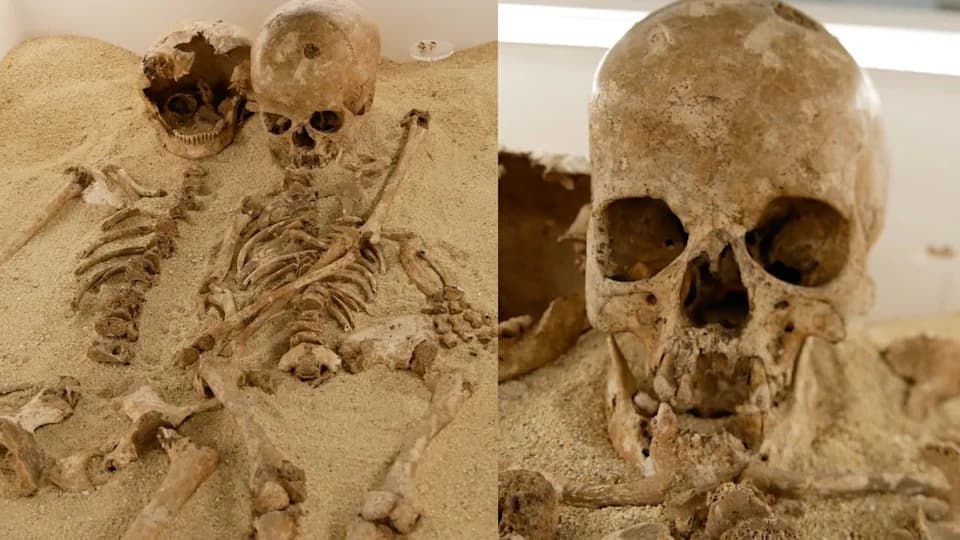
The teenage skeleton nicknamed "Il Principe," buried at Arene Candide in Liguria about 28,000 years ago, shows forensic evidence of a bear mauling. Microscopic and 3D analyses revealed a 10 mm claw-like scrape on the skull and a teardrop-shaped tooth depression on the ankle, and bone healing indicates he survived up to three days after the attack. His elaborate burial—shell headdress, ivory pendants, imported flint and ocher—suggests his community ritually marked this traumatic death.
28,000-Year-Old Teen Buried After Bear Mauling, New Skeletal Analysis Shows
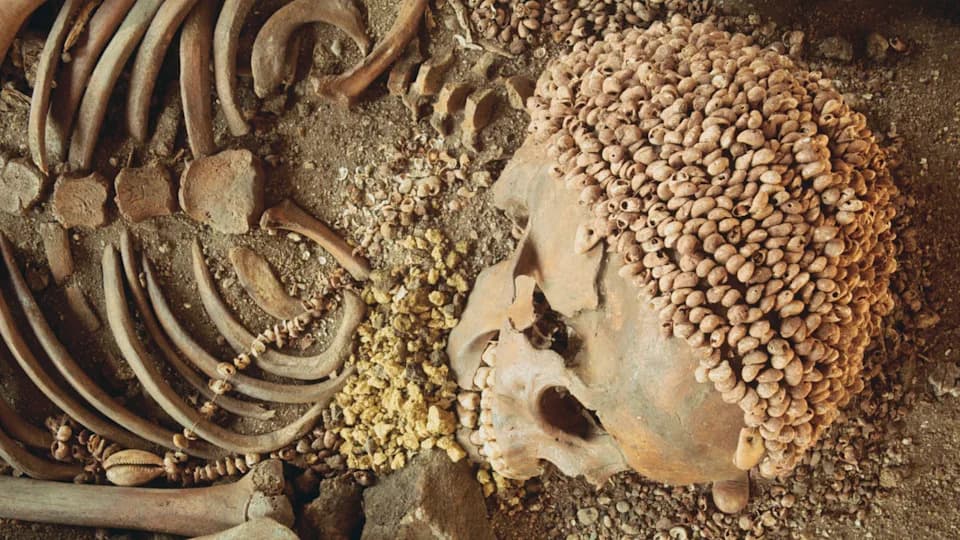
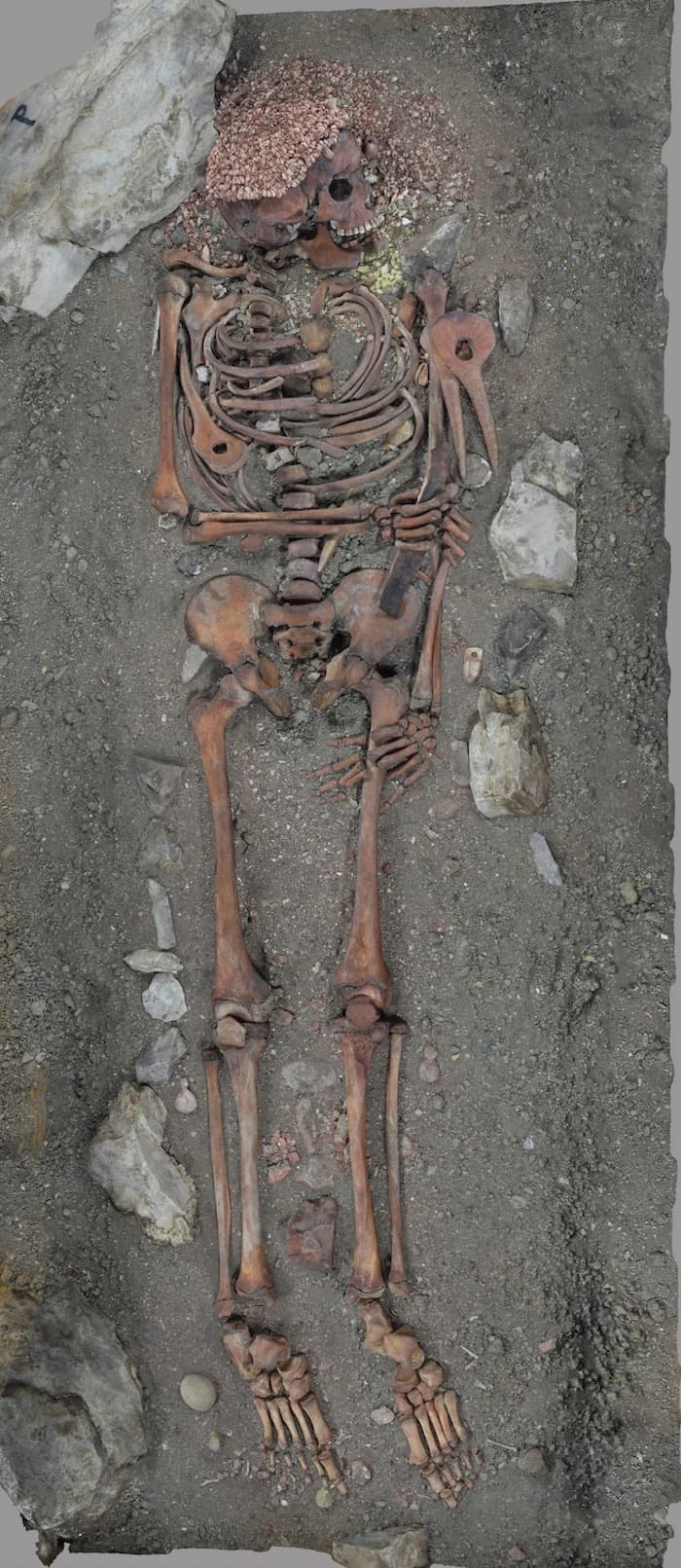
Reconstruction of the burial of "Il Principe," a hunter-gatherer teenager who likely died after being mauled by a bear nearly 28,000 years ago. | Credit: Getty Images
Nearly 28,000 years ago a teenage boy was carefully buried in the Arene Candide cave in Liguria, northern Italy. Nicknamed "Il Principe" (the Prince), he was interred with an elaborate headdress of perforated shells and deer teeth, ivory pendants, a flint blade imported from southern France, and a bed of red ocher. New microscopic and 3D-surface analyses of his bones now indicate he likely died after a brutal encounter with a large bear.
Revisiting a Famous Burial
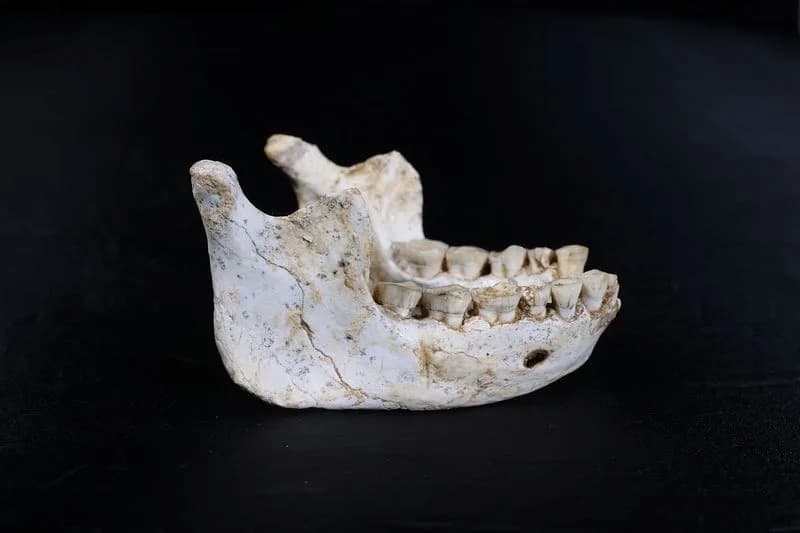
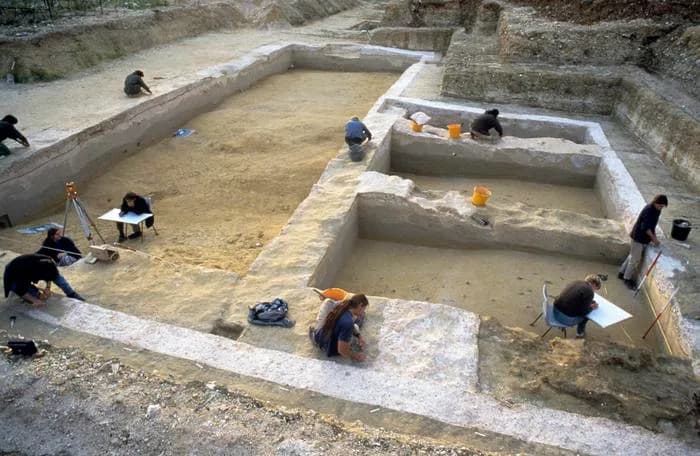
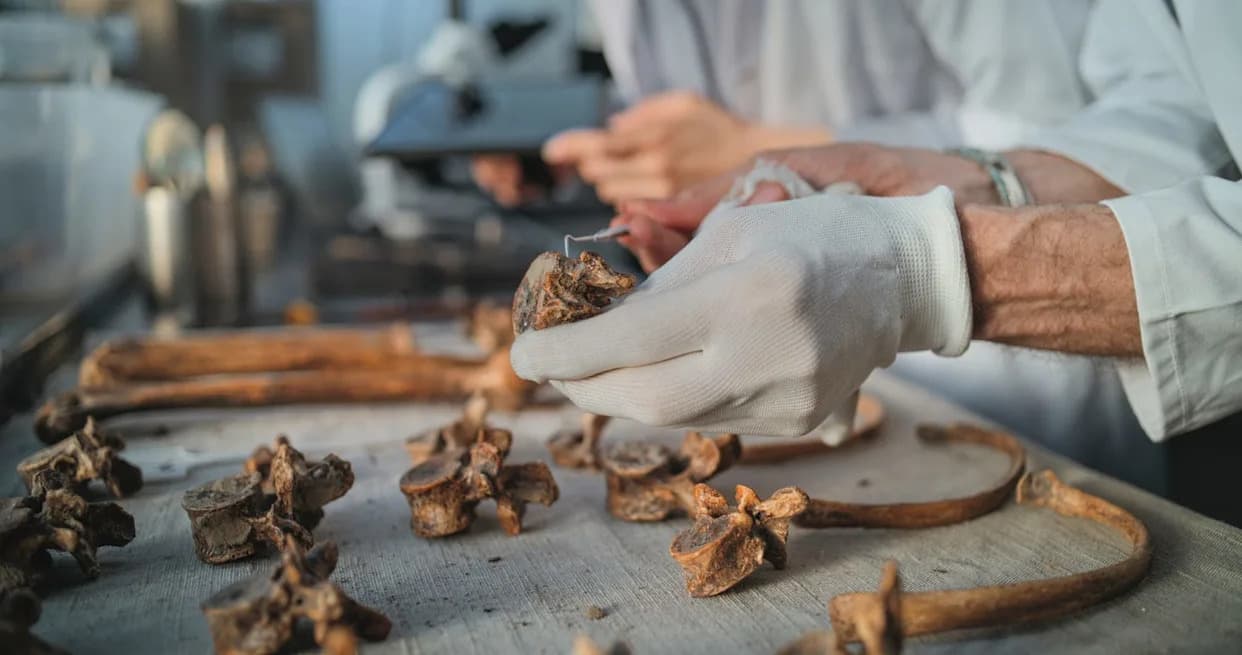
The Prince's skeleton was excavated in 1942 and, shortly after World War II, reconstructed and put on display at the Ligurian Archaeological Museum. Although early excavators noted extensive damage to bones around his left shoulder, neck and lower jaw, a detailed forensic-style analysis was not published until researchers recently obtained permission to remove and examine the bones one at a time.
Forensic Clues Point to a Bear Attack
Using high-resolution photography, 3D surface models and microscopic inspection, the team—led by bioarchaeologist Vitale Sparacello of the University of Cagliari—confirmed massive peri-mortem trauma consistent with a large carnivore mauling. Key findings include:
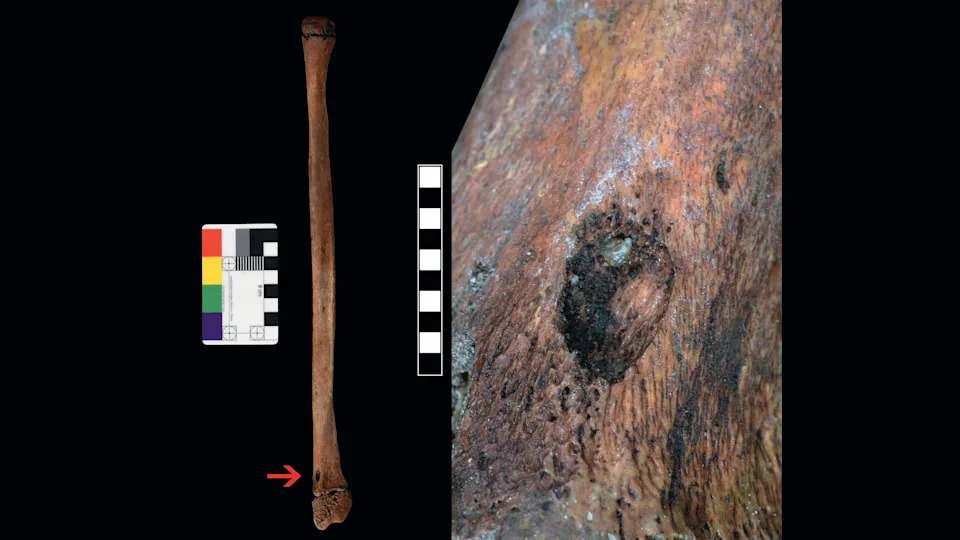
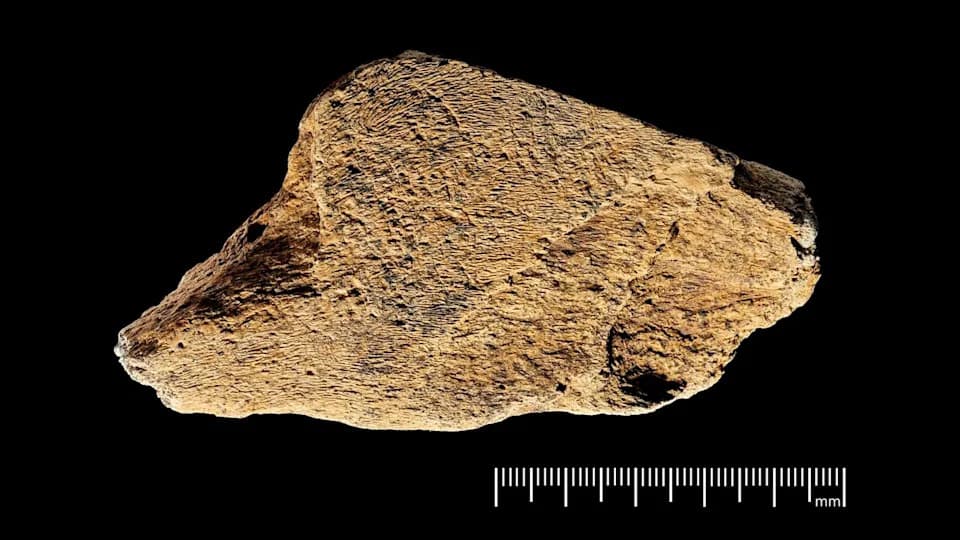
A photo of a possible bear bite mark in the lower leg bone of Il Principe. | Credit: Sparacello et al. 2025, Journal of Anthropological Sciences (CC-BY 4.0)
A 0.4-inch (10 mm) linear scrape on the left side of the skull beneath the shell headdress, shaped like a claw swipe, and a teardrop-shaped depression on the right ankle consistent with a cone-shaped tooth.
The injury pattern and faunal record for the Late Pleistocene in Italy make either a brown bear (Ursus arctos) or the extinct cave bear (Ursus spelaeus) the most likely assailant.
Survival, Care, and a Ritual Burial
Microscopic signs of bone healing indicate the adolescent survived the initial attack for up to three days. The researchers note that, despite extensive skeletal damage, major blood vessels may have been spared, allowing brief survival before death from secondary brain injury, internal hemorrhage, or multi-organ failure. Sparacello suggests the boy was probably not alone and may have been cared for immediately after the attack.
The richness of his burial—shell and tooth headdress, ivory pendants, imported flint blade, red and yellow ocher—suggests his community staged an elaborate, possibly ritual response to his violent death. The authors propose that the formal burial may have been a way to ritually process an exceptionally traumatic event.
What Comes Next?
The study appears in the Journal of Anthropological Sciences. The team hopes to pursue further analyses—such as an amelogenin test on dental enamel to clarify biological sex and potentially a full genetic study—but emphasizes that destructive testing on these rare remains must be kept to a minimum.
"He probably lost consciousness during the event and never regained it," said Vitale Sparacello. "We know these people hunted bears and that bears tend to avoid humans whenever possible, but a chance encounter is still possible."
Location: Arene Candide cave, Liguria, Italy
Date of death (approx.): 28,000–27,400 years ago
Age at death: Estimated 14–17 years old
Help us improve.