Spain and Greece have proposed new bans to restrict teenagers' access to social media—Spain would bar users under 16 and Greece is preparing a similar ban for under-15s. The moves come amid wider European efforts and follow Australia’s recent under-16 restriction. Spain also plans to pursue laws to hold platform executives accountable for hate speech, while critics warn of enforcement challenges including weak age verification and migration to unregulated apps.
Spain and Greece Propose Teen Social Media Bans as Europe Tightens Rules
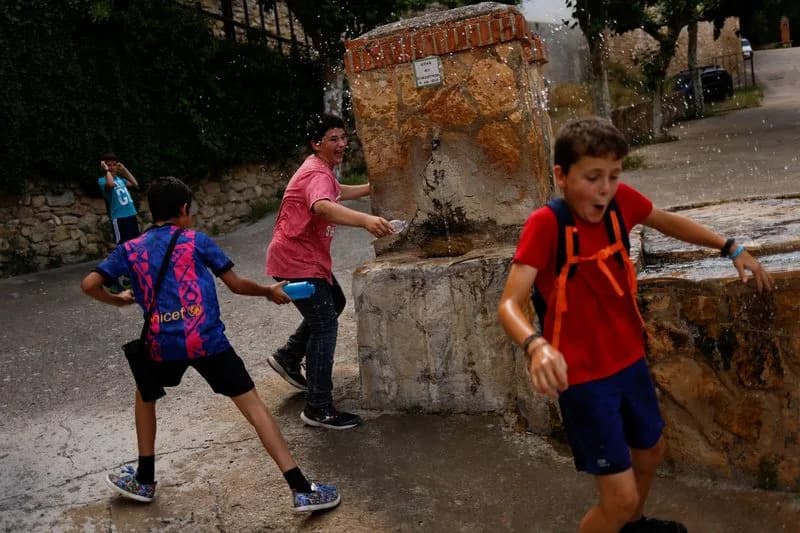
Eloy Moliner, 12, enjoys a water game with children from a neighbouring village where he will attend school in Pitarque, Teruel, Spain. REUTERS/Susana Vera
Spain and Greece have unveiled proposals to restrict teenagers' access to major social media platforms, part of a broader European debate over online safety, addiction and the risks posed by fast-evolving AI-generated content.
What Leaders Announced
Spain said it plans to ban social media use for children under 16, Prime Minister Pedro Sánchez announced at the World Governments Summit in Dubai. A senior Greek government source said Greece is preparing a similar ban for under-15s.
“Our children are exposed to a space they were never meant to navigate alone ... We will no longer accept that,” Sánchez said, adding that Spain would "protect them from the digital Wild West."
Policy Details And Enforcement
Spain's government said the proposed restriction would be implemented by amending an existing digital protection bill for minors now before parliament. Sanchez also said his administration would pursue laws to hold social media executives personally accountable for hate speech and other illegal content on their platforms.
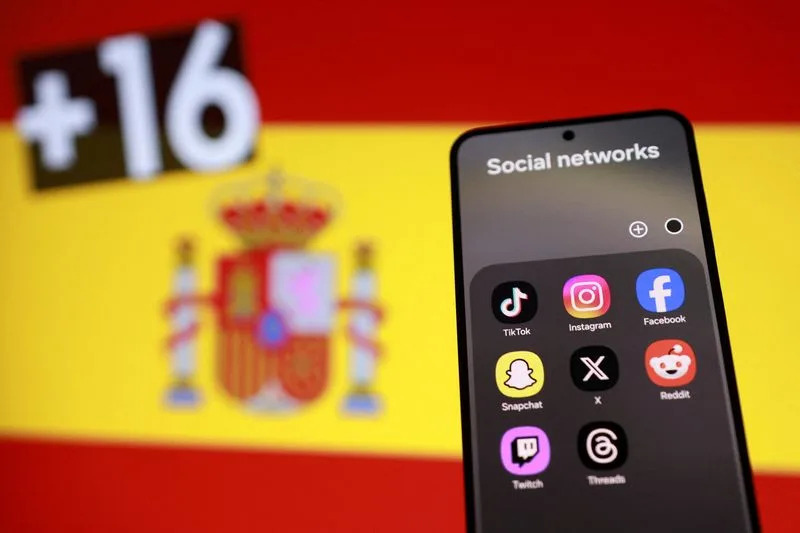
A Spanish flag, smartphone with displayed social media app icons and text "+16" in this illustration taken February 3, 2026. REUTERS/Dado Ruvic/Illustration
Officials said Spain is coordinating with five other European countries in what Sánchez called a "Coalition of the Digitally Willing" to harmonize cross-border regulation and enforcement, though he did not name the partner countries.
Industry Reaction And Practical Challenges
Representatives for major platforms — including Google (Alphabet), TikTok, Snapchat and Meta (Instagram) — did not immediately respond to requests for comment on Spain's proposals. Elon Musk, owner of X (formerly Twitter), posted a highly critical message on the platform in response to Sánchez's remarks.
Tech firms and critics have highlighted several enforcement challenges: limits to current age-verification technology, the risk that teenagers would move to less regulated messaging apps, and the practical difficulties of policing cross-border content and AI-generated abuse.
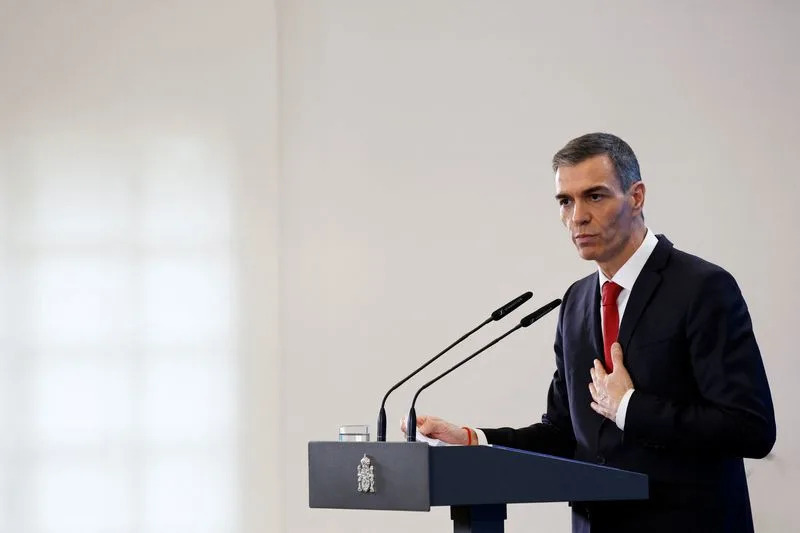
Spain's Prime Minister Pedro Sanchez gestures during a year-end balance news briefing at Moncloa Palace in Madrid, Spain, December 15, 2025. REUTERS/Susana Vera
Why The Push Now
Policymakers point to concerns about mental health, addiction and exposure to harmful material. The recent surge in AI-generated content and reports that an AI chatbot produced non-consensual sexual images — including some allegedly depicting minors — have intensified calls for stronger safeguards.
Support for restrictions appears high in Spain: an Ipsos education poll published last August found about 82% of Spaniards believed children under 14 should be banned from social media, up from 73% in 2024.
Precedent And Impact
Australia in December became the first country to restrict major platforms to users aged 16 and over; its internet regulator reported that social media companies deactivated nearly 5 million accounts belonging to teenagers within weeks of the ban taking effect. Advocates say similar policies could reduce harmful exposure, while opponents warn of enforcement gaps and unintended consequences.
Ongoing Debate
Experts are not unanimous about the harms of social media for adolescents. Some child-welfare advocates welcome legal backing for parental limits and reduced peer pressure, while psychologists and civil-liberties proponents urge careful, evidence-based policymaking and attention to implementation challenges.
Lawmakers in France and the U.K. are considering related measures, and Spain's proposals are likely to fuel further debate across Europe about how to balance child protection, free expression and technological feasibility.
Help us improve.