Researchers have uncovered the Huayuan biota in Hunan province, a remarkably preserved Cambrian fossil site dated to about 512 million years ago. From over 50,000 specimens (8,681 examined), the team identified 153 species—91 new to science—across 16 animal groups. The fossils reveal a diverse deep‑water ecosystem that appears to have weathered the Sinsk mass extinction and share taxa with the Burgess Shale, suggesting early larval dispersal by ocean currents.
Extraordinary Huayuan Fossils Reveal a Thriving Deep‑Water Marine Ecosystem 512 Million Years Ago
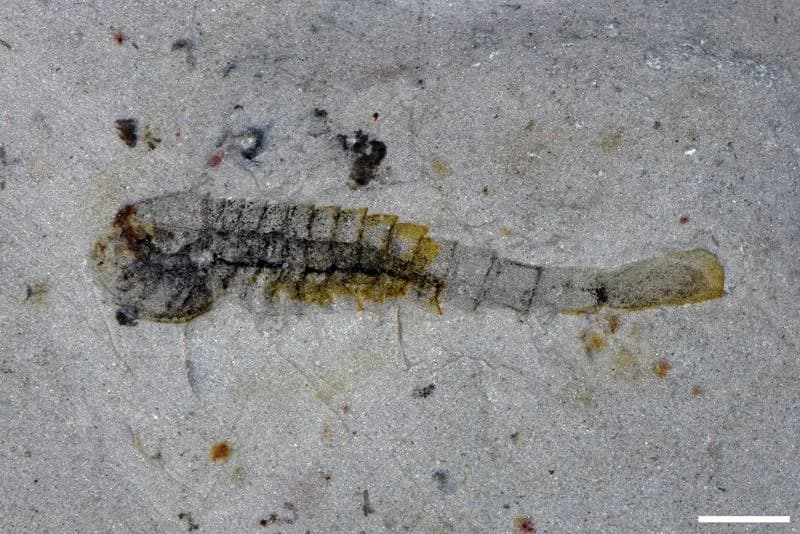
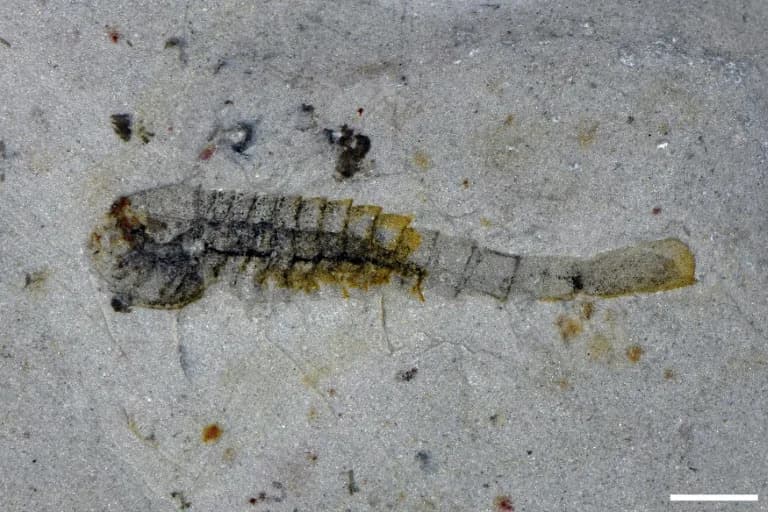
The fossil of the Cambrian Period marine arthropod Fuxianhuiid, with gut preserved, discovered in Hunan province in southern China and dating to around 512 million years, is seen in this photograph released on January 28, 2026. The scale bar is 2 mm. Han Zeng/Handout via REUTERS
Scientists working in southern China have uncovered an extraordinary Cambrian fossil assemblage that reveals a rich, deep‑water marine ecosystem flourishing more than half a billion years ago—shortly after the planet’s first major animal mass extinction.
The deposit, named the Huayuan biota after Huayuan County in Hunan province, was excavated from a single mudstone quarry and yielded over 50,000 specimens. From a studied subset of 8,681 specimens the research team identified 153 species, of which 91 are new to science, spanning 16 major animal groups. The fossils are dated to about 512 million years ago in the Cambrian Period.
Exceptional Preservation
Many specimens show exceptional soft‑tissue preservation—sometimes down to cellular detail—revealing legs, gills, guts, eyes and even nerve tissues. This level of fidelity offers rare anatomical detail that helps scientists reconstruct lifestyles, feeding strategies and ecological relationships among early animals.
A Diverse Deep‑Water Community
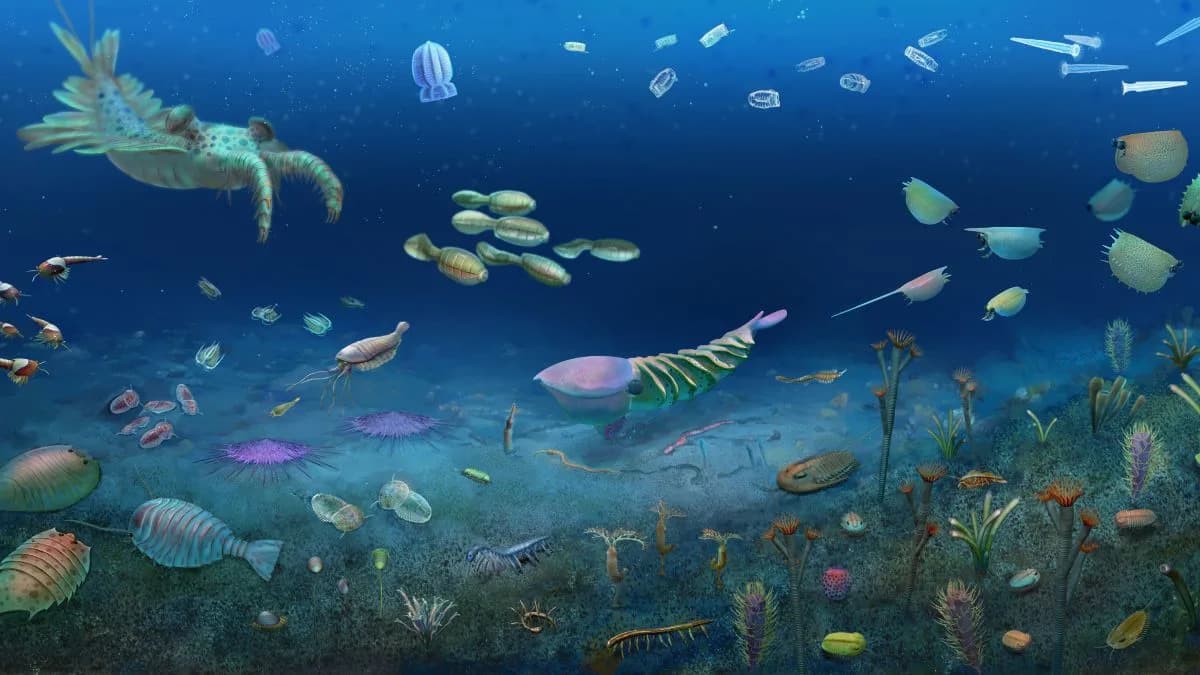
The Huayuan assemblage records a thriving deep‑water ecosystem at the edge of the South China continental shelf, with animals distributed throughout the water column, on the seafloor and within marine sediments. Dominant groups include arthropods (the phylum that includes modern crabs, shrimp and insects), cnidarians (jellyfish and relatives) and sponges.
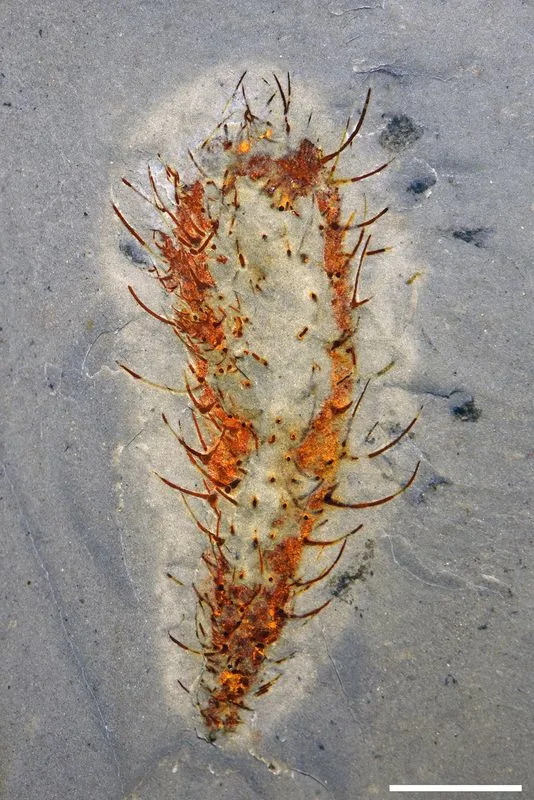
The fossil of the Cambrian Period marine animal Allonnia whose spiky body resembles a cactus, discovered in Hunan province in southern China and dating to around 512 million years, is seen in this photograph released on January 28, 2026. The scale bar is 5 mm. Han Zeng/Handout via REUTERS THIS IMAGE HAS BEEN SUPPLIED BY A THIRD PARTY. NO RESALES. NO ARCHIVES.
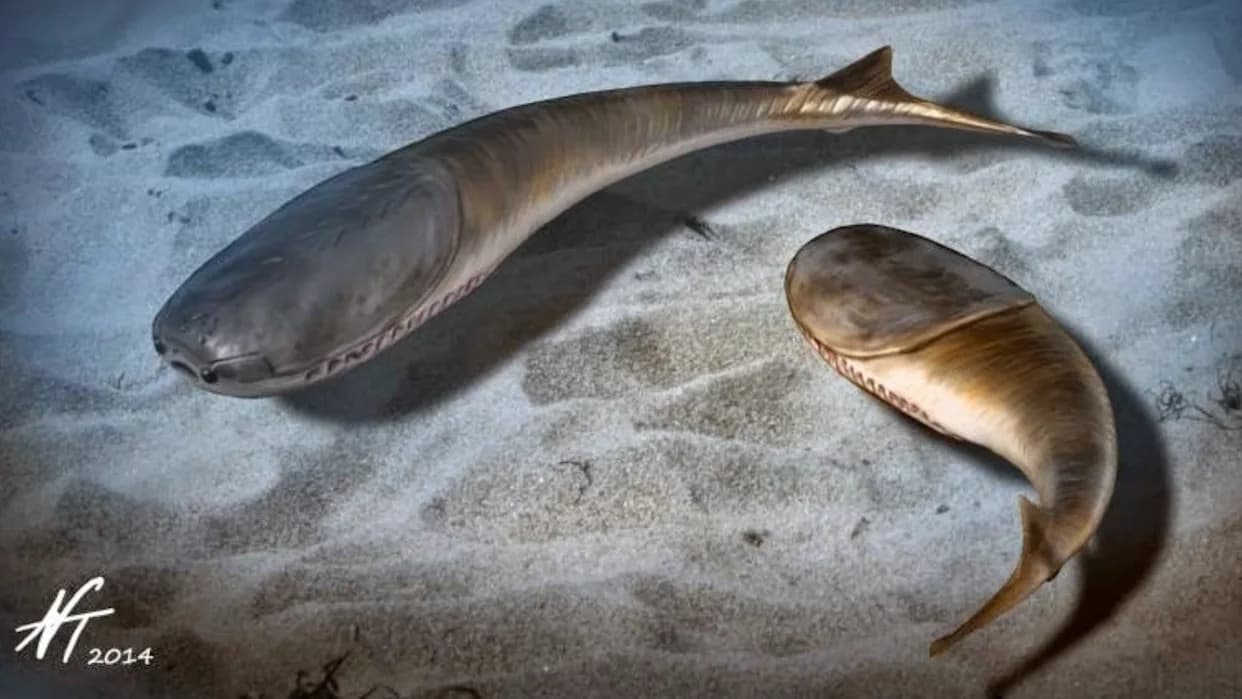
Top predators were several radiodonts, primitive arthropods equipped with raptorial appendages used to seize prey while swimming. The quarry also produced unusual forms, including an armoured, spine‑covered animal likened to a cactus, and a diverse suite of organisms considered close relatives of vertebrates.
Survival After the Sinsk Event
The Huayuan biota offers the clearest view yet of deep‑water life in the aftermath of the Sinsk event, a mass extinction about 513.5 million years ago that is thought to have been driven by volcanism and rapid climate change. According to the authors, the fossil record at Huayuan indicates that deep‑water faunas were less severely affected than shallower communities.
Connections Across Oceans
Despite the geographic and temporal distances, several taxa found at Huayuan are also known from the Burgess Shale (British Columbia), such as the arthropods Helmetia and Surusicaris. The researchers suggest a plausible explanation is planktonic larval dispersal by ocean currents during the Cambrian, allowing species to occupy broad geographic ranges even in early animal history.
"The Huayuan biota was a thriving ecosystem with animals distributed from the water column to the surface and inside of marine sediment," said Han Zeng of the Nanjing Institute of Geology and Paleontology, lead author of the study published in Nature.
The discovery ranks the Huayuan biota alongside the Burgess Shale and Chengjiang as one of the world’s most important windows into Cambrian marine life, providing new insights into post‑extinction recovery, biogeography and early animal evolution.
Help us improve.