New microscopic study of ammonite shell material from Stevns Klint, Denmark, finds sponge spicules in the sediment infill and a lack of Cretaceous-associated bryozoans and microbial mats. These features support a Paleogene age for the specimens and suggest some ammonites survived the K–Pg asteroid impact for roughly 70,000 years. The authors call for further research to determine why these last ammonites eventually vanished.
Spiral-Shelled Ammonites May Have Survived the Asteroid That Killed the Dinosaurs
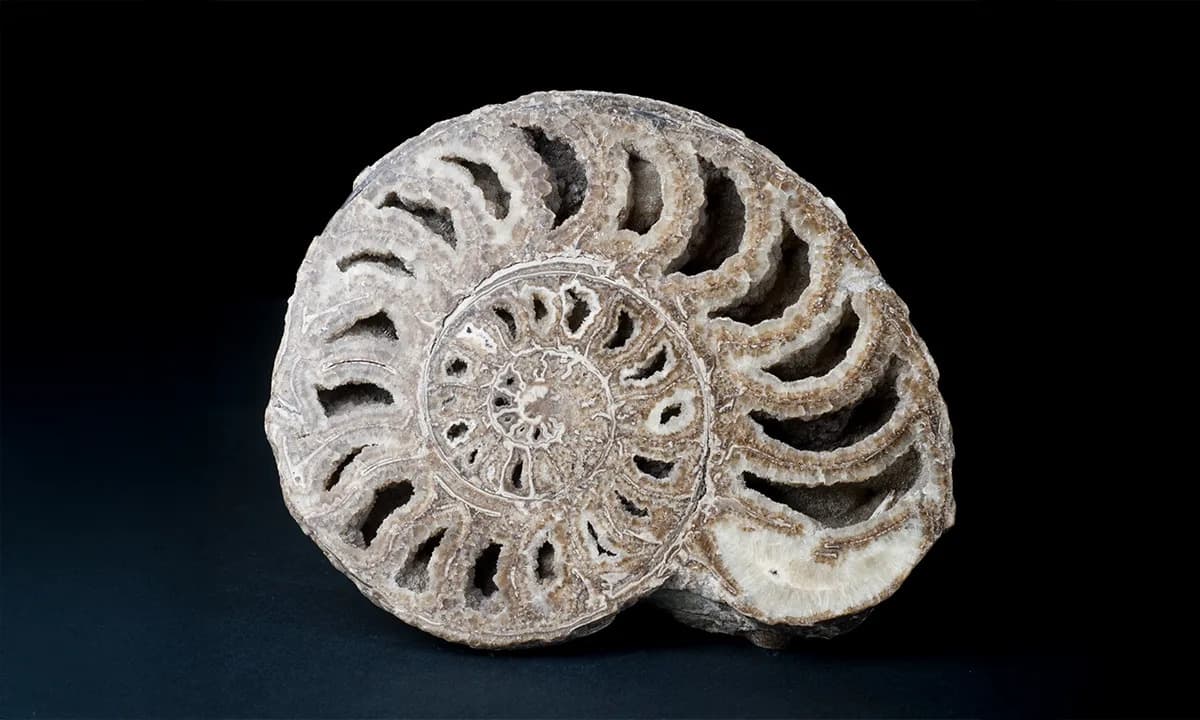
Lead image: Stefano Puzzuoli / Wikimedia Commons
About 66 million years ago, a massive asteroid struck near the present-day Yucatán Peninsula and drove a global extinction that wiped out roughly 75% of species on Earth — including the non-avian dinosaurs. Ammonites, the coiled, shelled relatives of modern squids and octopuses, have long been considered among the casualties of that event.
New microscopic analyses of ammonite fragments from a coastal cliff in Denmark, Stevns Klint, challenge that tidy narrative. A multinational team of researchers re-examined shell material recovered from the lowest Paleogene deposits at the site and found microfossil evidence suggesting some ammonite lineages persisted for a short interval after the mass extinction.
Microscopic Clues from Stevns Klint
Stevns Klint preserves a clear, fossil-rich stratigraphic record that marks the Cretaceous–Paleogene (K–Pg) boundary. Some ammonite shells recovered from the lowermost Paleogene sediments were previously interpreted as reworked — eroded from older Cretaceous layers and redeposited later. To test that idea, the team studied the sediment packed inside these shells under the microscope.
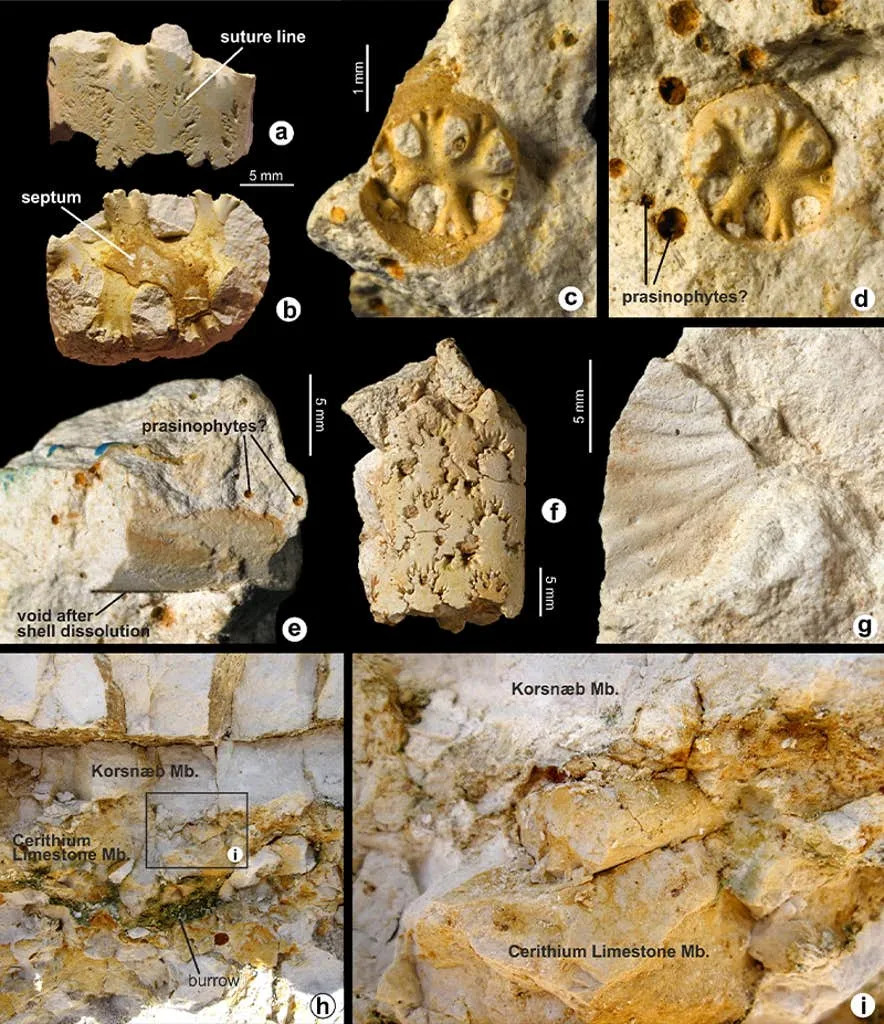
SURVIVORS:These ammonite fossils excavated in Denmark suggest some of these cephalopods outlived the dinosaurs.Image from Machalski, M.,et al. Scientific Reports(2025).
The researchers found abundant sponge spicules in the shell infill — microstructural remains commonly associated with early Paleogene deposits — and did not detect bryozoans (moss animals) or microbial sea-mat textures that typically indicate in situ Cretaceous assemblages. Those patterns make a Paleogene age for the shells more likely than simple reworking from older beds. The results are reported in Scientific Reports.
What This Means
Microscopic indicators from Stevns Klint align with earlier estimates that some ammonites may have survived for roughly 70,000 years after the asteroid impact. That interval implies these spiral-shelled cephalopods persisted beyond the immediate aftermath of the event before ultimately disappearing from the fossil record.
“What actually killed the last ammonites that lived on Earth?” the authors ask — emphasizing that the timing and cause of the final ammonite extinctions remain open questions that warrant further study.
Future work should aim to refine extinction timelines, expand microfossil comparisons across K–Pg boundary sites, and identify the environmental or ecological stresses that eliminated the last ammonite lineages. For now, the Stevns Klint evidence strengthens the case that at least some ammonites briefly outlived the dinosaurs.
Help us improve.