New isotope analyses of mosasaur teeth from North Dakota indicate that some mosasaurs inhabited freshwater rivers, not just the open ocean. Oxygen and strontium isotope ratios match river water, and carbon isotopes suggest surface feeding that may have included drowned dinosaurs. One tooth points to an animal about 11 meters (36 feet) long, large enough to threaten dinosaurs at watering holes. Researchers suggest freshwater habitation may have been a late adaptation in the final million years before extinction.
Fossil Teeth Reveal Giant Mosasaurs Lived in Rivers — And May Have Eaten Dinosaurs
Prehistoric Sea Monster Didn't Stick to The Oceans, Suggests Fossil Study
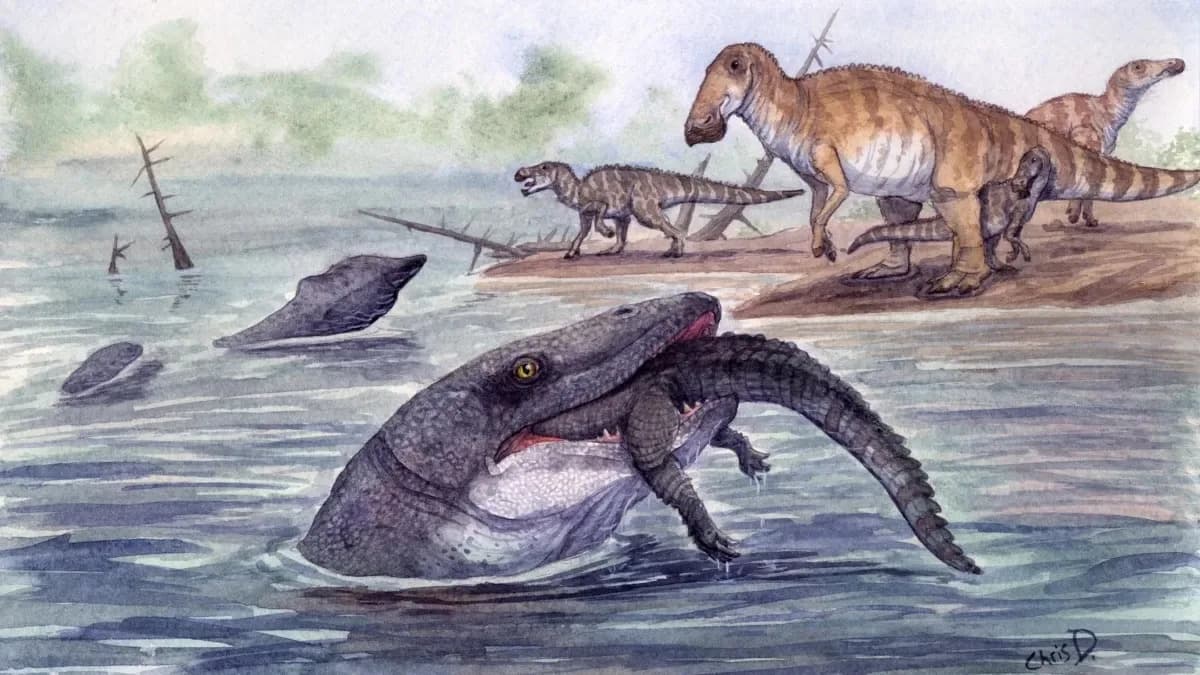
Mosasaurs, long viewed as ocean-dwelling apex predators of the late Cretaceous, also ventured into freshwater rivers, new isotope analyses suggest. Fossil teeth recovered from multiple sites in North Dakota show chemical signatures consistent with riverine habitats — and one specimen hints that these sea monsters may occasionally have fed on drowned dinosaurs.
Isotope Evidence Links Mosasaurs to Freshwater Rivers
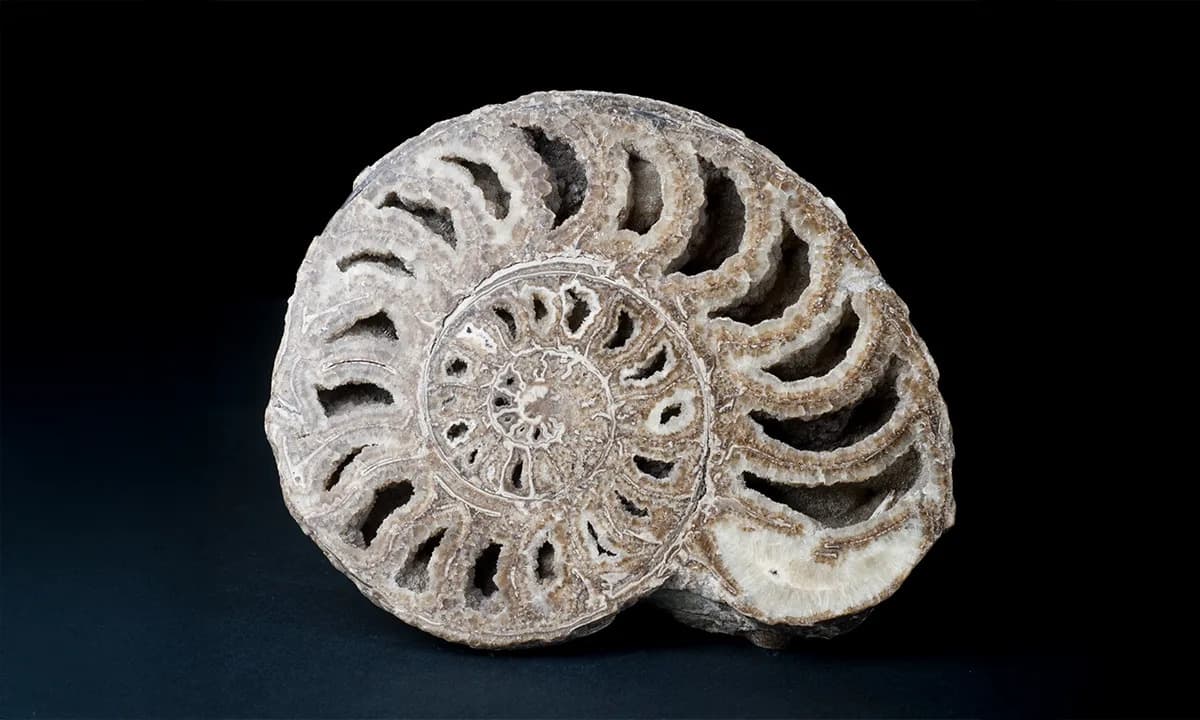
Researchers from Sweden, the United States and the Netherlands analyzed oxygen, strontium and carbon isotopes preserved in mosasaur tooth enamel and compared them with isotope signatures from contemporaneous fossils such as shark teeth and ammonites. The oxygen (16O/18O) and strontium values in several teeth match freshwater signatures rather than seawater, supporting the idea that some mosasaurs were resident in river systems.
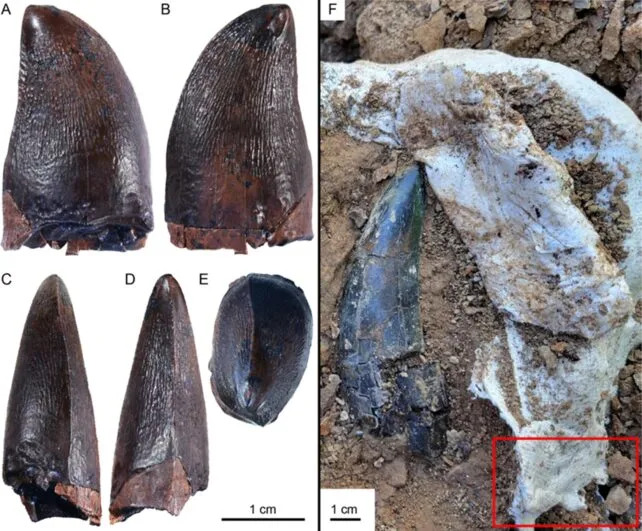
The mosasaur tooth from different angles (left), and (right) the location where it was found (red box) near aT. rextooth. (During et al.,BMC Zool., 2025)
How Isotopes Reveal Habitat and Diet
Isotopes are variants of elements with different numbers of neutrons. Because environmental waters and food webs carry distinct isotopic ratios, animal tissues can record where and what an animal lived and ate. In this study:
Oxygen: Freshwater is enriched in the lighter 16O relative to seawater, so lower 18O proportions indicate riverine residence.
Strontium: Local geology influences 87Sr/86Sr ratios; matching values between teeth and inland fossils support a freshwater origin.
Carbon: Tooth 13C values reflect feeding ecology. A relatively high 13C in one mosasaur tooth suggests surface or near-surface feeding, and possibly the consumption of terrestrial animals that drowned and washed into rivers.
Big Predators in New Places
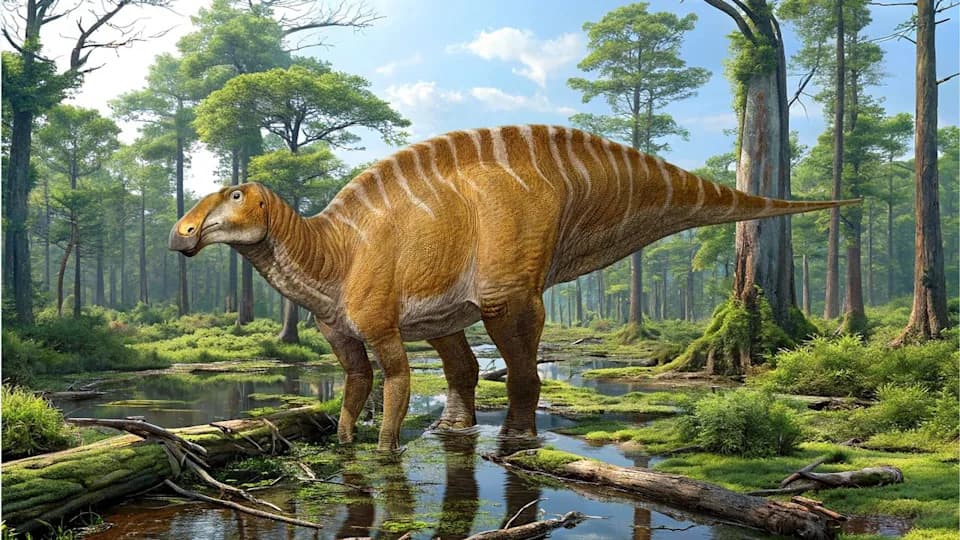
One tooth found in an inland floodplain bears features consistent with a mosasaur lineage capable of reaching roughly 11 meters (36 feet) — a size comparable to the largest modern killer whales. Such animals would have posed a tangible threat to dinosaurs that came to drink from rivers and floodplains.

Subscribe to ScienceAlert's free fact-checked newsletter
"The size means that the animal would rival the largest killer whales, making it an extraordinary predator to encounter in riverine environments not previously associated with such giant marine reptiles," says Per Ahlberg, vertebrate palaeontologist at Uppsala University.
Implications for Mosasaur Ecology and Extinction
The authors propose that movement into freshwater habitats may have been a late ecological shift for some mosasaur lineages during the final million years before the end-Cretaceous extinction. If confirmed more broadly, this behavior would change our picture of Cretaceous ecosystems, showing stronger interactions between large marine reptiles and terrestrial animals.
The study was published in the journal BMC Zoology and involved collaborative teams from Sweden, the United States, and the Netherlands.
Help us improve.