Volunteer archaeologists using satellite imagery helped identify four previously unknown Roman marching camps in Saxony-Anhalt, Germany. Aerial surveys, geophysical prospection and metal-detecting recovered more than 1,500 artefacts—including many hobnail nails and a denarius of Caracalla—and radiocarbon dating places the sites in the early third century C.E. The camps' characteristic rectangular-with-rounded-corners layout and titulum visible in imagery, combined with artefactual evidence, extend confirmed Roman activity farther north than previously proven and offer new detail on Roman military logistics in Germania.
Satellite Sleuths and Volunteers Uncover Four Lost Roman Marching Camps in Germany
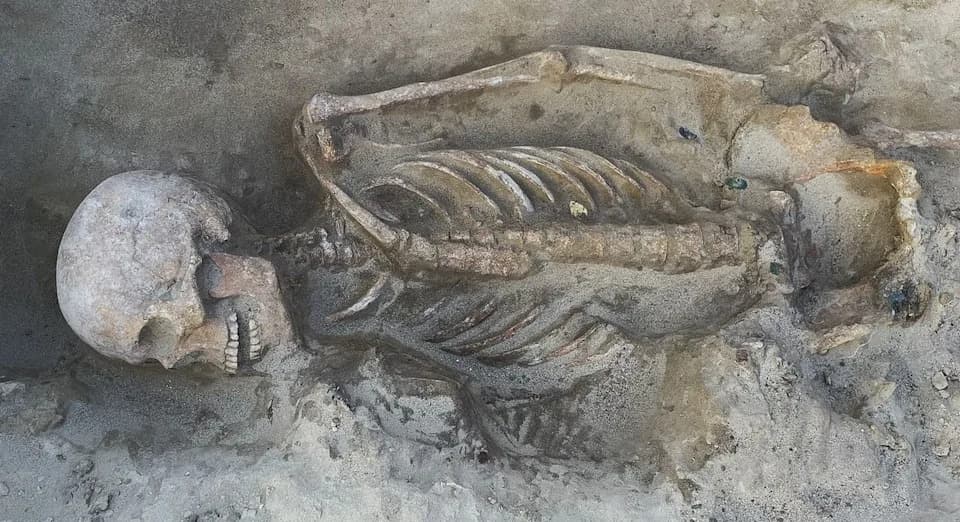
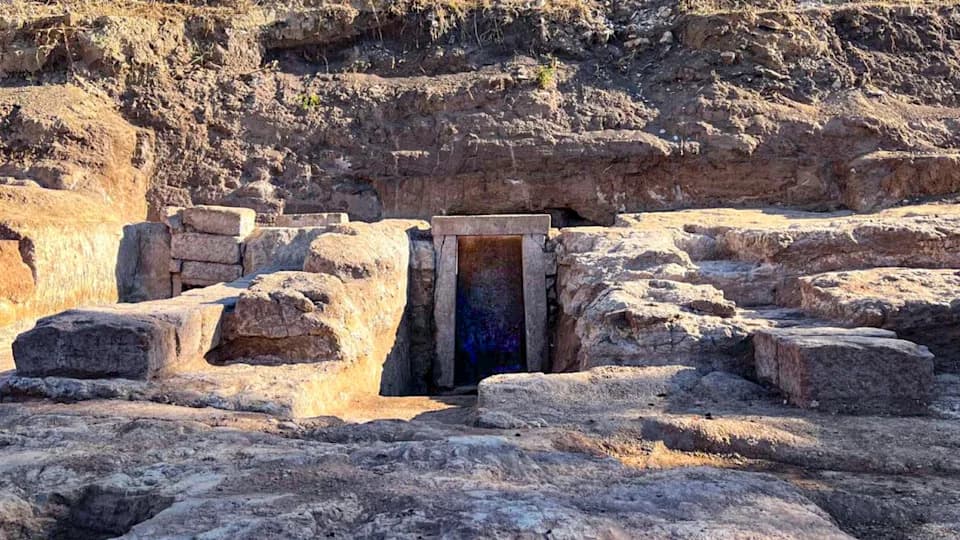
Hobbyists Stumbled Upon 4 Ancient Roman CampsimagoDens - Getty Images
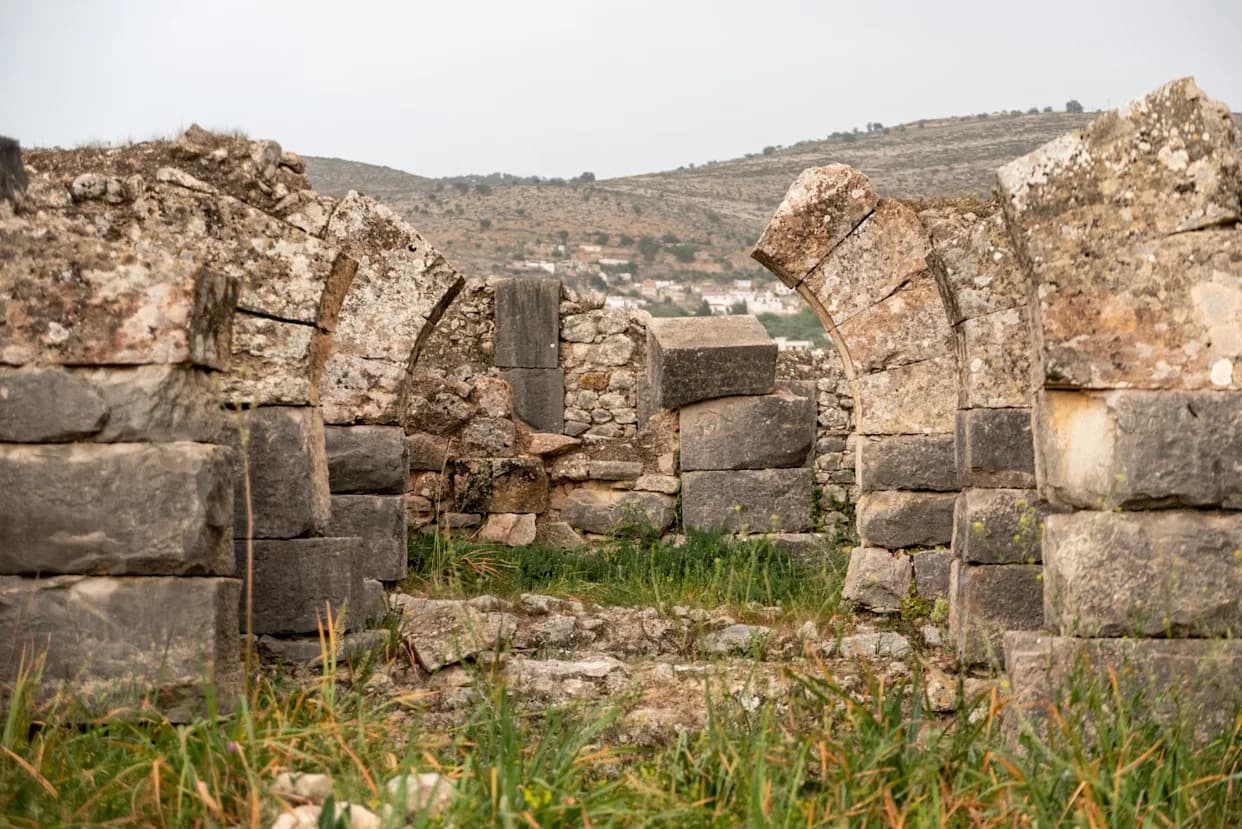
Volunteer archaeologists using satellite imagery and targeted aerial surveys have helped identify and confirm four previously unknown Roman marching camps in Saxony-Anhalt, Germany. On-the-ground geophysical work, metal-detecting, and radiocarbon dating place these sites in the early third century C.E., providing the first direct evidence of Roman temporary camp sites in this region.
Discovery and Verification
The project began in 2020 when a volunteer spotted a distinctive rectilinear feature with rounded corners near Aken on satellite images. Follow-up aerial photography and geophysical surveys by Germany's State Office for Heritage Management and Archaeology Saxony-Anhalt confirmed multiple candidates. A second potential site was identified in 2023 near Trabitz, and further prospection revealed a total of four camps: two near Aken, one at Trabitz and one at Deersheim.
What Makes These Camps Roman?
Roman marching camps have a characteristic layout: roughly rectangular enclosures with rounded corners, gated entrances aligned with main roads, internal roads converging toward a central headquarters, and a titulum—a short ditch-and-bank protecting the gate complex. These regular features are highly visible in aerial and satellite imagery and matched the patterns recorded by the survey teams.
Artefacts and Dating
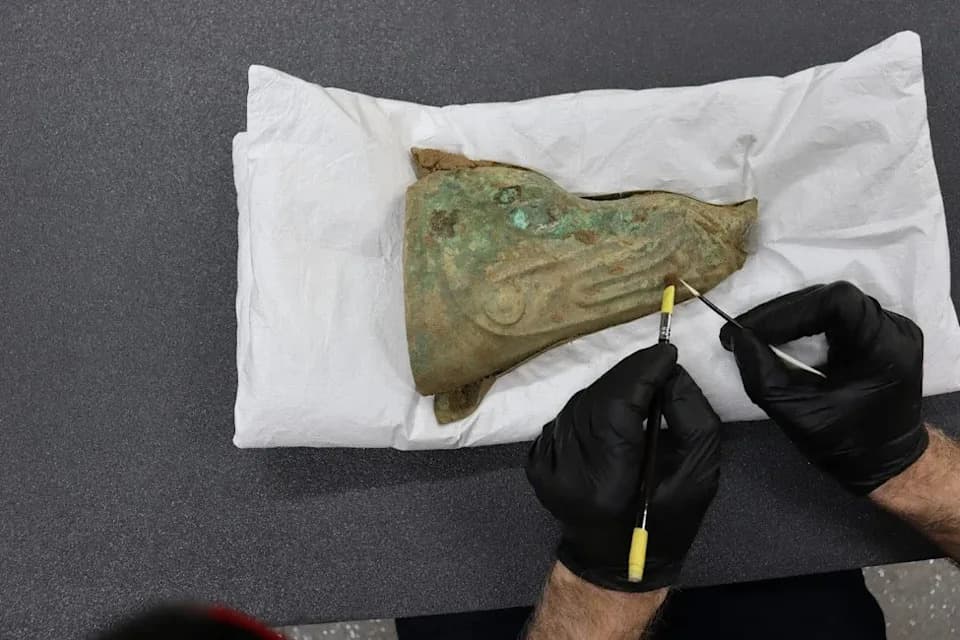
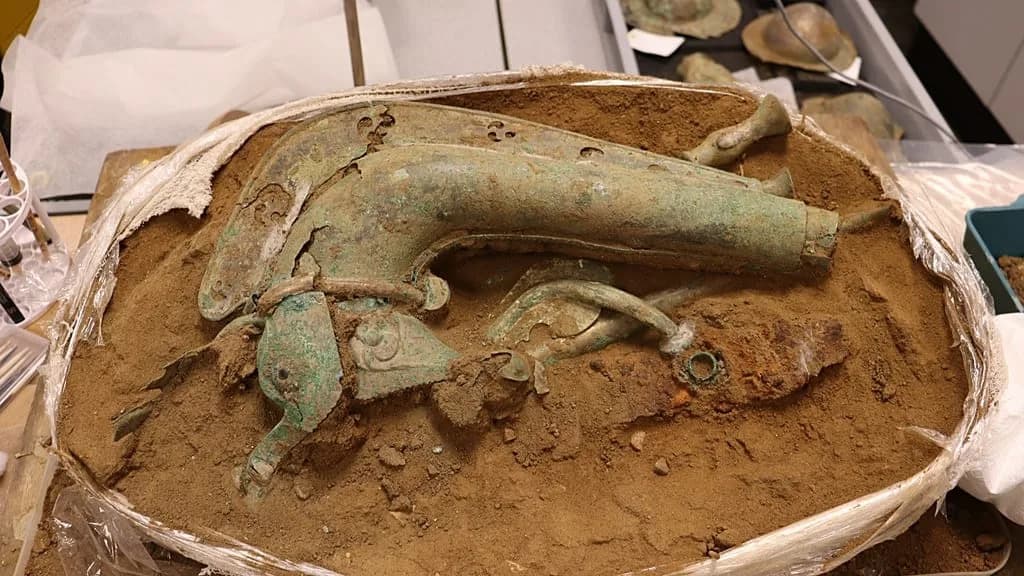
To corroborate the aerial evidence, teams ran large-scale geophysical surveys and collaborated with metal-detector enthusiasts. They recorded more than 1,500 finds—predominantly iron objects—including an unusually high number of hobnail nails and small bolts consistent with military footwear. Among the coins recovered was a denarius of Emperor Caracalla, and radiocarbon results place activity at the sites in the early third century C.E., making a connection to Caracalla's 213 C.E. campaigns plausible.
"The preliminary findings have confirmed the initial suspicion that the ditch structures discovered in aerial photographs are the remains of Roman marching camps," the research team wrote, noting that aerial, geophysical and artefactual evidence jointly support the identification.
Historical Significance
Until now, documentary and archaeological sources suggested Roman operations as far as the Elbe River but offered no direct evidence for camps in Saxony-Anhalt. These discoveries extend confirmed Roman presence farther north—between the northern Harz Mountains and the Elbe—and provide rare, localized insight into Roman logistics, troop movements and temporary encampment practices in Germania during the early third century.
Context
Historical campaigns under Augustus pushed toward the Elbe and Saale in the first century B.C.E. but were followed by withdrawal after military setbacks around 9 C.E. The newly identified camps do not overturn this broader history but add concrete archaeological detail about later incursions into Germanic territories and the scale of Roman field logistics.
What This Means: The combination of volunteer-led satellite research, professional aerial and geophysical surveys, and citizen finds demonstrates how modern remote-sensing and community archaeology can rewrite parts of regional history, revealing episodic Roman military activity farther north than previously documented.
Help us improve.