Squirrels across the U.S. are increasingly observed 'splooting' — lying flat with hind legs extended — to press their bodies against cool surfaces and shed heat. Experts tell NPR that many animals lack the ability to sweat and rely on behaviors like splooting, which is effective only up to a point. Conservation groups warn that rising temperatures threaten food, water and habitat, and scientists say cutting greenhouse gas emissions is essential to protect wildlife.
Why Squirrels Are 'Splooting' Across the U.S.: How Extreme Heat Forces Them to Splay Out
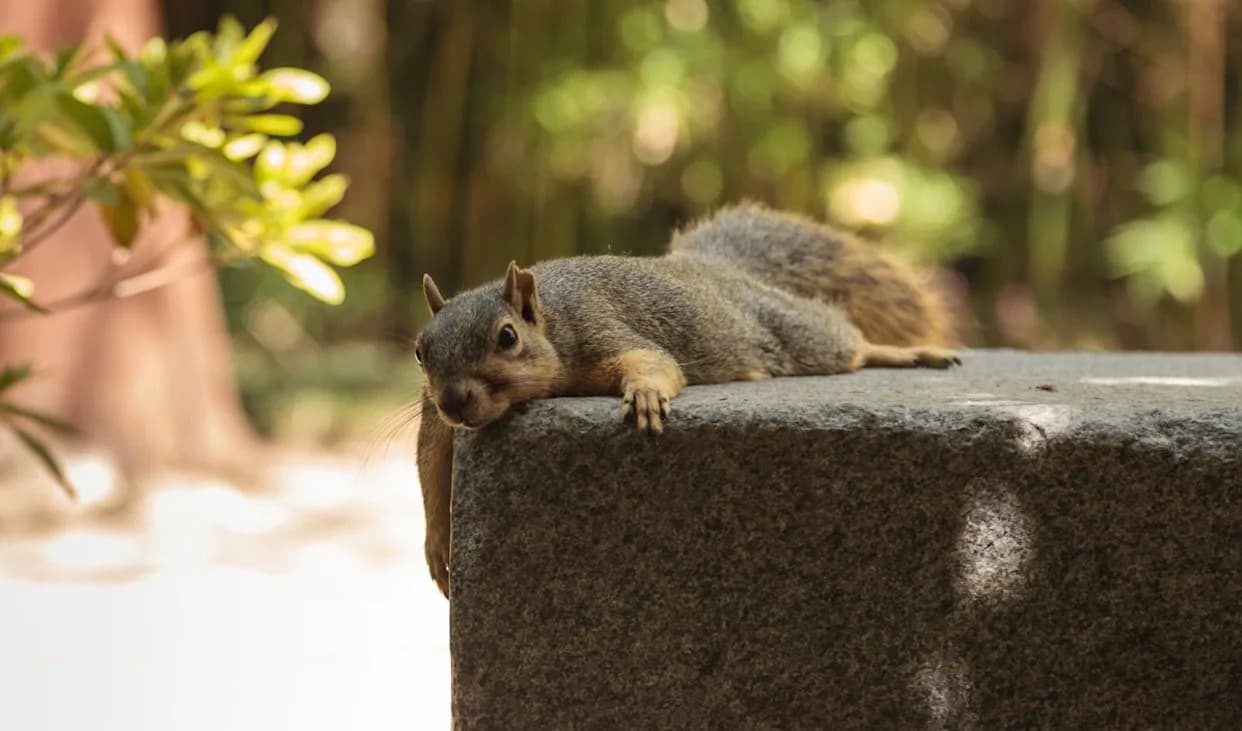
Photo Credit: iStock
Squirrels are beloved for their energetic, sometimes comical behavior — and a recent trend has drawn attention for both its cuteness and its warning sign. Observers across the United States are increasingly spotting squirrels lying flat on their bellies with their hind legs stretched straight behind them, a posture commonly called 'splooting.'
What Is Splooting — And Why Do Animals Do It?
Splooting describes an animal lying on its stomach with its rear legs kicked out behind it. Many species, including squirrels, use this posture to press as much of their core body against a cool surface — such as a shaded sidewalk, a patch of damp grass, or a cool stone — to transfer heat away from their body.
'They're trying to find a cool space, and if they can put as much of their core body onto a cool space, then the heat is going to transfer from their bodies to the other surface,' said Sunny Corrao of the New York City Department of Parks and Recreation in an interview with NPR.
Behavioral Cooling vs. Sweating
Humans cool themselves primarily by sweating, but many animals do not have that physiological option. Instead, they rely on behaviors — like splooting, seeking shade, panting, or staying still during the hottest hours — to regulate temperature. Splooting can be an effective short-term tactic, but it has limits when temperatures climb beyond an animal's tolerance.
Why This Matters
As the planet warms, extreme heat events are becoming more frequent and intense. Conservation groups such as the International Fund for Animal Welfare warn that rising temperatures also affect vegetation, food and water availability, and the structure of habitats. These cascading impacts can force animals to migrate, reduce reproductive success, and in extreme cases contribute to local extinctions.
University of Texas at Austin associate professor Carlos Botero told NPR that current temperatures in some regions are already pushing animals beyond their normal thermal limits. 'The temperatures we're experiencing right now are a little bit beyond the typical ability of this animal to withstand,' he said.
What You Can Do Locally
While the long-term solution is reducing greenhouse gas emissions and cutting reliance on polluting fuels, communities and individuals can help wildlife cope during heatwaves: provide shaded areas and shallow water bowls (placed where pets cannot dominate them), avoid handling or moving wild animals unless they are clearly injured, and contact local wildlife rehabilitators if an animal appears disoriented or unresponsive.
Splooting is a visible reminder that animals are adjusting to hotter conditions. The pose may look endearing, but it can also signal stress — a call for attention to both local actions and global solutions to keep ecosystems livable for wildlife and people alike.
Sources: Reporting by NPR and Texas Public Radio; International Fund for Animal Welfare; comments from Sunny Corrao (NYC Parks) and Carlos Botero (University of Texas at Austin).
Help us improve.