Researchers at Bar-Ilan University found that sleep allows neurons to repair DNA damage, a function conserved from brainless jellyfish to humans. Jellyfish, zebrafish and sea anemones show rest cycles of roughly eight hours, and sleep deprivation increases neuronal DNA damage. Experimental increases in DNA damage (for example via UV or chemicals) trigger longer sleep, suggesting an ancestral role for sleep in neural maintenance. These results may shed light on mechanisms behind neurodegenerative diseases such as Alzheimer’s and Parkinson’s.
Brainless Jellyfish and Humans Share Sleep's DNA-Repair Trick, Study Finds

Photo Credit: iStock
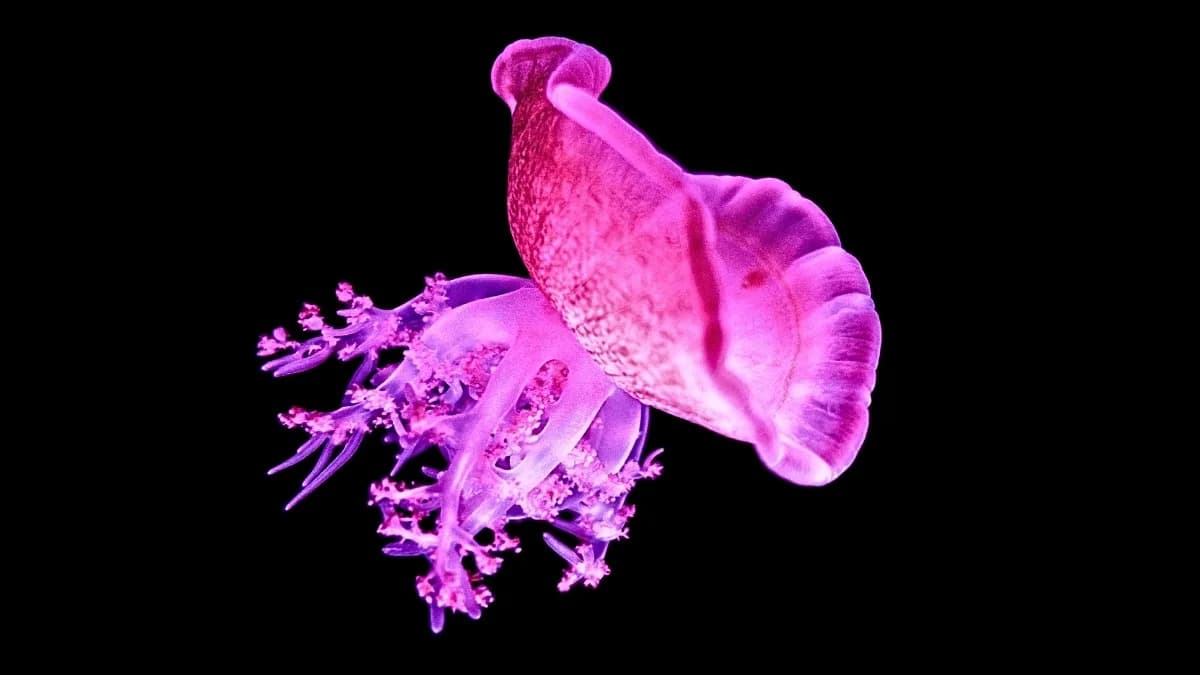
A new study from Bar-Ilan University shows that one fundamental role of sleep — allowing neurons to repair DNA damage — is ancient and conserved across very different animals, from brainless jellyfish to humans.
Study Overview
Researchers examined organisms that lack a centralized brain but possess nervous systems, including jellyfish, zebrafish and sea anemones. By tracking daily activity patterns and molecular markers of DNA damage in neurons, the team investigated why animals spend a large portion of each day resting.
Key Findings
- Neurons accumulate DNA damage during periods of wakefulness, and sleep or extended rest provides an opportunity for repair.
- The species studied maintain rest cycles that include roughly eight hours of sleep or inactivity, a rhythm that parallels human sleep duration.
- Sleep deprivation increased neuronal DNA damage; animals commonly compensated with longer subsequent rest.
- When DNA damage was increased experimentally (for example by UV exposure or DNA-damaging chemicals), animals responded by sleeping longer, suggesting a conserved biological repair response tied to rest.
“Sleep may have originally evolved to provide a consolidated period for neural maintenance, a function so fundamental that it may have been preserved across the entire animal kingdom,” said Lior Appelbaum, principal investigator of the Molecular Neuroscience Lab at Bar-Ilan University.
These findings point to a basic, evolutionary function for sleep: providing a dedicated window for neuronal maintenance. The work may help researchers explore how failures in these repair processes contribute to neurodegenerative diseases such as Alzheimer’s and Parkinson’s.
Studying diverse, simple organisms can reveal universal biological mechanisms that are relevant to human health and disease.
Help us improve.