Vietnam’s National Congress opened in Hanoi with 1,588 delegates set to choose leadership and set policy through 2031. General Secretary To Lam is expected to be reconfirmed and may seek to combine the party and state presidencies, concentrating power at the top. Delegates will finalize an ambitious plan targeting roughly 10% annual GDP growth from 2026–2030, emphasize industrial upgrading and private-sector-led growth, and elevate environmental protection and international integration as central priorities.
Vietnam's Party Congress Opens: To Lam Poised To Consolidate Power As Leaders Eye Ambitious 10% Growth
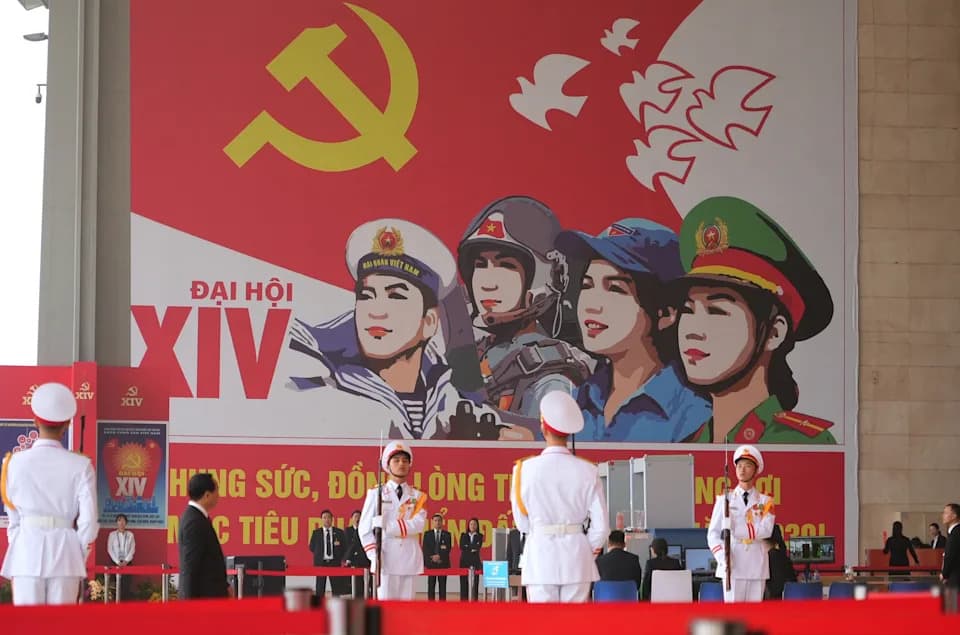
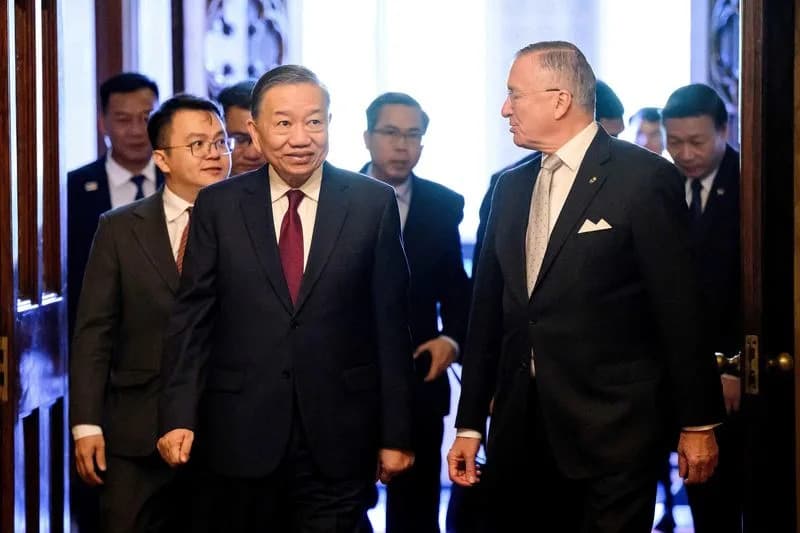
Delegates arrive at the National Convention Center for the week-long Congress of the Communist Party of Vietnam in Hanoi, Vietnam, Monday, Jan. 19, 2026. (AP Photo/Hau Dinh)(ASSOCIATED PRESS)
HANOI — Vietnam’s most consequential political gathering opened Monday as the ruling Communist Party convened in Hanoi to choose leadership and set policy priorities for the next five years. About 1,588 delegates from across the country are attending the National Congress, the party’s highest decision-making body, which meets every five years to elect top leaders and define the nation’s political and economic course.
Leadership At Stake
Delegates are expected to select roughly 200 members to the party’s Central Committee, which in turn will appoint between 17 and 19 members to the powerful Politburo through a tightly choreographed process. General Secretary To Lam is widely expected to be confirmed for a full five-year term. A central question is whether he will also move to combine the roles of party chief and state president — a consolidation that many diplomats and analysts say would mirror recent political models in China and Laos and concentrate authority at the top.

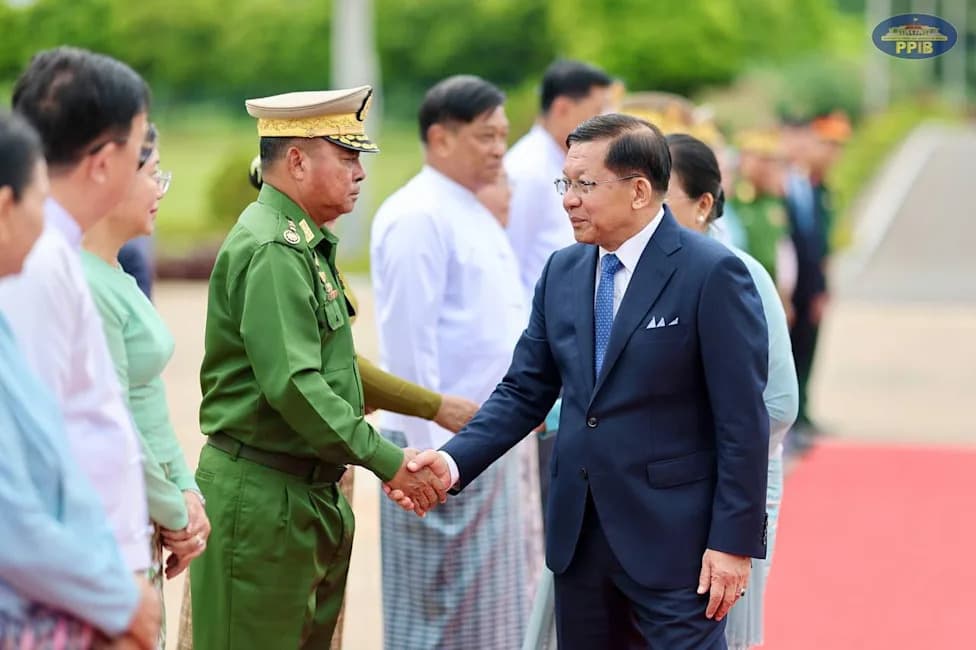
Honor guards salute the arrival of delegation at the National Convention Center for the week-long Congress of the Communist Party of Vietnam in Hanoi, Vietnam, Monday, Jan. 19, 2026. (AP Photo/Hau Dinh)(ASSOCIATED PRESS)
Vietnam has long operated under a "four pillars" arrangement — the party chief, the president, the prime minister and the National Assembly chair — designed to provide mutual checks. Merging top party and state roles would alter that balance and could make To Lam the most powerful Vietnamese leader in decades.
To Lam rose through the Ministry of Public Security and became minister in 2016. He has overseen an energetic anti-corruption campaign and an ambitious program of administrative and economic reforms, including tens of thousands of public-sector job cuts, redrawn administrative boundaries to speed decision-making, and a slate of major infrastructure projects. Anti-corruption probes in recent years removed six of the Politburo’s 18 members, including two former presidents and the National Assembly chair.
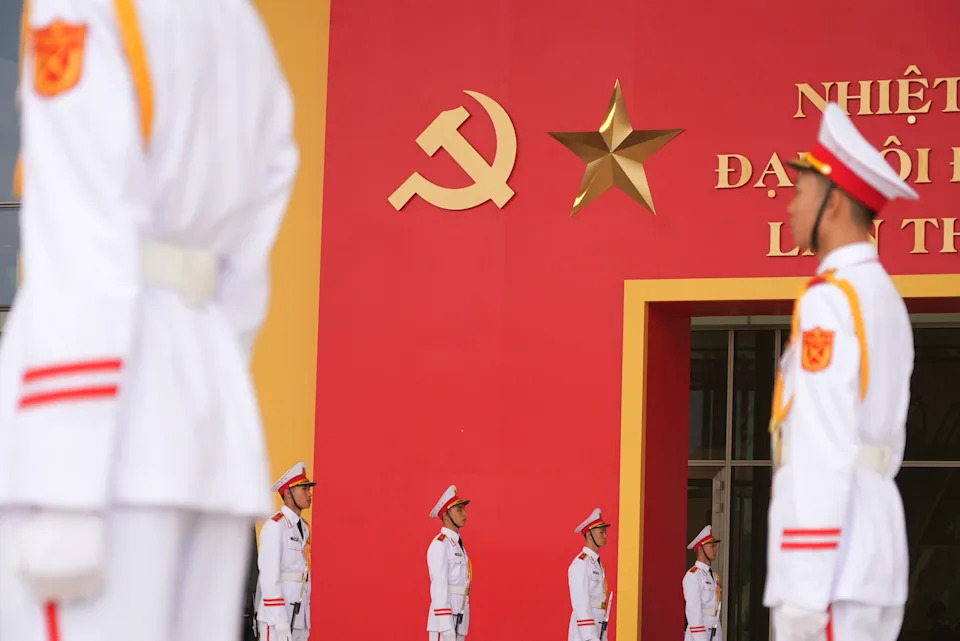
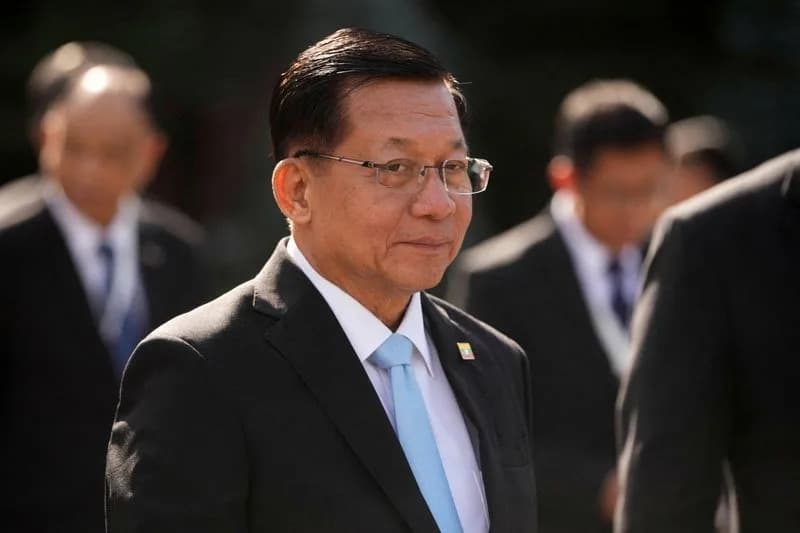
Honor guards stand in position at the National Convention Center for the week-long Congress of the Communist Party of Vietnam in Hanoi, Vietnam, Monday, Jan. 19, 2026. (AP Photo/Hau Dinh)(ASSOCIATED PRESS)
Economic Ambitions And Policy Direction
Hanging over the congress is a defining national objective: whether Vietnam can transform into a high-income country by 2045. Delegates will finalize a resolution based on an October draft that targets an average annual GDP growth of around 10% from 2026 to 2030, after the country reported 8% growth in 2025 and missed an earlier mid-decade goal of 6.5%–7.0%.
The draft resolution emphasizes changing the quality of growth: upgrading industry, modernizing production, and leaning more heavily on science, technology and digital tools. It also explicitly identifies the private sector as "one of the most important driving forces of the economy," signaling a continued shift toward business-led growth and a reduced relative role for state-owned enterprises.
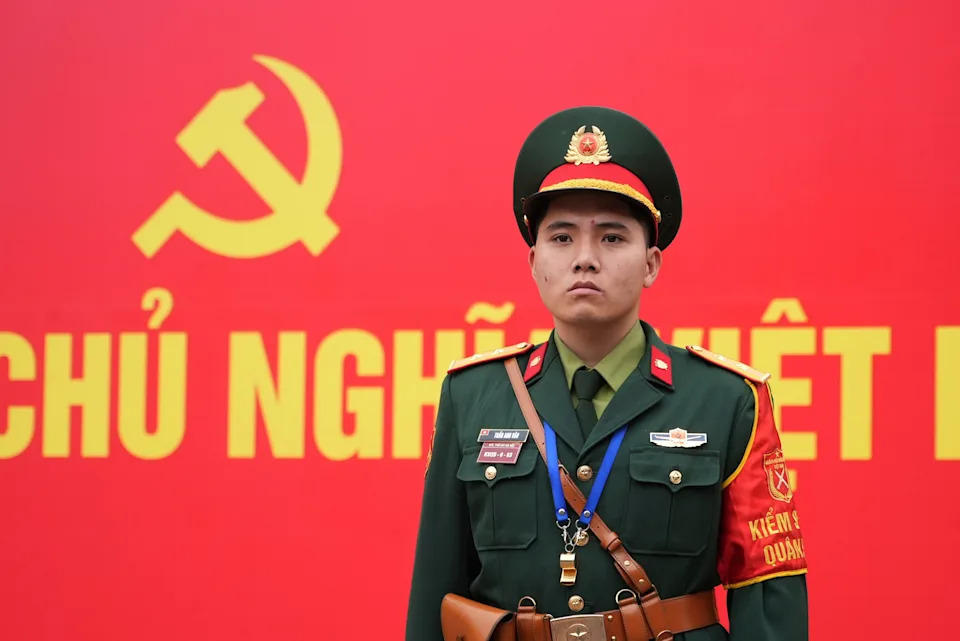
A security officer guards the entrance ofthe National Convention Center during the week-long Congress of the Communist Party of Vietnam in Hanoi, Vietnam, Monday, Jan. 19, 2026. (AP Photo/Hau Dinh)(ASSOCIATED PRESS)
Part of this push includes strategic moves into high-tech manufacturing. For example, military-run telecom giant Viettel began construction on its first semiconductor chipmaking plant in January, aiming for trial production by 2027. Such projects are integral to Hanoi’s broader strategy to build domestic high-tech capacity and reduce reliance on foreign suppliers.
The draft elevates "foreign affairs and international integration" alongside national defense and security, reflecting how dependent Vietnam’s export-driven economy is on global markets amid an intensifying U.S.–China rivalry. It also elevates environmental protection to a "central" task alongside economic and social development, a notable shift as rapid growth has increased air pollution and other environmental pressures.
What To Watch Next
The congress will reveal whether Vietnam doubles down on centralized leadership and accelerated economic transformation, or opts for a more balanced leadership structure with broader internal checks. Outcomes to watch include the final composition of the Central Committee and Politburo, any formal merging of top offices, adoption of the 2026–2030 growth targets, and concrete measures to back industrial upgrading, private-sector roles, and environmental protections.
Help us improve.