Vietnam's Communist Party chief To Lam is seeking to add the largely ceremonial presidency to his party leadership, a move that would bring Vietnam closer to China's model of consolidated authority. About 1,600 delegates will meet in Hanoi from January 19 for a week-long congress that will elect a new central committee and shape the top leadership. Sources say December talks produced mixed accounts on backing for Lam's presidential bid, while the military is reportedly negotiating safeguards if it cedes the presidency. The outcome could reshape Vietnam's traditional power-sharing arrangements and affect key policy directions.
Vietnam's Party Chief To Lam Seeks Presidency in Move That Could Consolidate China-Style Power
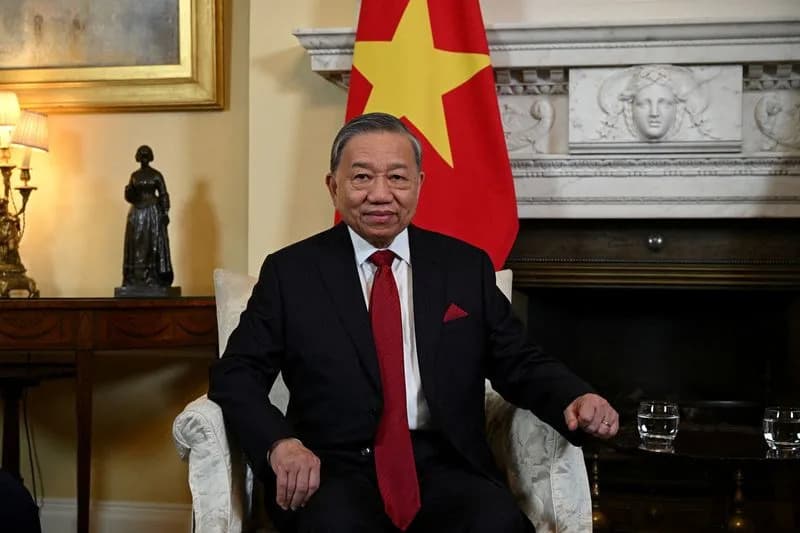
FILE PHOTO: General Secretary of the Communist Party of Vietnam, To Lam looks on during a meeting with Britain's Prime Minister Keir Starmer at Downing Street in London, Britain October 29, 2025. Leon Neal/Pool via REUTERS/File Photo
HANOI — Vietnam's Communist Party secretary To Lam is pressing to combine his party leadership with the largely ceremonial state presidency, officials told Reuters, a step that would align Vietnam's power structure more closely with the model used in China.
About 1,600 delegates will convene in Hanoi for a week-long Party congress beginning January 19, held every five years to select senior leaders and set policy direction for the one-party state. At an internal party meeting in December, Lam, 68, sought preliminary approval to hold both the party chief role and the presidency ahead of the congress.
Sources said the December meeting backed Lam to remain party chief, but accounts differed over whether it also endorsed his bid for the presidency, a post currently held by a military figure and generally regarded as ceremonial. Two people briefed by delegates said Lam secured support for the presidency; a third said the outcome was unclear. The final decision rests with delegates elected at the congress.
Power-Sharing And Military Safeguards
Should Lam succeed in holding both offices for the next five-year term, it would mark a significant departure from Vietnam's customary power-sharing arrangement. Historically, the party and presidency posts have been merged only in exceptional circumstances; Lam briefly held both for about three months in 2024.
Two sources said the military — a powerful faction inside the party — would give up the presidency but aim to retain broad autonomy over promotions of senior officers. One official said senior military leaders are negotiating "safeguards" to limit the extent of Lam's authority. The defence ministry did not immediately respond to requests for comment.
Political And Policy Implications
Supporters argue that vesting both roles in one leader mirrors practices in other communist states (China, North Korea, Cuba and Laos), would strengthen Lam's ability to push economic reforms and would bolster his standing with foreign counterparts. Critics warn that merging the posts could empower a leader seen as more assertive and could further expand the reach of the security apparatus.
In the run-up to the congress, some controversial economic measures pursued under Lam's first term have been revised or have encountered unexpected obstacles — notably policies on credit growth and a proposed high-speed railway — which some observers view as signs of bargaining and early concessions.
Congress Mechanics
Starting January 19, delegates will elect 200 members to a new central committee. That body will choose the party chief and the politburo — which Lam said could number between 17 and 19 members — and the politburo will then nominate candidates for president, prime minister and the parliamentary speaker. Those nominations must subsequently be confirmed by the National Assembly.
"The merger would be the natural outcome of streamlining Vietnam's political structure," said Carl Thayer, a Vietnam expert at the Australian Defence Force Academy, noting Lam has already taken on some presidential functions through frequent foreign visits.
Reporting by Francesco Guarascio; Editing by Michael Perry.
Help us improve.