
Myanmar held the first of three voting rounds Sunday in its first general election since the 2021 military coup. The vote, conducted amid civil war and new legal curbs on criticism, is widely seen as tilted in favor of the military-backed Union Solidarity and Development Party and expected to install Senior Gen. Min Aung Hlaing as president. Major opposition parties — including Aung San Suu Kyi’s dissolved NLD — are excluded, and rights groups report intimidation, mass detentions and thousands of civilian deaths since 2021.
Myanmar Votes Under Military Rule: First Election Since 2021 Coup Marred by War, Bans and Intimidation

Voters line up to cast their ballots at a polling station in Naypyitaw, Myanmar, Sunday, Dec. 28, 2025. (AP Photo/Aung Shine Oo)(ASSOCIATED PRESS)
YANGON, Myanmar — Voters cast ballots Sunday in the first stage of Myanmar’s general election — the first nationwide vote since the military seized power in February 2021. The balloting is taking place under the control of the junta while civil war and widespread displacement continue across large parts of the country.
Officials say final tallies will only be released after two additional voting rounds on Jan. 11 and Jan. 25, with nationwide results expected by February. Observers and many analysts widely expect Senior Gen. Min Aung Hlaing, who led the 2021 takeover, to assume the presidency when the process concludes.
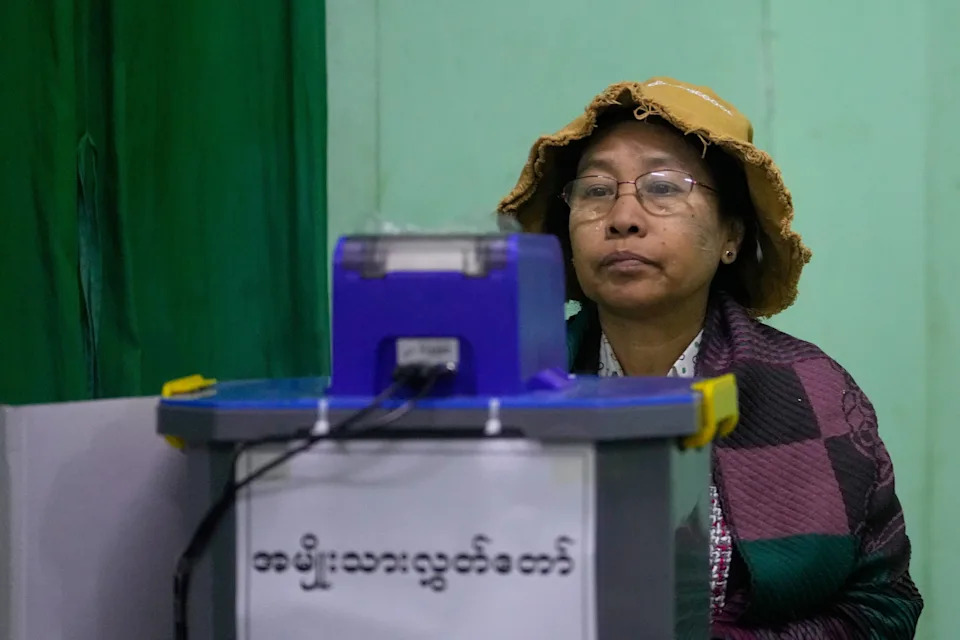
A voter casts a ballot at a polling station in Naypyitaw, Myanmar, Sunday, Dec. 28, 2025. (AP Photo/Aung Shine Oo)(ASSOCIATED PRESS)
Election Logistics and Key Players
Voting is organized in three phases. Sunday’s initial round covered 102 of Myanmar’s 330 townships. More than 4,800 candidates from 57 parties are contesting national and regional seats, but only a handful of parties — six by most counts — are positioned to compete nationwide. The Union Solidarity and Development Party (USDP), well funded and backed by the military, is broadly viewed as the dominant contender.
Critics Call the Vote a Sham
Critics say the election is a maneuver to give the junta a veneer of legitimacy after it removed the elected government of Aung San Suu Kyi in 2021 and prevented her party from serving a second term. Major restrictions include the banning or dissolution of prominent opposition groups and limitations on free expression and assembly.
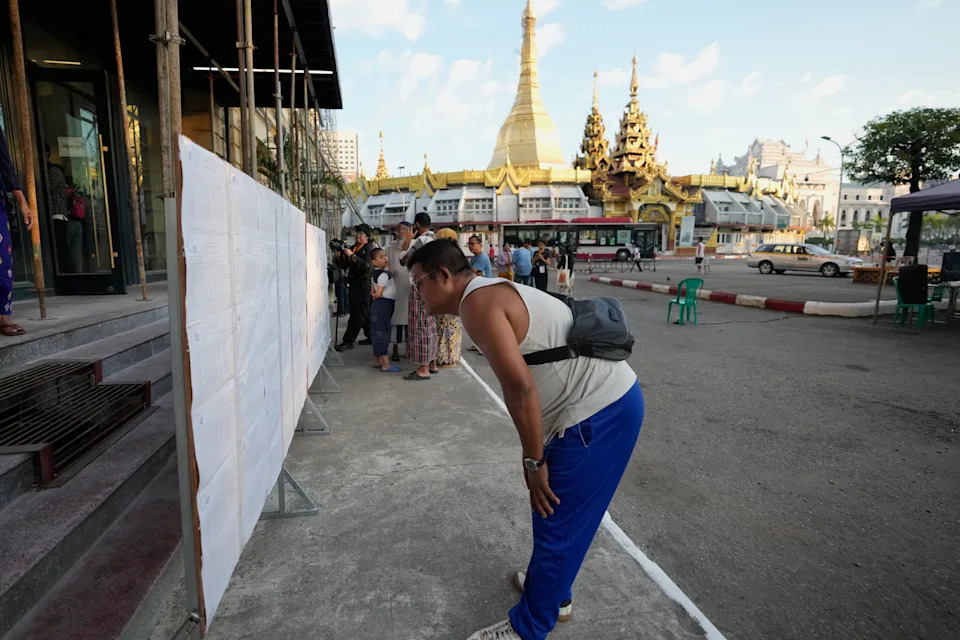
A man looks for his name on voter lists displayed outside a polling station, with Sule Pagoda in background, Sunday, Dec. 28, 2025, in Yangon, Myanmar. (AP Photo/Thein Zaw)(ASSOCIATED PRESS)
"An election organized by a junta that continues to bomb civilians, jail political leaders, and criminalize all forms of dissent is not an election — it is a theater of the absurd performed at gunpoint," said Tom Andrews, the U.N.-appointed rights expert for Myanmar.
Voters Describe Hope And Coercion
Some voters said they participated in the hope that a vote could help bring peace. Khin Marlar, 51, who fled fighting in central Mandalay’s Thaungta and voted in Yangon’s Kyauktada township, told The Associated Press she voted "with the feeling that I will go back to my village when it is peaceful."
Others described coercion. A resident in Mon state, who spoke on condition of anonymity, said soldiers had arrived with guns in her village and local authorities pressured people to go to the polls. Independent media and rights groups documented similar reports of intimidation in some areas leading up to voting.
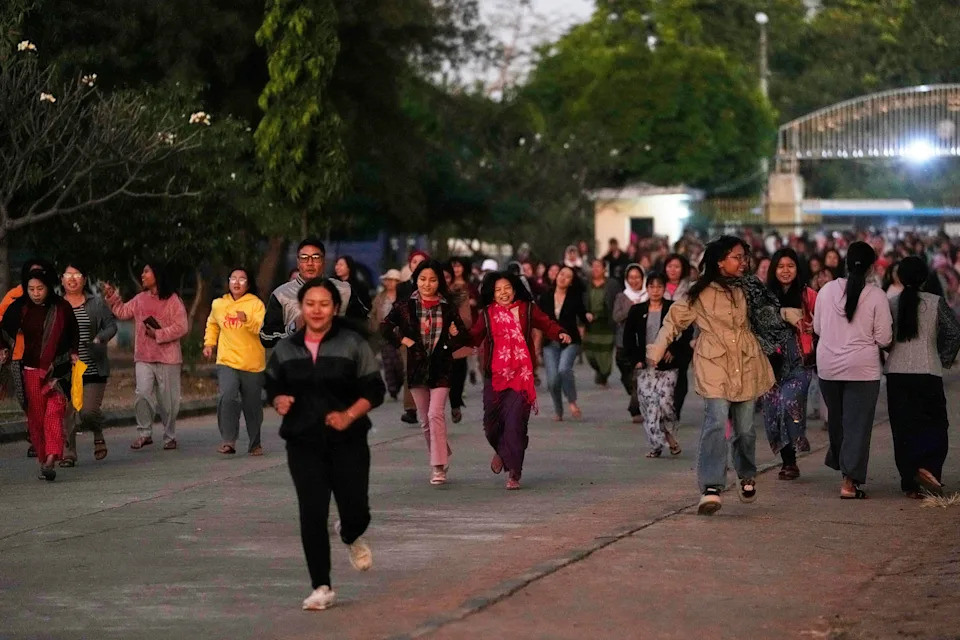
Voters run to cast their ballots at a polling station in Naypyitaw, Myanmar, Sunday, Dec. 28, 2025. (AP Photo/Aung Shine Oo)(ASSOCIATED PRESS)
Opposition Suppressed And New Legal Curbs
Aung San Suu Kyi, now 80, and the National League for Democracy (NLD) are not participating. Suu Kyi is serving a 27-year prison sentence on charges widely considered politically motivated, and the NLD was dissolved in 2023 after it refused to re-register under rules imposed by the junta. Other parties either declined to register or called for a boycott.
The junta has enacted a new Election Protection Law that rights groups say imposes broad restrictions and harsh penalties for criticism of the polls, further narrowing civic space and the ability to campaign freely.
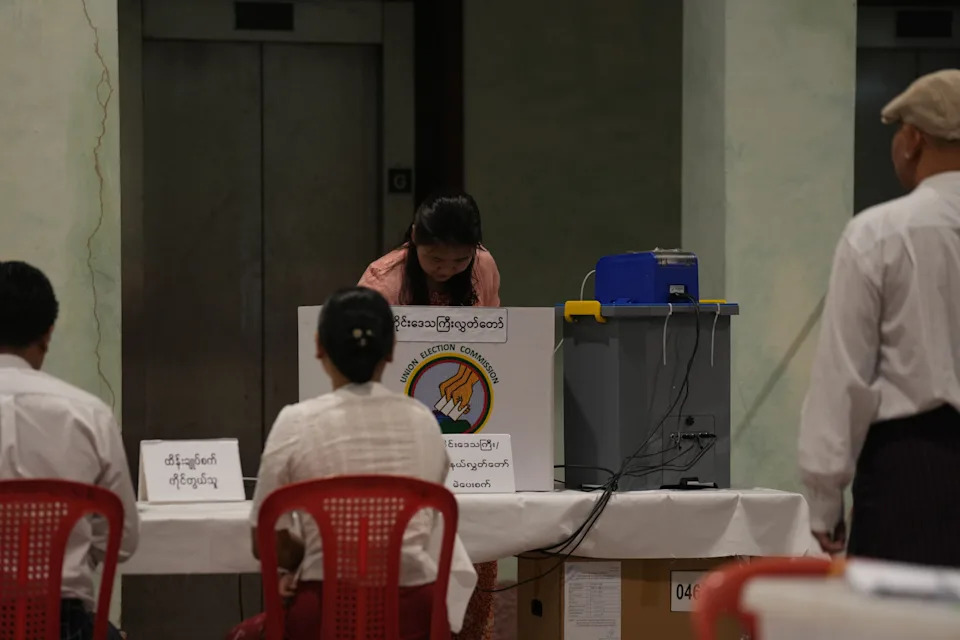
A voter casts a ballot at a polling station, Sunday, Dec. 28, 2025, in Yangon, Myanmar. (AP Photo/Thein Zaw)(ASSOCIATED PRESS)
Conflict, Detentions And Human Cost
Mounting repression and civil war have shaped the electoral environment. The Assistance Association for Political Prisoners reports more than 22,000 people detained on political charges. Human rights organizations say security forces have killed over 7,600 civilians since 2021, and the U.N. estimates more than 3.6 million people have been displaced by the fighting.
Given the military’s institutional power, the role of the armed forces in politics, and the exclusion of major opposition actors, both the junta and its opponents largely expect power to remain in the hands of Senior Gen. Min Aung Hlaing.
Associated Press writer Peck reported from Bangkok.


