
President Trump has intensified a confrontation with NATO allies by threatening tariffs on several European countries and refusing to rule out force to acquire Greenland, prompting emergency EU consultations and alarm among transatlantic leaders. Congressional Republicans and Democrats are exploring legal checks, including a war powers resolution and challenges to tariff authority. European leaders have pushed back, warning coercion over Greenland would undermine sovereignty and risk fracturing NATO, with potential consequences for trade, defense cooperation and US force projection.
Can NATO Survive? Trump's Greenland Push Threatens the Transatlantic Alliance

President Donald Trump at the White House in Washington, DC, on January 15, 2026. - Kylie Cooper/Reuters
President Donald Trump has escalated a dispute with NATO allies by threatening tariffs on multiple European countries and refusing to rule out force as a means to acquire Greenland — a semiautonomous territory of the Kingdom of Denmark. His actions have prompted emergency EU consultations, urgent calls among NATO leaders, and growing concern in Congress about the limits of presidential authority.
What Happened
On Saturday, Mr. Trump announced he would impose a 10% tariff on "any and all goods" from Denmark, Norway, Sweden, France, Germany, the United Kingdom, the Netherlands and Finland starting February 1, rising to 25% on June 1, and would keep duties in place until an agreement over Greenland is reached. He also declined to rule out using military force to obtain the island, prompting alarm across Europe and at home.
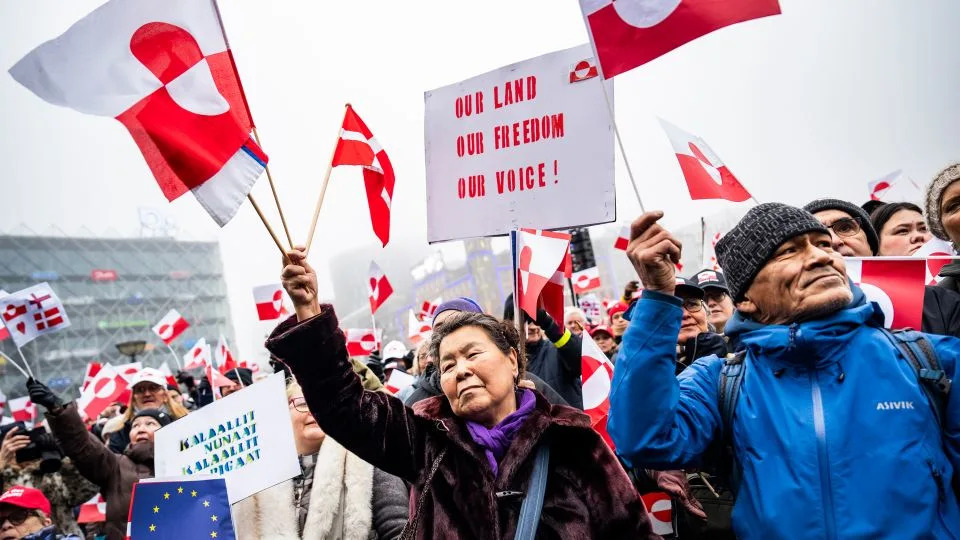
Protesters rally in support of Greenland on January 17, 2026, in Copenhagen, Denmark. - Martin Sylvest Andersen/Getty Images
Transatlantic Reaction
European Union ambassadors convened emergency talks in Brussels and several NATO leaders — including those who have cultivated friendly ties with Mr. Trump — contacted the White House to emphasize Greenland's status and to signal unified opposition to coercive tactics. Leaders from France, Britain and Italy publicly defended the principle of national sovereignty and the right of peoples to self-determination.
"No intimidation or threat will influence us — neither in Ukraine, nor in Greenland," French President Emmanuel Macron wrote on social media.
European officials warn that retaliatory trade measures or reductions in military cooperation could harm both US and European economic interests, and could complicate transatlantic coordination on security issues ranging from the Ukraine war to Middle East stabilization.
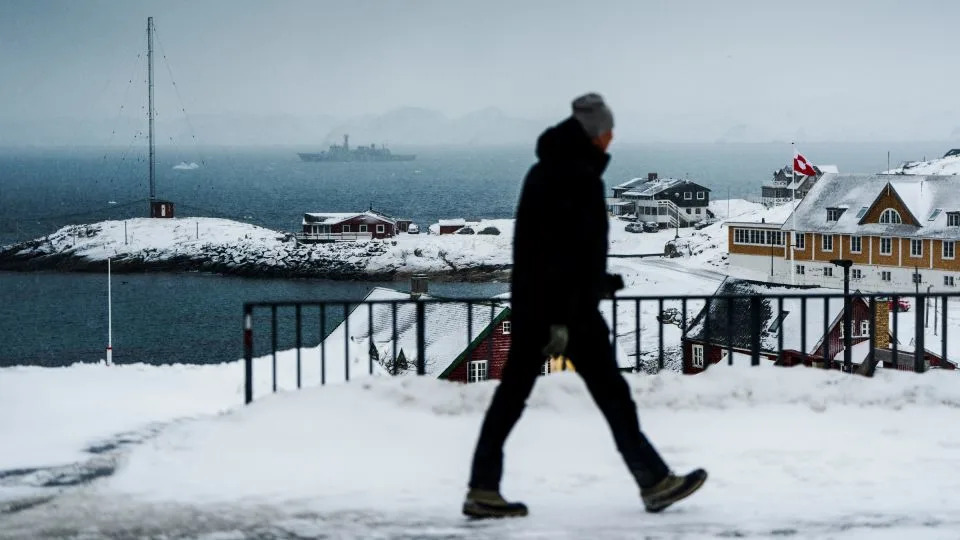
The Danish navy's inspection ship HDMS Vaedderen sails off Nuuk, Greenland, on Sunday. - Mads Claus Rasmussen/AFP/Getty Images
Congressional and Legal Pushback
Members of Congress from both parties signaled plans to check the president. Senators Rand Paul (R-Ky.) and Tim Kaine (D-Va.) said they are discussing a war powers resolution specific to Greenland, and they plan to challenge the tariff authority Mr. Trump invokes. Lawmakers also highlighted statutes that limit a president's ability to withdraw from NATO without congressional approval.
Lawmakers and former officials warned that using force to seize Greenland would violate NATO's mutual-defense commitments under Article 5 and could precipitate an unprecedented rupture in the alliance.
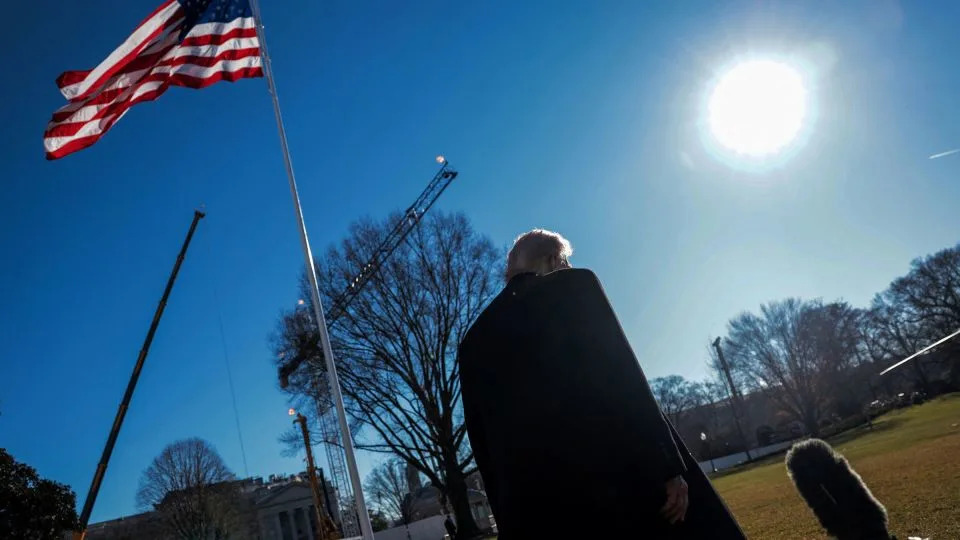
President Donald Trump departs the White House for Detroit on January 13, 2026. - Jonathan Ernst/Reuters
Administration Rationale and Criticism
Administration officials have argued the United States has legitimate strategic interests in Greenland — from missile defense and missile-warning installations to potential rare-earth mineral exploration and Arctic security as great-power competition intensifies.
At the same time, some administration comments have suggested a readiness to act unilaterally. A senior Treasury official said the US projects strength while Europe projects weakness — remarks that underscored fears in Europe about American unpredictability. The Supreme Court is also considering disputes over the president's use of emergency powers to impose tariffs, raising legal questions about trade prerogatives.

An Inuit woman holds her child during a protest in front of the US Consulate in Nuuk, Greenland, on January 17, 2026. - Evgeniy Maloletka/AP
Wider Consequences
Experts warn the dispute could jeopardize a proposed EU‑US trade agreement, invite retaliatory tariffs, and weaken cooperation on defense and intelligence. A sustained fracture in NATO could affect US access to bases in Europe used to project force in the Middle East and Africa, shift the burden of Arctic defense more heavily onto the United States, and complicate coordinated responses to crises such as the war in Ukraine and stabilization efforts in Gaza.
Why This Matters
For decades many European militaries have relied on the US security umbrella. While several NATO countries have promised to increase defense spending after Russia’s invasion of Ukraine, building full strategic autonomy will take years and substantial investment. The current crisis underscores how an assertive presidency combined with long-standing imbalances in the alliance can create fragile moments with broad geopolitical consequences.
Bottom line: The Greenland episode tests legal, political and diplomatic limits — from congressional checks on war powers and trade authority to the resilience of NATO itself. The outcome will hinge on whether US Congress, NATO partners and EU leaders can impose effective constraints or incentives that prevent escalation and preserve long-term transatlantic cooperation.
Help us improve.





















