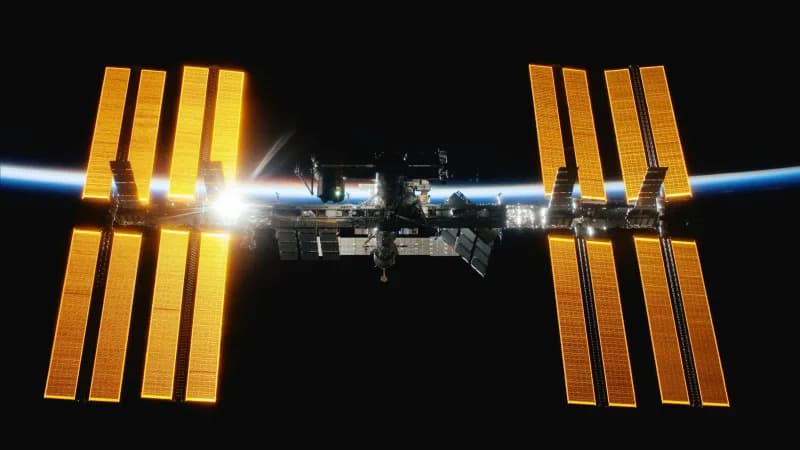
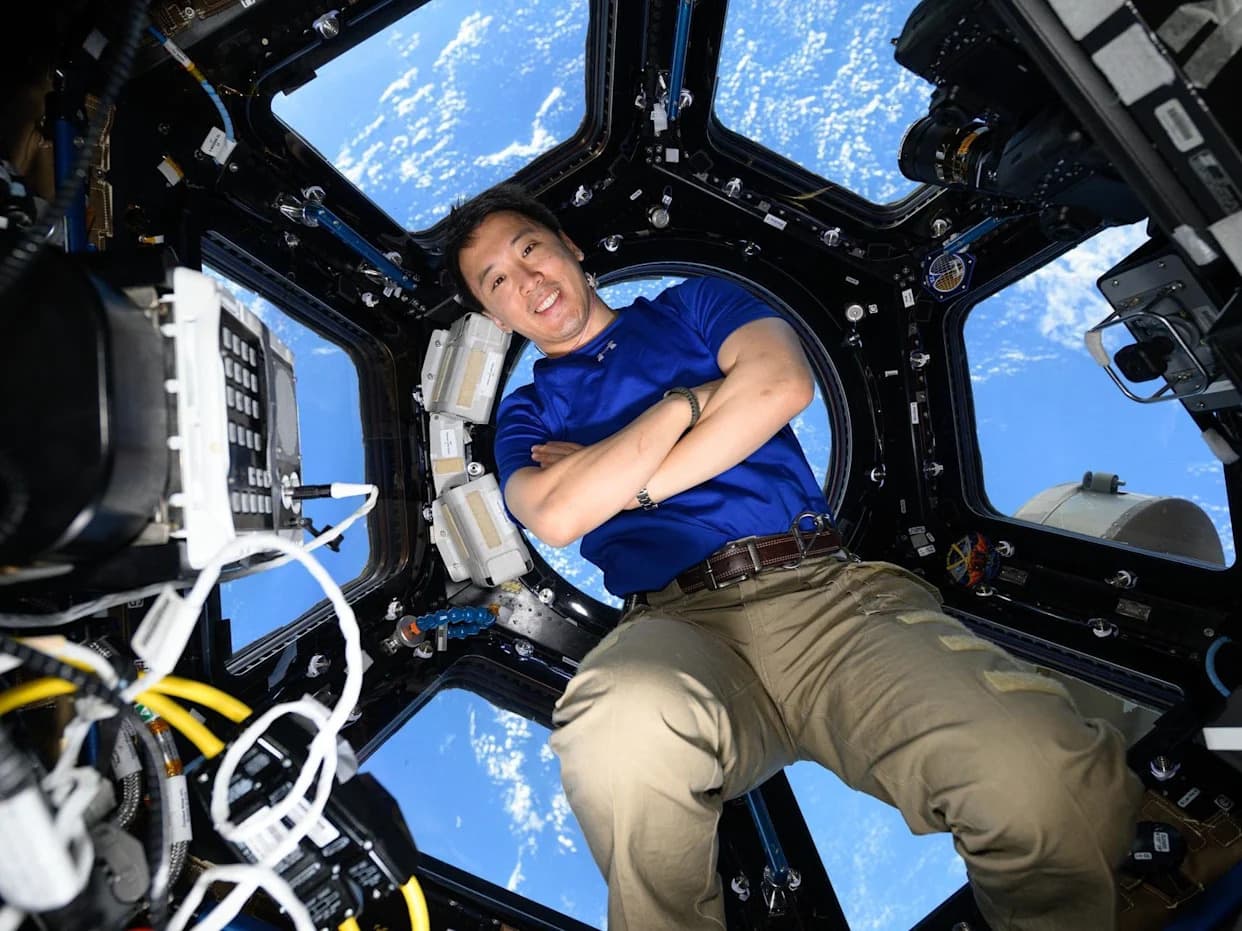
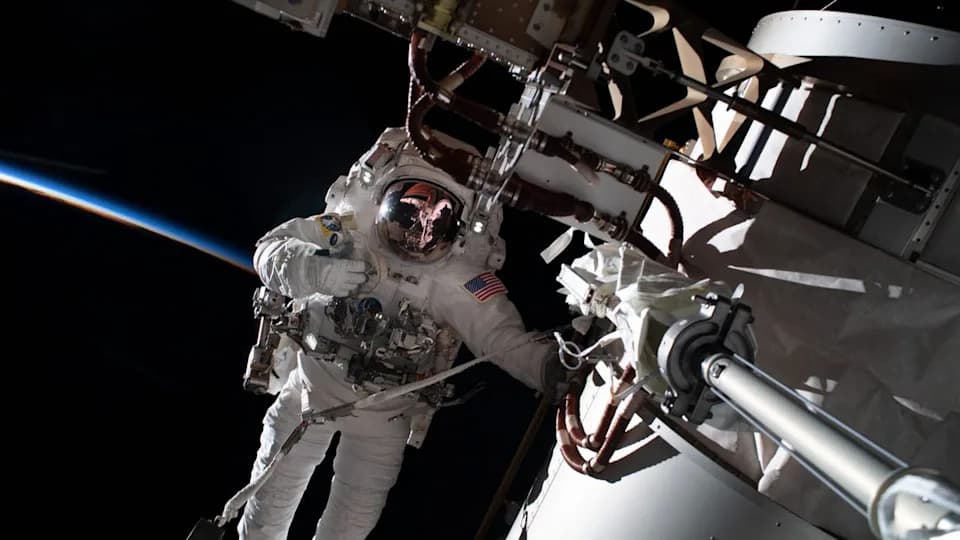
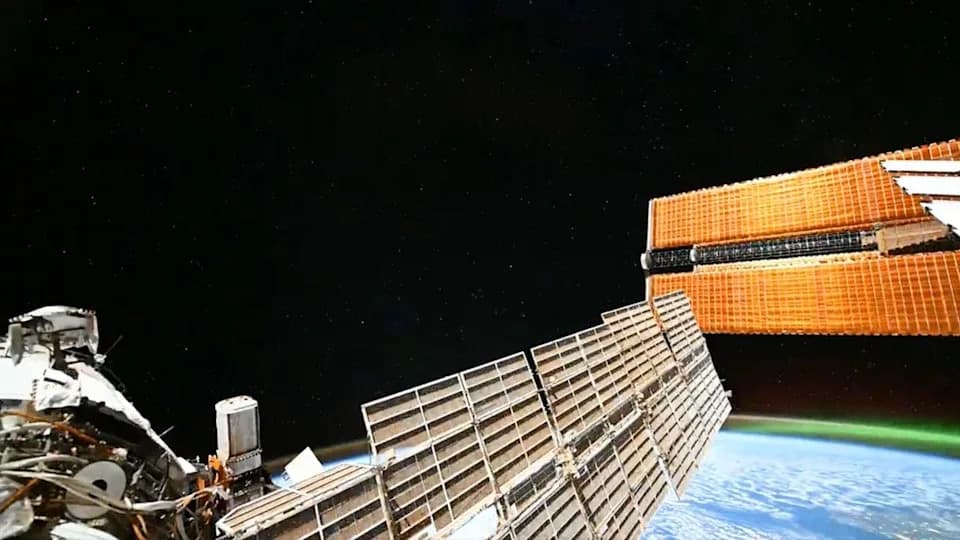
NASA released a high‑definition walkthrough of the International Space Station, assembled from footage of Crew‑4 and Crew‑5 activity in October 2022. The short tour highlights key modules — including ESA’s Columbus laboratory and Japan’s Kibo module with its external robotic arm — and shows candid scenes of daily life in microgravity. Orbiting about 250 miles above Earth, the ISS squeezes storage and experiments into every inch. Under the current plan, NASA will begin deorbit procedures in 2031 after more than 25 years of continuous habitation.
Inside the International Space Station: NASA’s New HD Walkthrough Reveals Life Aboard
Humans have lived continuously in the International Space Station for over 25 years.
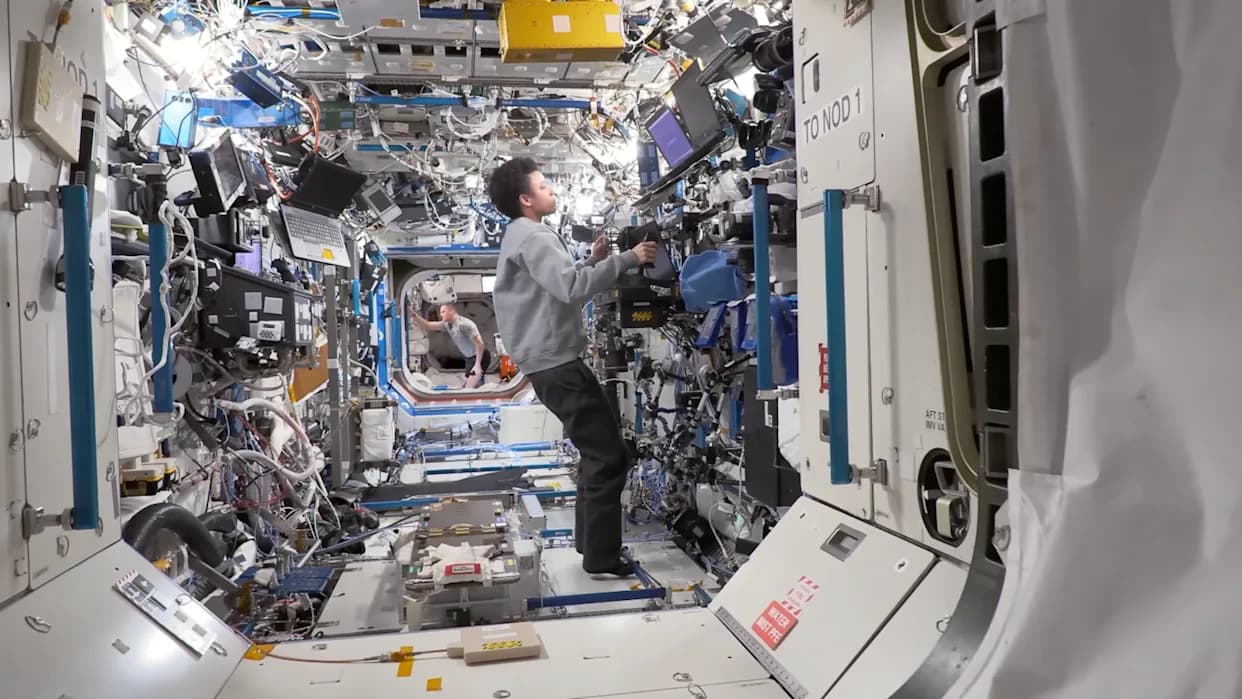
There are nearly 16,700 cubic feet of habitable space aboard the International Space Station (ISS) — roughly the volume of a large six‑bedroom house — yet everything inside is optimized for science and survival rather than conventional living. NASA’s new high‑definition walkthrough compresses that intricate environment into a tour that lasts under 15 minutes, but it reveals a surprising amount of detail.
Published this month, the video compiles footage captured during Crew‑4 and Crew‑5 activity in October 2022 and highlights both the station’s scientific facilities and everyday crew life. The guided tour opens in the Columbus laboratory module, the European Space Agency’s (ESA) primary research lab on the station, which houses experiments in fluid physics, materials science and the effects of microgravity. The tour then follows Commander Nicole Mann into Kibo, Japan’s experiment module, which supports tasks such as satellite deployment and is fitted with an external robotic arm.
Life and Work in Microgravity
Viewers get close, candid looks at daily routines: how astronauts eat, sleep and move through narrow passageways lined with racks of equipment and storage bags. Orbiting roughly 250 miles above Earth makes resupply missions expensive and infrequent, so nearly every available surface is used for experiments, spare parts, wiring and personal items. The result is a highly efficient, tightly packed environment that can look like controlled chaos to the untrained eye.
Why the Tour Matters
This snapshot of life aboard the ISS celebrates more than 25 years of continuous human presence in low Earth orbit. At the same time, it arrives as the program approaches a planned conclusion: under the current schedule, NASA intends to begin deorbit procedures in 2031, after which the station will re‑enter the atmosphere and largely burn up during descent.
Watch for: compact labs, the Columbus and Kibo modules, the station’s storage ingenuity, candid crew moments and a reminder of the ISS’s legacy as it nears retirement.
Help us improve.