Researchers analyzed bacterial strains preserved from the 2007 assembly of NASA’s Phoenix Mars lander and identified 26 previously unknown species that persisted in Kennedy Space Center cleanrooms despite rigorous sterilization. Genomes reveal adaptations such as chemical resistance, biofilm formation, DNA repair and dormancy, which may help long-term survival. Scientists are building a planetary simulation chamber at KAUST to test whether these organisms could survive combinations of space- and Mars-like stresses; pilot experiments are expected in early 2026. The work informs planetary protection and spacecraft decontamination strategies.
Life Finds a Way: 26 New Bacterial Species Found in NASA Cleanrooms — Scientists Will Test Their Survival Under Mars‑Like Conditions
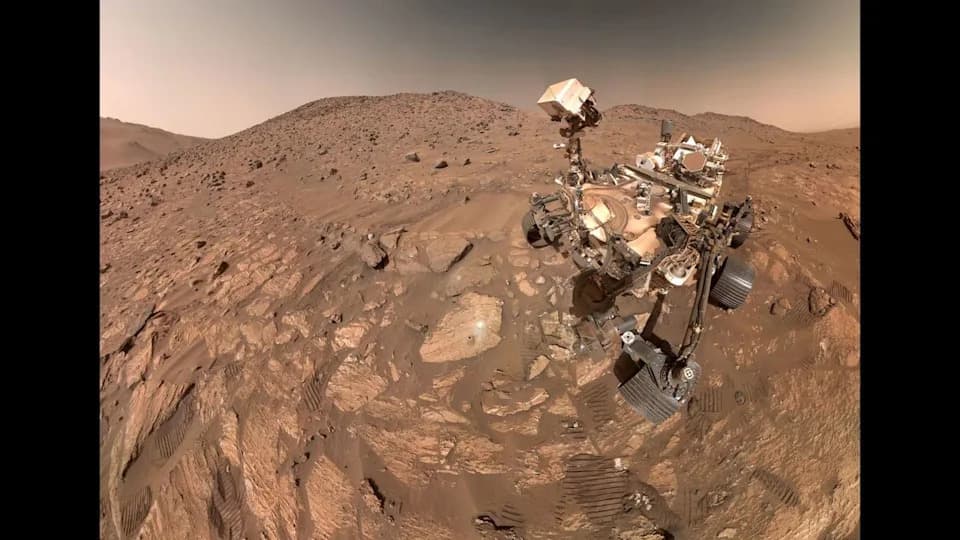
Credit: NASA/JPL-Caltech/MSSS
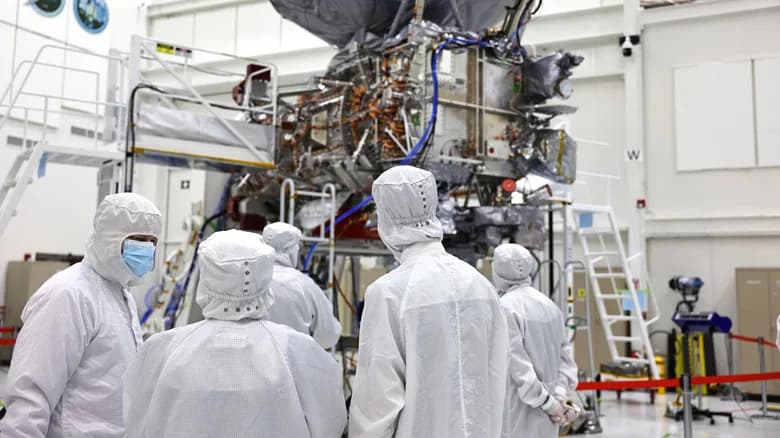
NASA spacecraft-assembly cleanrooms are among the most rigorously sterilized environments on Earth, yet recent research shows some microbes still persist. Scientists identified 26 previously unknown bacterial species in samples taken from the Kennedy Space Center cleanrooms where the Phoenix Mars lander was assembled in 2007. The discovery raises important questions for planetary protection and spacecraft-sterilization protocols.
How the Discovery Was Made
During Phoenix assembly, a team led by Kasthuri Venkateswaran of NASA’s Jet Propulsion Laboratory collected and preserved 215 bacterial strains from cleanroom floors inside the Payload Hazardous Servicing Facility. Samples were taken before the spacecraft arrived (April 2007), during assembly and testing (June 2007), and after the vehicle moved to the launch pad (August 2007). Advances in DNA sequencing since 2007 enabled researchers to analyze these archived strains in depth and identify dozens of previously unrecognized species.
What the Genomes Reveal
Genomic analysis—reported in a paper published in Microbiome—showed many of the new species carry genetic traits associated with long-term survival in hostile, low-nutrient, frequently cleaned environments. Key adaptations include genes for resistance to cleaning chemicals, formation of sticky biofilms that anchor cells to surfaces, DNA-repair systems that mitigate radiation damage, and mechanisms for dormancy or spore formation. Though these species are generally rare within cleanrooms, they appear to persist at low levels and across multiple facilities.
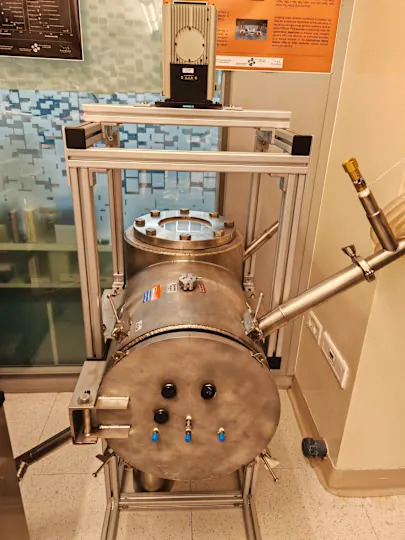
The planetary simulation chamber at King Abdullah University of Science and Technology in Saudi Arabia. Scientists will soon use it to recreate Mars-like and space-like conditions and test how the newly discovered microbes survive and adapt. | Credit: Niketan Patel and Alexandre Rosado/King Abdullah University of Science and Technology
“It was a genuine ‘stop and re-check everything’ moment,” said Alexandre Rosado, co-author and professor of bioscience at King Abdullah University of Science and Technology (KAUST), reflecting on the implications for planetary protection.
Testing Survival Under Space- and Mars‑Like Conditions
To evaluate whether these microbes—or others with similar adaptations—could survive spaceflight and conditions on Mars, researchers at KAUST are assembling a planetary simulation chamber. The facility is designed to reproduce stresses such as Mars’s low, carbon-dioxide-rich atmospheric pressure, intense radiation, extreme temperature swings, and aspects of the space environment. The chamber is in its final assembly phase and pilot experiments are expected to begin in early 2026.
Rosado cautioned that while several species carry genes that could help withstand some space stresses (for example, DNA repair and dormancy-related systems), actual survival would depend on untested factors such as exposure to vacuum, high-energy cosmic and UV radiation, and prolonged deep cold on Mars.
Implications and Next Steps
The findings underscore that cleanrooms are very low-biomass environments, not sterile voids. The newly identified organisms can serve as valuable test subjects to validate decontamination methods and detection systems used by space agencies. The researchers recommend coordinated, long-term sampling across multiple cleanrooms with standardized methods, paired with controlled experiments to measure survival limits and stress responses. Such efforts would clarify which microbial traits truly matter for planetary protection and could reveal translational opportunities in biotechnology and astrobiology.
Key investigators: Alexandre Rosado (KAUST) and Kasthuri Venkateswaran (NASA JPL). Study details appear in the journal Microbiome.
Help us improve.