Hubble has imaged a massive protostar propelling the fastest and longest stellar jet yet observed: a flow moving at 2.2 million mph (3.5 million km/h) and extending 32 light‑years. The jet lights up Herbig‑Haro objects HH 80 and HH 81, powered by the protostar IRAS 18162‑2048 about 5,500 light‑years away in cloud L291. This is the only known long jet driven by a young massive star, and Hubble’s WFC3 made detailed study possible.
Hubble Captures Massive Protostar Launching 32‑Light‑Year Jet — Fastest Ever Seen
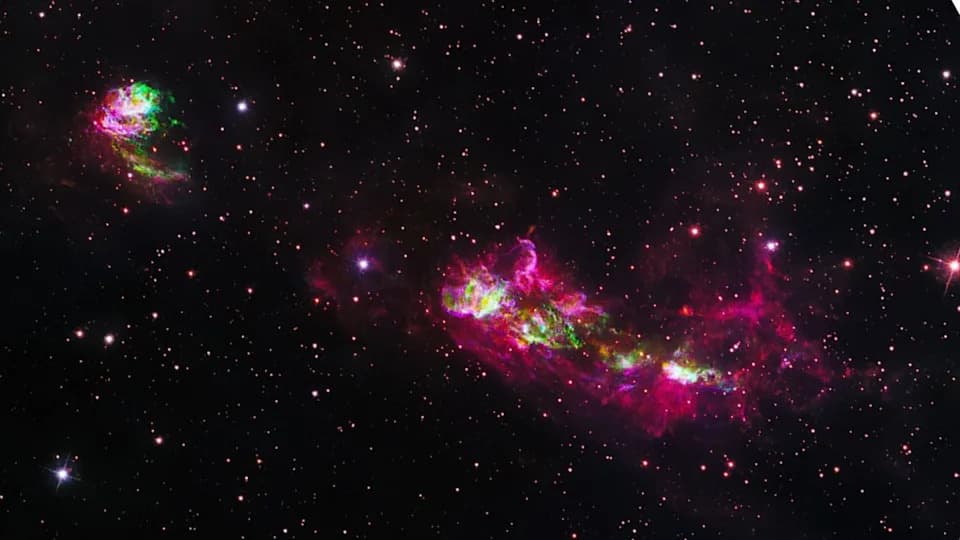
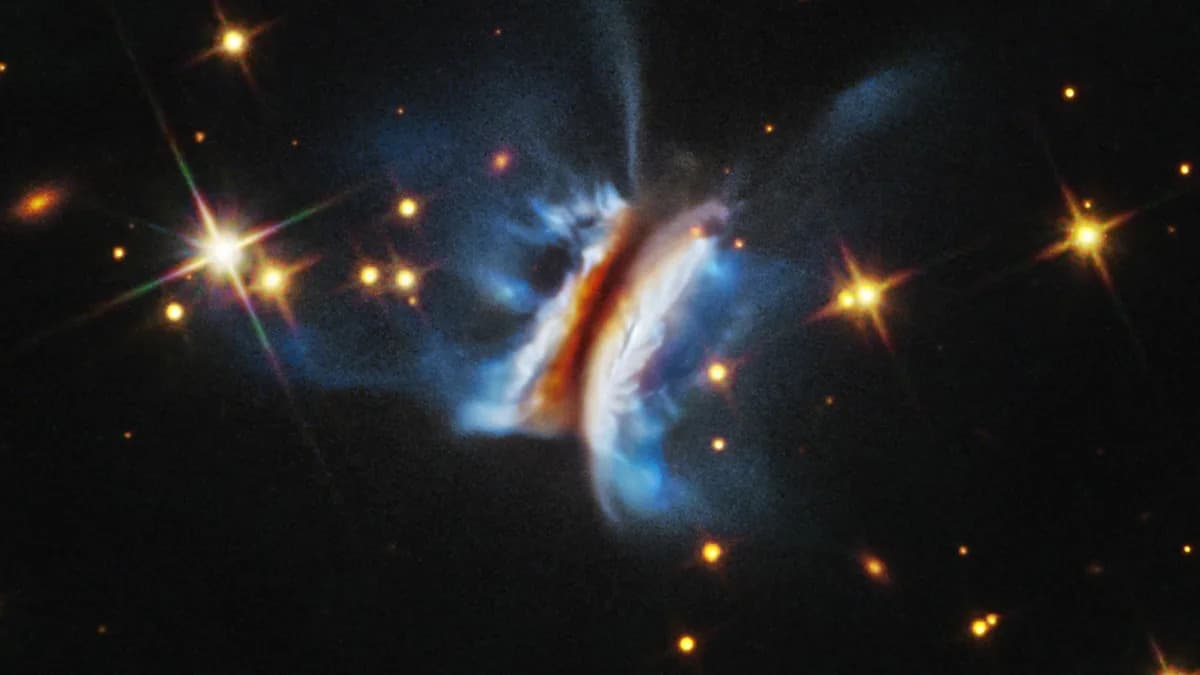
Outbursts from an infant star light up the interstellar clouds HH 80 and HH 81. | Credit: NASA, ESA, and B. Reipurth (Planetary Science Institute); Processing: Gladys Kober (NASA/Catholic University of America)
Using the Hubble Space Telescope, astronomers have recorded a young, massive star launching an exceptionally fast and extended jet of hot gas that lights up surrounding clouds.
What Hubble Saw
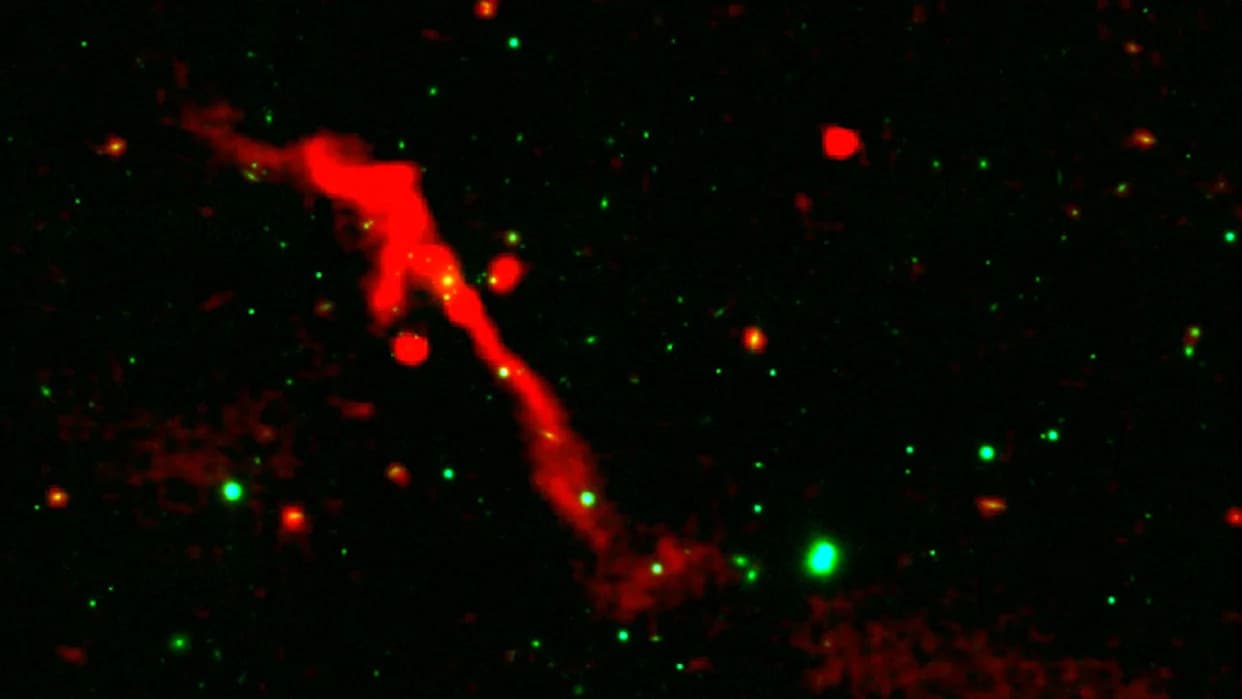
The observations reveal a protostar roughly 20 times the mass of the Sun powering a collimated stellar jet traveling at about 2.2 million miles per hour (3.5 million km/h) — the fastest outflow of this kind yet measured. That jet stretches an astonishing 32 light‑years from its source, making it the longest protostellar outflow observed to date.
The Objects In The Image
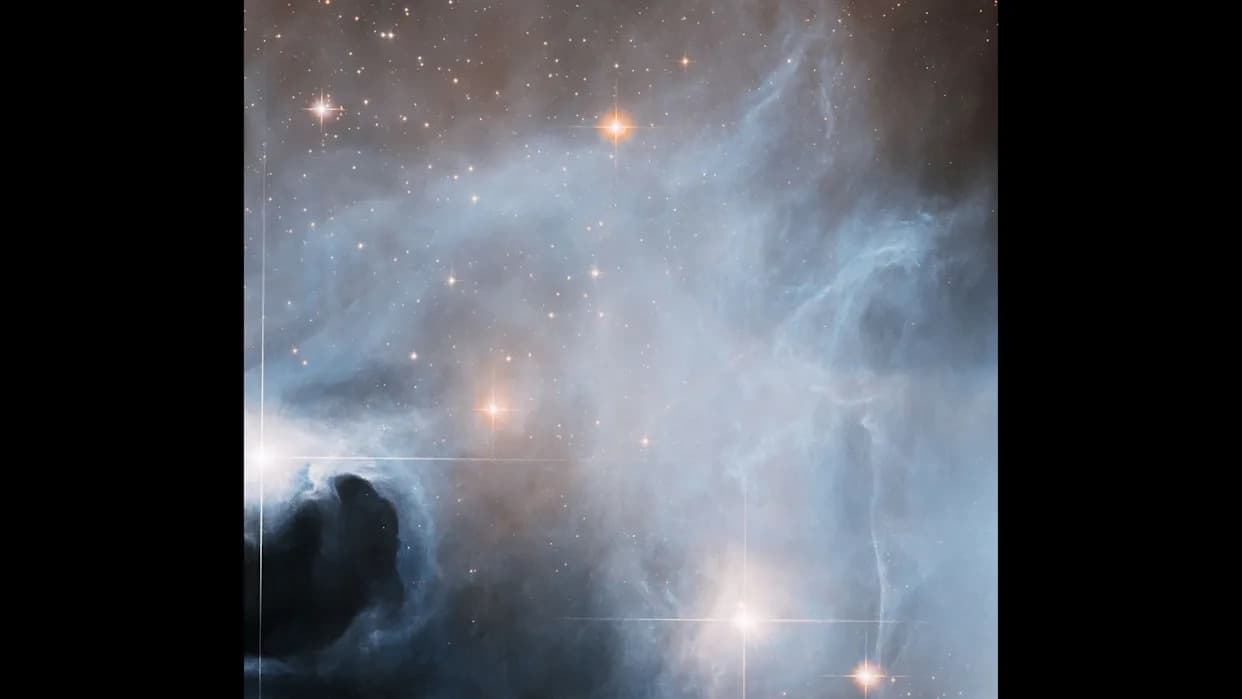
The Hubble image shows two bright Herbig‑Haro objects, labeled HH 80 and HH 81, glowing in colors rendered by the telescope's filters. HH 81 appears toward the upper left of the frame and HH 80 toward the lower right. Both are glowing where the jet collides with previously ejected material, producing shockwaves that heat the gas and cause the emission we see.
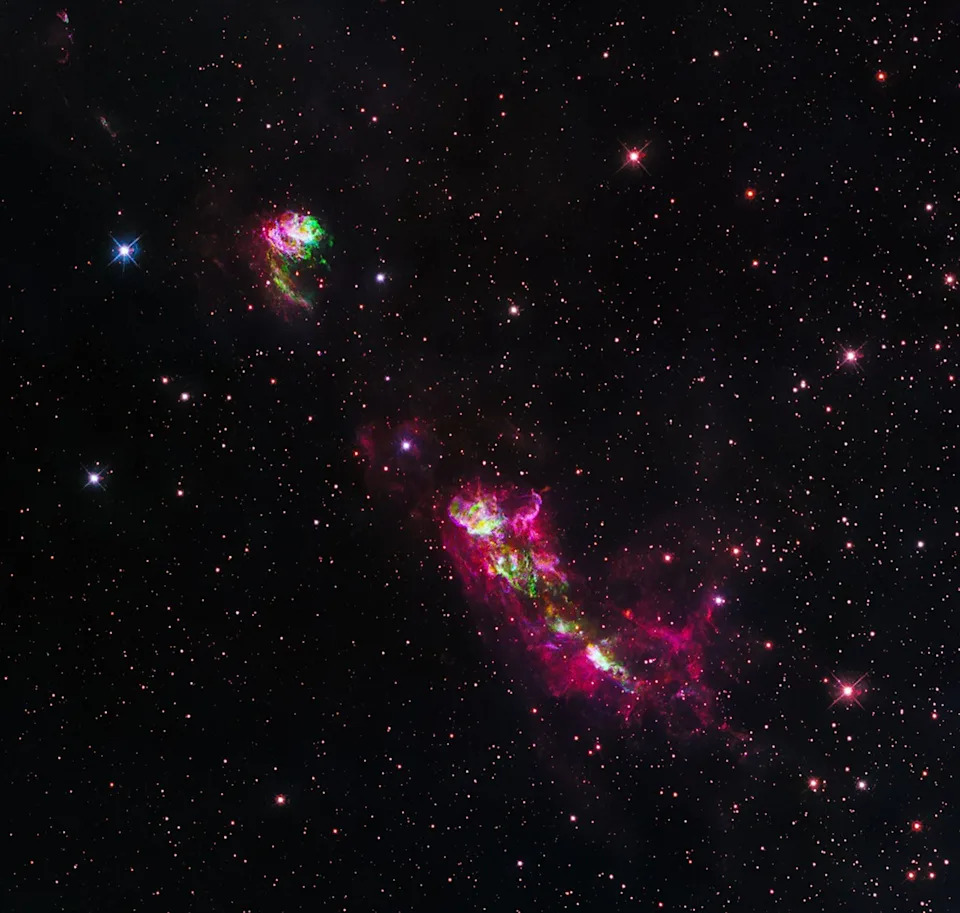
Outbursts from an infant star light up the interstellar clouds HH 80 and HH 81 | Credit: NASA, ESA, and B. Reipurth (Planetary Science Institute); Processing: Gladys Kober (NASA/Catholic University of America)
Source And Environment
The jet is launched by the protostar IRAS 18162‑2048, located about 5,500 light‑years away inside the molecular cloud known as L291. Protostars grow by accreting gas and dust from their surroundings. Because the inflowing material retains angular momentum, it forms a rotating accretion disk that feeds the young star. Strong magnetic fields associated with the disk can channel and accelerate ionized gas (plasma) into narrow, high‑speed jets that escape along the star’s poles.
Why This Is Important
HH 80 and HH 81 were first captured by Hubble in 1995. This system is notable not only for the extreme speed and length of its jet but also because it is the only known example where such an extended jet is driven by a young massive star rather than a low‑mass protostar. Detailed imaging with Hubble’s Wide Field Camera 3 (WFC3) lets astronomers track small structural changes over time, offering rare insight into the dynamics of massive star formation.
Even after more than three decades in service, Hubble continues to provide high‑resolution, sensitive views of dynamic astrophysical processes and remains a vital observatory for studying how stars form and shape their environments.
Help us improve.