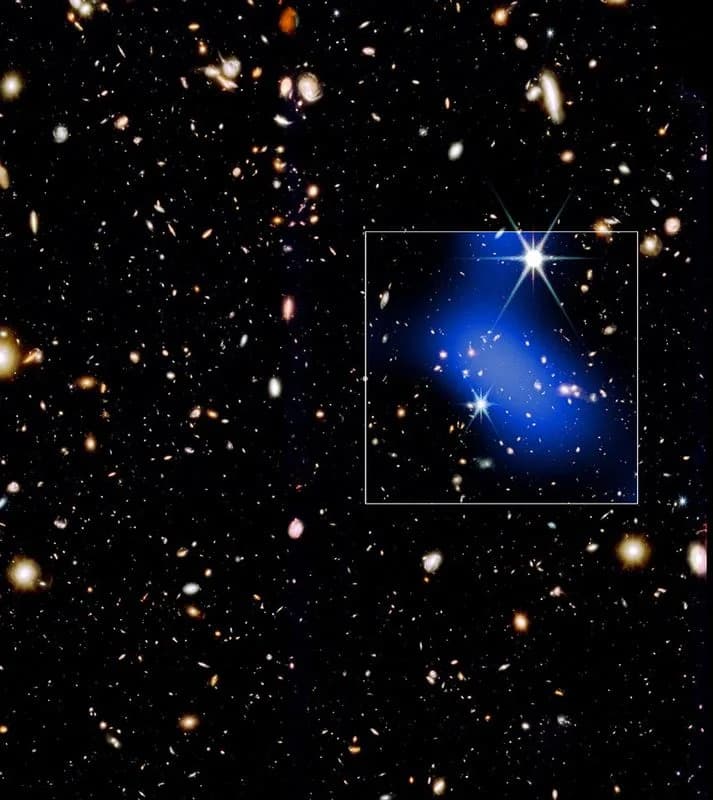
NASA’s James Webb Space Telescope has identified a candidate runaway supermassive black hole in the interacting system nicknamed the Cosmic Owl, about eight billion light-years away. The object is estimated at ~10 million solar masses and is moving at roughly 2.2 million mph (≈620 mi/s), driving a galaxy-sized bow shock and leaving a 200,000-light-year star-forming tail. Astronomers suggest the black hole was likely ejected by a merger recoil or a three-body interaction; the team favors a gravitational-wave kick from a merger. The finding appears in a paper not yet peer-reviewed and invites further observations to confirm the interpretation.
James Webb Spots Candidate Runaway Supermassive Black Hole Escaping Its Galaxy at ≈2.2 Million mph

Scientists say they've spotted the first runaway supermassive black hole that's rocketing away from its home at a staggering speed.
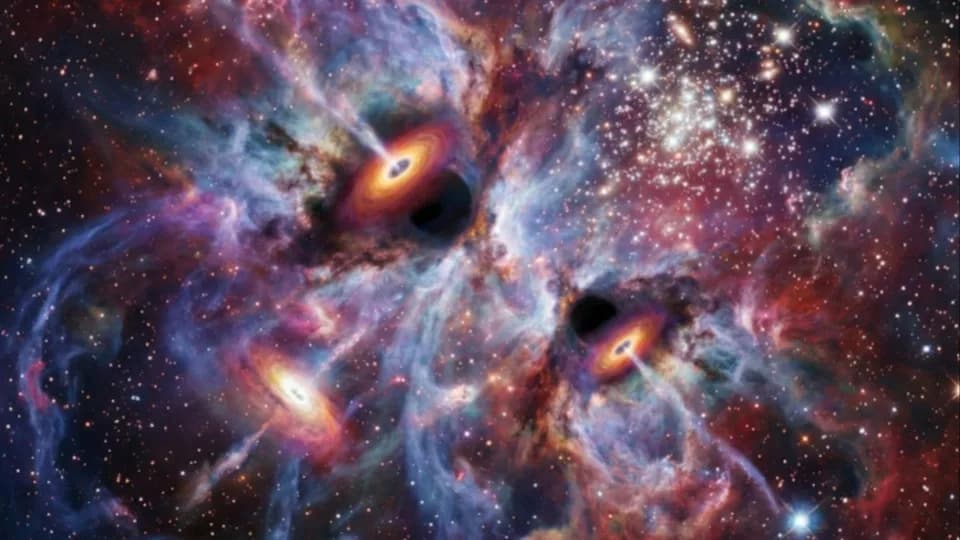
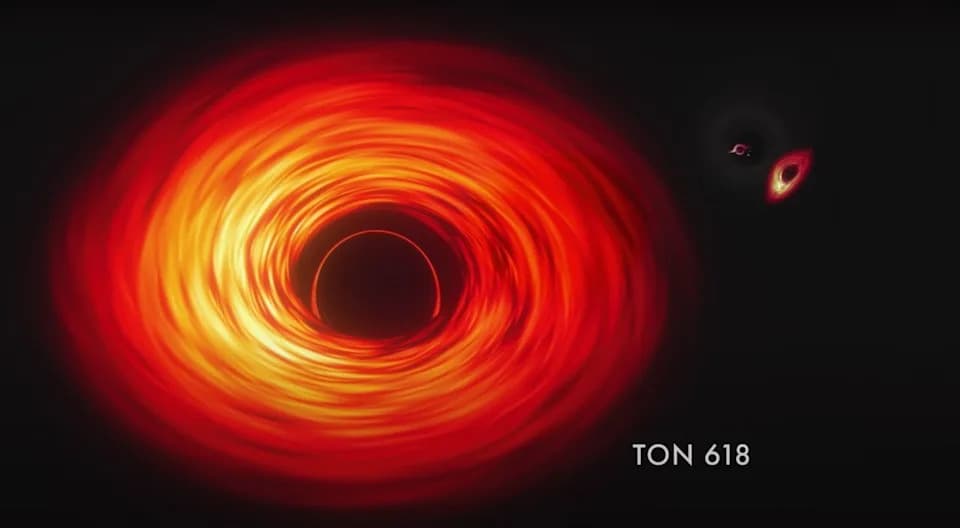
Supermassive black holes sit at the centers of most large galaxies, where their extreme gravity can trap anything — even light — that crosses their event horizon. Despite many observations, how these giants form and behave in unusual circumstances remains an active area of research.
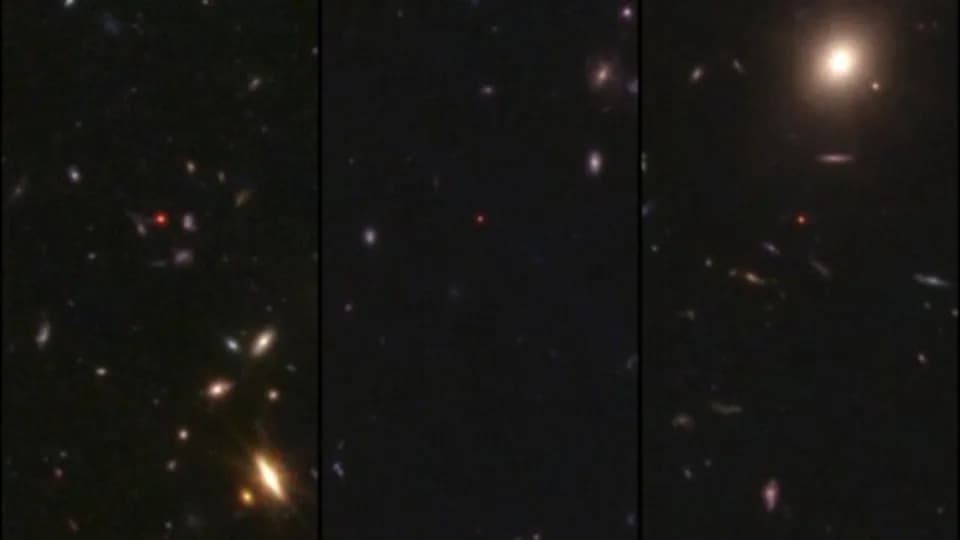
Now an international team using NASA’s James Webb Space Telescope (JWST) reports a striking discovery: what appears to be a runaway supermassive black hole moving away from its host system at roughly 2.2 million miles per hour (≈620 miles per second). The object, estimated at about 10 million times the mass of the Sun, is traveling through an interacting galaxy pair nicknamed the "Cosmic Owl", some eight billion light-years from Earth.
What Webb Revealed
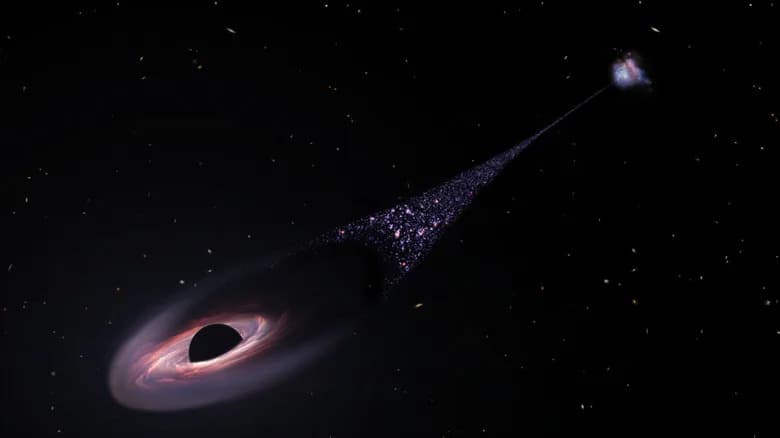
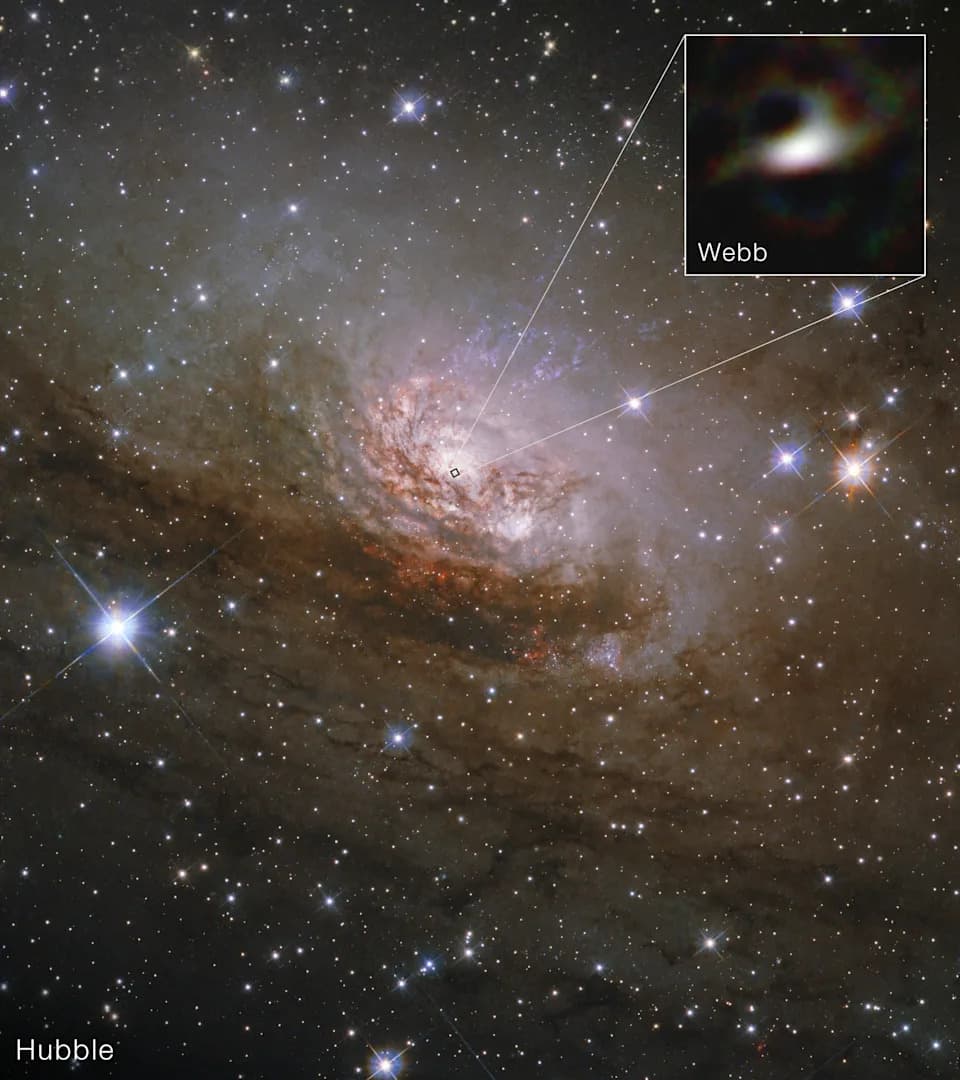
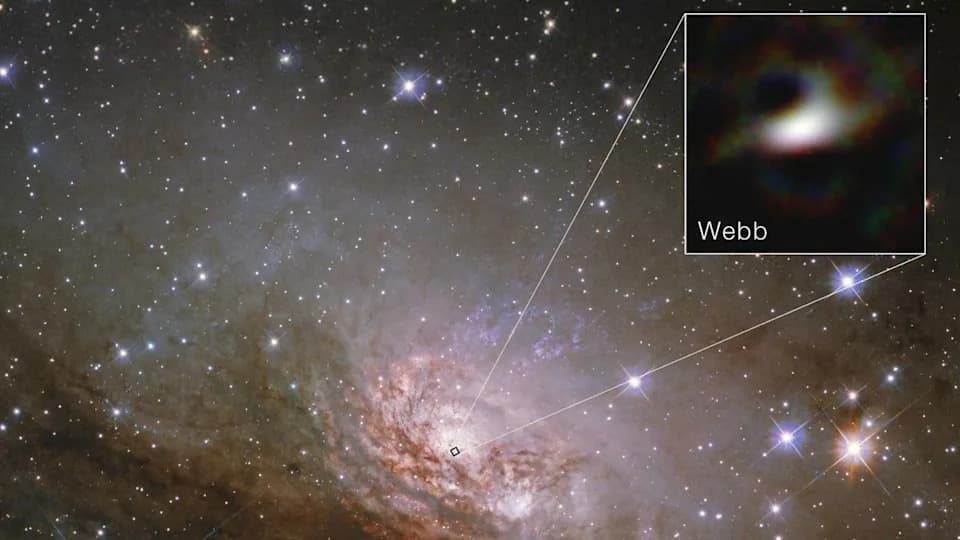
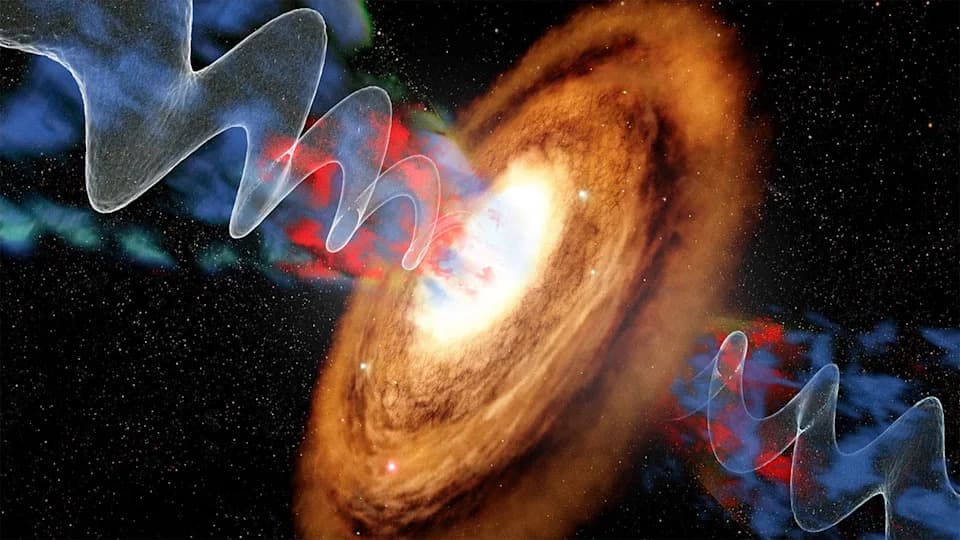
Although the source was first noticed in 2023 in Hubble imaging, detecting a black hole traveling through intergalactic space is difficult because the hole itself emits no light. Webb’s infrared sensitivity allowed researchers to observe the enormous quantities of gas and dust being displaced as the object plows through its environment. That displaced material outlines a galaxy-sized bow shock ahead of the black hole and a trailing plume—about 200,000 light-years long—where new stars appear to be forming.
How Fast — And How It May Have Gotten There
Lead author Pieter van Dokkum (Yale University) told Space.com the inferred speed is roughly 620 miles per second, making it one of the fastest-moving objects ever reported if confirmed. The team discusses two primary ejection scenarios: a gravitational-wave recoil from a merger of two supermassive black holes, or a three-body interaction in which a close encounter with a binary black hole slingshots one member out. The researchers favor a recoil from a merger but note both mechanisms are plausible.
“The forces needed to dislodge such a massive black hole from its home are enormous. And yet, it was predicted that such escapes should occur,” van Dokkum said.
Significance And Next Steps
If confirmed, this object would be the first directly observed runaway supermassive black hole and could provide a new window into black hole mergers, gravitational-wave kicks, and galaxy evolution. The discovery is reported in a paper that has not yet completed peer review; the team says, importantly, that now that astronomers know what signatures to look for (bow shocks, displaced gas, and long star-forming tails), additional examples may be found and counted to determine how often such ejections occur.
What remains uncertain: the result depends on interpretation of the displaced gas and dynamical modeling. Follow-up observations, spectroscopic confirmation, and further analysis are needed to determine definitively whether the object is a genuine runaway black hole and which ejection mechanism occurred.
Related research continues to explore other unusual galactic systems that could shed light on the life cycles of supermassive black holes.
Help us improve.