AT 2024wpp — the brightest known LFBOT — bolsters the case that some luminous fast blue optical transients are caused by extreme tidal disruption events. Multiwavelength data, including a near-infrared excess from Gemini South and energy output ~100× that of a typical supernova, argue against ordinary stellar explosions. The team proposes a preexisting shell of stolen material around a black hole collided with freshly shredded stellar debris (from a ~10 M☉ Wolf–Rayet star), producing bright X-ray, UV and blue optical emission and relativistic radio jets. The study is accepted by The Astrophysical Journal Letters and is posted on arXiv.
Bright Blue Blast Explained: Black Hole Shreds Star to Create Record LFBOT

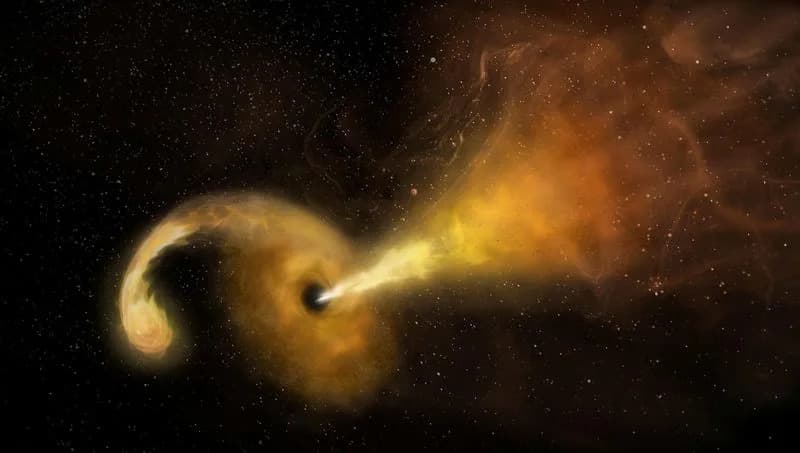
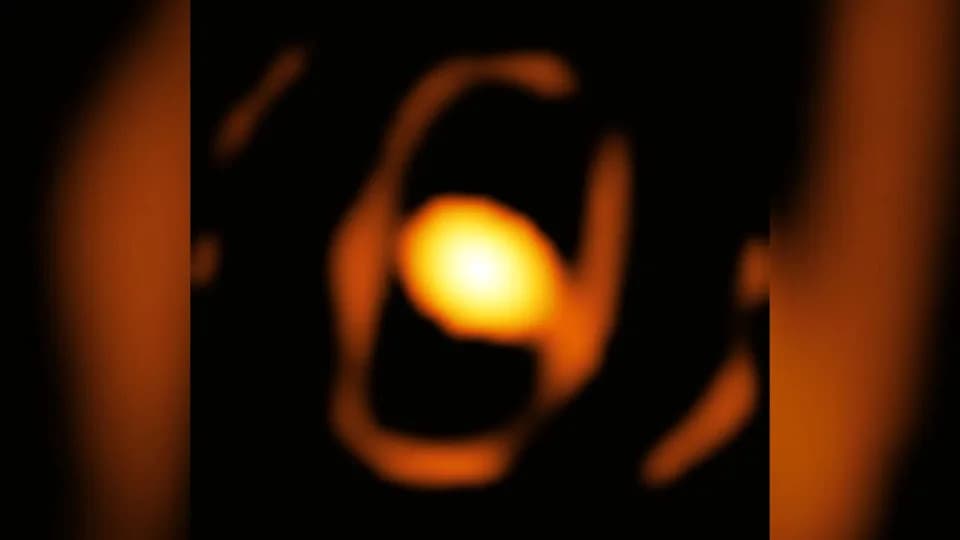
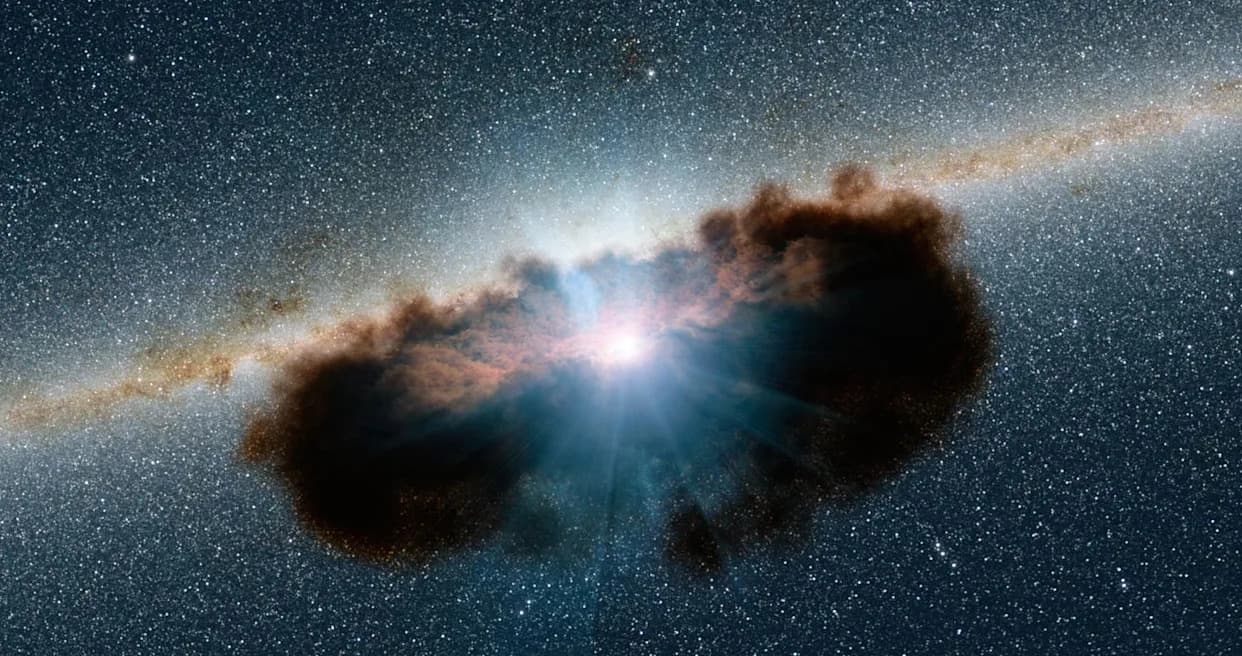
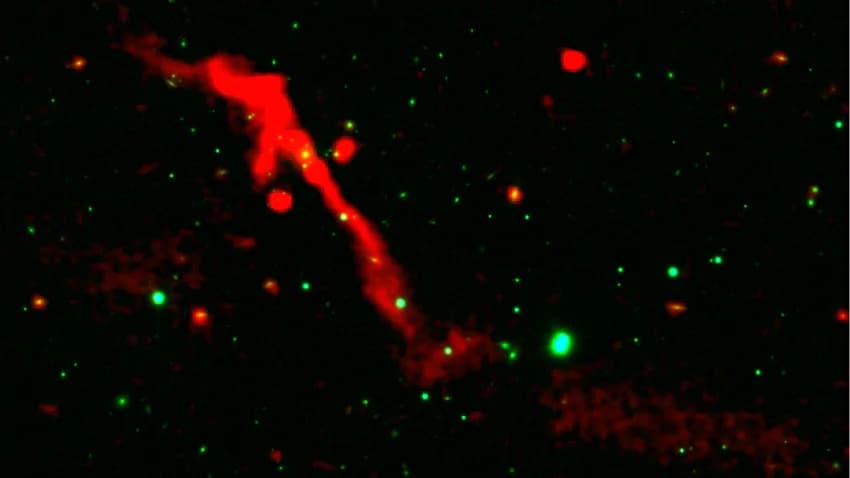
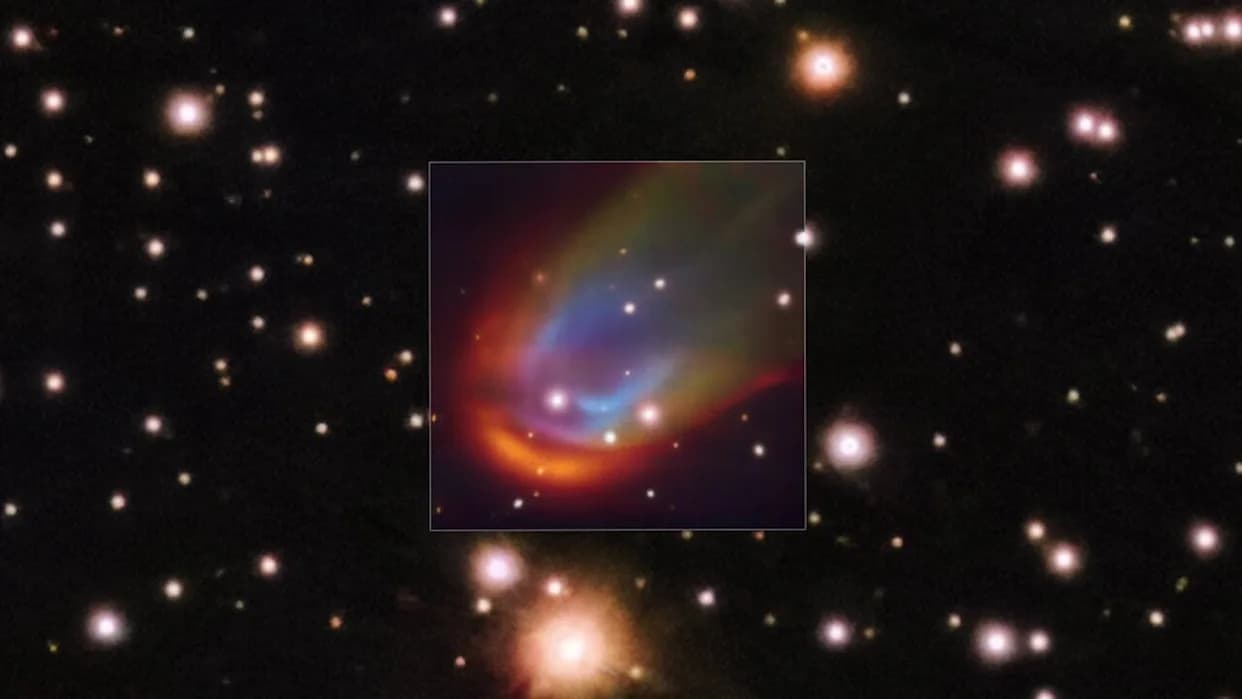
(Main) This composite image features X-ray, ultraviolet, optical, and near-infrared data of the luminous fast blue optical transient (LFBOT) named AT 2024wpp. The transient is the bright spot at the upper right edge of its host galaxy, which is 1.1 billion light-years from Earth. (Inset) An illustration of a Tidal Disruption Event. | Credit: International Gemini Observatory/NOIRLab/NSF/AURA
The brightest example yet of a rare class of cosmic explosions appears to have given astronomers a critical clue about what produces powerful, short-lived blue flares in the sky.
Central to the discovery is a signal from a Luminous Fast Blue Optical Transient (LFBOT) catalogued as AT 2024wpp, first detected in 2024. Detailed analysis by the research team indicates these LFBOTs arise from extreme tidal disruption events (TDEs), where a black hole — possibly up to ~100 times the mass of the Sun — rips apart a companion star in only a few days.
What Makes LFBOTs Special?
LFBOTs are named for their intense luminosity and blue spectral energy. They can be visible across billions of light‑years and emit energetic light spanning the blue optical band, through ultraviolet and into X-rays, while fading over a matter of days. Only a little more than a dozen LFBOTs have been identified so far, and their origin has been debated for roughly a decade.
The first well-studied example was AT 2018cow (nicknamed “The Cow”), and later events have earned informal zoological monikers such as the Koala (ZTF18abvkwla), the Tasmanian Devil (AT 2022tsd) and the Finch (AT 2023fhn). AT 2024wpp is the brightest LFBOT recorded to date — some have suggested "the Wasp" as a nickname.
Observations and Why Supernovae Are Unlikely
When the team examined AT 2024wpp they found it released roughly 100 times the energy of a typical supernova, a level that effectively rules out ordinary stellar explosions as the power source. To match that output via a supernova would require converting an implausible fraction of a star's mass directly into energy on timescales of weeks.
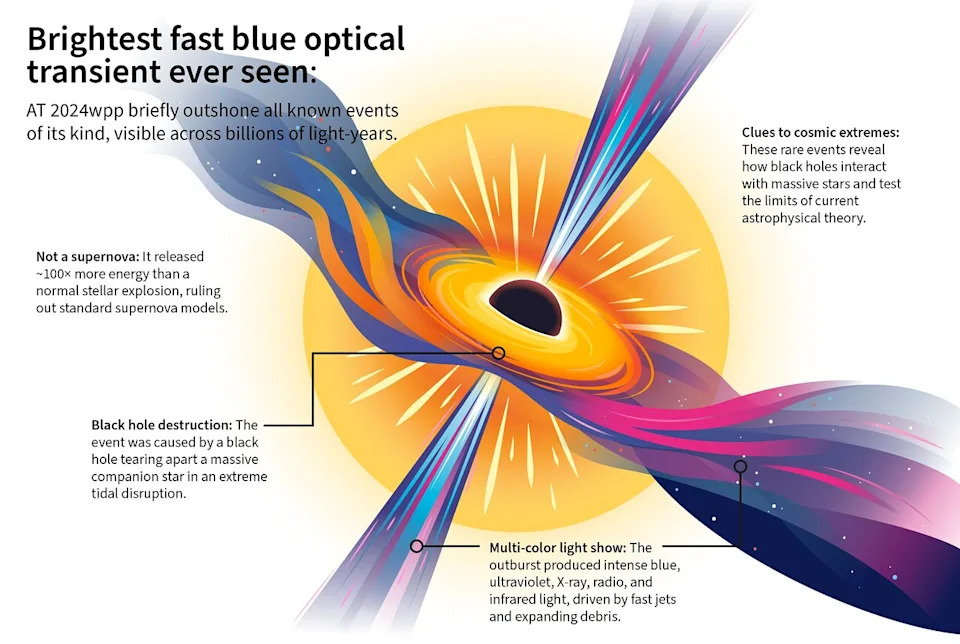
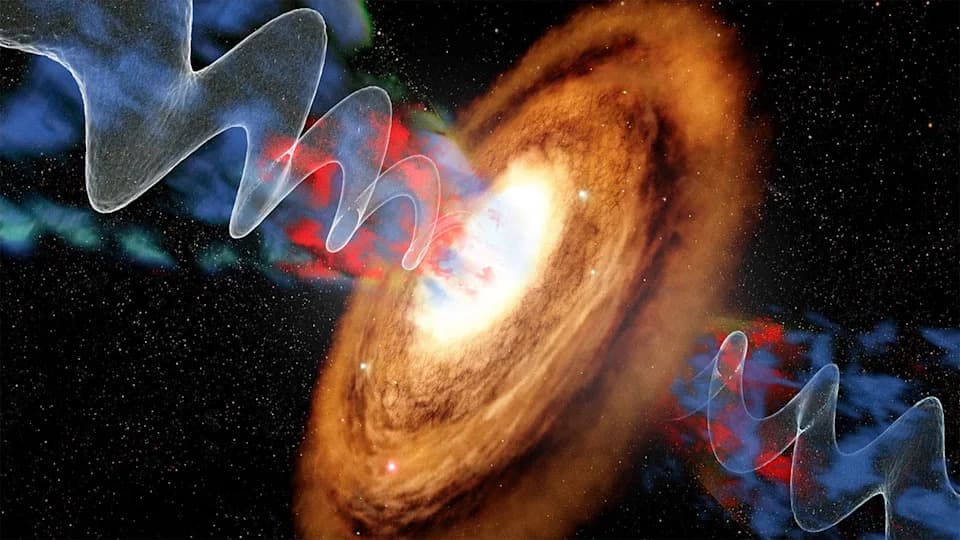
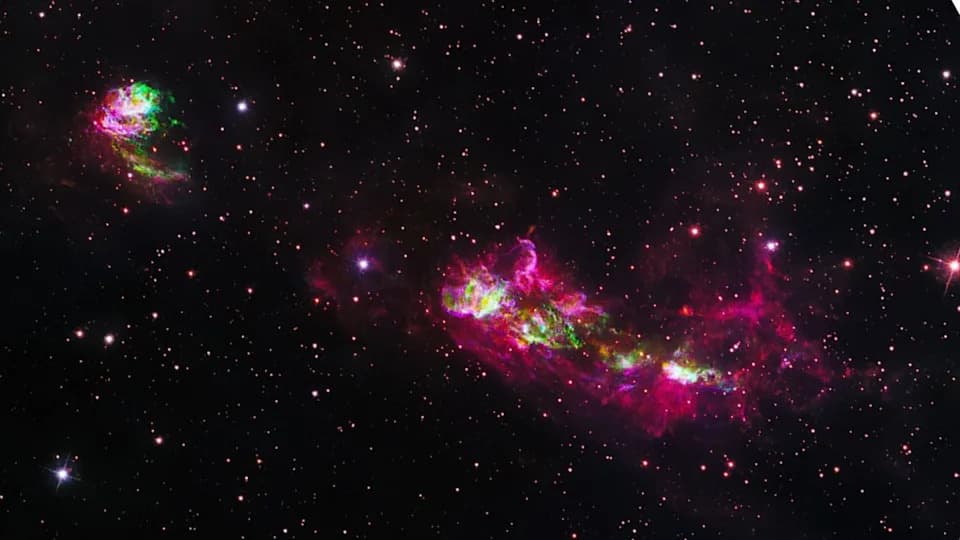
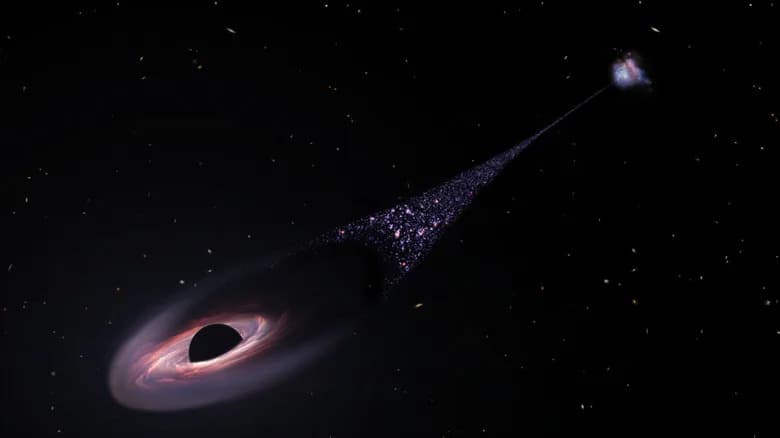
This infographic depicts AT 2024wpp, the brightest fast blue optical transient (FBOT) ever seen, and the likely mechanism behind its extreme power output. | Credit: NOIRLab/NSF/AURA/R. Margutti/P. Marenfeld
Observations with the Gemini South observatory revealed an excess of near-infrared emission at the location of AT 2024wpp — a feature previously seen only around AT 2018cow and not associated with normal supernovae.
“The sheer amount of radiated energy from these bursts is so large that you can't power them with a core-collapse stellar explosion — or any other type of normal stellar explosion,” said team member Natalie LeBaron of the University of California, Berkeley. “The main message from AT 2024wpp is that the model that we started off with is wrong. It's definitely not just an exploding star.”
Proposed TDE Mechanism for LFBOTs
The researchers propose that in this case the black hole had been siphoning material from its companion star over an extended period, coating itself in a roughly spherical shell of stolen matter that remained at some distance from the hole. When the companion star later plunged close enough to be shredded, the newly released stellar debris slammed into that preexisting shell.
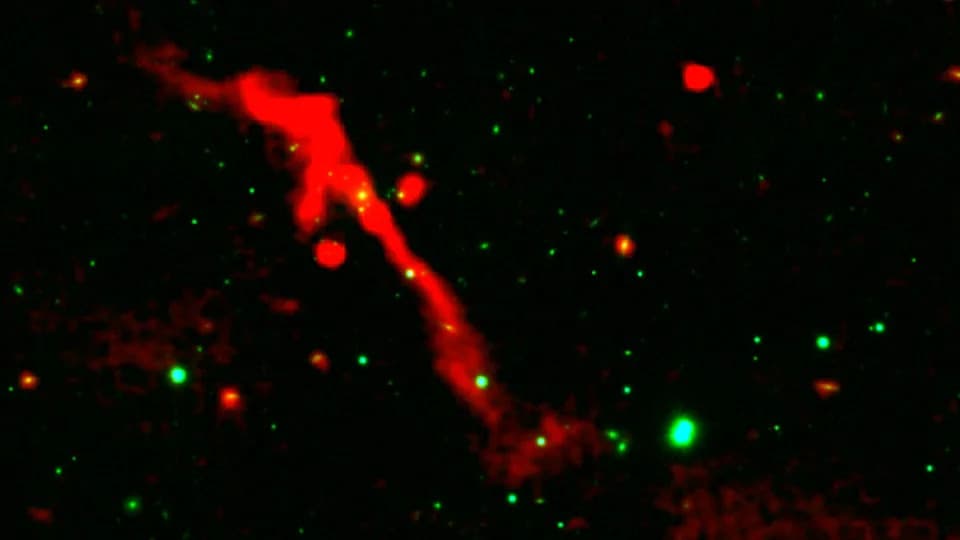
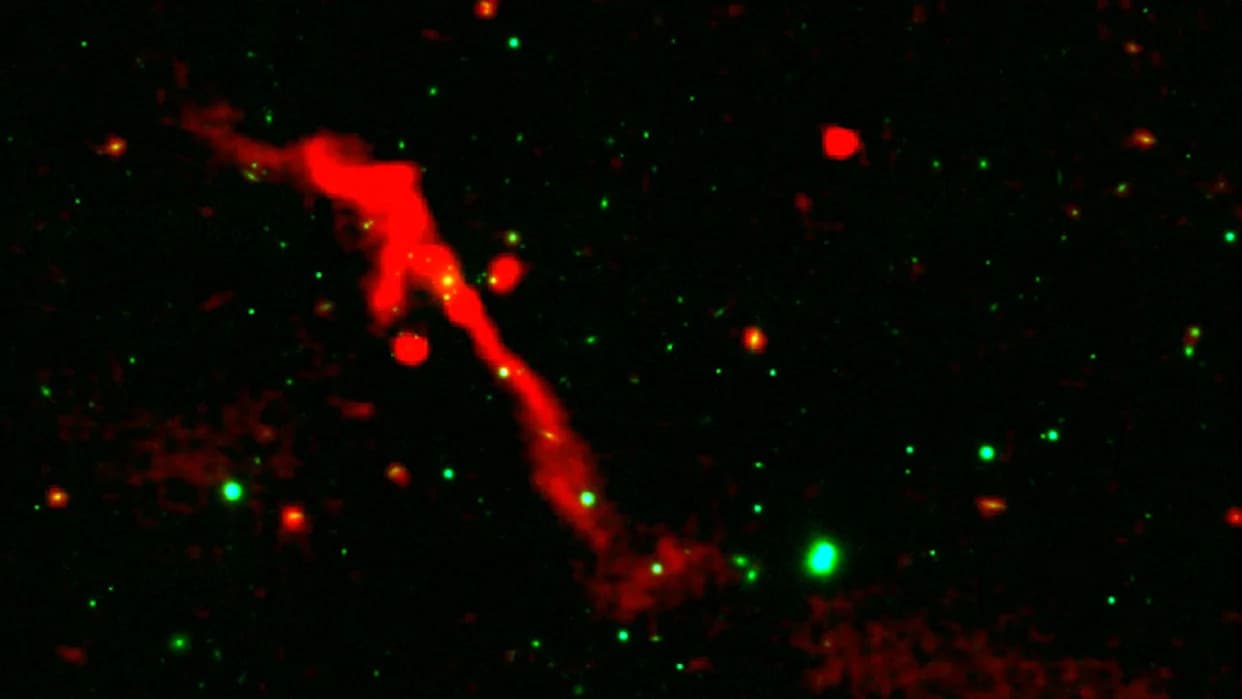
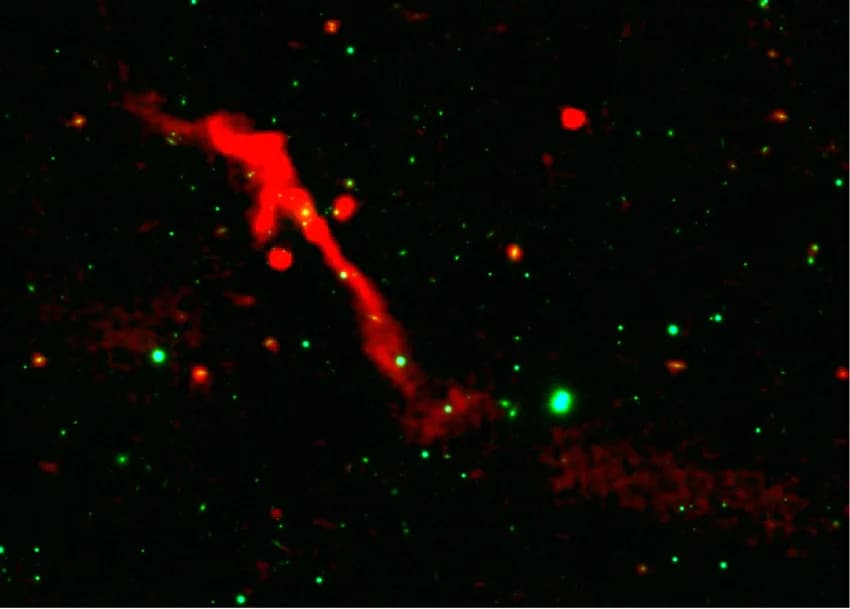
That collision can produce intense X-ray, ultraviolet and blue optical emission — observed as AT 2024wpp — while some disrupted material is launched in focused polar outflows. These jets, accelerated to relativistic speeds, produce the observed radio emission; the team estimates jet speeds of roughly 40% of the speed of light.
The researchers estimate the destroyed star had about 10 times the mass of the Sun and was a highly evolved Wolf–Rayet star near the end of its life, which explains the weak hydrogen signatures seen in the event. Such stars are common in vigorously star-forming galaxies like the host galaxy of AT 2024wpp, located about 1.1 billion light‑years away.
Significance and Publication
Because LFBOTs are rare and evolve quickly, catching a particularly bright one like AT 2024wpp with multiwavelength follow-up provides a unique window into extreme black-hole physics and transient phenomena. The team's results have been accepted for publication in The Astrophysical Journal Letters and are available as a preprint on arXiv prior to final peer review.
Help us improve.