On August 2, 2027, the longest total solar eclipse in 100 years will occur, with totality lasting up to 6 minutes 23 seconds near Luxor, Egypt. The path of totality crosses Morocco, southern Spain, North Africa, Egypt, Saudi Arabia, Yemen and the Somali coast. North America will not see totality, only a partial eclipse in the far north. Observers must use certified solar-viewing glasses or indirect methods (for example, a pinhole projector) to avoid severe eye injury, and should plan travel early if they want to experience totality in person.
The Century’s Longest Total Solar Eclipse Arrives August 2, 2027 — How and Where to See It

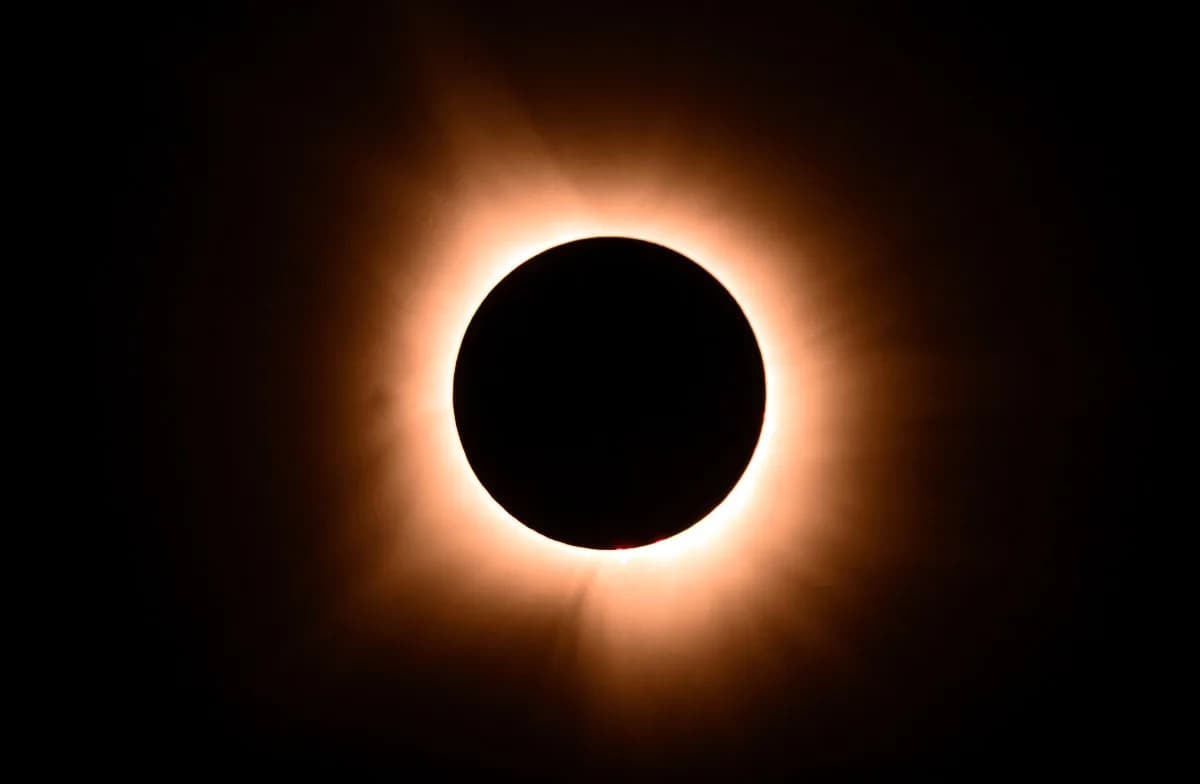
JOSH EDELSON / Getty Images
Skywatchers, mark your calendars: on August 2, 2027 the longest total solar eclipse in a century will sweep across parts of Africa, southern Europe and the Middle East. According to NASA's solar eclipse predictions, totality will last up to 6 minutes 23 seconds at its peak near Luxor, Egypt — a duration not exceeded again until 2132.
Where the Eclipse Will Be Visible
The path of totality begins over the Atlantic and North Africa and moves eastward. It crosses Morocco and southern Spain, then continues through Algeria, Tunisia, Libya and Egypt, before reaching the Arabian Peninsula (Saudi Arabia) and ending near Yemen and the coast of Somalia. Observers on the centerline — especially near Luxor — will experience the longest stretch of totality.
What You’ll See During Totality
During totality the Moon completely covers the Sun, briefly turning daylight into twilight. The Sun’s faint outer atmosphere, the corona, becomes visible as a glowing halo. Bright planets and stars may appear, and the horizon can take on sunset-like colors. This dramatic phase lasts only while the Sun is fully obscured, so timing and location matter.
Visibility in North America and Europe
North America will not see the eclipse as a total event. Observers in the far northern United States may witness a partial eclipse, but those wanting to experience totality will need to travel to the path of totality. Portions of southern Europe — notably southern Spain — are on the path and will see a total eclipse.
Safety: Don’t Look at the Sun Without Protection
Never look directly at the Sun without approved eye protection. Use certified solar-viewing glasses (ISO 12312-2) or view the event indirectly. A simple and safe method is a pinhole projector, which projects an image of the eclipsed Sun onto a surface. Viewing the Sun through inadequate filters or with the naked eye can cause severe and permanent eye damage.
Planning Tips
- Book travel and accommodations early — eclipse chasers will converge on prime viewing locations.
- Check local weather forecasts and consider multiple viewing sites to avoid clouds.
- If you plan to photograph the eclipse, use proper solar filters and practice beforehand.
- Follow guidance from trusted sources such as NASA and local astronomical societies for timing and safety information.
With advance planning and proper precautions, the August 2, 2027 eclipse promises a memorable celestial spectacle. Whether you travel to Luxor for the maximum duration or catch a partial view from afar, make safety your top priority.
Help us improve.