
Earth's Moon takes center stage in 2026 with NASA's planned Artemis II crewed lunar flyby and several commercial robotic landers aiming for the surface. A total solar eclipse on Aug. 12 will cross the Arctic, Greenland, Iceland and parts of Europe, prompting special cruise voyages and global interest. Artemis II would be the first mission beyond low-Earth orbit since Apollo and could clear the way for a lunar surface return as soon as 2027.
Moon Missions and a Rare Eclipse: Top Space Stories to Watch in 2026

The Artemis II crew (from left to right) Canadian Space Agency astronaut Jeremy Hansen, NASA astronauts Christina Koch, Victor Glover and Reid Wiseman, don their Orion Crew Survival System Suits for a multi-day crew module training beginning Thursday, July 31, 2025 at the agency’s Kennedy Space Center in Florida. (Image: NASA)
Earth's nearest celestial neighbor will be the focus of much of 2026's space coverage, with a planned crewed lunar flyby, multiple robotic landing attempts, and a rare total solar eclipse offering skywatchers plenty to follow.
Artemis II Crewed Flyby
NASA plans to launch Artemis II as early as February 2026. If it proceeds on schedule, Artemis II will be the first crewed mission beyond low-Earth orbit since Apollo and the first crewed lunar flyby in more than 50 years. The crew—NASA astronauts Reid Wiseman, Victor Glover and Christina Koch, together with Canadian Space Agency astronaut Jeremy Hansen—will lift off on the Space Launch System rocket and spend roughly 10 days aboard the Orion spacecraft on a loop around the Moon before returning to Earth.
Artemis II is intended to validate systems and procedures ahead of Artemis III, which aims to return humans to the lunar surface as early as 2027. No one has walked on the Moon since Apollo 17 in 1972.
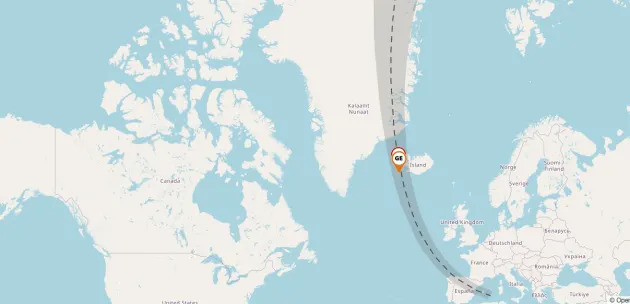
The Aug. 12, 2026 path of totality for the total solar eclipse. (Image credit: National Solar Observatory)
Total Solar Eclipse on Aug. 12, 2026
A total solar eclipse on Aug. 12, 2026, will trace a narrow path of totality across the Arctic Ocean, Greenland, Iceland, the northern Atlantic, northern Spain and parts of Portugal. Observers in the continental United States will not see totality; parts of New England (including Boston) can expect only a partial eclipse—roughly 16% coverage in that area.
Several cruise lines — including Princess Cruises, Cunard, Virgin Voyages, Holland America and Silversea — are offering eclipse-themed voyages that promise views of totality from international waters. These voyages are popular, so bookings often sell quickly.
Safety reminder: Always use certified solar eclipse glasses or viewers when looking at the Sun during an eclipse, except during the brief period of totality. Viewing the Sun without an approved solar filter can cause serious and permanent eye damage.

A full-scale model of Firefly Aerospace’s Blue Ghost Mission 2 lunar lander awaits transport into a clean room for environmental testing at NASA’s Jet Propulsion Laboratory in Southern California in September 2025. (Image credit: NASA/JPL-Caltech)
Multiple Robotic Lunar Landing Attempts
Under NASA's Commercial Lunar Payload Services (CLPS) initiative, several private companies plan robotic deliveries of science and technology payloads to the lunar surface in 2026. Astrobotic aims to launch its Griffin Mission One no earlier than summer 2026. Other companies with missions in development include Blue Origin, Firefly Aerospace and Intuitive Machines, with tentative launch windows spread across the year.
Each mission is expected to carry multiple experiments for NASA and research partners, helping to prepare the surface, instruments and operations for eventual human missions. While up to four landing attempts are planned in 2026, lunar landings remain challenging—historically, a significant fraction of attempts have failed.
What To Watch
Key milestones to follow in 2026 include the Artemis II launch window, individual launch announcements from CLPS partners, and travel and viewing plans for the Aug. 12 eclipse. Whether you follow these events live online, join an eclipse cruise, or watch mission updates from home, 2026 promises to be an exciting year for lunar exploration and skywatching.


