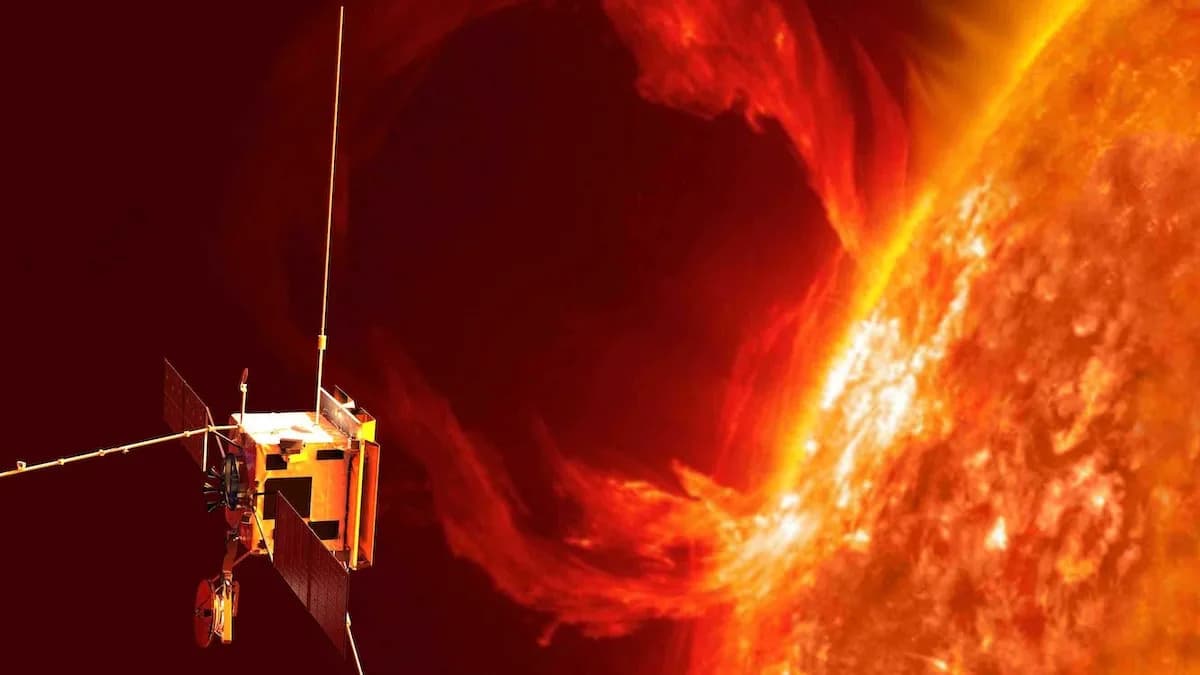
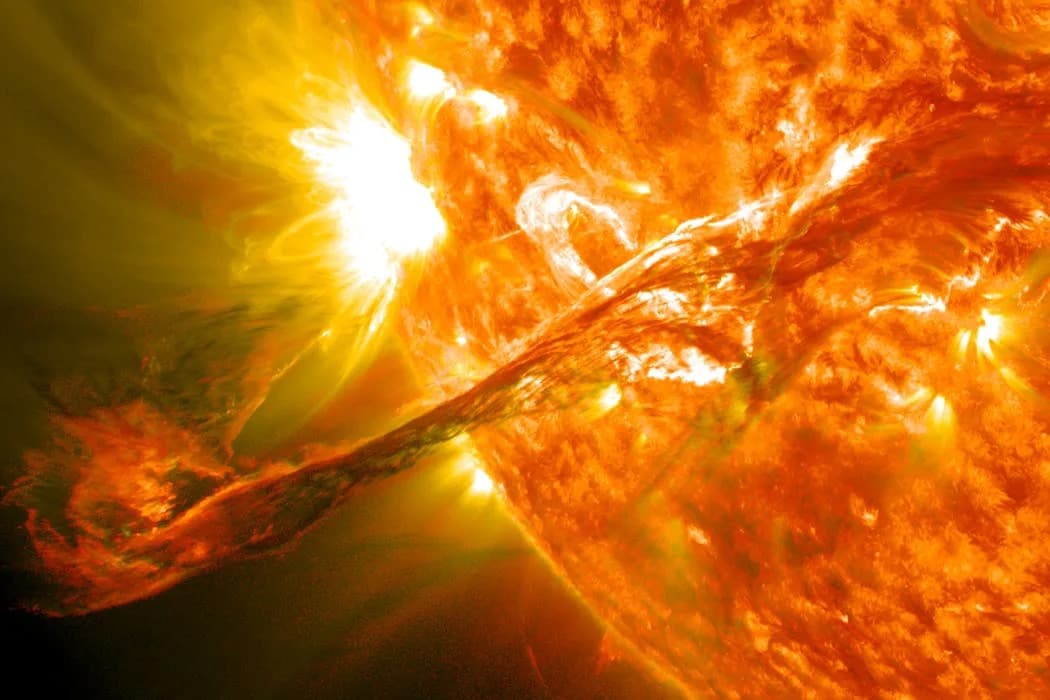
Researchers produced the longest continuous observation of a single solar active region — tracking NOAA 13664 for 94 days. The dataset ties that region to the severe geomagnetic storms of May 2024, which disrupted satellites, power grids, and GPS and pushed auroras to Florida. Using ESA’s Solar Orbiter and other observatories, the team followed the region from its first appearance on the Sun’s far side on April 16 until it rotated out of view after July 18, 2024. The extended observations aim to improve space weather forecasting and protection of Earth infrastructure.
Longest-Ever 94-Day Watch of Solar Storm Source Reveals New Clues to Space Weather
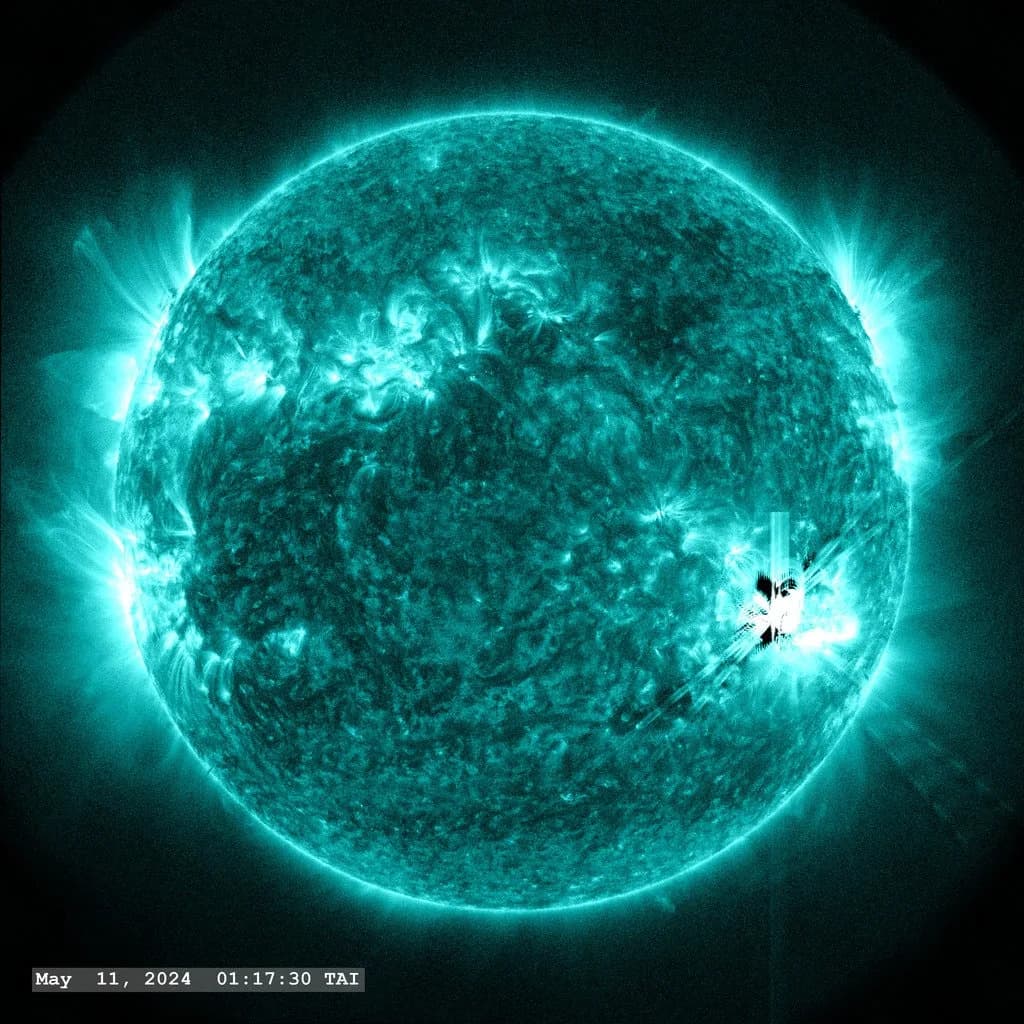
An image taken by NASA’s Solar Dynamics Observatory spacecraft shows a powerful solar flare produced on May 11, 2024, during a spate of activity that was associated with strong auroras.
May 2024 was one of the most turbulent months for Earth in more than two decades: a series of solar flares from a single sunspot region triggered powerful geomagnetic storms that disrupted satellites, GPS, and power systems, and pushed auroras as far south as Florida. Researchers have now revealed the longest continuous observation of an active region on the Sun — a 94-day dataset that tracks the stormy source from emergence to fade.
The team tracked active region NOAA 13664 using coordinated observations that included the European Space Agency’s Solar Orbiter, launched in 2020. By following the region continuously for 94 days, scientists produced the longest uninterrupted series of images and measurements of a single active region to date, offering unprecedented views of magnetic activity that leads to eruptions.
It’s a milestone in solar physics, said Ioannis Kontogiannis, a solar physicist at the Swiss Federal Institute of Technology Zurich (ETH Zurich) who helped lead the project. This is the longest continuous series of images ever created for a single active region.
Observing active regions continuously is difficult because the Sun rotates, so any given feature moves out of view from Earth after a limited time. Solar Orbiter’s trajectory and complementary observatories allowed the research team to follow NOAA 13664 as it appeared on the Sun’s far side on April 16, 2024, produced the strong flares that disturbed Earth in May, and then faded sometime after it rotated out of sight following July 18, 2024.
Why This Matters
Long-duration observations like this help scientists study the buildup and release of magnetic energy that produces flares and coronal mass ejections — the drivers of geomagnetic storms. Although researchers can now observe these processes more completely, they still cannot reliably predict the size or exact timing of eruptions, which complicates efforts to protect satellites, power grids, and other vulnerable infrastructure.
Even signals on railway lines can be affected and switch from red to green or vice versa, said Louise Harra, lead author of the study and a professor of physics at ETH Zurich. That’s really scary.
The 94-day dataset is expected to improve models and forecasting of space weather by revealing how magnetic structures evolve over long periods and how successive eruptions originate and interact. The researchers emphasize that better forecasting can inform early warnings and mitigation measures for utilities, satellite operators, aviation, and navigation systems.
Editor’s Note (1/5/26): This article was edited after posting to clarify that the active region rotated out of sight after July 18, 2024, and to correct the name of NASA’s Solar Dynamics Observatory in the image caption.
Help us improve.