Japan and the United States have agreed to expand joint production of defence equipment, including air-to-air missiles and surface-to-air interceptors, and to widen joint drills and military presence in waters southwest of Japan, notably around Okinawa. The commitments followed talks in Washington between Japanese Defence Minister Shinjiro Koizumi and U.S. defense official Pete Hegseth and include enhanced cooperation on critical-mineral supply chains. The move comes amid strained ties with China after Tokyo and Beijing clashed over comments on Taiwan and China's export controls on dual-use goods.
Japan and U.S. Deepen Missile Cooperation, Expand Joint Drills Near Okinawa Amid China Tensions
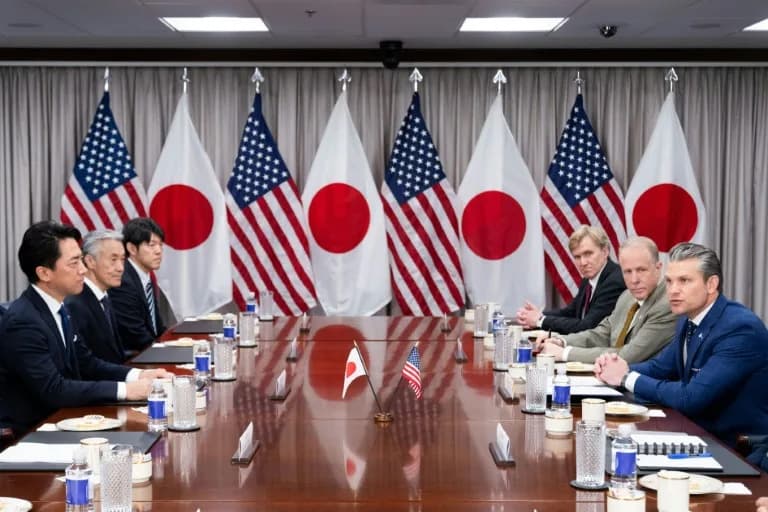
US Defense Secretary Pete Hegseth (R) and Japanese Defense Minister Shinjiro Koizumi (L) at the Pentagon in Washington, DC, on January 15, 2026 (SAUL LOEB)(SAUL LOEB/AFP/AFP)
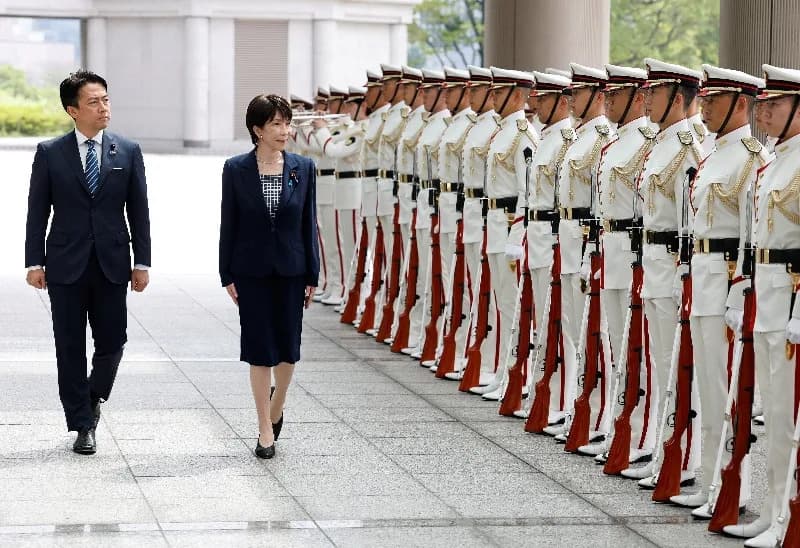
Tokyo and Washington agreed on Friday to step up joint production of defence equipment — including air-to-air missiles and surface-to-air interceptors — and to broaden their military presence in waters southwest of Japan's main islands as tensions with China rise.
The accord followed talks in Washington between Japanese Defence Minister Shinjiro Koizumi and U.S. defense official Pete Hegseth. The two ministers also pledged to deepen cooperation on supply chains for critical minerals and other sensitive components.
What Was Agreed
Japan's defence ministry said the ministers confirmed the Japan–U.S. alliance “remains absolutely unwavering” amid what both described as a rapidly deteriorating security environment in Asia. They committed to advance joint production of air-to-air missiles and surface-to-air interceptors and to expand "more sophisticated and practical joint drills in various locations including the Southwest region."
Strengthening defences around the Southwest region — which includes the subtropical island of Okinawa — is a top priority for Tokyo. Okinawa hosts the majority of U.S. military bases in Japan and serves as a key outpost for monitoring developments in the Taiwan Strait, the East China Sea and the Korean Peninsula.
Background And Strategic Context
The announcement comes amid a diplomatic row with Beijing after Prime Minister Sanae Takaichi suggested in November that Japan might intervene militarily if China were to attack Taiwan. China, which regards Taiwan as its own territory, responded by restricting exports of certain dual-use items to Japan, sparking concerns in Tokyo about access to vital rare earths and other critical materials.
Tokyo has been steadily increasing defence spending; in December the government approved a record nine trillion yen defence budget for the coming fiscal year. At the start of their meeting, Hegseth praised Japan's defence build-up as a practical approach that advances shared security interests.
The ministers also began the day with a joint morning workout at a military gym. Reflecting on the session, Koizumi wrote on X:
"The American military-style training was very tough. But I did my best to labour my way through it, telling myself: 'This is all for the sake of strengthening the Japan–U.S. alliance.'"
Officials said the steps are intended to make bilateral defence cooperation more resilient — from munitions production to supply-chain security and more realistic, geographically dispersed exercises — as regional tensions grow.
Help us improve.