Japan is rapidly expanding its military capabilities, citing growing threats from China and a desire for greater self-reliance. A Cabinet-approved defense plan tops 9 trillion yen and includes long-range missiles, unmanned systems, and stronger coastal defenses. Legal reinterpretations of Article 9 and new security strategies have enabled a shift from strict self-defense to limited strike capabilities, while debates over nuclear-powered submarines and arms exports intensify.
From Pacifism to Power: Japan’s Rapid Military Buildup to Counter China

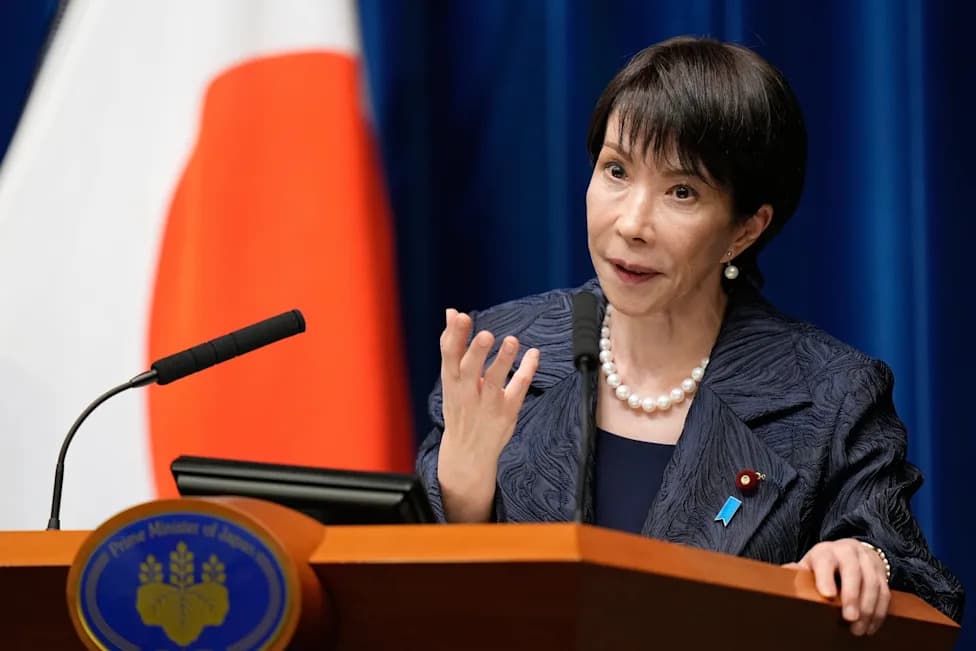
FILE - Japanese Prime Minister Sanae Takaichi gestures as U.S. President Donald Trump delivers his speech during their visit to the aircraft carrier USS George Washington at the U.S. Navy's Yokosuka base in Yokosuka, south of Tokyo, Tuesday, Oct. 28, 2025. (AP Photo/Eugene Hoshiko, File)(ASSOCIATED PRESS)
Tokyo is accelerating a major expansion of its military capabilities, citing growing threats from China and the need for a more self-reliant defense posture. The government plans to double annual arms spending and has approved a record defense budget that exceeds 9 trillion yen (about $58 billion). These moves mark a notable shift from Japan’s postwar emphasis on purely defensive forces toward greater strike and deterrence capabilities.
Constitutional Origins and a Gradual Shift
After World War II, Japan’s U.S.-drafted 1947 constitution — especially Article 9 — renounced war and barred maintaining forces for offensive purposes. The U.S. occupation intended to prevent a revival of Japanese militarism. However, the outbreak of the Korean War and shifting Cold War priorities led to the creation of the Self-Defense Forces in 1954.
Over the decades, Tokyo has broadened its interpretation of "self-defense," permitting overseas peacekeeping and limited international deployments. A major legal and political turning point came under former Prime Minister Shinzo Abe, who in 2014 reinterpreted Article 9 to allow collective self-defense. The 2015 security law authorized the use of force to defend allies under attack — even if Japan itself was not directly attacked — enabling a stronger role without formally amending the constitution.
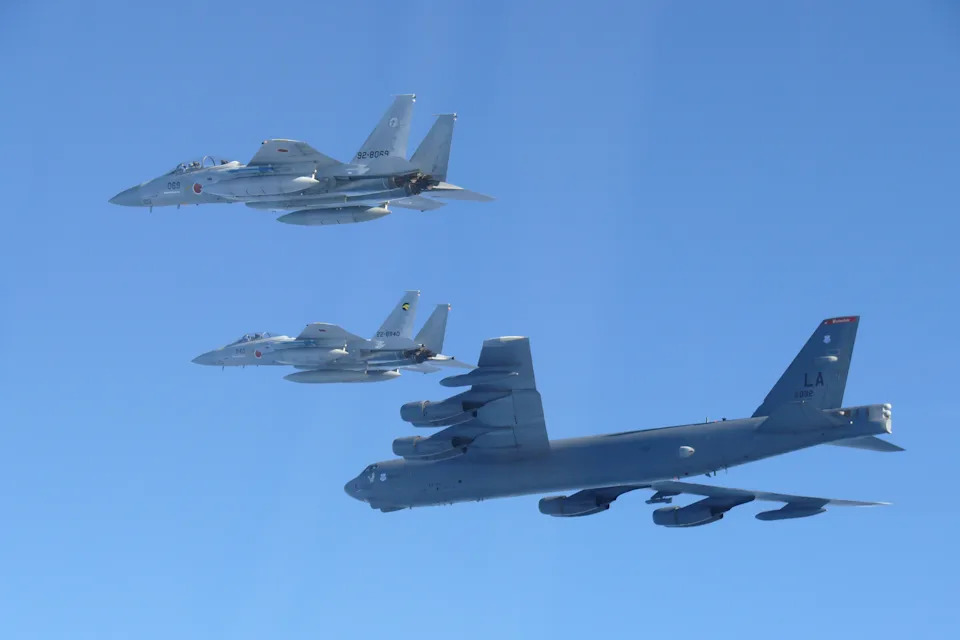
FILE - This photo provided by Japan's Ministry of Defense shows the Japan Air Self-Defense Force's F-15 fighters holding a joint military drill with the U.S. B-52 bomber in the vicinity of Japanese airspace on Wednesday Dec. 10, 2025. (Japan's Ministry of Defense via AP, File)(ASSOCIATED PRESS)
Recent Policy Changes and Capabilities
Under successive governments, Japan has steadily increased defense spending from a long-held cap near 1% of GDP to roughly 1.1% under Abe, and now toward a 2% target under Prime Minister Sanae Takaichi. The Cabinet recently approved a record plan focused on long-range strike capability, coastal defenses, cruise missiles, unmanned systems, and expanded arms production and exports.
In December 2022, the Kishida government adopted a new national security strategy endorsing "strike-back" capabilities with long-range missiles — a clear departure from a strict self-defense posture and a recognition of China as Tokyo’s principal strategic challenge.
Tensions With China
Relations with Beijing have grown increasingly fraught. Japanese officials reported incidents in which Chinese aircraft locked radar on Japanese planes during carrier drills near southwestern Japan, and two Chinese carriers were observed operating near Iwo Jima for the first time. Such actions have intensified Tokyo’s concern over expanded Chinese military activity around disputed islands and regional waters.

FILE - In this photo released by Xinhua News Agency, conventionally powered Chinese aircraft carrier Liaoning carries out a dual aircraft carrier formation exercise with the Shandong aircraft carrier, for the first time in the South China Sea in late Oct. 2024. (Pu Haiyang/Xinhua via AP,File)(ASSOCIATED PRESS)
Beijing has criticized Japan’s accelerated military expansion. China’s Foreign Ministry described Japan’s moves as a dangerous departure from peaceful development, while historical grievances — including visits by some Japanese politicians to Tokyo’s Yasukuni Shrine — continue to fuel mistrust.
Industry, Exports, And Nuclear Questions
Takaichi’s policy agenda aims to loosen remaining restrictions on arms exports to nurture Japan’s defense industry and deepen cooperation with partners. Japan is already collaborating on a next-generation fighter with the UK and Italy, negotiating a frigate sale to Australia, and expanding support roles for U.S. warships.
A government panel has proposed studying nuclear-powered submarines to enable longer-range deterrence, prompting debate in a country with a strong non-nuclear tradition. Tokyo continues to assert its three non-nuclear principles — not possessing, not producing, and not permitting nuclear weapons on its soil — while asking the United States to maintain extended nuclear deterrence. Some Japanese officials have discussed nuclear options publicly, drawing criticism from atomic-bomb survivors and pacifist groups.
Implications and Outlook
The rapid buildup raises legal and political questions about the meaning of Article 9 and Japan’s postwar pacifist identity. Supporters argue the changes are defensive and necessary to deter an increasingly assertive China and to share more of the regional security burden with the United States. Critics at home and abroad warn the shift could increase regional tension and risk undermining the spirit of Japan’s postwar settlement.
Bottom line: Japan’s defense transformation is incremental but profound — expanding capabilities, loosening export rules, and embracing strike options that will reshape regional security dynamics for years to come.
Help us improve.