The Philippines and Japan signed two defence agreements in Manila, highlighted by an Acquisition and Cross‑Servicing Agreement to speed logistics and support between their militaries. Japan pledged $6 million in security assistance to build facilities for donated rigid‑hulled inflatable boats. The pacts come amid rising maritime tensions in East Asia, with both countries emphasising the rule of law and closer trilateral cooperation with the United States.
Japan, Philippines Sign Two Defence Pacts to Boost Military Logistics; Tokyo Pledges $6M
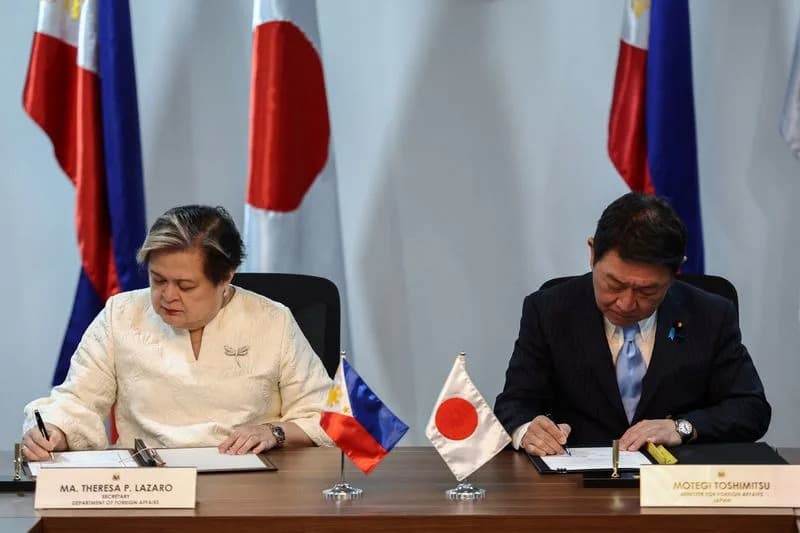
Philippine Foreign Minister Ma. Theresa P. Lazaro and Japanese Foreign Minister Toshimitsu Motegi sign bilateral agreements ahead of their joint press conference in Pasay City, Metro Manila, Philippines, January 15, 2026. REUTERS/Eloisa Lopez
MANILA, Jan 15 (Reuters) - The Philippines and Japan on Thursday formalised two defence agreements to deepen security cooperation amid growing regional tensions. The accords include an Acquisition and Cross‑Servicing Agreement (ACSA) designed to let the two militaries more swiftly exchange supplies and services.
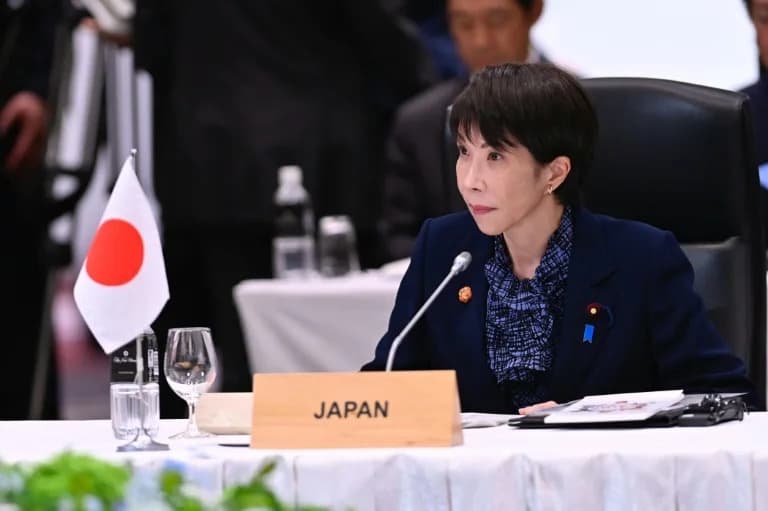
Japanese Foreign Minister Toshimitsu Motegi signed the deals in Manila during a nine‑day diplomatic tour spanning the Middle East and Asia. The visit, with stops in Israel, the Palestinian territories, Qatar and India, underlines Tokyo's expanding strategic engagement in the region.
Logistics Pact And Security Aid
The ACSA aims to streamline logistics support between Japan and the Philippines, enabling faster provision of fuel, spare parts, transportation and related services during joint activities or emergencies. Motegi and his Philippine counterpart, Theresa Lazaro, also announced $6 million in Official Security Assistance from Tokyo to fund facilities to house rigid‑hulled inflatable boats Japan donated to strengthen Manila's naval capacity.
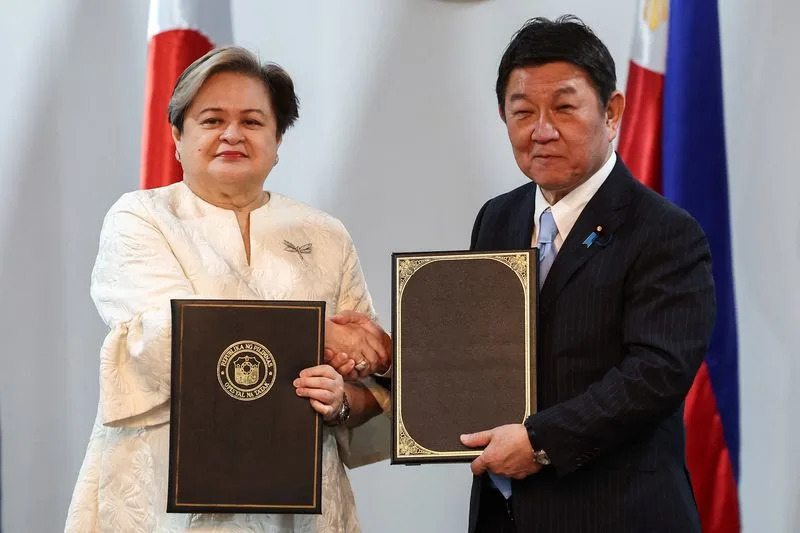
Philippine Foreign Minister Ma. Theresa P. Lazaro and Japanese Foreign Minister Toshimitsu Motegi shake hands while holding signed bilateral agreements ahead of their joint press conference in Pasay City, Metro Manila, Philippines, January 15, 2026. REUTERS/Eloisa Lopez
"The Secretary and I also confirmed the importance of the Japan, Philippines, U.S. trilateral cooperation in the face of an increasingly severe strategic environment," Motegi said at a joint press conference with Lazaro.
Regional Context
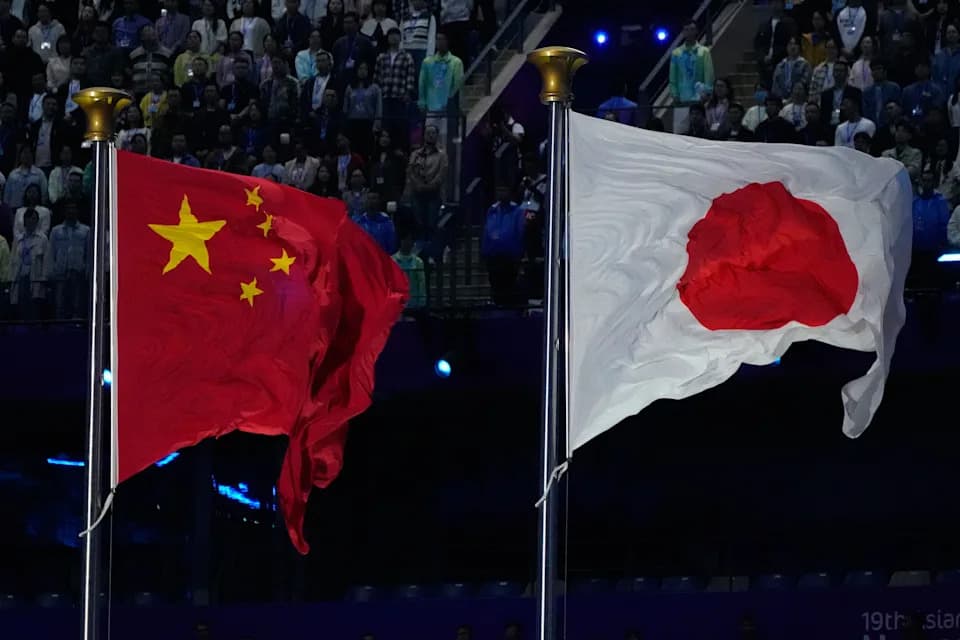
Tokyo has voiced concern about rising maritime tensions in East Asia and opposes any unilateral attempts to change the status quo. Japan has backed the 2016 Permanent Court of Arbitration ruling in The Hague that rejected China’s expansive claims in the South China Sea — a decision Beijing has refused to accept.
Motegi's trip comes as the Philippines assumes the chair of the Association of Southeast Asian Nations and amid heightened tensions across the Taiwan Strait. Japan has warned that peace and stability around Taiwan are vital to global security; comments by Prime Minister Sanae Takaichi suggesting Japan might respond militarily to a Chinese attack on Taiwan prompted a sharp response from Beijing, including a travel boycott and export restrictions on some dual‑use items.
In response to what it describes as growing Chinese military might and assertiveness, Japan has embarked on an expanded military build‑up and is strengthening partnerships with regional allies, including deeper trilateral cooperation with the United States and the Philippines.
(Reporting by Mikhail Flores; Writing by Martin Petty and Karen Lema; Editing by David Stanway)
Help us improve.