The Supreme Court heard Little v. Hecox and West Virginia v. B.P.J., two cases that challenge state laws limiting girls’ sports to participants designated by biological sex. Justices debated whether such laws discriminate on the basis of sex or target transgender status and whether Title IX prohibits assigning teams by birth sex. Key issues included how to define “sex,” whether medical treatments erase physical advantages, and how broadly a ruling would apply. A decision is expected by the end of the Court’s term in June.
Supreme Court Hears High‑Stakes Cases on Who Counts as a Woman — The Future of Girls’ Sports at Stake
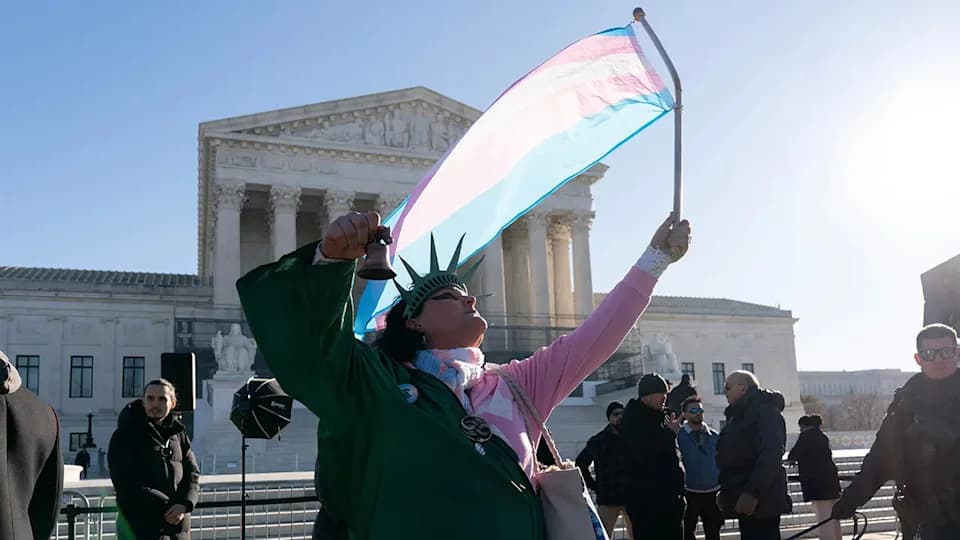
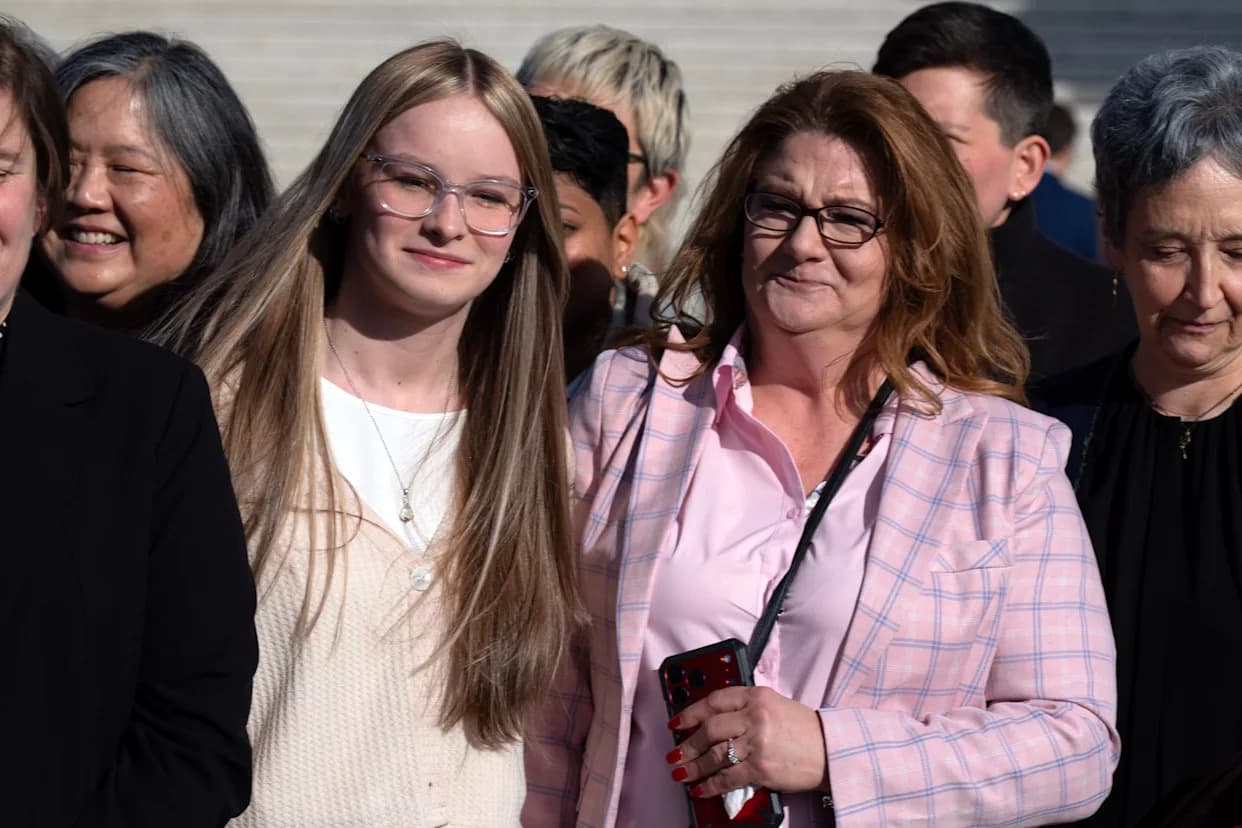
Protesters gather outside the Supreme Court as it hears arguments over state laws barring transgender girls and women from playing on school athletic teams Jan. 13, 2026, in Washington.(AP Images)
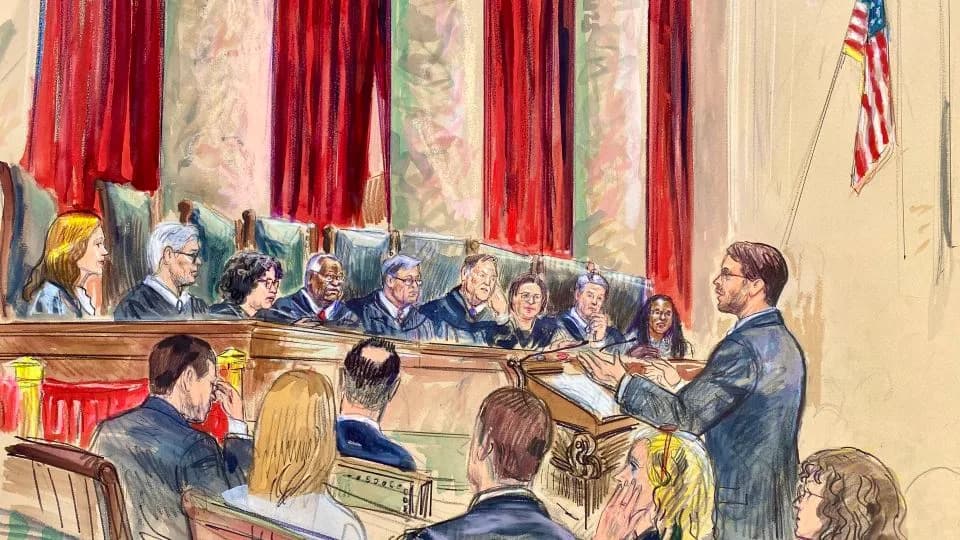
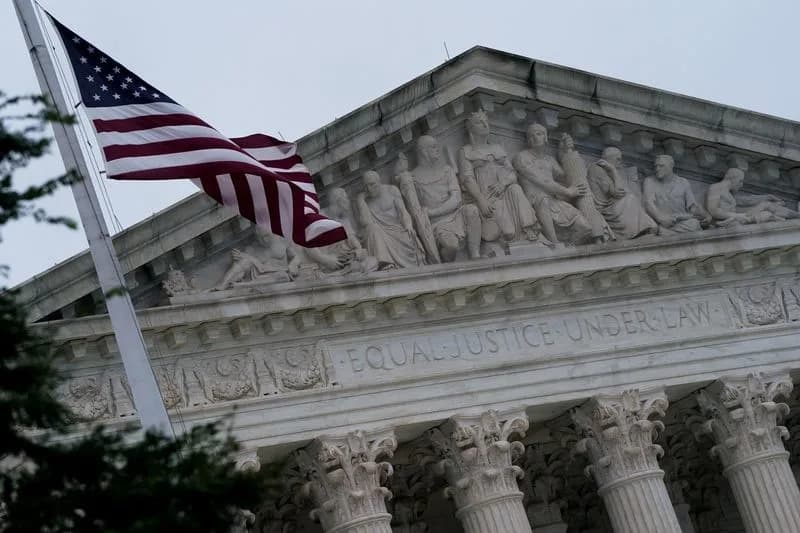
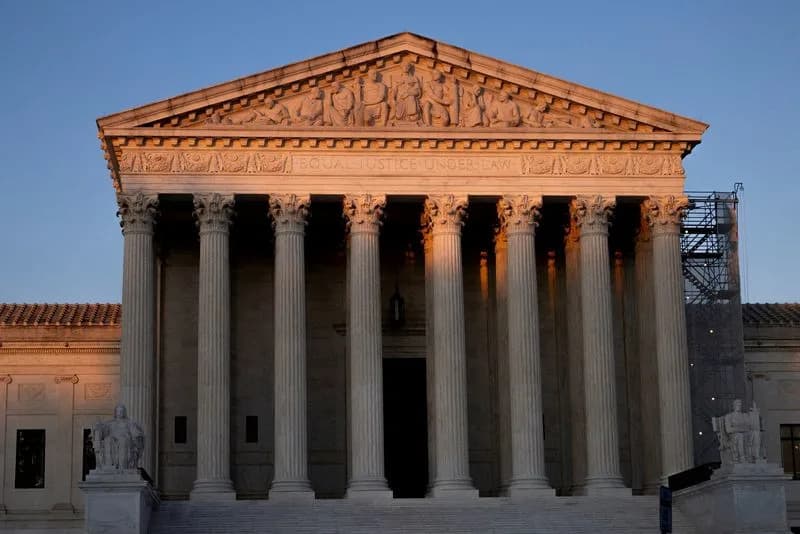
The Supreme Court spent more than three hours this week hearing two landmark cases that could reshape policies for girls’ and women’s athletics nationwide and may force the justices to confront a foundational legal question: what does the word “sex” mean for purposes of Equal Protection and Title IX?
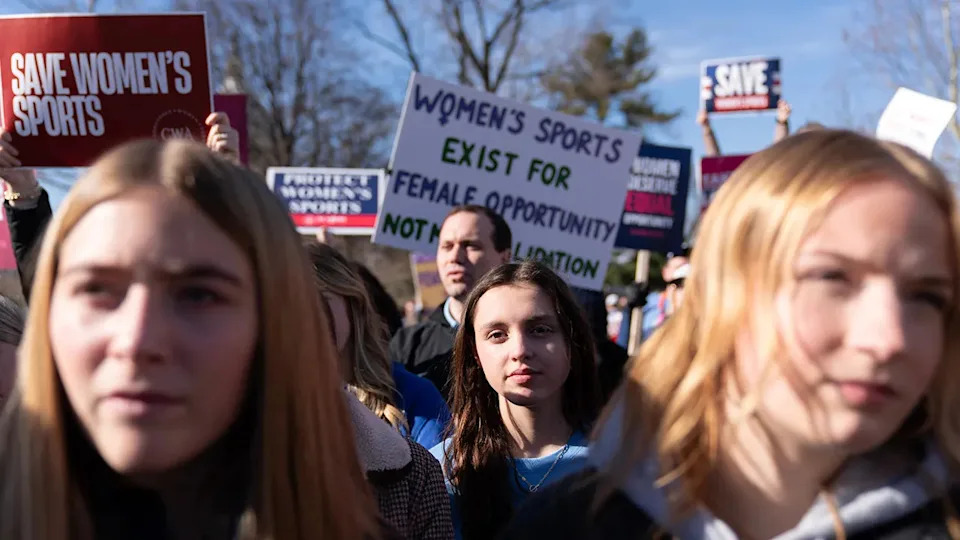
Protesters gather outside the Supreme Court as it hears arguments over state laws barring transgender girls and women from playing on school athletic teams Jan. 13, 2026, in Washington.
The Cases
Justices heard Little v. Hecox (challenging Idaho’s law) and West Virginia v. B.P.J. (challenging West Virginia’s law). Idaho’s 2020 statute, known as Fairness in Women’s Sports, ties eligibility for school athletic teams—from elementary school through college—to biological sex. West Virginia’s 2023 statute, called Save Women’s Sports, uses a similar sex‑based eligibility rule. Federal appeals courts enjoined both laws: the Ninth Circuit blocked Idaho’s law, and the Fourth Circuit blocked West Virginia’s.
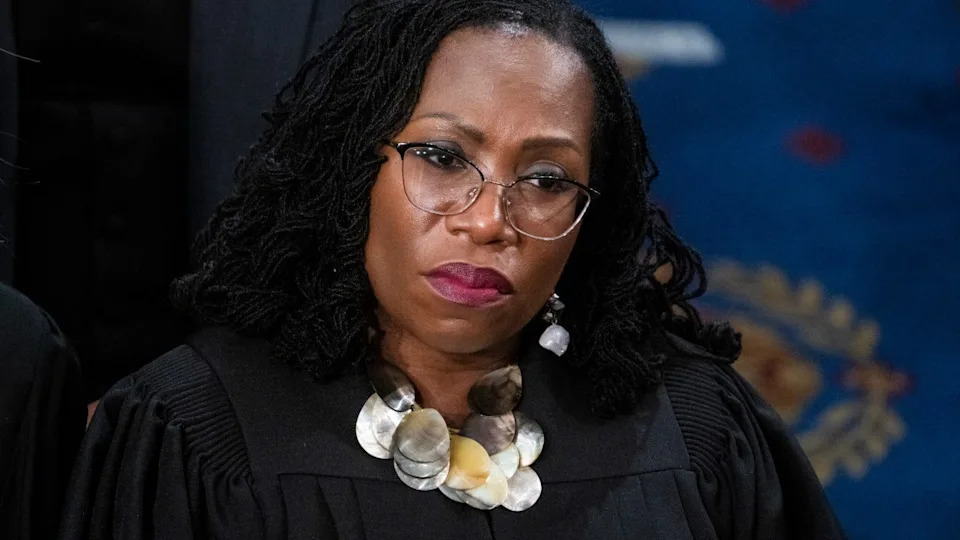
Supreme Court Justice Ketanji Brown Jackson
Who Are The Parties?
In Idaho, plaintiff Lindsay Hecox, a transgender woman, challenged the law after seeking to try out for Boise State University’s women’s track and cross‑country teams. In West Virginia, the plaintiff, identified in filings as B.P.J., is a young person who was an 11‑year‑old in the original suit; the state says the athlete later competed in and displaced female competitors in cross‑country and track events. Lainey Armistead, a former female college soccer player, intervened to defend West Virginia’s statute.
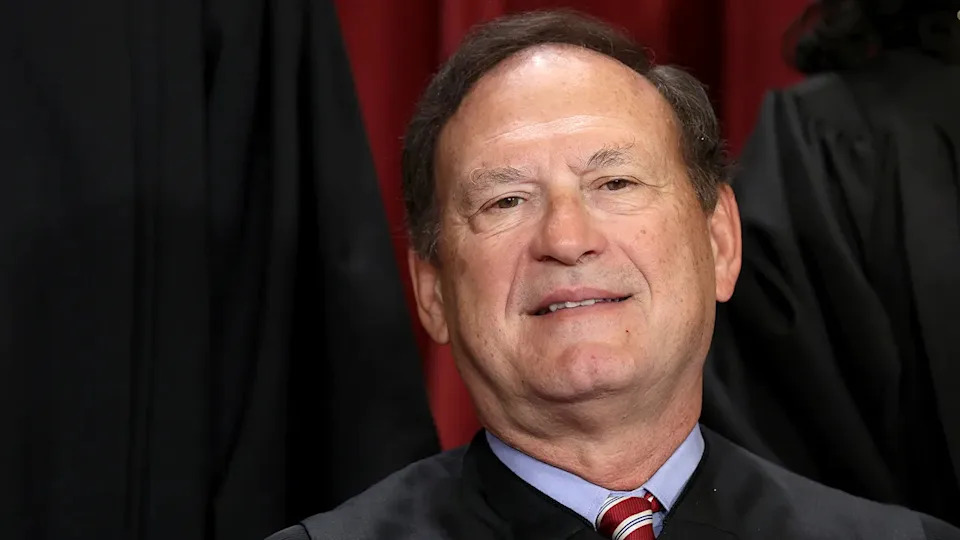
United States Supreme Court Associate Justice Samuel Alito poses for an official portrait at the East Conference Room of the Supreme Court building Oct. 7, 2022, in Washington, D.C.
Key Legal Questions
- Does a law that limits participation in girls’ teams to those designated by biological sex violate the Equal Protection Clause of the Fourteenth Amendment?
- Does Title IX — the 1972 law that bars sex discrimination in education and is credited with expanding opportunities for female athletes — prohibit a state from consistently assigning teams based on biological sex determined at birth?
- Do such laws classify people by sex (a biological category) or by transgender status (a status‑based classification that may trigger heightened judicial scrutiny)?
What Happened At Argument
Justices subjected both sides to probing questions and spent significant time on technical issues about classification standards and statutory interpretation. Several recurring themes emerged:
- Definition of “Sex”: Chief Justice John Roberts and Justice Samuel Alito pressed lawyers on whether the Court must adopt a clear, objective definition of “sex” to apply Equal Protection and Title IX consistently. Roberts said if Title IX is to be administered across thousands of schools, "sex must mean something specific and objective."
- Status vs. Classification: A central dispute was whether the state laws classify people based on biological sex or impermissibly single out transgender people. Justice Alito asked how a law that bars all biological males from girls’ teams could be treated as targeting a status rather than sex.
- Role of Medical Treatments: Justices explored whether hormone therapy or puberty blockers eliminate physical advantages tied to biological development. Advocates for the laws argued that medical treatments do not necessarily erase sex‑based differences in strength and size; advocates for the plaintiffs disputed that conclusion.
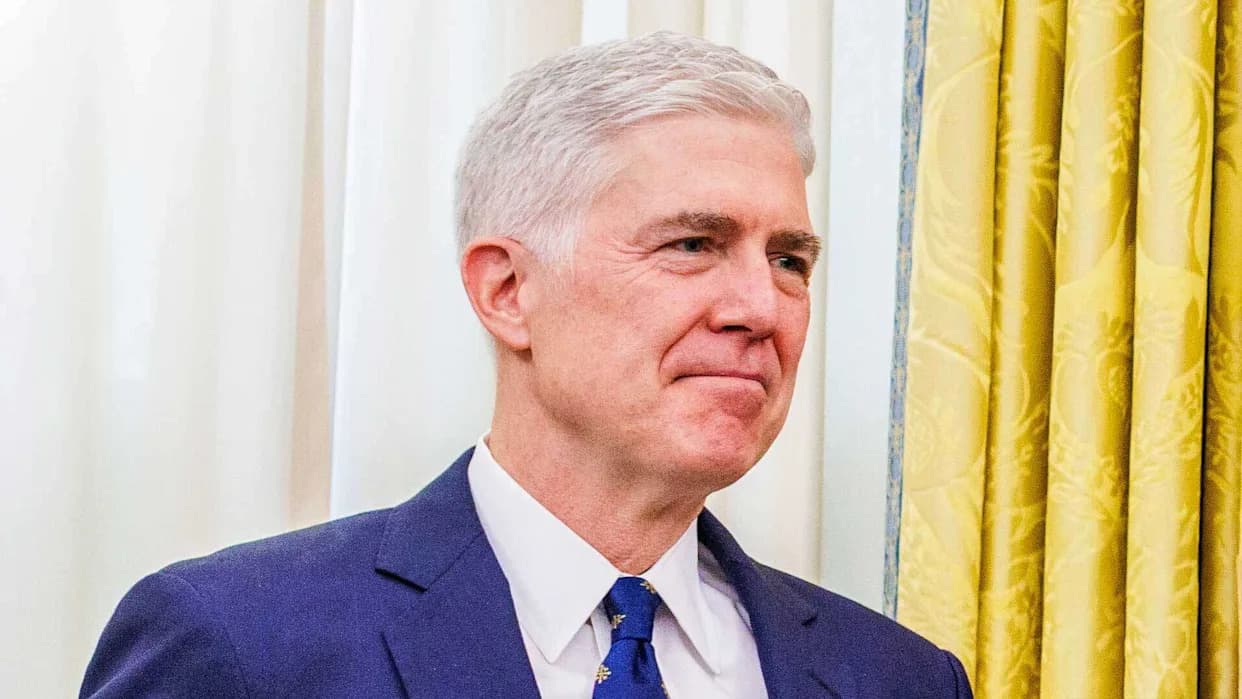
- Precedent and Statutory Context: Justice Neil Gorsuch — who authored a 2020 Title VII opinion recognizing that discrimination “because of sex” can cover transgender people — suggested that Title IX and its regulatory history might make school athletics a distinct legal context from employment law.
- Procedural Issues: Justice Sonia Sotomayor raised mootness and other procedural questions, noting that some plaintiffs had sought dismissal in lower courts at various points.
Evidence and Broader Claims
At argument, advocates on both sides cited data and anecdotes. One report cited at the hearing — described in filings as a United Nations–sourced compilation — stated that as of August 2024, "over 600 female athletes in more than 400 competitions [worldwide] have lost more than 890 medals in 29 different sports" to competitors identified as males who identify as women. Supporters of the state laws say such incidents justify sex‑based protections to preserve fairness and safety; opponents say exclusionary rules unlawfully discriminate against transgender people.
Potential Impact and Timeline
The Court typically issues decisions in major cases near the end of its term in June. Observers say a ruling could affirm states’ authority to restrict team eligibility by biological sex, limit that authority, or adopt a narrower approach tied to specific contexts. The breadth of the Court’s decision — whether it resolves only the narrow statutory questions or issues a broader definitional ruling about "sex" — will determine how far the ruling reshapes school sports, athletic opportunities, and related policies nationwide.
Bottom line: The arguments put core questions about fairness, safety, legal classification, and statutory interpretation before the Court. The outcome will have significant implications for athletes, schools, and state policymakers.
Help us improve.