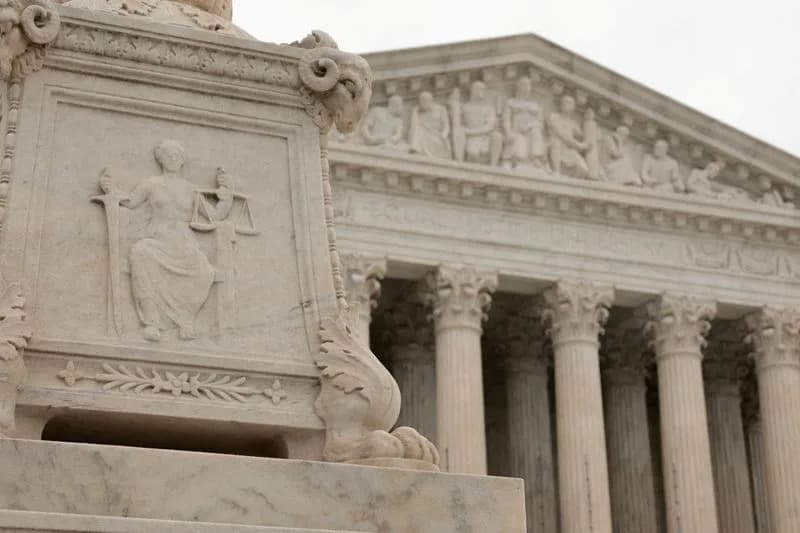
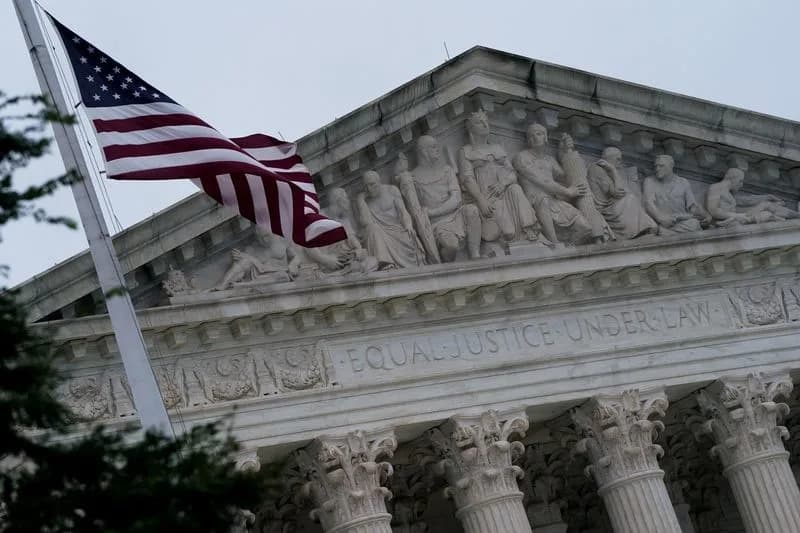
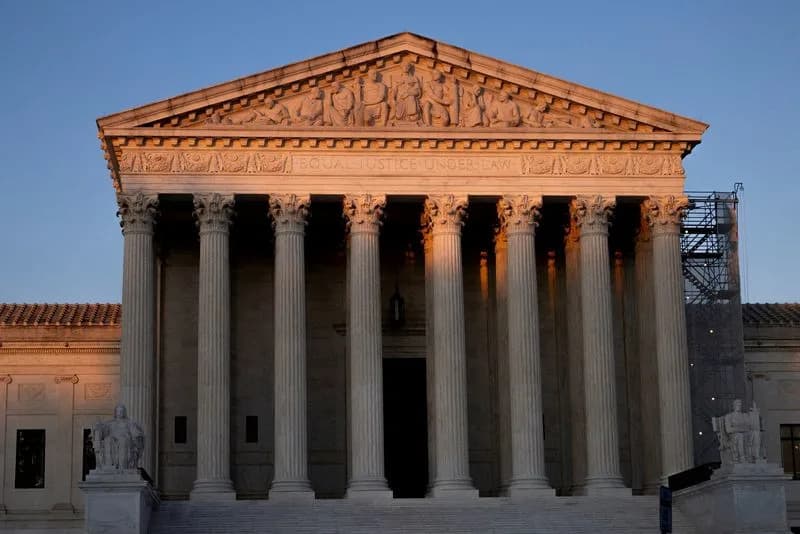
The Supreme Court spent three-and-a-half hours weighing whether states may ban transgender women from girls' and women's school sports, signaling a likely willingness among the conservative majority to uphold bans in about 25 states. Justices debated whether Title IX's ban on sex discrimination should be read as referring to biological sex or to transgender status, and they questioned how scientific uncertainty about hormone treatments should factor into individual cases. Plaintiffs urged individualized review where hormone therapy may remove any competitive advantage, while the government and states pushed for a biologically based rule. The Court's decision could be narrow or have wide-reaching effects on state policies and school athletics nationwide.
Supreme Court Considers Limits Of Title IX As Justices Weigh Transgender Sports Bans
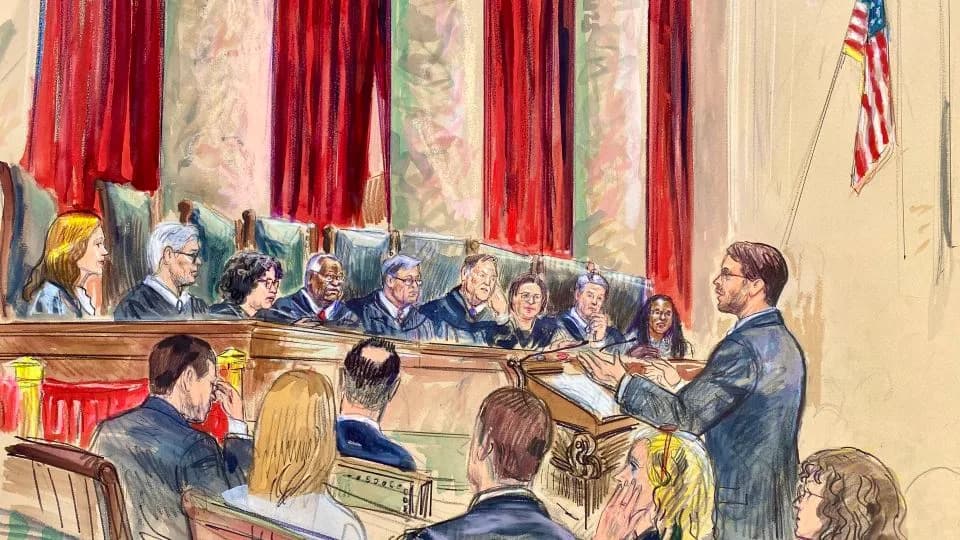
During a marathon, three-and-a-half-hour Supreme Court argument on Tuesday, justices examined whether states may bar transgender women from participating in girls' and women's school sports. The Court's conservative majority signaled it may be willing to uphold bans in Idaho, West Virginia and roughly two dozen other primarily Republican-led states, while also wrestling with how any ruling could affect policies in Democratic-led states that explicitly allow transgender women to join female teams.
Key Legal Question
At the center of the dispute is how Title IX— the federal law that prohibits sex discrimination in programs receiving federal funds—should be interpreted: Does Title IX's prohibition on discrimination based on "sex" refer only to biological sex, or does it encompass discrimination based on transgender status, as the Supreme Court held for employment law in Bostock v. Clayton County (2020)?
What the Justices Focused On
Several conservative justices, including Justice Brett Kavanaugh, raised concerns about competitive fairness and safety. Kavanaugh suggested transgender girls who qualify for teams could displace cisgender girls from starting lineups and reduce playing time—outcomes he described as meaningful to athletes.
"It's kind of a zero-sum game for a lot of teams," Kavanaugh said. "...someone who tries out and makes it, who is a transgender girl, will bump from the starting lineup, from playing time...and those things matter to people big time."
Chief Justice John Roberts pressed lawyers to limit the case's broader implications, asking whether a sex-based classification is necessarily equivalent to a transgender classification. He sought to distinguish the sports dispute from the Court's Bostock ruling, which found that discrimination against transgender people in employment is discrimination based on sex.
Plaintiffs, Defendants And The Government
The challenges were brought by Lindsay Hecox, an Idaho college student who sought to compete on Boise State's women's track team, and Becky Pepper-Jackson, who sued West Virginia as a middle-schooler and now hopes to compete in high school shot put. Their attorneys urged the Court to avoid a sweeping rule and urged individualized consideration where hormone treatments may mitigate any physiological advantage.
Deputy Solicitor General Hashim Mooppan, representing the federal government, and state lawyers urged the Court to interpret Title IX's reference to "sex" as biological sex, arguing that regulatory separations should be based on biological categories rather than circulating testosterone levels. Mooppan asked the justices to decide narrowly on the Idaho and West Virginia bans and leave broader questions about other states for another day.
Science, Individualized Review, And Broader Implications
Justices, including Neil Gorsuch, probed scientific uncertainty about whether puberty blockers and testosterone suppression fully eliminate any athletic advantage. Gorsuch asked whether determinations should be made on an individual basis or by group, noting a substantial and contested scientific record.
Liberal justices pushed for avenues that would allow transgender athletes to pursue claims demonstrating the absence of a competitive edge, for example, by showing that hormone therapies have mitigated physiological differences.
Political Context And Potential Fallout
The arguments unfolded against a recent backdrop of federal actions affecting transgender rights. The Trump administration referenced in oral argument has issued policies affecting transgender service members, passports, federal funding for certain medical care for transgender youth, and has sought to restrict transgender participation in school sports. Several justices and advocates acknowledged the high political and cultural stakes, even as the legal questions before the Court remain narrowly framed.
What Comes Next
The Court's decision—expected in the coming months—could clarify whether Title IX protections hinge on biological sex or whether they encompass transgender status in the context of school athletics. A broad ruling could affect policies nationwide, while a narrow ruling could limit the decision to the facts of the Idaho and West Virginia laws and leave open individualized claims.
Who This Affects: The cases directly involve a small percentage of the population but carry large implications for school sports, state policies, and federal civil-rights law. Both legal precedent and evolving scientific evidence will play central roles in how the Court rules.
Help us improve.